

Why Biostimulant Application Timing Matters
3/30/2026 - By Harrell's
Golf course turf is expected to perform under constant pressure. Traffic, heat, drought, compaction, and seasonal transitions all challenge turfgrass health long before visual decline appears above ground. For superintendents and greenskeepers, success increasingly depends on managing what happens below the surface, in the root zone and surrounding soil biology.
That is where biostimulants play a critical role.
Rather than replacing fertility programs, biostimulants enhance plant and soil function, helping turf better utilize nutrients, tolerate stress, and maintain consistent performance throughout the year.
What Are Biostimulants?
Biostimulants are materials applied to soil or foliage that improve plant health and growth processes without serving primarily as fertilizers or pesticides. Instead of directly feeding turf, they stimulate natural biological and physiological processes that enhance efficiency and resilience.
In turfgrass systems, biostimulants commonly work by:
1. Stimulating root growth and development
2. Increasing nutrient availability and uptake
3. Supporting beneficial microbial populations
4. Improving soil structure and biology
5. Enhancing tolerance to environmental stress
The result is turf that performs more consistently under real-world golf course stress conditions.
Types of Biostimulants Used in Turf Management
Modern turf programs often combine multiple biostimulant technologies because each supports a different aspect of plant or soil health. Technologies include humic substances, seaweed and kelp extracts, amino acids and protein hydrolysates, microbial (beneficial bacteria and mycorrhizal) inputs, and more. Let us look a little deeper.
Humic Substances
Derived from organic matter, humic and fulvic acids help to improve nutrient retention and exchange, increase micronutrient availability to the turf, and enhance the overall soil structure and rooting environment. Harrell’s EarthMAX® Organic is a great example of a naturally derived, carbon-rich soil additive, comprised of humic acid, which is well known and valued by agronomic practitioners nationwide.
To learn more about EarthMAX® Organic and how it fits into your program, connect with your Harrell’s Rep.
Carbon & Microbe Foods
Carbon sources and microbial stimulants feed soil biology by providing an energy source that supports beneficial microbial populations in the root zone. As microbial activity increases, nutrient cycling becomes more efficient, helping convert organic and unavailable nutrients into plant-accessible forms. A more biologically active rhizosphere improves soil function, enhances nutrient availability, and promotes stronger root development, contributing to more consistent turf performance under stress.
Each category supports turf differently, but the greatest impact occurs when used together strategically throughout the season.
Learn more about Harrell’s BioMAX® Soil Enhancer here.

Seaweed & Kelp Extracts
Seaweed-based products provide natural compounds that promote stress tolerance, root initiation, improved metabolic activity during environmental extremes, and increase antioxidant production in the plant. There are sources of seaweed extract available for use, most of which are derived from the kelp species Ascophyllum nodosum.
Harrell’s Bio-MAX® Seaweed A+E combines the benefits of our original seaweed extract source, Ascophyllum nodosum, and pairs it with a differentiated, unique source, Ecklonia maxima. Learn more about Seaweed A+E here.
Amino Acids & Protein Hydrolysates
Amino acid and protein hydrolysate products help turf conserve energy during stress periods by supplying readily available building blocks for plant metabolism.
Instead of expending energy synthesizing these compounds internally, turfgrass can redirect resources toward recovery, root maintenance, and stress tolerance. These inputs are particularly valuable during heat, drought, or traffic stress, when maintaining physiological efficiency is critical for preserving turf quality, color and overall playability.
Learn more about Harrell’s Bio-MAX® Amino Pro V.
Beneficial Mycorrhizae Fungi
Beneficial fungi and bacteria can form symbiotic relationships with turfgrass roots, effectively extending the plant’s ability to access water and nutrients beyond the natural root zone. Mycorrhizal fungi, in particular, increase root surface area through microscopic hyphal networks, improving nutrient uptake and soil structure while supporting long-term soil biological activity (check out Harrell’s Bio-MAX® Mycorrhizae Pro). Over time, these microbial populations contribute to improved nutrient cycling, healthier soils, and more resilient turf systems.
Why Root Health Drives Turf Performance
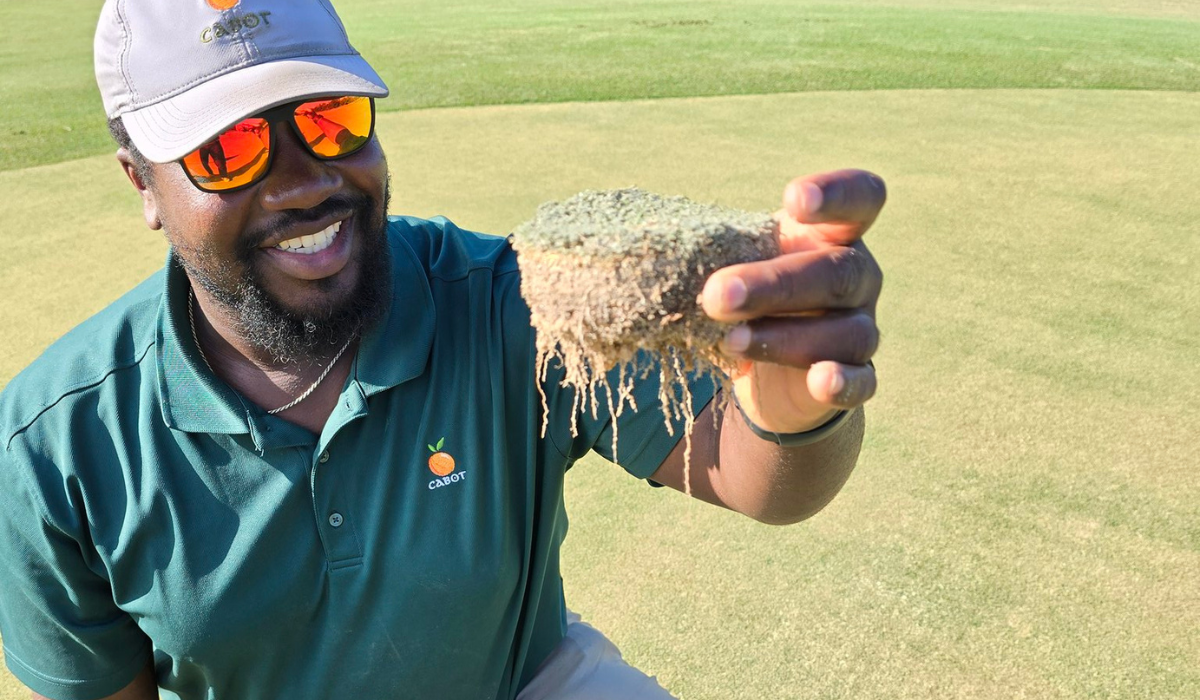
Above-ground turf quality is determined by below-ground development. A dense, active root system allows turf to:
Access deeper moisture reserves.
Improve nutrient uptake efficiency.
Recover faster from traffic and mechanical stress.
Maintain color and density during environmental extremes.
When roots decline, turf becomes reactive instead of resilient. This is why many superintendents are shifting toward proactive root health programs, anchored by biological and soil-focused inputs like Azo Root and Mycorrhizae Pro.
Improve nutrient cycling in the soil.
Enhance microbial activity around roots.
Support a stronger establishment during transition periods.
Improve overall turf physiological fitness.
Healthier roots translate directly into improved turf consistent Microbial Inputs.
Plant Growth Promoting Rhizobacteria (PGPR):
Azo Root™ contains the PGPR Azospirillum brasilense, a well-studied and effective soil bacterium that can enhance root growth and function through the production of beneficial root growth-promoting compounds. Azo Root™ is designed to support the beneficial biological activity in the soil and improve the soil environment surrounding turf roots.
Rather than acting as a traditional fertilizer, Azo Root™ works within the rhizosphere — the narrow region of soil influenced by roots — where nutrient exchange and microbial interactions occur.
When incorporated into a biostimulant program, Azo Root™ helps stimulate root growth and density, especially during stress periods common on golf courses. Learn more about Azo Root™ here.
Timing Biostimulants Applications for Optimal Results
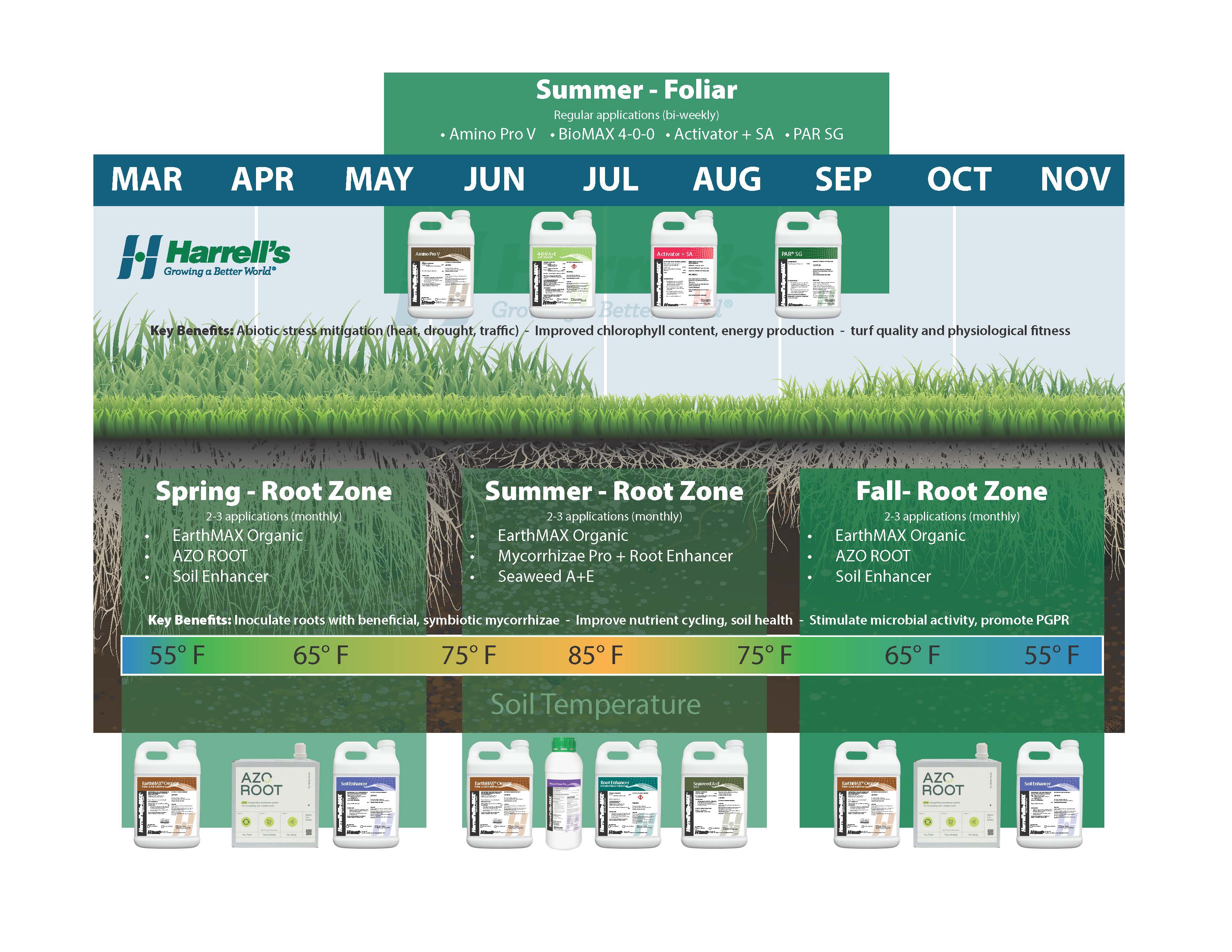
Like any agronomic input, biostimulants deliver the greatest benefit when applications align with turfgrass physiology and soil conditions rather than a fixed calendar schedule. Timing applications around soil temperature, growth cycles, and anticipated stress periods allows superintendents to support turf when plants are most responsive, maximizing both efficiency and performance outcomes.
Applying root-focused biostimulants during active root growth windows — typically in spring and fall, when soil temperatures are moderate — promotes stronger root development and improved nutrient uptake. During summer stress periods, shifting toward foliar and stress-mitigation products helps maintain plant energy and physiological function rather than forcing growth under unfavorable conditions.
Spring Applications (Soil Temps ~55–65°F)
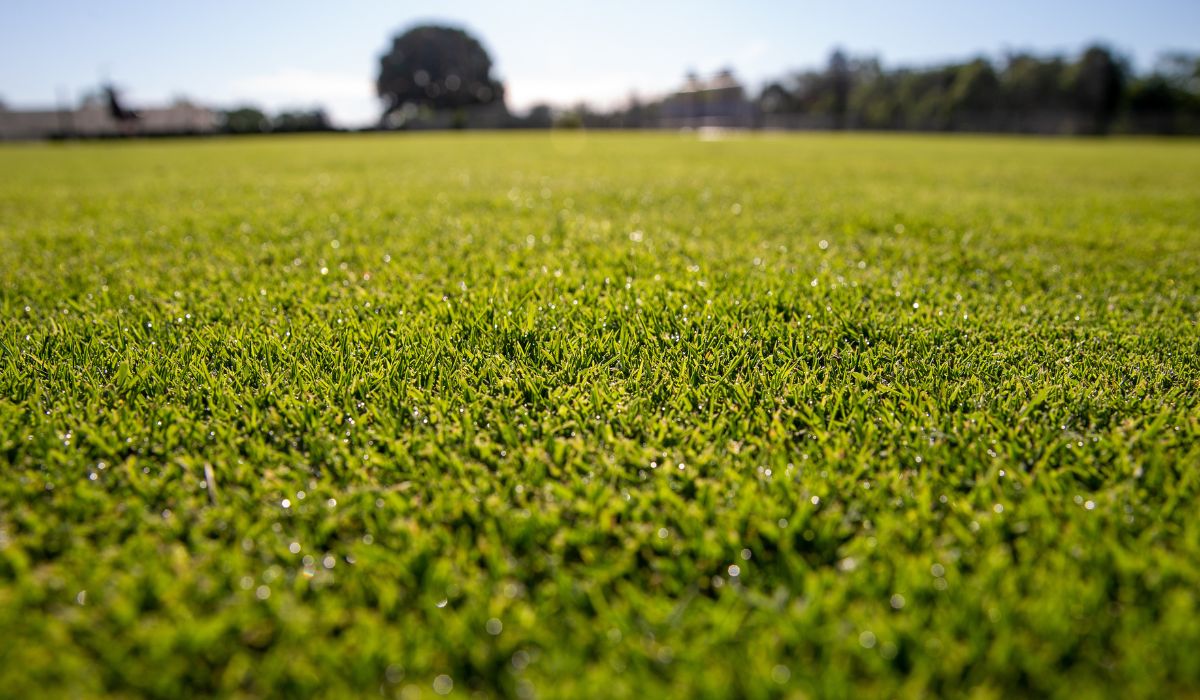
Spring is one of the most important windows for root development. To ensure that you are maximizing the efficacy of your products and the root development you can achieve, we recommend applying monthly or bi-weekly root zone applications. Combine soil-support products with microbial root enhancement products for further root development.
Spring applications help turf rebuild roots following winter dormancy and prepare for summer stress. The goals of spring applications are to activate soil biology, encourage new, healthy rooting, and improve nutrient efficiency heading into the growing season.
Our recommendations for spring applications include:
And Soil Enhancer
Summer Strategy (Soil Temps ~75–85°F)
During peak stress periods, turf shifts from root expansion to survival mode, and programs focus on stress mitigation rather than aggressive rooting. During these times, root-zone emphasis transitions toward:
Mycorrhizae establishment
Seaweed-based stress support
Maintaining microbial activity
Amino acid supplementation
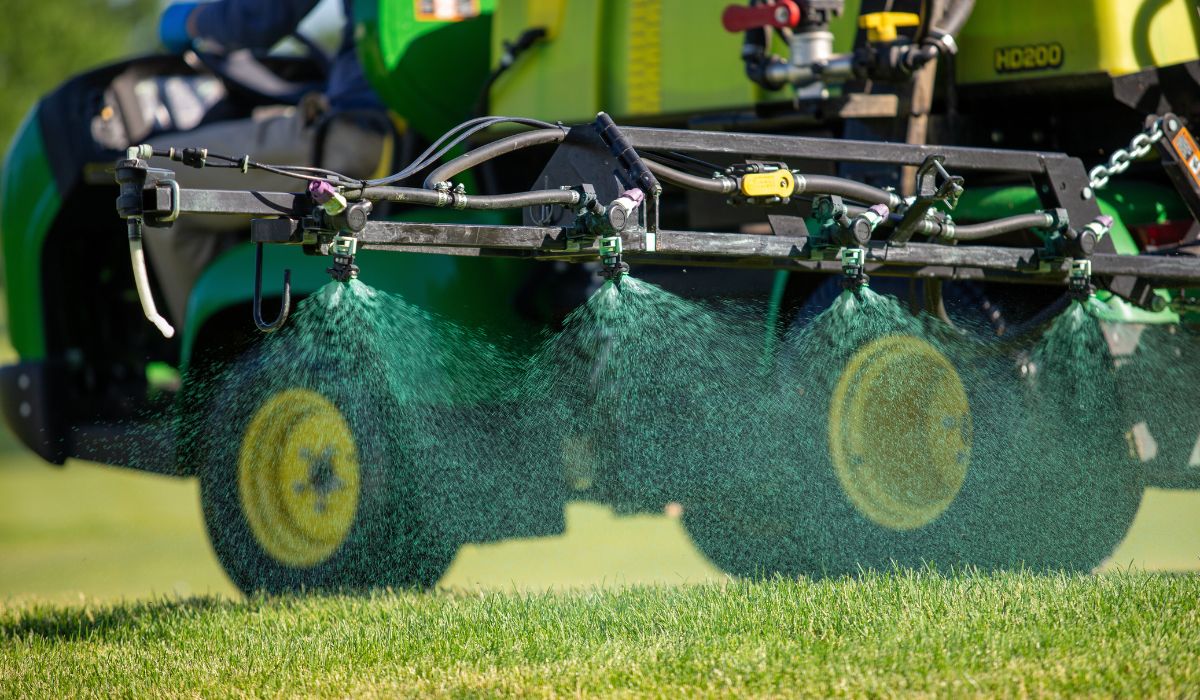
Foliar biostimulants applied bi-weekly help sustain plant energy and chlorophyll production during heat and traffic stress. Typical summer foliar products include amino acid products (Amino Pro V), seaweed and kelp extracts (Seaweed A+E), and pigment technologies like PAR® SG for plant protection.
The goal of summer applications is to reduce abiotic stress impacts, maintain photosynthetic efficiency under stress conditions, and preserve root mass that has already been established.
Our recommendations for summer applications include:
Mycorrhizae Pro + Root Enhancer
And Seaweed A+E
With added applications for your summer foliar program:
And PAR® SG
Fall Applications (Soil Temps Returning to ~55–65°F)
Fall represents another major rooting opportunity that is often overlooked but highly impactful. Reintroducing soil health and root growth products such as EarthMAX and Azo Root during fall helps turf rebuild roots after summer stress, improve carbohydrate storage, and strengthen turf heading into winter or overseeding.
Recommended program:
Monthly or bi-weekly root-zone applications
Pair with carbon and soil-support inputs
Fall rooting frequently determines spring performance and success the following year.
With the fall being a relatively similar period (stress-wise) to spring, our product recommendations include:
And Soil Enhancer
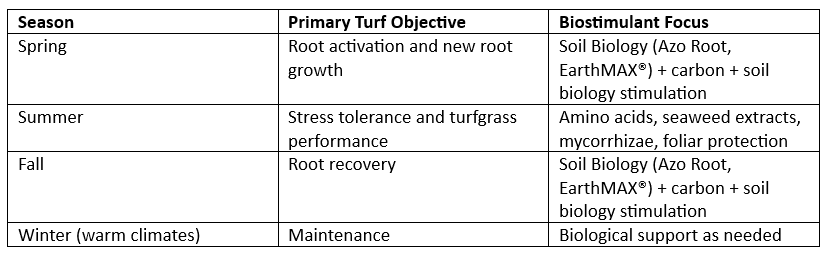
Matching Biostimulants to Seasonal Turf Needs
A successful program aligns products with turf physiology rather than the calendar alone.
Soil temperature — not air temperature — should guide application timing whenever possible.
Why Superintendents Are Integrating Biostimulants Year-Round
Modern golf course management increasingly emphasizes efficiency and resilience. Biostimulants help maximize returns from existing fertility and agronomic practices by improving how turf and soil function together.
Programs centered on root health are curated with the goal of bringing your turf, improved consistency across playing surfaces, greater stress tolerance during extreme weather, enhanced nutrient utilization, faster recovery from traffic and mechanical practices, and reduced performance swings between seasons. The Harrell's root and soil health portfolio of products has been intentionally designed and diligently researched to fit this approach with a collection of foundational tools for strengthening turf where performance truly begins — below the surface.
Building a Stronger Foundation for Better Turf
High-performing turf is not built through single applications or reactive inputs. It develops through consistent support of soil biology, root growth, and plant physiology throughout the year. By integrating biostimulants strategically, especially root- and soil-focused tools during key soil temperature windows, superintendents can promote healthier roots, more resilient turf, and improved playability season after season.
To learn more about any of the biostimulants mentioned in this article and see how you can further optimize your root program through every season, connect with your Harrell’s Rep. They are your best resource for product knowledge, program optimization, and root health.
Related Resources

In addition to being the nation’s largest distributor of branded fungicides, herbicides, and insecticides, Harrell’s produces custom-blended fertilizers, specialty liquids, and wetting agents. Additionally, Harrell’s is the exclusive US owner, formulator, and distributor of all POLYON® branded products.
TEAM HARRELL'S
STAY EQUIPPED
Never stop learning. Access FREE continuing education courses from Harrell’s.
LET'S GROW
PRESS RELEASES
PRESS RELEASES
STAY EQUIPPED
Never stop learning. Access FREE continuing education courses from Harrell’s.
LET'S GROW