

Turfgrass Health Pro Tips
8/18/2025 - By Dr. Paul Giordano
As summer begins to wind down, turfgrass managers are often left assessing the toll that heat, drought, compaction, and disease pressure have taken on their surface, especially below ground. While chlorotic leaves and thinned canopies capture immediate attention, it is the unseen damage beneath the surface that can have the longest-lasting impact on turf performance.
The reality is this: root systems often suffer the most during summer stress, and unfortunately, they are also the slowest to recover. In weakened turf, roots become shallow, fragmented, and inefficient at nutrient and water uptake—setting up a compounding cycle of stress and recovery failure if not properly addressed.
Why Roots Struggle in Summer
Summer stress creates a hostile environment for root growth. High soil temperatures, especially above 86°F, begin to impair root elongation and respiration. At the same time, drought conditions force plants into survival mode, reallocating resources away from roots and toward minimal leaf maintenance. Add in anaerobic conditions from saturated soils or heavy rainfall events, and root dieback is inevitable.
Additionally, the turf's rhizosphere biology—the complex community of microbes surrounding roots—is disrupted by stress and chemical inputs, reducing the natural support system that healthy turf depends on for nutrient solubilization and hormone production.
Fall: A Critical Window for Reviving Roots
The good news is that early fall provides a critical opportunity to reboot root systems. Cooler air temperatures combined with still-warm soils create ideal conditions for root regrowth. But this window is short, typically six to eight weeks, so proactive strategies are essential.
Here is what that recovery plan should include:
Aerification - To relieve compaction, oxygenate, and stimulate new root growth.
Balanced fertility - To support root metabolism without forcing excessive top growth.
Consistent moisture management - To avoid reintroducing drought stress.
Biostimulant inputs - To accelerate biological recovery and rebuild microbial partnerships in the rhizosphere.
The Role of Biostimulants in Reviving Roots
Biostimulants offer a unique and effective way to support stressed turf. Unlike traditional N-P-K fertilizers, biostimulants work by enhancing natural biological processes that contribute to root growth, stress resistance, and nutrient uptake.
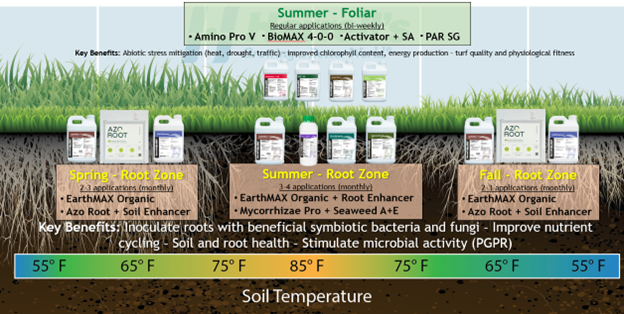
Harrell’s offers a powerful lineup of biostimulants designed to restore and fortify turf root systems following summer stress:
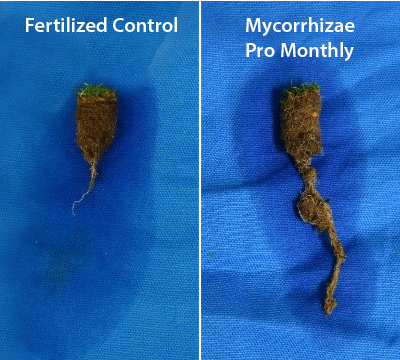
Mycorrhizae Pro for Reviving Roots
Mycorrhizae form symbiotic associations with turfgrass roots, dramatically improving water and nutrient absorption, particularly phosphorus. After summer stress has reduced fine root density, reintroducing beneficial mycorrhizal fungi can restore root efficiency and extend the functional root zone.
Learn more about Mycorrhizae Pro.
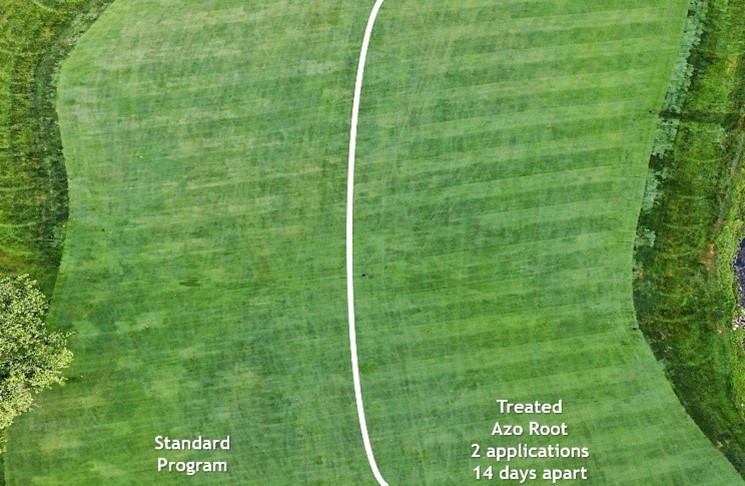
Azo Root™ for Reviving Roots
This liquid formulation includes a specialized strain of Azospirillum brasilense, a nitrogen-fixing bacterium known for promoting root development and elongation. Ideal during fall recovery, Azo Root stimulates new root hair production and supports improved nutrient uptake in depleted soils.
Learn more about Azo Root™.
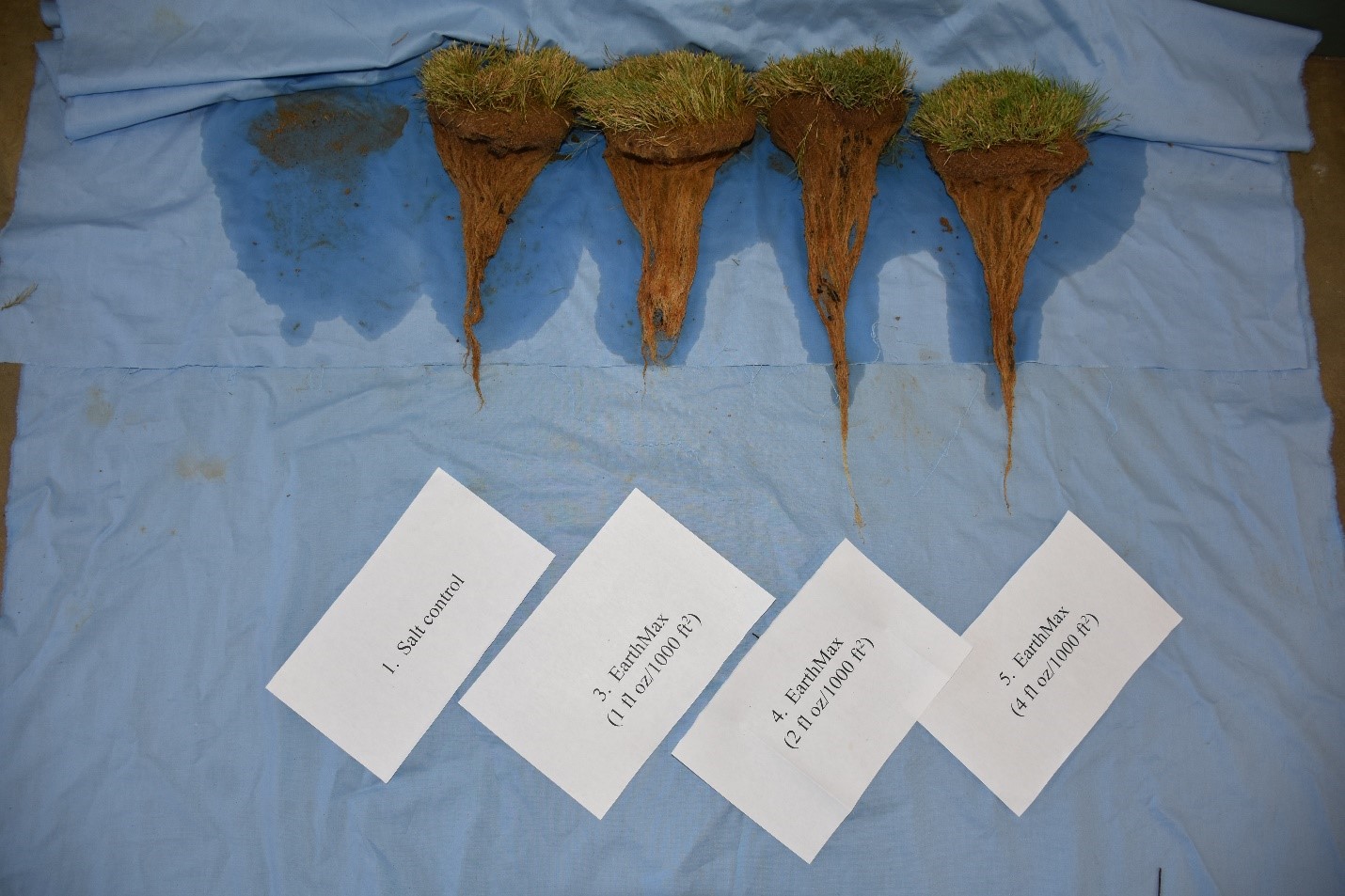
EarthMAX® Organic for Reviving Roots
A microbial-rich soil conditioner packed with carbon, humic acids, and beneficial bacteria, EarthMAX® Organic helps revitalize the soil biology that turf relies on for long-term health. It is especially useful in areas affected by compaction, chemical stress, or organic matter depletion. EarthMAX® Organic is an OMRI certified product for organic use, bringing you another level of confidence in every application.
Learn more about EarthMAX® Organic.
Bottom Line: Do Not Wait to Revive Roots
If summer takes a toll on your turf, do not just wait for cooler weather to fix things. Be intentional about root recovery. Incorporating biostimulants like Mycorrhizae Pro, Azo Root™, and EarthMAX® Organic into your fall program can help you capitalize on the short window for root regrowth and set your turf up for success going into winter and beyond.
Contact your Harrell’s representative today for tailored recommendations or to learn more about Harrell’s complete biostimulant lineup.
Related Resources

In addition to being the nation’s largest distributor of branded fungicides, herbicides, and insecticides, Harrell’s produces custom-blended fertilizers, specialty liquids, and wetting agents. Additionally, Harrell’s is the exclusive US owner, formulator, and distributor of all POLYON® branded products.
TEAM HARRELL'S
STAY EQUIPPED
Never stop learning. Access FREE continuing education courses from Harrell’s.
LET'S GROW
PRESS RELEASES
PRESS RELEASES
STAY EQUIPPED
Never stop learning. Access FREE continuing education courses from Harrell’s.
LET'S GROW