

Phosphite Basics: How Title Phyte Works to Control Turf Diseases
6/16/2022 - By Dr. Paul Giordano

For many years, Harrell's Title Phyte has been a beloved staple in the turf health and nutritional programs of golf course superintendents. More recently, Title Phyte achieved EPA registration as a systemic fungicide labeled for the control of several turf and ornamental diseases, including Pythium blight, Pythium root rot, anthracnose and others. So, how does Title Phyte work to control these important diseases? The answer is somewhat complicated and involves technical, regulatory, and marketing elements of the larger turfgrass and agricultural industries.
Phosphites as Fungicides to Control Turfgrass Diseases
Title Phyte Systemic Fungicide contains mono- and di-potassium phosphite as the active ingredient. This falls into the broader category of fungicides known as the phosphonates (FRAC Code P07). Phosphonates are a family of fungicides that use phosphonic acid as the basic building block. Phosphonic acid is a very strong acid (pH 2.2) that needs to be modified with other chemicals, such as potassium hydroxide, to raise the pH before it can be applied directly to plants.
When combined with potassium hydroxide, we get potassium dihydrogen phosphite (KH2PO3) or dipotassium hydrogen phosphite (K2HPO3) - collectively known as PHOSPHITES (PO33-). Other products use ethanol and aluminum ions to neutralize the phosphonic acid, which creates a similar active ingredient with a slightly different chemical makeup, known as fosetyl-al or aluminum tris O-ethyl.
Are Phosphites like Phosphate…the Fertilizer?
In general, no. Phosphate (PO43-) is chemically similar to phosphite, but with key structural differences in their molecular makeup. These differences allow only phosphate molecules to bind to internal plant enzymes, which then catalyze various metabolic processes like photosynthesis, ATP production, and respiration. Because phosphite molecules cannot bind to these enzymes in the same manner, phosphites are not considered metabolically useful forms of phosphorus in plants (McDonald et al., 2001).
How Does Title Phyte work?
Over the years, there has been some debate on how phosphites work to inhibit or control plant diseases. The answer is twofold:
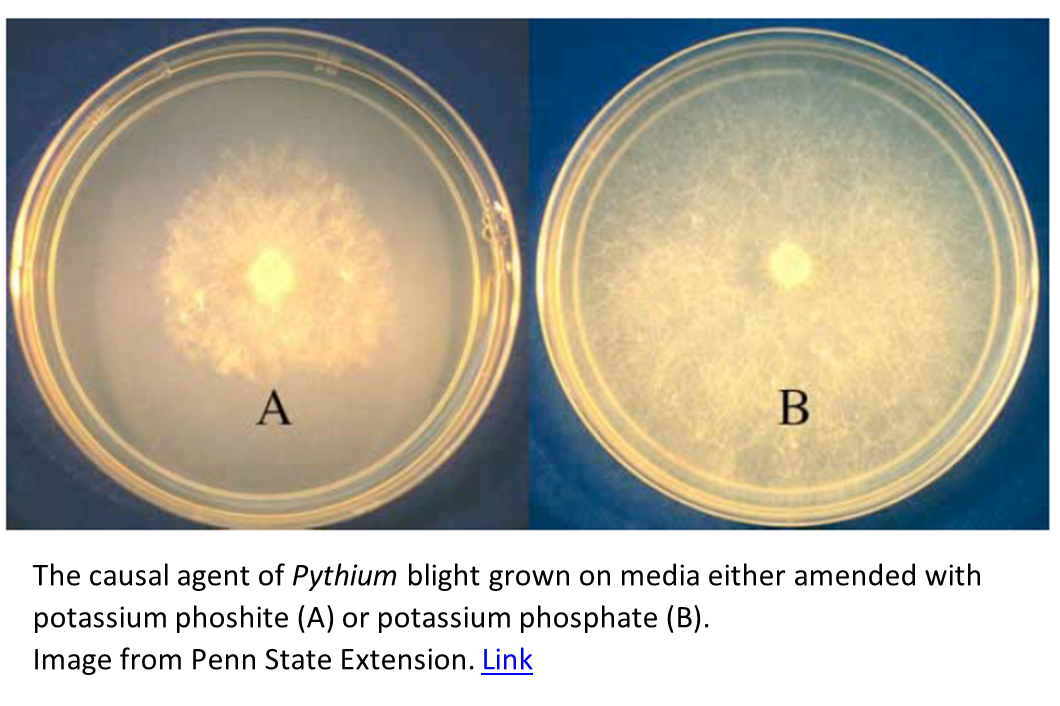
- Direct fungicidal inhibition: It is well established that phosphites like Title Phyte have fungistatic properties against certain Oomycete plant pathogens such as Pythium and Phytophthora spp. This is also true for turf-specific pathogens like those that cause Pythium blight and root rot. More recently, research has shown that phosphite can also have direct inhibitory effects on the growth of Microdochium nivale - the causal agent of Microdochium patch and pink snow mold in turfgrass (Dempsey et al., 2018). Phosphites interfere with phosphate metabolism in fungal cells, which results in a general decrease in fungal growth over time.
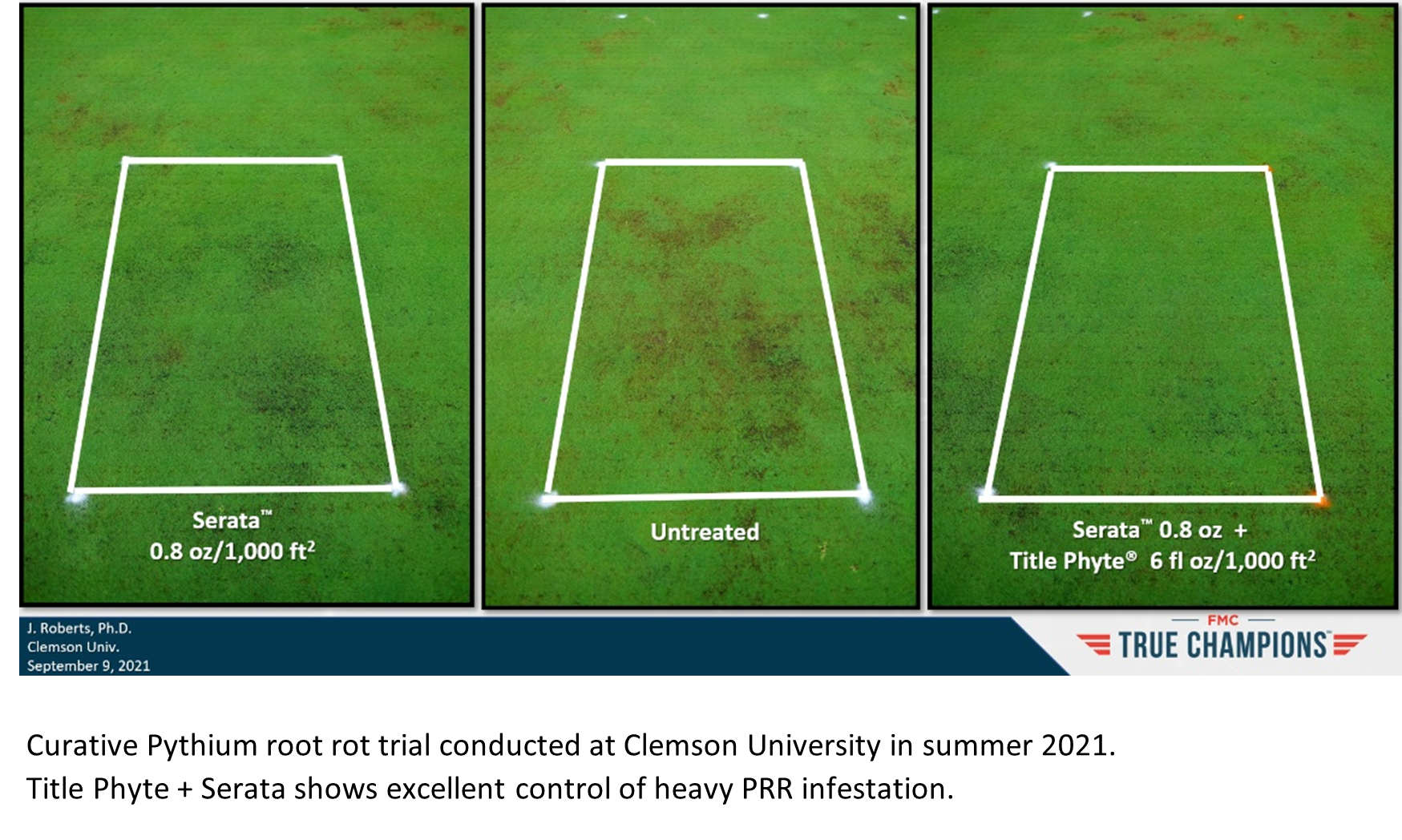
Once absorbed by plants and incorporated into cells as phosphite ions, Title Phyte conveys fungitoxic effects on the pathogen. It’s important to note that while most fungicidal compounds used in turfgrass management are either contacts or acropetal penetrants (translocated only upward in the xylem), Title Phyte has the capacity to move in both the xylem and phloem. This allows for movement from leaf tissues to crowns and roots of the turfgrass plant - making Title Phyte a unique and particularly effective fungicide for the control of root diseases, like Pythium root rot and root dysfunction.
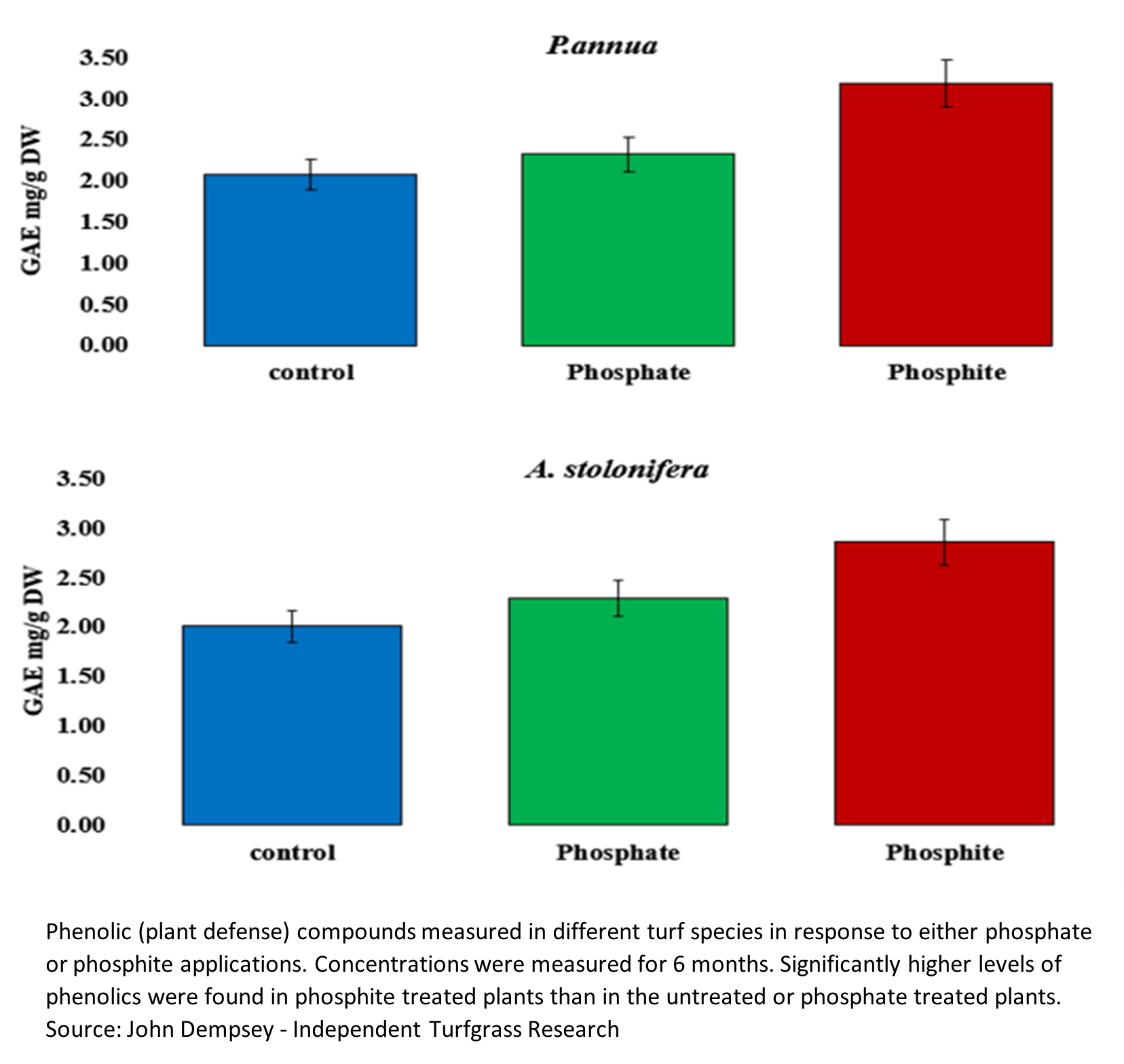
- Stimulation of natural plant defenses: Many studies have shown that phosphites do more when it comes to disease control. It’s thought that the mode of action also contributes to physical and chemical defenses within the treated plants. Research in model plant systems has shown accelerated increases in phenolic compounds and other resistance markers, known as phytoalexins, in response to phosphite treatments. Other plant defense enzymes have also been shown to be elevated in the presence of high phosphite concentrations. Research by Dempsey et al., have shown similar responses in both Poa annua and creeping bentgrass systems.
Title Phyte as a Staple in Any Agronomic Program
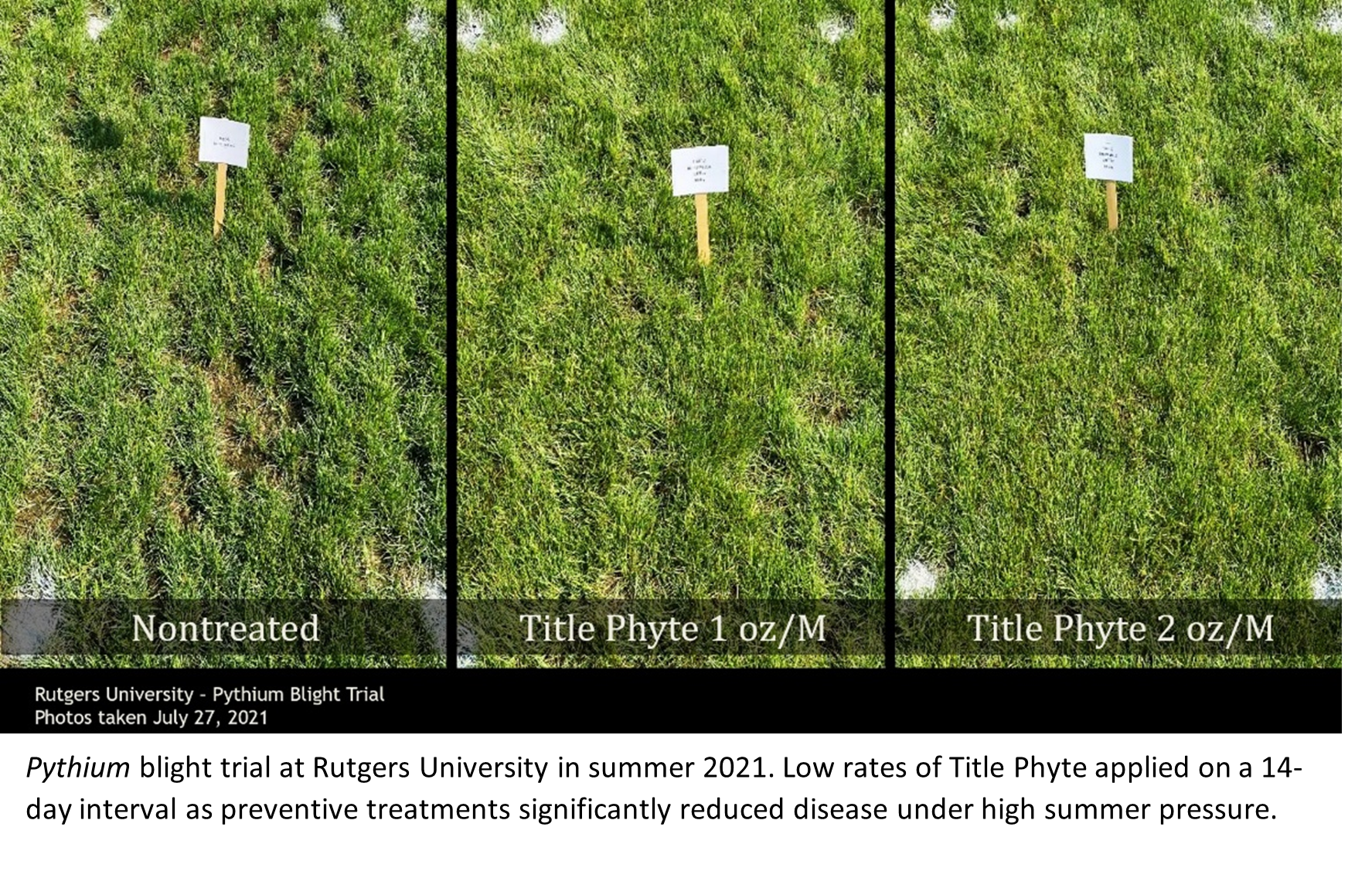
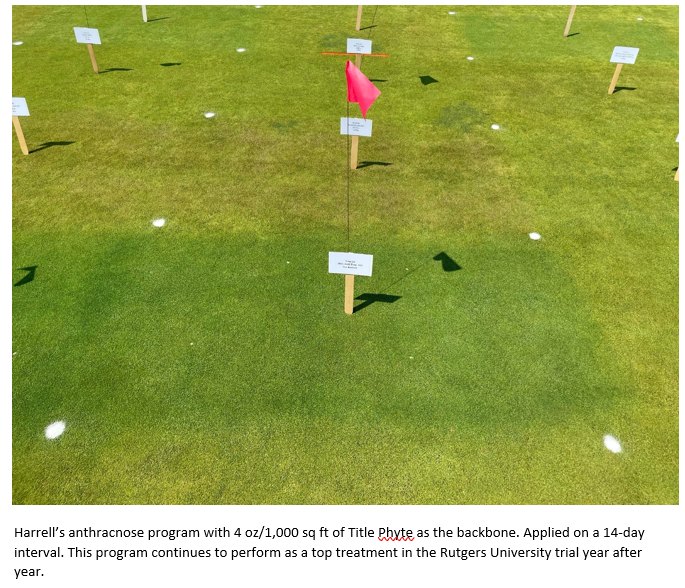
There’s a good reason phosphite products like Title Phyte have become a staple in so many turf management programs. The contribution to turf nutrition and plant health disease control is often the difference between life and death - especially during times of peak stress. Harrell’s continues to explore new research with Title Phyte to further understand the benefits on key diseases and in programs with other turf health products. To date, Title Phyte’s performance on Pythium blight, Pythium root rot, anthracnose, and in summer programs continues to impress.
Check out a few of the highlights below and be sure to reach out to your Harrell’s representative to see how Title Phyte Systemic Fungicide can maximize your disease management program.
References
Dempsey, J.J., Wilson, I., Spencer-Phillips, P.T.N. and Arnold, D. (2018), Suppression of the in vitro growth and development of Microdochium nivale by phosphite. Plant Pathol, 67: 1296-1306. https://doi.org/10.1111/ppa.12846
Cook, P. J. Inhibition of Pythium Spp. And suppression of Pythium blight and anthracnose with phosphonate fungicides. MS Thesis. Penn State University. 2009. https://etda.libraries.psu.edu/files/final_submissions/4873
Allison E. McDonald, Bruce R. Grant & William C. Plaxton (2001) PHOSPHITE (PHOSPHOROUS ACID): ITS RELEVANCE IN THE ENVIRONMENT AND AGRICULTURE AND INFLUENCE ON PLANT PHOSPHATE STARVATION RESPONSE, Journal of Plant Nutrition, 24:10, 1505-1519, DOI: 10.1081/PLN-100106017
Related Resources

In addition to being the nation’s largest distributor of branded fungicides, herbicides, and insecticides, Harrell’s produces custom-blended fertilizers, specialty liquids, and wetting agents. Additionally, Harrell’s is the exclusive US owner, formulator, and distributor of all POLYON® branded products.
TEAM HARRELL'S
STAY EQUIPPED
Never stop learning. Access FREE continuing education courses from Harrell’s.
LET'S GROW
PRESS RELEASES
PRESS RELEASES
STAY EQUIPPED
Never stop learning. Access FREE continuing education courses from Harrell’s.
LET'S GROW