

Types of Wetting Agents
5/24/2024 - By Dr. Raymond Snyder
Wetting agents are most often used to alleviate undesirable soil conditions such as water repellency, preferential flow, and slow water infiltration. Improving these undesirable conditions helps turf managers utilize water resources more efficiently and economically, improve plant health, and increase the visual quality of a playing surface.
Types of Wetting Agents
Wetting agents can have varying effects on soil moisture relations depending on their formulation chemistry. Wetting agent formulations are often designed for water penetration or retention, or to impart a balance of penetration and retention. These products may be formulated with less than 100% active ingredient content to facilitate irrigation injection, turf safety, and operational efficiency.
So, what are the different types of wetting agents?
Soil Penetrants
Soil penetrants, which are designed to promote rapid infiltration and distribution of water, are valuable tools. They afford turf managers control over their soil moisture contents. Soil penetrants are often applied monthly but can also be applied biweekly as needed. These products are often paired with fungicides and other soil health products to maximize distribution throughout the root zone. Irrigation following application is recommended. This positions the penetrant for maximum effectiveness while also positioning the soil health products for maximum efficacy.
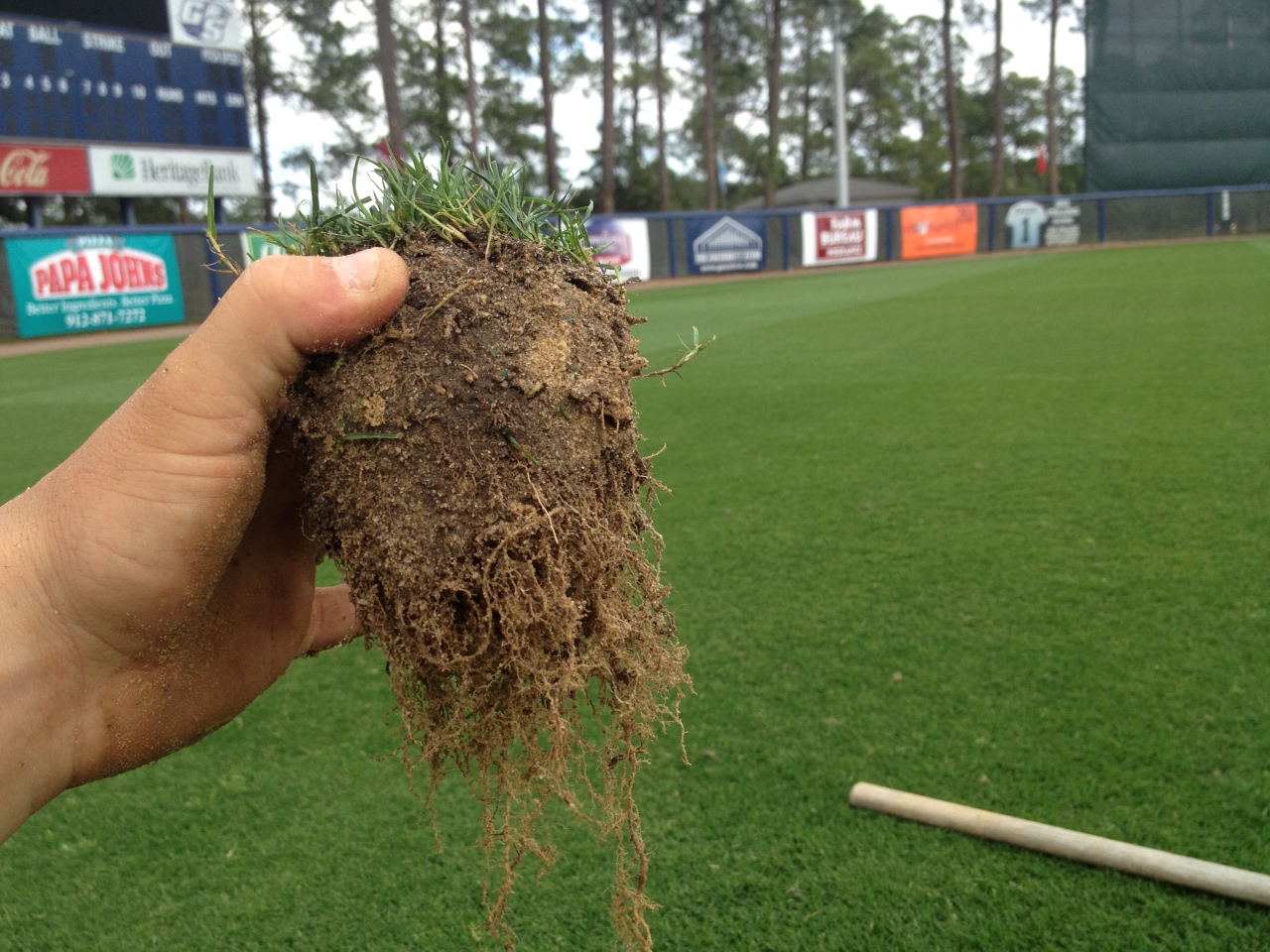
Harrell’s HydroMAX® SurfaceRx™
SurfaceRx™ is the latest addition to Harrell’s HydroMAX® lineup of wetting agents, adding a powerful new formula designed for pros. SurfaceRx is a true innovation in surfactant technology that isn’t just about water movement or moisture management. It’s about plant protection and turf health. We’re giving superintendents a tool that supports turf performance, resiliency, and maximum soil moisture control.
Traditional wetting agents primarily reduce surface tension, helping water enter the soil more easily. SurfaceRx takes penetrant technology one step further by incorporating osmotech that supports the turf’s natural hydration mechanisms. This means that the plant isn’t just absorbing water more efficiently; it’s better equipped to cope with abiotic stress like heat and drought.
Independent research conducted at Virginia Tech confirmed that SurfaceRx can lead to:
• Stronger root surface area and volume
• Higher chlorophyll content and leaf color intensity
• Better photochemical efficiency under stress
• Improved moisture distribution across the turf profile
These outcomes help turf remain competitive in appearance and performance even under water-limiting conditions.
Want to dive deeper into turf science? Check out our related wetting agent primer for a complete hydration strategy.
Moisture Retainers
Also known as moisture managers, moisture retainers are formulated to increase soil moisture near the root zone surface. Retainers are especially useful on soils with high sand content, such as newly constructed greens. Retainers are used weekly at low rates to promote moisture in the top one to three inches of soil during periods of low rainfall. This low-rate weekly strategy, combined with foliar nutrients, provides maximum flexibility during periods of increased rainfall. The wetting agent's effectiveness is short-lived when applied at rates up to 1fl oz per thousand square feet.
Hybrid-Type Wetting Agent Formulations
Hybrid formulations are prepackaged combinations of penetrant and retainer surfactants. These products are designed to impart water-penetrating characteristics while promoting soil moisture content that would otherwise be absent if a pure penetrant were utilized. Hybrids are most often used on tees and fairways at rates ranging from 1 to 3 gallons per acre. Hybrid use on putting greens is an option for those who desire water infiltration and distribution while minimizing the potential for “hot spots” that require labor-intensive hand watering.
Wetting agents containing less than 100% a.i. are great economical, utility-type products due to their ability to be injected into irrigation and applied through ground sprayers. Application via irrigation is an excellent means of treating broad acreage without labor; however, a properly functioning irrigation system with injection capability is necessary for maximum benefit. Consider targeting one to two quarts per acre throughout the month when injected.
These wetting agents are also useful when applied with ground equipment and coupled with foliar nutrition, fungicides, and plant growth regulators. Use rates range from 1 to 3 fl oz per thousand square feet. The application frequency is higher when using low a.i. wetting agents due to both the low application rate and the overall potency of these products.
Fleet® 100 and the Effect of Wetting Agents on Plants
The direct effect of wetting agents on plant health is often associated with improved visual color and quality, coupled with a reduction in localized dry spot occurrence. The below-ground plant health response to wetting agent applications is not often observed or quantified when conducting wetting agent research. Coupling above and below-ground responses might help to provide an increased awareness of the agronomic value of wetting agent applications.
During the Summer of 2022, we conducted a study with Xunzhong Zhang, Ph.D., at Virginia Tech University to evaluate the effects of Fleet® 100 on turf quality, physiological fitness, and root growth during Summer stress. The field study was conducted on a creeping bentgrass putting green at the Virginia Tech Turfgrass Research Center in Blacksburg, VA. Two of the treatments were a fertilized control, and Fleet 100 wetting agent applied at 5 fl oz/1000 sq ft/month.
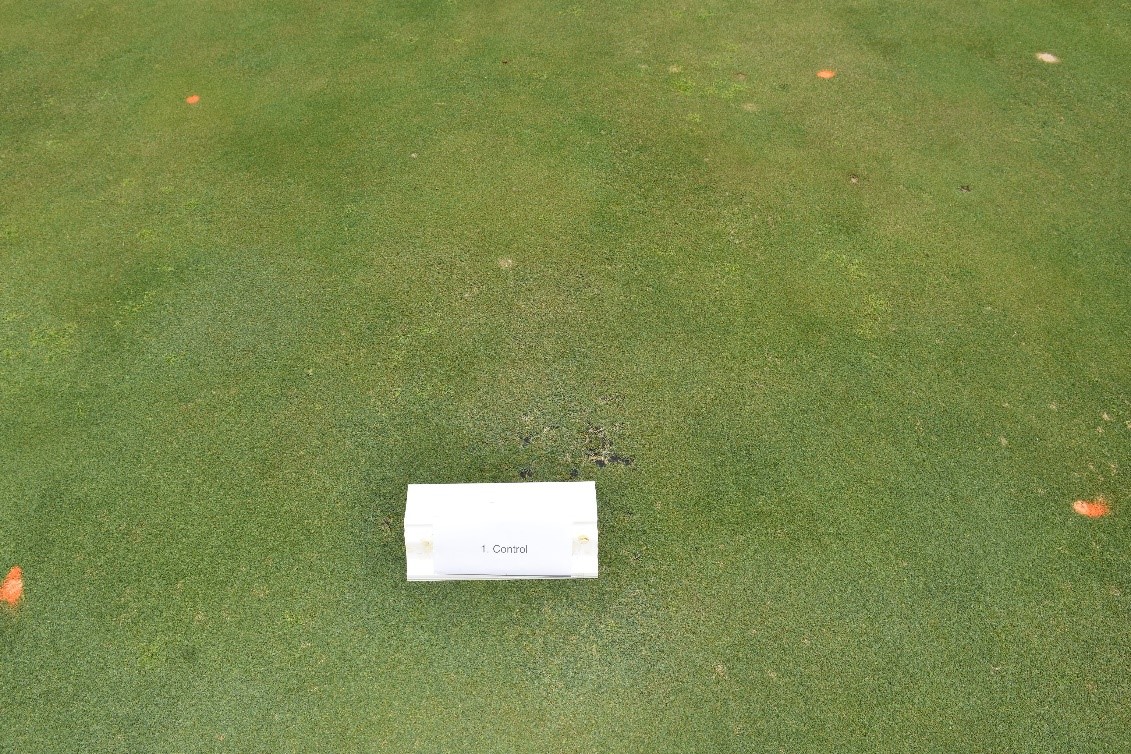
Figure 1 Fertilized Control
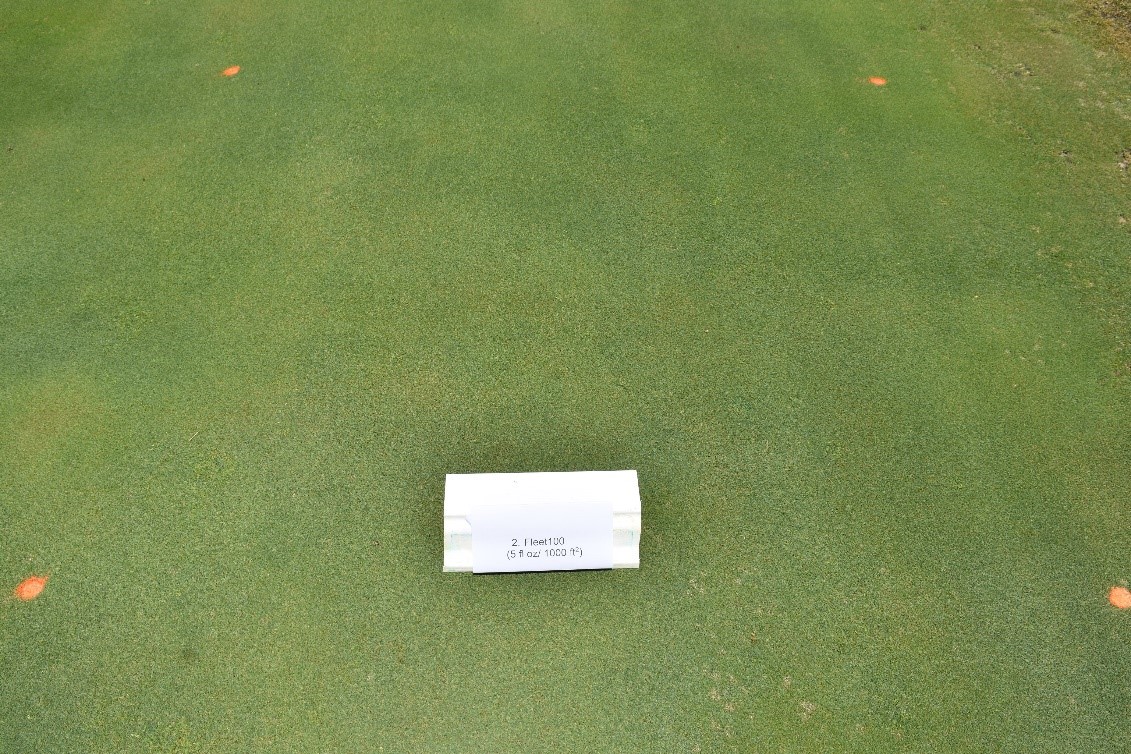
Figure 2 Fleet® 100
All treatments received the same fertility input (0.15 lb. N/1000 sq ft biweekly), with a total of three treatment applications made during the 12-week study, which occurred from June 8 to August 31. Irrigation was applied after application at about 0.125” and up to 0.25” water without puddling. Measurements took place on day 0, 14, 28, 42, 56, 70, and 84 days after initial treatment. Finally, two dry-down cycles occurred from June 21-30 and July 11-20.
Wetting Agent Results and Discussion
Turf Quality - Foliar application of Fleet 100 improved turf quality beginning 22 days after initial application (June 30) till the end of the trial.
Leaf Color – Fleet 100 improved leaf color ratings relative to the control as measured from June 22 through August 31.
Leaf Chlorophyll and Proline - Fleet 100 increased leaf chlorophyll content when compared to the control, as measured from July 6 through August 31.
Root Biomass, Characteristics, and Viability - Fleet 100 increased root biomass relative to the control and improved root viability.
Contact Your Harrell’s Rep and See Our Product Catalog
In summary, monthly applications of both SurfaceRx™ and Fleet® 100 improved turf quality, leaf color ratings, chlorophyll content, root biomass, and root viability in creeping bentgrass putting greens beginning about 3 weeks after initiation of treatment. Additionally, SurfaceRx provided increased photochemical efficiency and improved moisture distribution across the turf profile.
Reach out to your local Harrell's Representative to learn more about your wetting agent options and check out our full product catalog to see all of our offerings.
Related Resources

In addition to being the nation’s largest distributor of branded fungicides, herbicides, and insecticides, Harrell’s produces custom-blended fertilizers, specialty liquids, and wetting agents. Additionally, Harrell’s is the exclusive US owner, formulator, and distributor of all POLYON® branded products.
TEAM HARRELL'S
STAY EQUIPPED
Never stop learning. Access FREE continuing education courses from Harrell’s.
LET'S GROW
PRESS RELEASES
PRESS RELEASES
STAY EQUIPPED
Never stop learning. Access FREE continuing education courses from Harrell’s.
LET'S GROW