

Winter Fertilizing Strategies for Growers
12/15/2020 - By Lynn Griffith
The dead of winter—late January & February—will be here before you know it. Winter, of course, means different things to different growers, depending on where they are in the world. On any given day in February, a boxwood grower up north could be dealing with a snowstorm and freezing temperatures while a Florida grower might be fertilizing their tropical plants in flip flops. How growers deal with winter conditions depends on a multitude of variables, including the type of crops they’re growing and the production techniques they’re using. However, despite all of those variables, there are still some general principles for winter nutrition that growers can utilize no matter where they are in the country.
How much nitrogen?
One general guideline is that you normally don’t want to apply too much nitrogen in the winter. The idea is that if you generate soft new growth on crops, a frost or cold snap could come and burn off that growth.
On the other hand, there’s significant research showing that crops whose nutritional needs are fully satisfied will resist cold better than crops that are deficient in something.
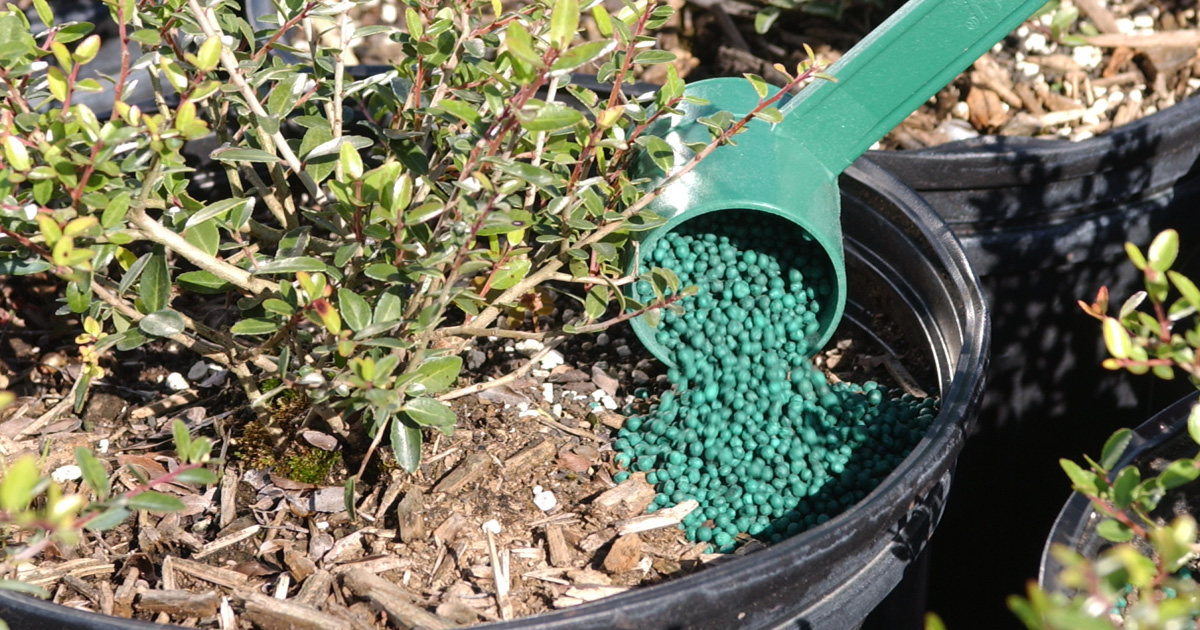
So, what’s the right amount? Unfortunately, there’s no one-size-fits-all answer. The amount of nitrogen a grower should apply in the dead of winter depends on the situation. Greenhouse growers preparing spring crops in heated facilities will generally still be applying nitrogen fertilizer on a regular basis. However, nurseries in the Midwest and Northeast growing woody ornamentals have their crops buttoned up tight, and they don’t want to apply any nitrogen at all. For them, POLYON® Controlled-release fertilizer is a great option because it won’t release under those cold soil temperatures.
The nitrate form of nitrogen is often preferred during winter, for a couple of reasons.
- It doesn’t have to convert chemically to be available for plant uptake. In cool soil, nitrogen conversion is slowed significantly.
- Nitrate uptake is regulated in part by the carbohydrate content within the plant. In winter, days are shorter and the sun angle is lower, so crops are producing fewer carbohydrates. Nitrate nitrogen in winter tends to give you more compact new growth because of the carbohydrate regulation. On the other hand, urea and ammonia can sometimes cause stretched new growth during cool and dark conditions. Where growers are using urea and ammonia nitrogen, they should be sure they have enough nickel and molybdenum to convert these sources to nitrate. Harrell’s MAX® Minors is an excellent source of both nickel and molybdenum.
Other micronutrients are also important for cold tolerance.
Two of the most important ones are boron and zinc, as these nutrients both contribute directly to carbohydrate metabolism in the plant. Wherever winter crops have foliage, it’s not a bad idea to apply a foliar spray with a micronutrient blend such as Harrell’s MAX® Minors. It may help with cold resistance in some cases. I also like to spray minors on cold sensitive crops in the fall before plants go dormant.
Potassium nutrition is also very important for cold and stress tolerance in plants.
Potassium has over 200 known functions in plant physiology, including some that help plants deal with cold and stress tolerance:
- Potassium serves as an electrolyte in cells. Leaf cells with good potassium nutrition will have a slightly higher salt content in the cytoplasm, which can make leaf cells a little harder to freeze.
- Potassium helps regulate the guard cells which open and close the stomates. Plants need to be able to control the opening and closing of the stomates in order to help resist cold, drying winds.
Silicon is also known to increase plant cold tolerance in many situations.
Silicon is important for the formation of strong, sturdy cell walls, which help with cold tolerance.
Growers have an easy and convenient option for applying both potassium and silicon to their plants; they can spray with Harrell’s MAX® Potassium Silicate. Such sprays can provide the cold-tolerance benefits of both potassium and silicon to cold-sensitive crops without inducing new plant growth.
So, if you’re trying to nail down a winter fertility program for your plants, keep these considerations in mind. And give your Harrell’s rep a call today to learn more about the different solutions available as well as which ones might work best for your situation.
About Lynn Griffith
A graduate of Duke University, Lynn Griffith has been involved with the horticulture industry for decades as a professor, professional speaker, author, consultant and head nursery grower. Lynn provides his expertise in plants and soil in the form of educational courses and consultation for Harrell's LLC.
Related Resources

In addition to being the nation’s largest distributor of branded fungicides, herbicides, and insecticides, Harrell’s produces custom-blended fertilizers, specialty liquids, and wetting agents. Additionally, Harrell’s is the exclusive US owner, formulator, and distributor of all POLYON® branded products.
TEAM HARRELL'S
STAY EQUIPPED
Never stop learning. Access FREE continuing education courses from Harrell’s.
LET'S GROW
PRESS RELEASES
PRESS RELEASES
STAY EQUIPPED
Never stop learning. Access FREE continuing education courses from Harrell’s.
LET'S GROW