

Wildflowers: gardeners newest plant obsession
6/3/2020 - By Rebecca Perry and Dr. Adam Dale
If you’re looking to add more plants to your landscaping or golf course, why not add wildflowers? They have certainly become more popular in recent years and with good reason. Wildflowers benefit both people and the environment. They add color, texture, and life to the landscape. The more wildflowers you add, the more wildlife you’ll support. However, there is more to a successful wildflower plot than beauty and sprinkling a few seeds.
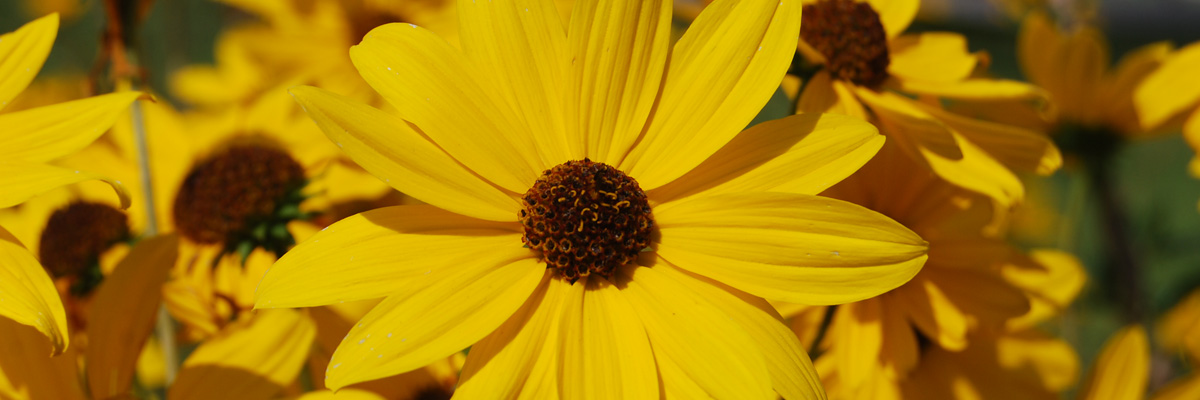 Swamp sunflower (Helianthus angustifolius). Credit: Rebecca Perry
Attracting more than people
Wildflowers can help support bees and many other beneficial insects in a time when research is finding widespread declines around the globe. I know what you’re thinking, “but I don’t want more bugs!” But having wildflowers (and many other flowering plants) in your landscape supports a more functional ecosystem. In addition to bees, these plants provide food that birds and predatory insects feed on. For example, a recent study at the University of Florida found that planting wildflowers increased natural pest control of fall armyworms in nearby turfgrass areas by attracting predatory wasps and flies that eat them. So, adding wildflowers to your landscape can make it prettier, but also reduce plant pests on nearby desirable plants.
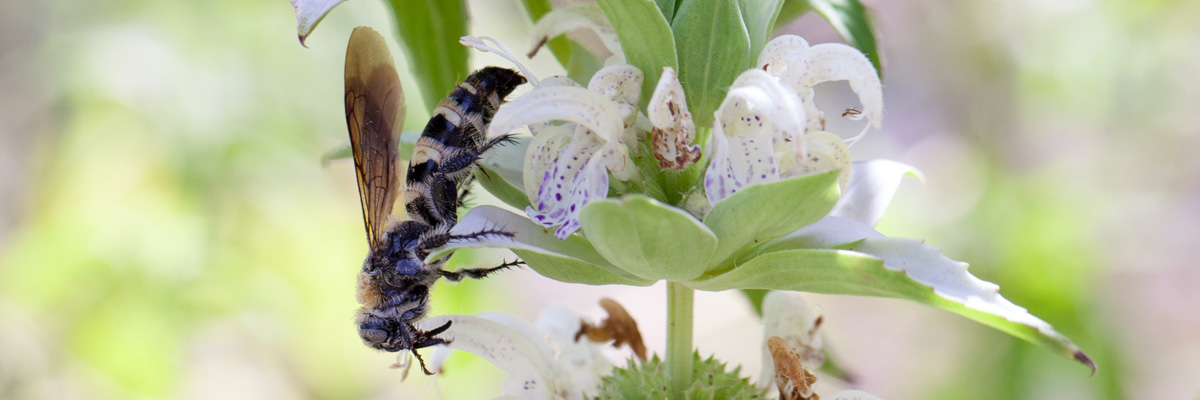 Parasitoid Scoliid wasp foraging on spotted beebalm (Monarda punctata). Credit: Matthew Borden
Wildflower gardening made easy
To encourage this diversity in your landscape, you’ll first need to do some research. I know, work, but I promise it will save you in the end. Hopefully reading this blog post will have you well on your way.
Your landscapes are far from the original native habitat. We’ve altered the soils, climates, and plant communities by creating these spaces. Therefore, as with many ornamental plants, the ‘right plant, right place’ principle and proper site preparation should be applied when designing your wildflower garden. Only when we adopt this method for gardening, do we reap the many benefits wildflowers provide!
Get to know the area where you’re considering adding wildflowers. Look closely at your soil and write down what you see. Do you know how well it retains water after a heavy rain? Is it mostly clay or sand? Do you have any organic matter? These are all important questions that need answers before you buy your wildflowers. But your soil isn’t the only important thing to know. You’ll also want to learn how many hours of sunlight your area receives. Based on these observations, you can select wildflower species that will survive and thrive.
There are many wildflowers to choose from. Start by selecting a variety of wildflowers that have different blooming seasons. Not only does this maximize the time you get to view pretty flowers, but also the time that insects have food and habitat. Depending on your geographic location, you may even have blooming wildflowers in winter! There are many resources available, such as the Xerces Society, UF/IFAS Extension documents, and state-specific sites such as the Florida Wildflower Foundation to help you select the right plant for your garden. Many of these resources, like the UF/IFAS link above, provide helpful details like color, bloom season, provenance, and plant hardiness zone.
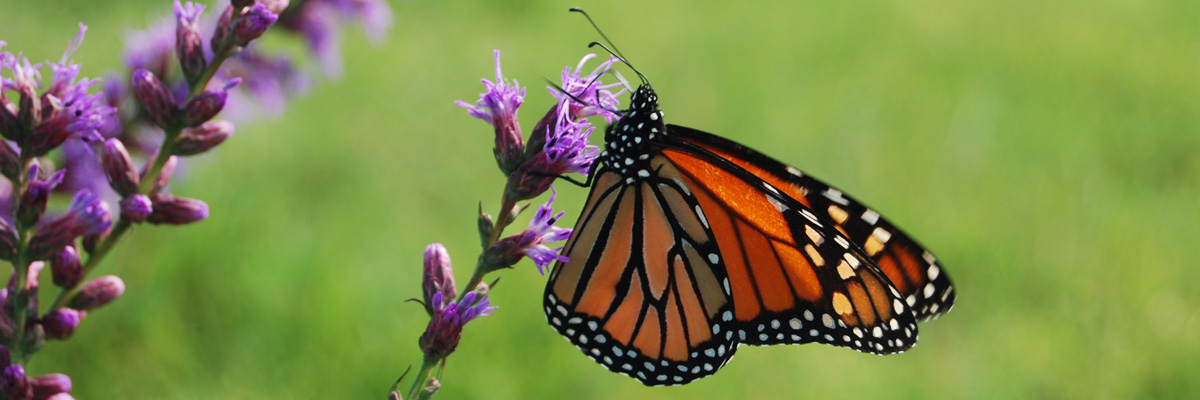 Monarch butterfly foraging on dense blazing star (Liatris spicata). Credit: Rebecca Perry
Several wildflowers are generally attractive to a wide range of beneficial insects, birds, and other wildlife. However, some attract specific insects and allow you to tailor your garden to meet specific goals. Trying to attract native bees and wasps? Species like bee balm, native milkweeds, and blanket flower may be great choices, among others. Looking for specific pest assistance? Research has shown that some species attractive to bees, like partridge pea, are also highly attractive to specialist wasps that attack invasive mole cricket pests. Looking for plants attractive to butterflies? Include nectar plants for adults such as blazing star and giant ironweed, host plants for caterpillars such as swamp milkweed for monarchs and queens, and passion vines for zebra longwings and fritillary species.
With the right plant selection, you’ll create a beautiful showplace and build a healthy habitat full of activity for all to enjoy.
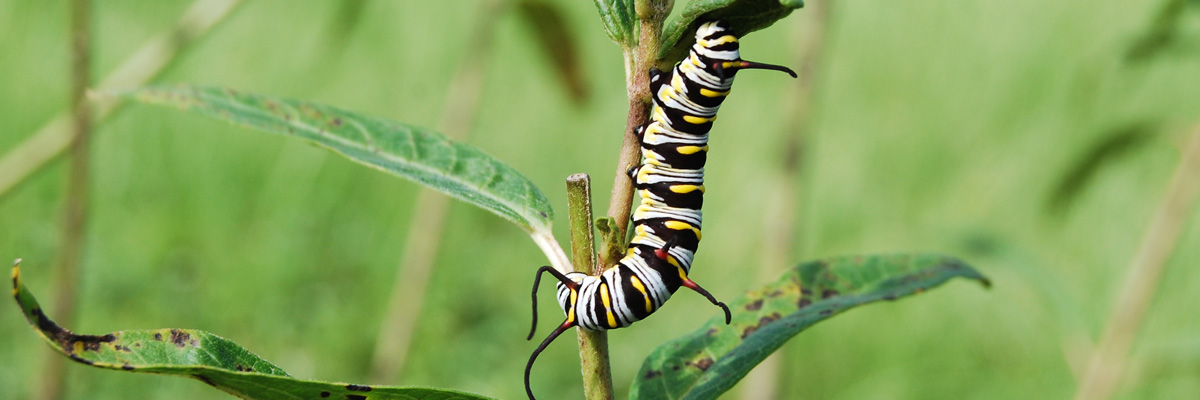 Queen caterpillar on swamp milkweed (Asclepias incarnata). Credit: Rebecca Perry
Related Resources

In addition to being the nation’s largest distributor of branded fungicides, herbicides, and insecticides, Harrell’s produces custom-blended fertilizers, specialty liquids, and wetting agents. Additionally, Harrell’s is the exclusive US owner, formulator, and distributor of all POLYON® branded products.
TEAM HARRELL'S
STAY EQUIPPED
Never stop learning. Access FREE continuing education courses from Harrell’s.
LET'S GROW
PRESS RELEASES
PRESS RELEASES
STAY EQUIPPED
Never stop learning. Access FREE continuing education courses from Harrell’s.
LET'S GROW