

Whiteflies - Managing a Pesky Insect
11/3/2022 - By Dr. Aaron Palmateer
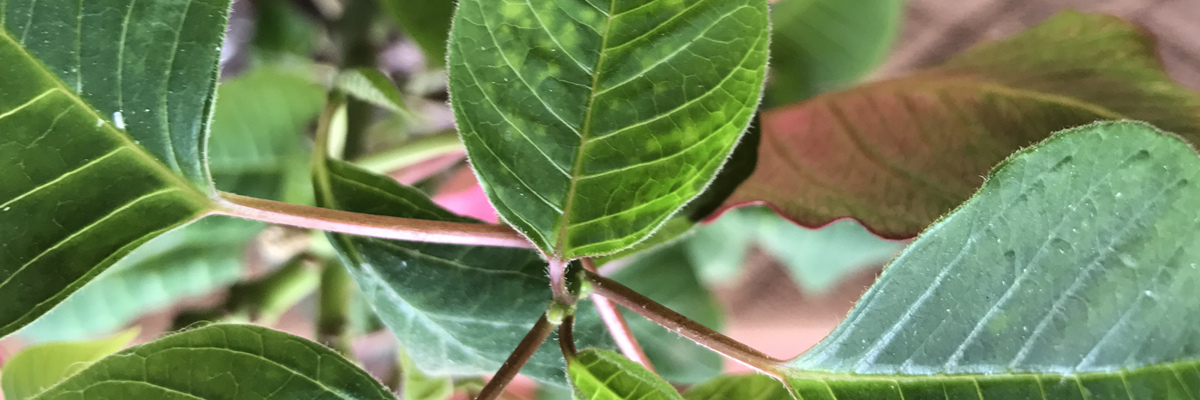
Whiteflies are tiny, sap-sucking insects that can be major pests to
ornamental plants. They can be a nuisance in greenhouse production on susceptible plants pretty much all
year round.
Whitefly Lifecycle
When actively feeding, whiteflies cause leaves to turn yellow and eventually brown as the leaf tissue dies. Large colonies typically develop on the undersides of leaves, where they normally lay tiny oblong eggs that range from yellow to white in color. After the eggs hatch, the young whiteflies go through four nymphal stages called instars.

Winged adults emerge from the last nymphal stage. All stages feed
by sucking plant juices from leaves and excrete excess liquid as drops of
honeydew when they feed. Whiteflies are extremely difficult to control when
populations are high, so preventative management is crucial.
There are numerous species of whitefly associated with ornamental
plants. The most common species include the greenhouse whitefly (Trialeurodes vaporariorum) and the sweet
potato whitefly (Bemisia tabaci). Both
have a wide range of plant hosts that include many ornamental crops and weeds.
Ornamental production areas with warmer climates, such as Florida
and California, provide opportunities for these pests to breed year-round,
moving from one host to another as plants go through the production cycle. Needless
to say, they're always
on the move.
Whitefly Honeydew Excretion Leads to Sooty Mold Fungi
In addition to the destructive feeding damage whiteflies cause on
plants, the honeydew excreted on the affected leaves provides a source of
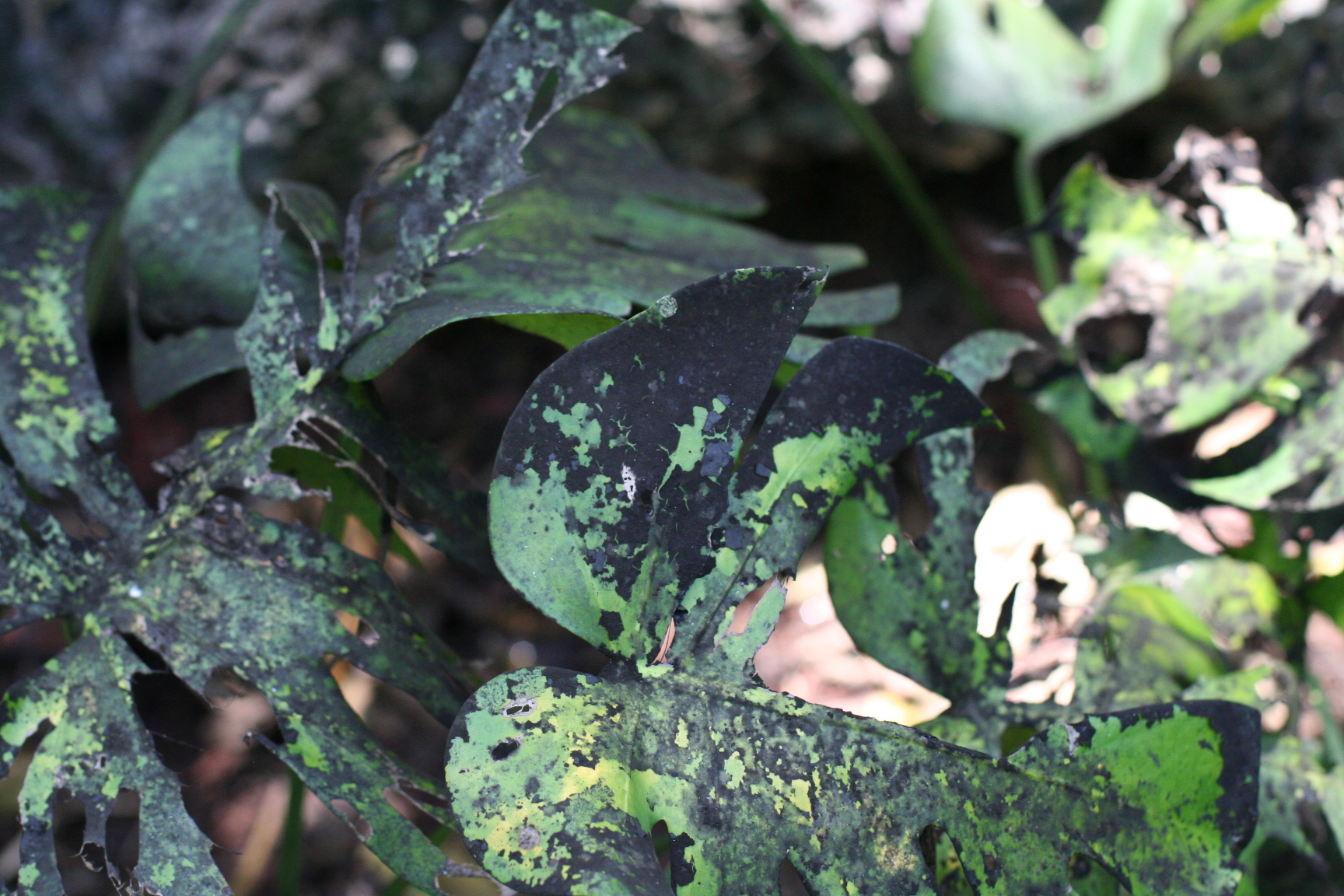
nutrition for sooty mold fungi. Sooty mold fungi are not plant pathogens but
readily colonize plant tissues as they feed on the honeydew excreted by the whiteflies.
The fungus causes any affected surfaces (plants, concrete, etc.)
to blacken from an abundance of spores and subsequently reduces overall plant
quality. The best way to eliminate sooty mold is to control the whiteflies that
are feeding on the plant.
Whitefly Management Strategies
Effective whitefly management in greenhouse and nursery production
requires a preventative
approach. Identify and closely monitor plants known to host high
populations of whiteflies because infestations will likely start on the most
susceptible plants. Many weeds are susceptible hosts for whiteflies and should
be removed or controlled with herbicides.
Yellow sticky traps can be used to aid in monitoring whiteflies
and, under high populations, even help to reduce their numbers. The use of
biological controls (live predators) can be very effective but limits the
choice of chemical insecticides and should be practiced with this
consideration.
|
Whitefly
Solutions |
|||
|
Solution1 |
Application Method |
Rate (per 100 gallons) |
Restricted
Entry Interval (REI) |
|
Chemical |
|
|
|
|
Mainspring® |
drench |
8 fl oz |
0 hours |
|
spray |
4 - 8 fl oz |
4 hours2 |
|
|
|
|
|
|
|
Safari® |
drench |
12 - 24 oz |
0 hours |
|
spray |
4 - 8 oz |
12 hours |
|
|
|
|
|
|
|
Rycar ® |
spray |
1.6 – 3.2 fl oz |
12 hours |
|
|
|
|
|
|
Savate™ |
spray |
2.0 – 4.0 fl oz |
12 hours |
|
|
|
|
|
|
Biological |
|
|
|
|
Velifer ™ |
spray |
3 – 13 fl oz |
12 hours |
|
|
|
|
|
|
1 See
insecticide labels for complete details. Always read and carefully follow
label instructions. |
|||
Contact Your Harrell's Rep!
The best resource you have to answer questions on whiteflies, preventative strategies, and recovery is your local Harrell's rep! reach out today, we're here to help.
Related Resources

In addition to being the nation’s largest distributor of branded fungicides, herbicides, and insecticides, Harrell’s produces custom-blended fertilizers, specialty liquids, and wetting agents. Additionally, Harrell’s is the exclusive US owner, formulator, and distributor of all POLYON® branded products.
TEAM HARRELL'S
STAY EQUIPPED
Never stop learning. Access FREE continuing education courses from Harrell’s.
LET'S GROW
PRESS RELEASES
PRESS RELEASES
STAY EQUIPPED
Never stop learning. Access FREE continuing education courses from Harrell’s.
LET'S GROW