

Whiteflies IPM Program
9/9/2021
 Whiteflies IPM Program
Whiteflies can take on many different looks and appearances as they grow from egg to adult. Eggs are laid by females on the underside of leaves. Within two weeks, the eggs hatch and a nymph emerges, at this point it doesn’t have any wings. The whitefly nymphs (“crawlers”) look more like a scale insect at this stage. These lightly colored nymphs are flat and circular to oval in shape, still located on the underside of the leaves, the whitefly nymph usually crawls around for a few hours before it settles down and starts to feed. It will remain in this place until it pupates. Whiteflies pierce the leaf tissue, they insert a feeding stylet, then they suck out the liquid, depriving plants of necessary nutrients. A whitefly remains a nymph for a couple days to a couple of weeks depending on temperature. It then pupates and becomes an adult which have two sets of wings. Most species are white in color, but some species can be pink to tan in color and can grow up to 1/16” in length.
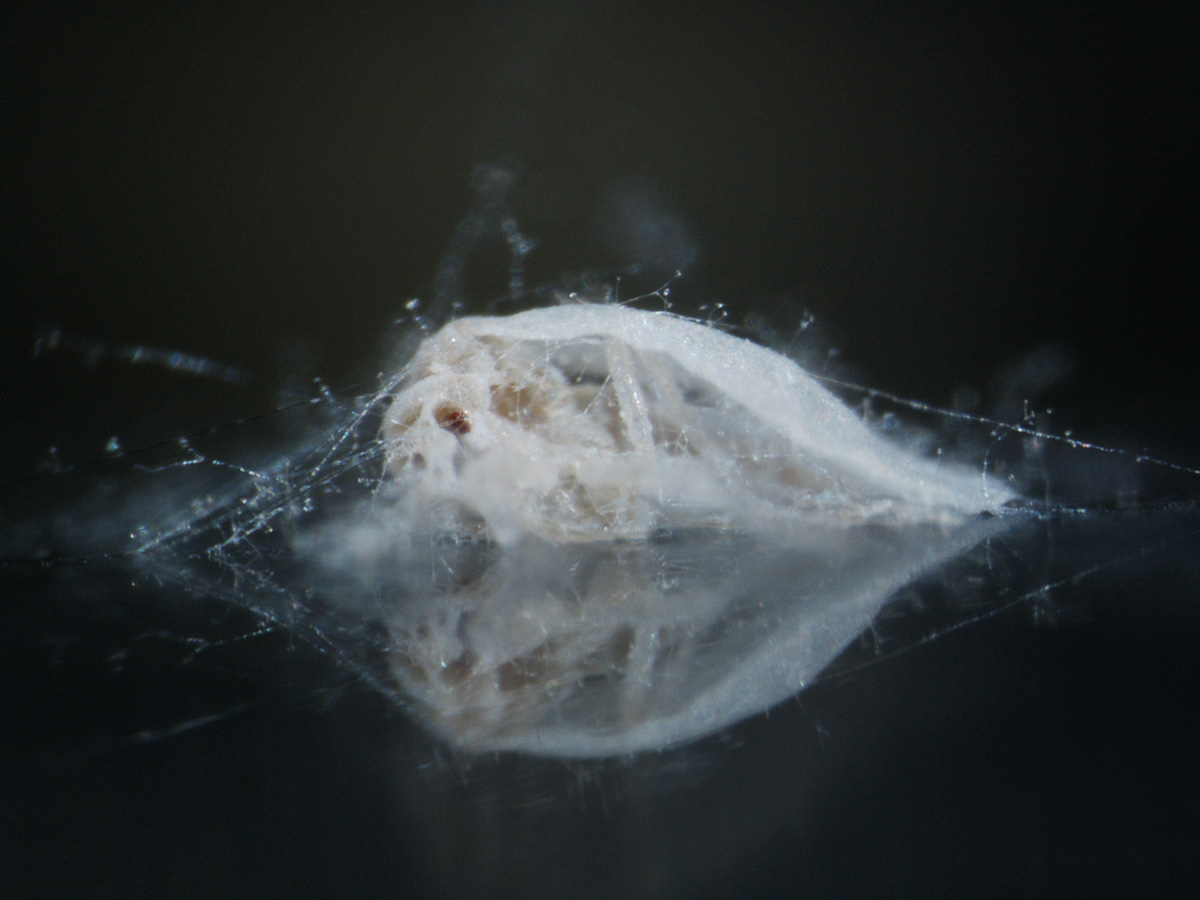 In order to scout for these pests, growers need to look at the undersides of their leaves. Larger populations of whiteflies can cause yellow stippling on the upper side of the leaves, which can be confused with spider mite damage. Whiteflies excrete honeydew when they feed. This honeydew serves as a breeding ground for sooty mold. Growers should look for black mold growing on the leaf surfaces.
Whiteflies IPM Program Spray Options:
- Altus – 7-14 oz /100 gals - Group 4D MOA – Labeled for greenhouse, nursery, landscape, greenhouse vegetables and transplants.
- Ventigra– 1.4-7 oz /100 gals - Group 9D MOA – Labeled for greenhouse, nursery, landscape and vegetable transplants. Soft on beneficials.
- Tristar– 4-25.3 oz / 100 gals - Group 4A MOA – Labeled for greenhouse and nursery, including greenhouse vegetables and some vegetable transplants.
- Mainspring– 2-16 oz / 100 gals - Group 28 MOA – Labeled for greenhouse nursery and landscape. Soft on beneficials when used as a drench.
- Avid 0.15 EC – 8 oz/100 gals – Group 6 MOA -- Labeled for use in greenhouse, nursery and landscape: Contact activity.
- Flagship 25 WG– 4-8.5 oz/100 gals – Group 4A MOA -- Labeled for use in greenhouse and nursery (Meridian for landscapes); Never spray open blooms as this can be detrimental to bees and other pollinators. Also available in granular formulation for applications to growing medias. Systemic and translaminar activity.
- Endeavor– 2.5-5.0 oz/100 gals – Group 9B MOA -- Labeled for use in the greenhouse, nursery, landscape and interiorscapes; Soft on most beneficial insects; Addition of a Harrell’s non-ionic or organosilicon based surfactant can improve coverage.
- Ultra-Pure Oil– 1 gal/100 gals – Group NA MOA -- Labeled for use in greenhouse, nursery and some landscape settings; Soft on most beneficial insects; Do not spray plants that are in bloom; Do not spray plants in extreme temperatures (below 32 & above 85) or humidity (above 85%); Plants should be free from water stress during application; Always test oil on small scale before applying to the entire crop
- Distance IGR– 6-8 oz/100 gals –Group 7D MOA -- Labeled for use in greenhouse, nursery, landscape and interiorscape; Soft on most beneficial insects; Systemic and translaminar activity.
- Aria– 2.1 oz/100 gals – Group 9C MOA -- Labeled for use in greenhouse, nursery, landscape and interiorscape settings; Soft on most beneficial insects.
- Pyreth-It– 12-24 oz/100 gals – Group 3A MOA -- Labeled for use in greenhouse, nursery, landscape and interiorscape; Use only under heavy infestations and as a last defense in an IPM program; Can be detrimental to beneficial insects.
- AzaGuard– 2-4 oz / 10,000 square feet -- Group N/A -- Labeled for use in greenhouse and nursery, ornamentals and vegetables; This is an azadirachtin containing product which works as a growth regulator; It prevents insect pests from molting to the next life stage; It is often tank mixed with a Beauveria bassiana containing product.
- Velifer – Group N/A – Labeled for use in ornamentals, vegetables fruits and herbs grown in the greenhouse; Velifer contains the active ingredient Beauveria bassiana; While this is a sprayed product, because it is a living organism, technically it is considered a biological control.
Biological Control Options:
- Encarsia formosa is an hymenopterous parasitic wasp. It attacks the third and fourth larval stage of greenhouse whitefly, Trialeurodes vaporariorum. Prefers relatively cool conditions making it a great release option in spring or fall.
- Eretmocerus eremicus is an hymenopterous parasitic wasp. It attacks the second larval stage of greenhouse whitefly, Trialeurodes vaporariorum, and silverleaf/ sweetpotato whitefly, Bemisia tabaci. Prefers warmer temperatures, up to high 80’s F which makes this a great late spring or late summer release option.
- Amblyseius swirskii is a predatory mite. It is mainly used for control of whiteflies and thrips, but it will provide some reduction in other small pest species.
Related Resources

In addition to being the nation’s largest distributor of branded fungicides, herbicides, and insecticides, Harrell’s produces custom-blended fertilizers, specialty liquids, and wetting agents. Additionally, Harrell’s is the exclusive US owner, formulator, and distributor of all POLYON® branded products.
TEAM HARRELL'S
STAY EQUIPPED
Never stop learning. Access FREE continuing education courses from Harrell’s.
LET'S GROW
PRESS RELEASES
PRESS RELEASES
STAY EQUIPPED
Never stop learning. Access FREE continuing education courses from Harrell’s.
LET'S GROW