

What’s All the Buzz? – The Bees at Evansville
7/12/2021 - By Mike Hess
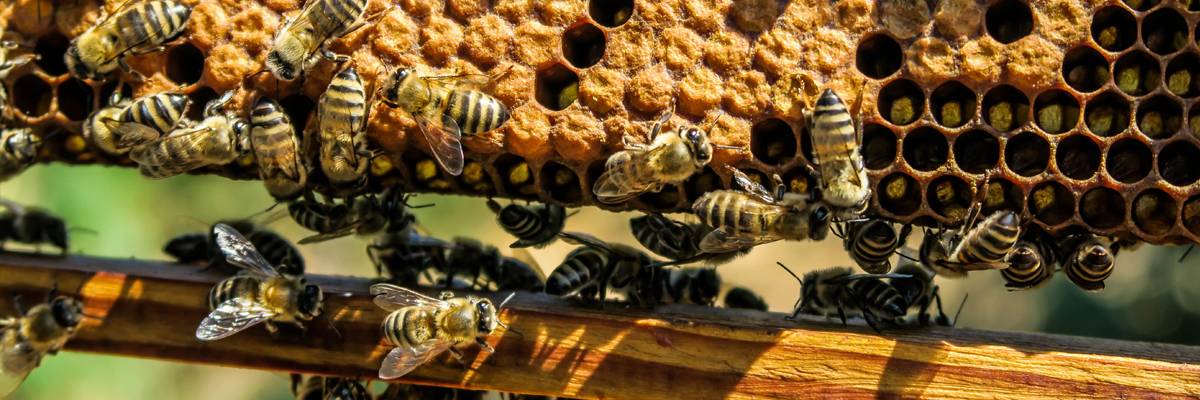
When I first heard about how the Evansville Country Club in Evansville, Indiana, was maintaining six Apiaries across their club, I was admittedly very excited to start digging into the story. This was only heightened when I had the opportunity to speak with Jeff Sexton, superintendent at Evansville, about this project which he has nurtured since its conception, for a number of years now.
Back in 2013, around 25,000 bees were found dead in the middle of a Target parking lot in Wilsonville, Oregon, and a pesticide was named as the cause of death. This event was what led Jeff Sexton to start Evansville’s various Apiaries, of which he said, “basically the bees are used to prove that neonicotinoids don’t kill bees, we use neonics on the golf course. I guess I was in support of the industry back when a honeybee colony was killed in Oregon [2013], and I wanted to just prove to the EPA that we weren’t the culprit to the honeybee decline that everybody thought we were.”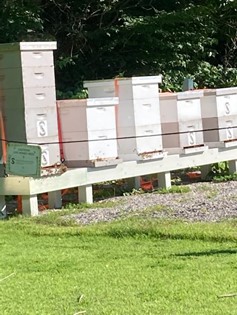
Jeff began the Evansville Apiaries to show that the bees and pesticides used on golf courses can coexist without any harmful side effects to the environment. It is purely a passion project spurred by the events in Oregon, through our conversation Jeff said he basically just got a ‘bee keeping for dummies’ book, worked for a few years with one of his employees who had kept Apiaries before, and is still keeping the project growing to further prove his point. And of course, make more honey.
The bees are not harmed from the neonicotinoids and the course receives thorough pollination from the bees. Which of course begs the question, does having so many bees within the course improve plant life throughout? To this, Jeff responded with, “that’s an honest question that a lot of people have asked, and I don’t know that I can really answer. I do pay attention more to honeybees, we do a lot of annual flowers here, we see them out bouncing to and from the different types of flowers. But I don’t know that I’ve seen an increase in plant health because bees are here.”
Even if the flowers may not be receiving a direct benefit, the honey-loving members of the club sure are! Across the six Apiaries which Jeff keeps, a lot of honey is collected and then sold back to the members of the club. In 2020, they had their best year of collection yet, extracting just over 150 lbs. of honey., They sell it in 1 lb. jars satisfying150 members .. “We do all of the extraction and jar it all, we have our own customized labels too. So that’s fun.” said Jeff, who continued, “It generally sells out in less than 30min. And then that money goes back into the golf course maintenance department and is reinvested back in the operation.”
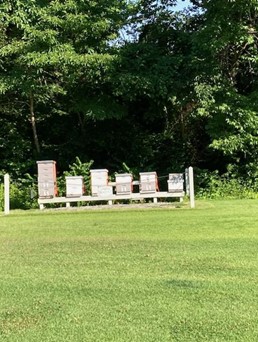 Jeff himself is a big supporter of finding ways to be environmentally conscious and supportive on the course, “I think that superintendents ultimately always try to be environmental stewards, and I think that most clubs that have bees are probably just introducing them as a project for environmental sustainability.” Especially following the 2013 events in Oregon, many clubs across the country began starting their own Apiaries, while continuing the use of neonicotinoids to show that the bees are unaffected by the pesticide.
Now if you’re anything like me, walking the course with the knowledge that there are hundreds of bees intentionally put on property, you’d be wondering if you would ever be at risk of getting stung. As shocking as it might be, Jeff told us that no customer or client has ever been stung on the course, even when approaching the Apiaries to watch the bees! “Of course, we’ve been popped a few times, working with them.”
When asked if bee keeping (or maintaining aviaries) is something he would recommend to other superintendents and clubs, Jeff was very optimistic and encouraging toward this becoming more of a normal institution at clubs. As Jeff has shown, the bees are a testament to how pesticides have no negative effect on them and how hives/Apiaries can coexist on the course, because like he said, “these environmental projects only help our industry as a whole.”
Related Resources

In addition to being the nation’s largest distributor of branded fungicides, herbicides, and insecticides, Harrell’s produces custom-blended fertilizers, specialty liquids, and wetting agents. Additionally, Harrell’s is the exclusive US owner, formulator, and distributor of all POLYON® branded products.
TEAM HARRELL'S
STAY EQUIPPED
Never stop learning. Access FREE continuing education courses from Harrell’s.
LET'S GROW
PRESS RELEASES
PRESS RELEASES
STAY EQUIPPED
Never stop learning. Access FREE continuing education courses from Harrell’s.
LET'S GROW