

What You Need to Know About pH
1/22/2025 - By Lynn Griffith
The subject of pH draws a lot of questions even for those who work with it and its balances every day.
What does pH mean?
What does it do?
Does it really matter when it comes down to it?
And if so, how does it affect my soil and plants?
There are also more technical questions. If my soil, plants, and whole operation rely on pH balance, can I change it? Why don't we express it in parts per million (PPM) like other balances? Well for this, there is a pretty simple answer.
The Story of pH is Not That Complicated
Everyday numbers like 3, 27, or 506 are easy for us to understand on the fly and apply to programs. However, a number like 3.5 x 10⁻⁶, or 19,000,000,000 is a whole different story. You wouldn't want to have to deal with all those 0's day by day. That's the main reason behind using PPM and %. We want to be able to wrap our own heads around what we're talking about.
Now, let's jump back to the year 1909. At that time, there was no widely accepted way to express acidity. So people would say things like, "slightly acid, strongly basic, moderately acid, neutral, etc." That was until a man named Dr. Soren Sørensen came along. Dr. Sørensen was a Danish chemist who worked for a beer company. This begs the question, does the origin of pH really come from beer?
Actually, it kind of does, to a degree. Then, the flavor of beer was very dependent on the amount of acidity or alkalinity the beer had. The only way people measured it at the time was with litmus paper or colorimetric reactions, with indicator chemicals. Even with these methods, the smallest amount of acid could have a major impact on the way it tastes. What they really needed to measure acidity in the drink was a more precise way to determine acid content. With a more precise manner for measurement, they would be able to control exactly how the beer would end up tasting.
However, there was another hurdle. The way acidity was expressed was through the molality of hydrogen ion concentration.
What Does pH This Have to do With Your Plants?
Well, it turns out that acidity could be expressed through the concentration of Hydrogen ions in a solution, meaning the Hydrogen ions could be quantified to specific numbers. VERY specific numbers that were (and are) hard to work with.
Ex. .000001 Molar H+, or .0000000001 Molar H+
Dr. Sørensen realized this problem and was able to come up with a table to make the numbers easier to swallow. He simply took the logarithm of the Hydrogen ion concentration, in moles, and expressed it as a whole number reciprocal. Or in layman’s terms, he took the exponent and flipped it from negative to positive, so then the Hydrogen ion concentration of .000001 (or 10-6) was simply changed to 6!
Here are a few more examples:
- .00001 or 10-5 became 5.0
- .000001 or 10-6 became 6.0
- .0000001 or 10-7 became 7.0
This New Scale Was Called pH
The Carlsberg brewers spoke French, so the level of acidity was expressed as "pouvoir Hydrogene" or "puissance Hydrogene." Which we now know simply as pH.
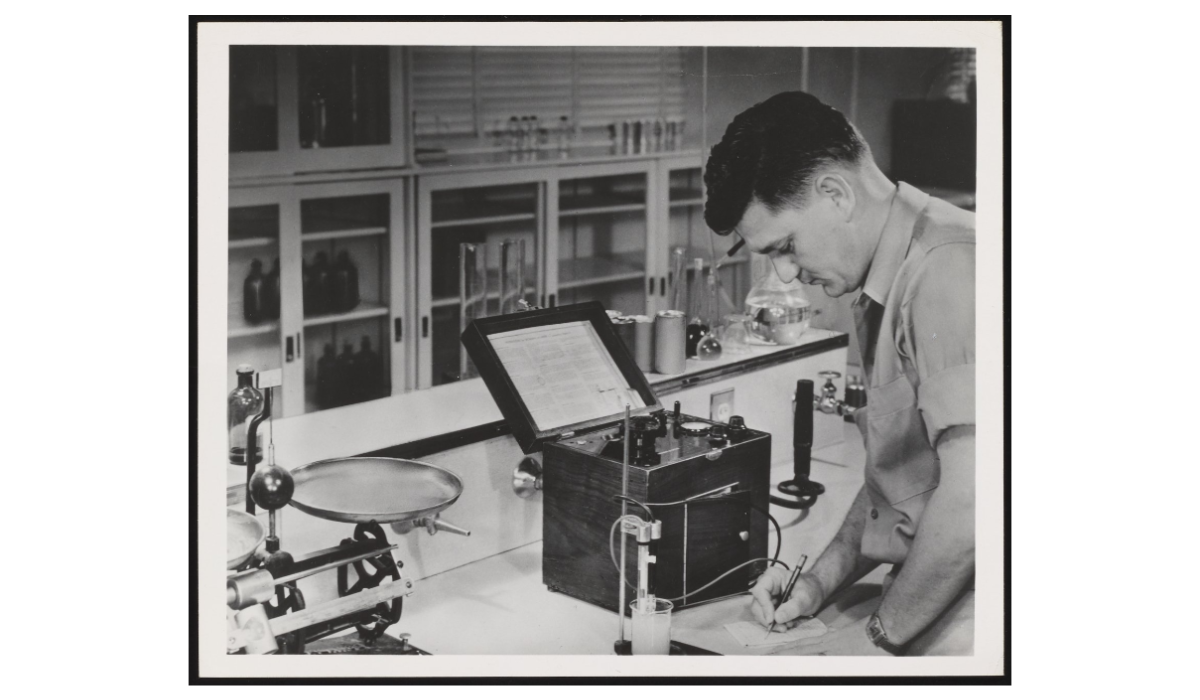
Now all that was needed was a reliable way of measuring pH. Fast forward to 1934 to a guy named Glen Joseph, a chemist for the California Fruit Growers Exchange, which sold most of their fruits under the brand name Sunkist. Being such a big name in the citrus market, they needed a reliable way of measuring acidity in fruit juice, especially lemons.
Glen called on a Cal Tech professor named Dr. Arnold Beckman who immediately saw the flaws in their current system. So, he built them a sturdy and reliable meter to measure pH. The first pH meter!
What About pH in Soil?
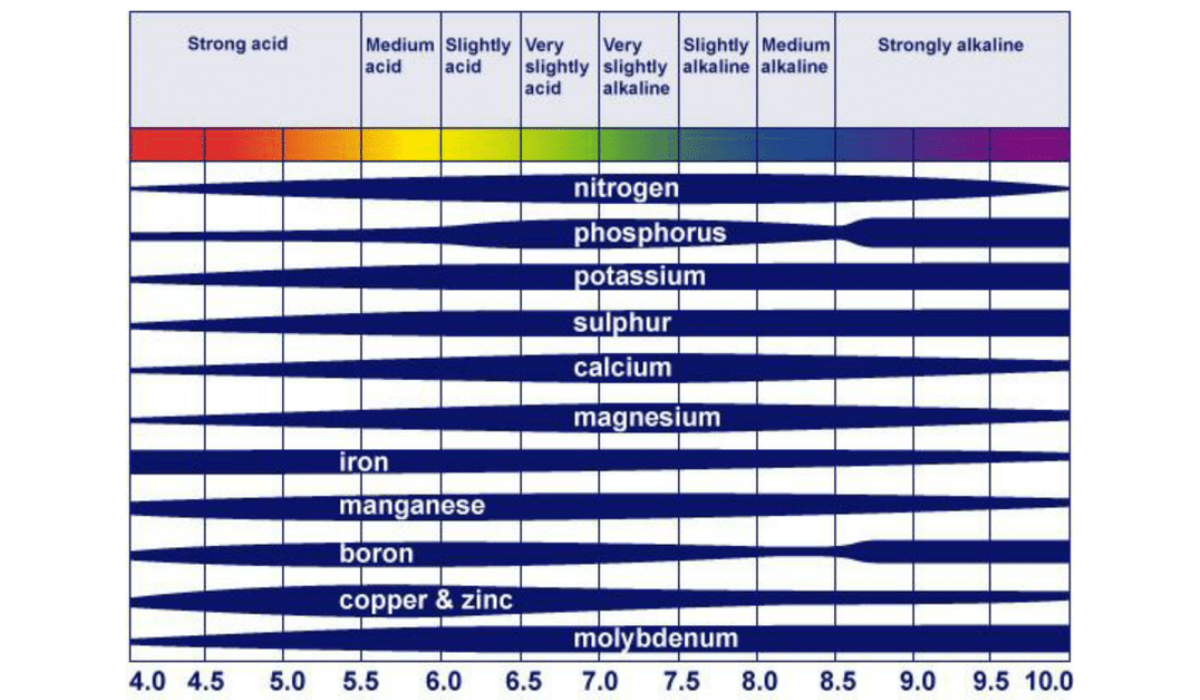
We tend to think about soil pH only in terms of nutrient availability, but that's not all that matters. If it was, then why don't plants all grow best at the pH of maximum nutrient availability? For example, let's say 5.5. Will they all grow best?
No.
Soil pH affects a lot more than just nutrient availability!
pH vs availability in field soil vs potting soil.
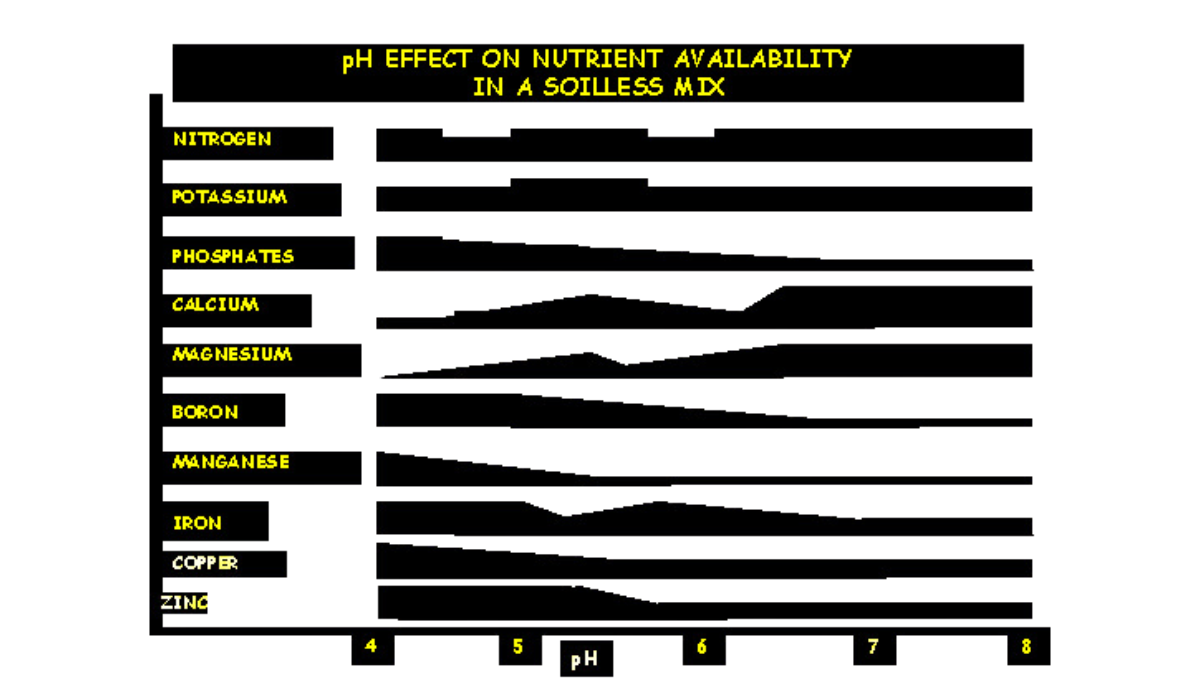
Soil pH also affects:
- Soil microbe profiles- Both beneficial microbes and pathogens.
- Fungi vs bacteria - Fungi generally grow better at lower soil pH, whereas bacteria grow better at high soil pH.
- Beneficial microbes - such as mycorrhizae, grow better at low pH.
- For example, plants in the family Ericaceae do not make root hairs
- They need lower soil pH in order to encourage the mycorrhizae, which they need for the best root function.
Media pH
Media pH also affects potential plant toxins such as sodium, aluminum, heavy metals, and fluoride. How then do we change media pH? It may sound counterintuitive, but it is usually easier to raise soil pH than to lower it.
To lower media pH:
- Use acidic granular fertilizer sources.
- Customize Controlled-release fertilizers (such as POLYON®)
- Acidify irrigation water.
- Drench with acidic solubles such as ammonium sulfate, or 21-7-7.
- Top-dress with granular or powdered sulfur.
- Drench with flowable sulfur.
To raise pH:
- Top-dress with dolomite.
- Drench with hydrated lime.
- Drench with flowable dolomite.
- Fertilize with alkaline fertilizers such as calcium/potassium nitrate.
- NOTE: calcium nitrate is not lime. It only has 1/7th the neutralizing value of dolomite.
For More Information on pH Reach Out to Your Local Harrell's Rep
Using these methods to monitor and alter your pH can help you to maximize the efficacy of your plants. Reach out to your local Harrell's Representative if you have any more questions or want more information on products!
Related Resources

In addition to being the nation’s largest distributor of branded fungicides, herbicides, and insecticides, Harrell’s produces custom-blended fertilizers, specialty liquids, and wetting agents. Additionally, Harrell’s is the exclusive US owner, formulator, and distributor of all POLYON® branded products.
TEAM HARRELL'S
STAY EQUIPPED
Never stop learning. Access FREE continuing education courses from Harrell’s.
LET'S GROW
PRESS RELEASES
PRESS RELEASES
STAY EQUIPPED
Never stop learning. Access FREE continuing education courses from Harrell’s.
LET'S GROW