

Insect of the Month: Boxelder Bugs
3/17/2022
Each summer, reports arrive right from the get-go regarding boxelder bugs, with questions about how to control them. Boxelder bugs are considered nuisance pests, but rarely cause significant damage to plants.
The western boxelder bug (Boisea rubrolineata) usually feeds on the leaves, flowers, and seedpods of the female seedbearing boxelder tree (Acer negundo) during spring and summer. They can also feed on male boxelder trees, maple, and ash trees. Additionally, they may feed on almond, apple, cherry, peach, pear, and plum trees, as well as on grapes, where their feeding causes the leaves and fruit to yellow and/or become deformed. Large populations of the insect usually occur only on female box elder trees.
As winter approaches, boxelder bugs seek shelter. They can fly up to two miles to find a suitable location in tree stumps, under debris, or within homes. Then they remain inactive until the early spring when temperatures begin to rise.
Identification
Boxelder bugs can sometimes be confused with other similar-looking insects. Contact your local Harrell’s representative to confirm their identity first.
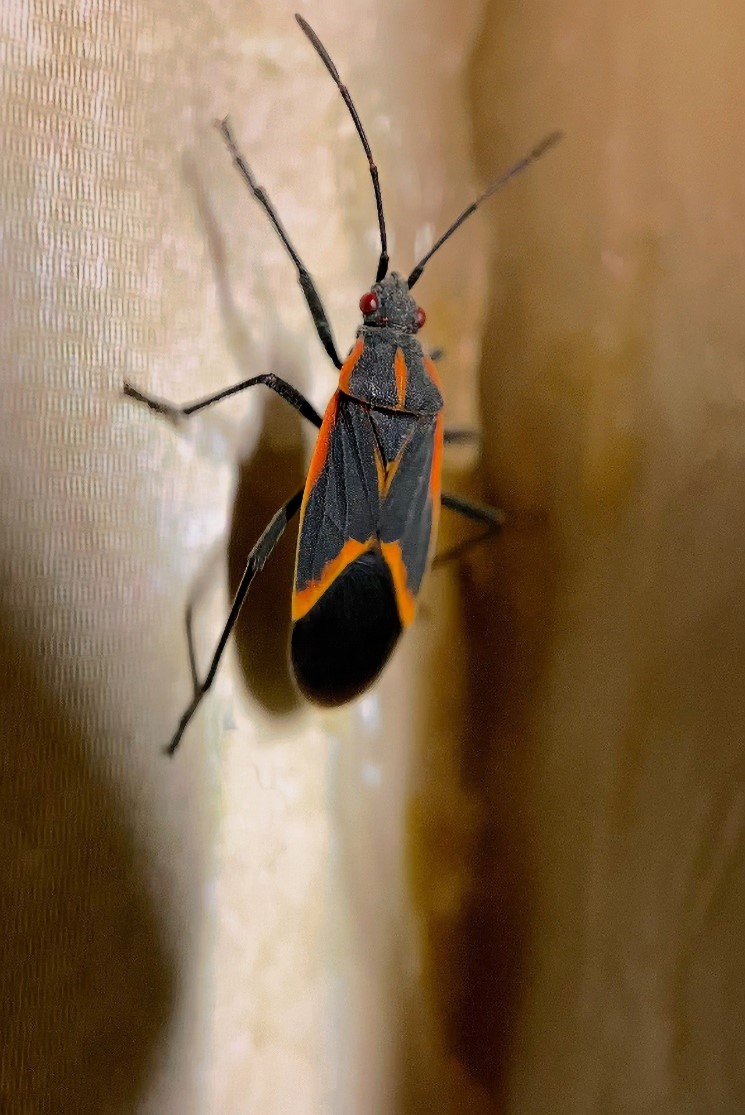
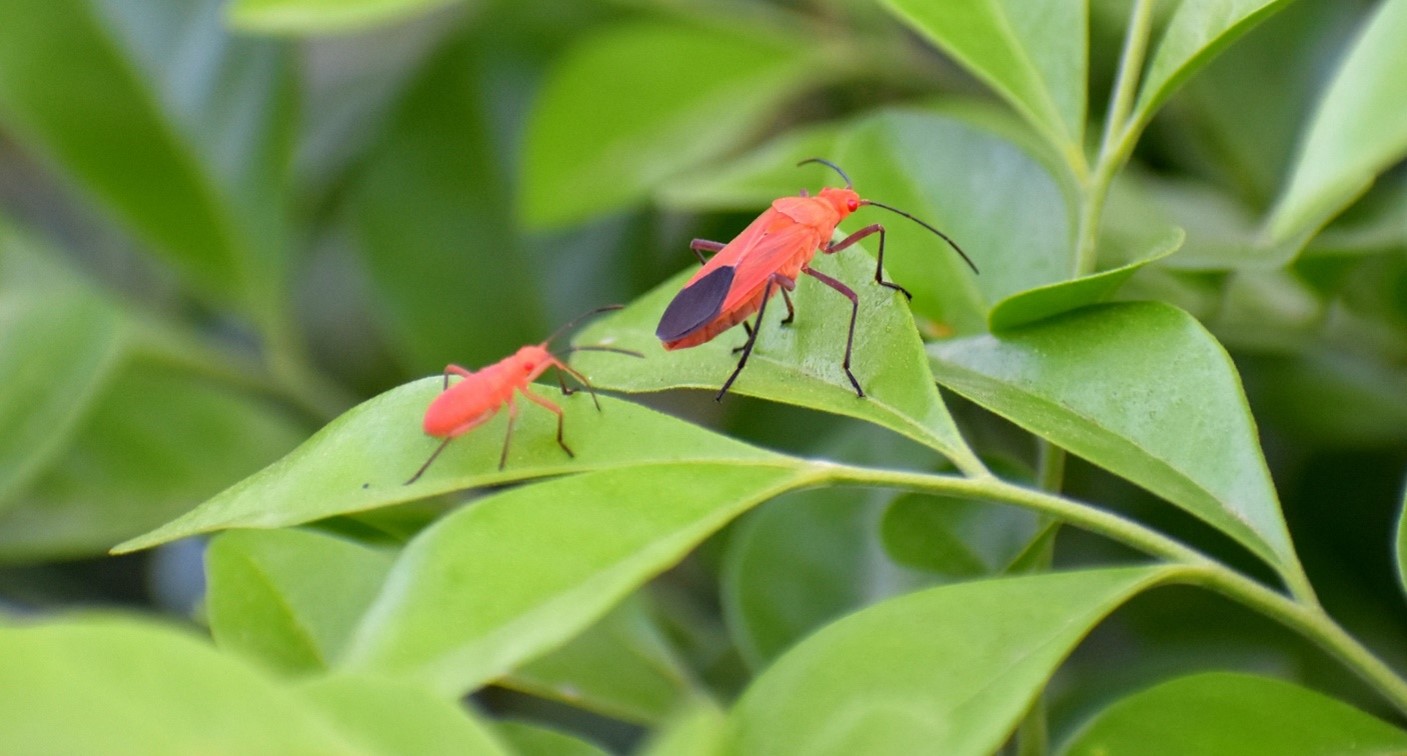
When full-grown, the boxelder bug is about 1/2 inch long and about 3/16 inch wide. Adults are mainly black with three red lines on the thorax and several fine red lines on each wing. The wings lie flat on the bug’s back when at rest. The abdomen is red. Nymphs are bright red initially. When nearing adulthood, they become marked with black and begin to develop black wing pads. Eggs are yellow first and become red as nymphs develop inside.
Boxelder bugs are true bugs (Order: Hemiptera) in the family Rhopalidae. They are sometimes confused with other true bugs, like squash bugs, for example.
Life Cycle
In spring, the female bugs lay eggs in the cracks and crevices of the box elder tree’s bark. A few days later the nymphs hatch. The nymphs grow larger and molt 5 times before they develop into adults during the summer. They then mate and lay eggs that hatch into the nymphs of a second generation during the next season. Adults and nymphs sometimes migrate in large groups, often covering tree trunks, the ground, fences, and the sides of houses.
Most of the nymphs of the second generation grow to full size in late summer. In fall, the adults search for overwintering places in hollow tree trunks, under rocks, boards, and other debris. They become a nuisance outdoors on patios or indoors when they invade in significant numbers.
Control
Wood stacks, leaf/rock piles, and overgrown plants may provide shelter for boxelder bugs. Consider removing them.
Keep the ground below female boxelder trees free of fallen seedpods.
Often a good blast of water is enough to remove boxelder bugs. If you choose to use a pesticide, try a lower toxicity product first, like insecticidal soap. For persistent infestations, you can use something stronger such as a pyrethrin product. Always be sure to test on a small area first and always follow the label.
For more product-related information, or any questions on Boxelder bugs and how you can manage them, reach out to your local Harrell's representative.
Related Resources

In addition to being the nation’s largest distributor of branded fungicides, herbicides, and insecticides, Harrell’s produces custom-blended fertilizers, specialty liquids, and wetting agents. Additionally, Harrell’s is the exclusive US owner, formulator, and distributor of all POLYON® branded products.
TEAM HARRELL'S
STAY EQUIPPED
Never stop learning. Access FREE continuing education courses from Harrell’s.
LET'S GROW
PRESS RELEASES
PRESS RELEASES
STAY EQUIPPED
Never stop learning. Access FREE continuing education courses from Harrell’s.
LET'S GROW