

Winter Weed Cleanup and Prevention of Spring Weeds
4/26/2024
As we look to the near future, we begin a critical weed control period. If left untouched, winter annuals will thrive through the early spring, competing with turf and eventually leaving voids in the turf canopy as summer approaches. However, summer annuals are just getting started, and their arrival in the early months of spring can set the stage for ugly infestations come mid-summer. Here are a few tips to clean up existing weeds while preventing those that are soon to become problematic.
Weed Control - Poa annua
No news here, Poa annua continues to challenge turf managers. No matter if the desirable turf is a dormant bermudagrass fairway mowed at 0.5 inch or a 3-inch-tall fescue lawn, Poa annua is thriving this time of year. Unfortunately, as the calendar moves into spring and warm season turfgrasses begin to break dormancy, many of the postemergence herbicide options that were an option in January and February, when turf was dormant, are no longer an option due to lack of turf safety on green turf.
Herbicides that can be safely applied to green, warm season turfgrasses are slow to produce results or are marginally effective this time of year. Unfortunately, as Poa annua matures, it also becomes less susceptible to herbicide application.
For warm season turfgrass managers, Group 2 herbicides such as Revolver®, Tribute® Total, Katana®, and Monument® can be effective options for postemergence Poa annua control this time of year. It’s a good idea to use the high labeled rate of these herbicides to control mature Poa annua, also, always pay attention to label language related to surfactant use and optimal spray tank pH values. Many herbicides in Group 2 recommend the addition of an adjuvant to the spray tank and can be less effective in acidic carrier water, have patience with Group 2 herbicides.
As a rule, their mode of action starts working quickly within a treated plant by preventing the biosynthesis of specific amino acids, however healthy plants have storage reserves. It takes a while for plants to work through these storage reserves and ultimately die. Group 5 herbicides such as Sencor® and Xonerate® are also options; however, Sencor can cause a slight amount of phytotoxicity to desirable turf. Again, always consult the product labels for more detailed information. As a final tip, postemergence herbicides seem to be more effective when applied to well hydrated turf on a sunny, warm day.
For managers of cool season turfgrasses, what is old is new again in Velocity PM. The active ingredient in Velocity PM, bispyribac-sodium, was previously registered in the turf market then took a hiatus for a few years to be reintroduced as Velocity® PM. Velocity PM is a Group 2 herbicide that is unique from the other Group 2 herbicides previously mentioned in that it is safe to apply to cool season turf but also an effective control option for Poa annua and Poa trivialis in cool season turf. As a rule, frequent, low-rate applications on a 14–21-day interval are more effective than high rate, less frequent applications. Also, elevated temperatures improve efficacy.
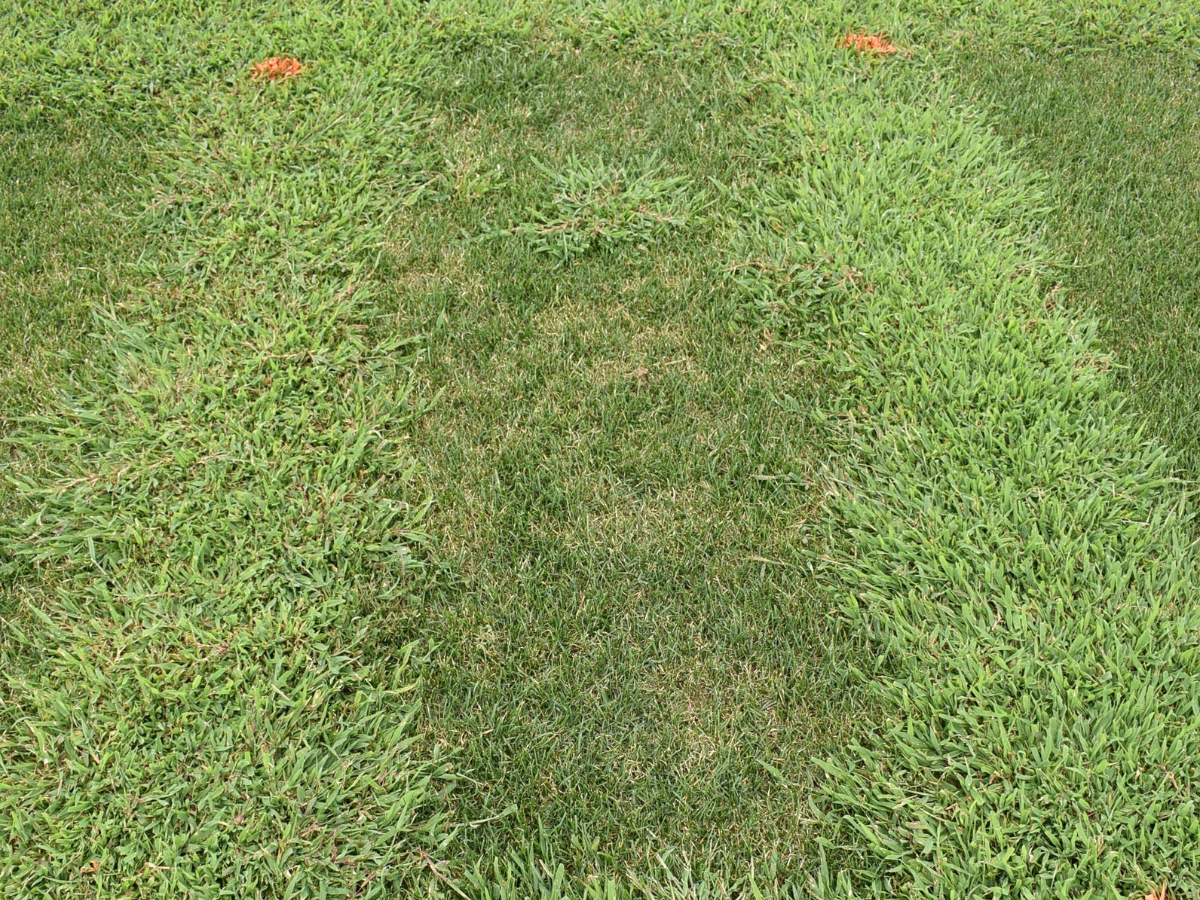
Figure 1. Poa annua continues to be a problematic weed for both warm and cool season turf managers.
Weed Control - Broadleaf Weed
There are innumerable broadleaf weed control options on the market, especially when it comes to 3- and 4-way active ingredient mixes. It’s tough to know when to use what. One major distinguishing characteristic of 3- and 4-way mixes is the formulation type: ester formulations vs. amine formulations.
Ester and amine is a descriptive characteristic of a molecule. Short of taking a trip back to Chemistry 101, formulation as an ester or an amine has very real-world implications. Under cool temperature conditions, ester formulations will be more effective broadleaf weed control formulations; however, under warm conditions these herbicides can be highly volatile. Think of highly volatile materials as having a high chance of ‘gassing off’ or ‘evaporating’.
Once off the ground and in the air, the active ingredient will go whichever way the wind blows, which is not desirable for applicators wanting to limit injury to off-target plants, such as a neighbor’s prized ornamental bed. Alternatively, amine formulations are less volatile under warm conditions, thus limiting off target movement and become more efficacious once temperatures warm.
Weed Control – Using Preemergence Herbicides
“Preemergence” is somewhat of a misnomer. Preemergent herbicides don’t prevent weeds from germinating, rather they prevent germinated seeds from establishing. Group 3 herbicides such as Dimension® (dithiopyr) and Barricade® (prodiamine) work by inhibiting proper root formation. Group 14 herbicides such as StayGuard® (flumioxazin) and Ronstar® (oxadiazon) (Restricted Use Pesticide) work by inhibiting shoot formation as they emerge from weed seeds. The bottom line is these active ingredients are much less effective if they are not applied before weed seed germination.
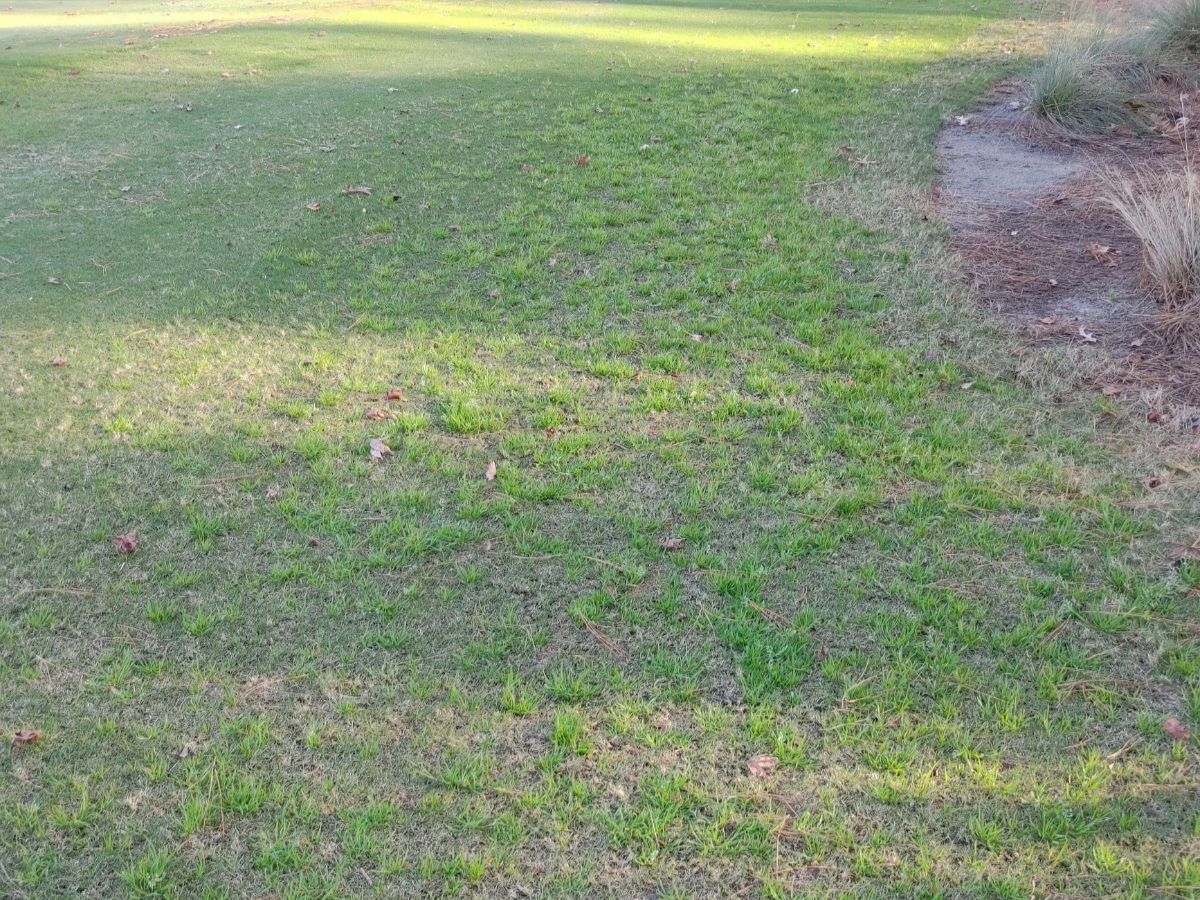
In a perfect world, one could time preemergence herbicide application just before germination of the weed, but reality is much more challenging. Often south-facing slopes warm faster than other areas causing weeds to establish first in these areas, especially if turf is thin. Some weeds germinate as soil temperatures reach 55°F (crabgrass), others 65°F (goosegrass), and yet others 82°F (doveweed). It’s helpful to know which weed(s) are problematic, then the proper herbicide active ingredient and application timing can be selected, your Harrell's Rep is a great resource to identify the best option for a specific agronomic situation.
Weed Control - Proper Fertility
Arguably, proper fertility is the most important weed control consideration. Turf 101 teaches “a healthy turf stand is the best defense against weed establishment.” A healthy turf stand starts with proper fertility. Both plots in Figure 2 were treated with the preemergence herbicide Dimension with an equal active ingredient rate, the plot on the left is under a POLYON® fertility program while the plot on the right has gone without fertility throughout the trial. In addition to reducing dollar spot incidence, POLYON application also limited crabgrass breakthrough.
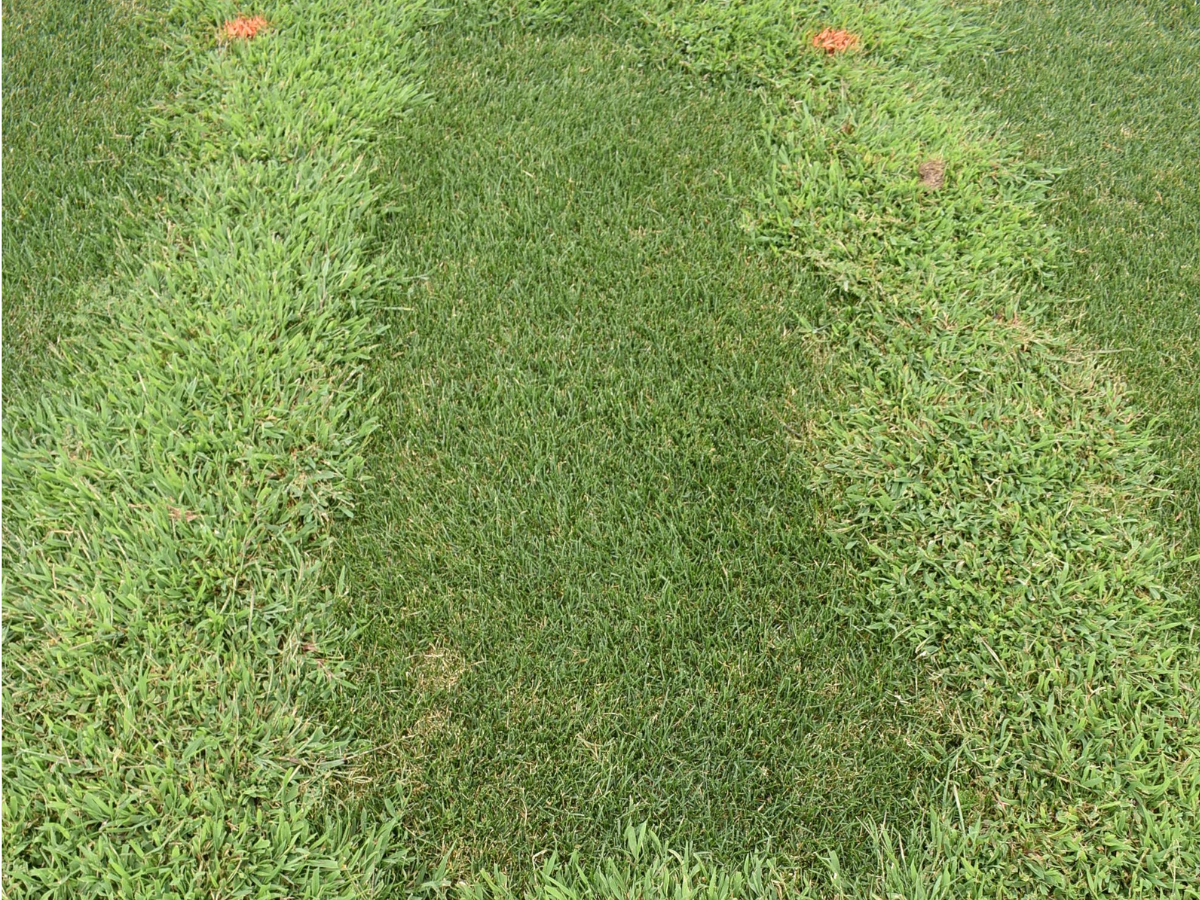
Figure 2. Proper fertility can enhance weed control, both plots were treated with 0.5 lb. ai/A of Dimension, the high labeled rate. The plot on the left received nitrogen fertility, while the plot on the right did not. Note the establishment of crabgrass in the center of the plot on the right and the increased dollar spot pressure in this cool season turf stand.
Reach Out to Your Harrell’s Rep
There are lots of herbicides to choose from, and an infinite number of ways they can be combined to create a program. There is not a one-size-fits-all approach to weed control, it’s dictated by location, weed pressure, and expectations. Catch up with your Harrell's Rep, they are well equipped to consider these factors and assemble a complete, effective weed management program for the coming season.
Related Resources

In addition to being the nation’s largest distributor of branded fungicides, herbicides, and insecticides, Harrell’s produces custom-blended fertilizers, specialty liquids, and wetting agents. Additionally, Harrell’s is the exclusive US owner, formulator, and distributor of all POLYON® branded products.
TEAM HARRELL'S
STAY EQUIPPED
Never stop learning. Access FREE continuing education courses from Harrell’s.
LET'S GROW
PRESS RELEASES
PRESS RELEASES
STAY EQUIPPED
Never stop learning. Access FREE continuing education courses from Harrell’s.
LET'S GROW