

Getting to the Root of the Problem
7/26/2022 - By Dr. Paul Giordano
I’m going to tell a story about poor turf roots with three
maps. These three maps hold information that is key to understanding why many
turfgrass managers in the northern half of the country are battling issues like
take-all patch, summer patch, root dysfunction, drought stress, and fairy ring
among other soil-borne maladies.
Stemming back to late summer 2021, weather patterns that included
record setting rainfall, and dramatic fluctuations in both temperature and soil
moisture have created challenging conditions, wreaking havoc on turfgrass root
systems.
The Story in the Maps
The Choke Out Phase: June - November 2021
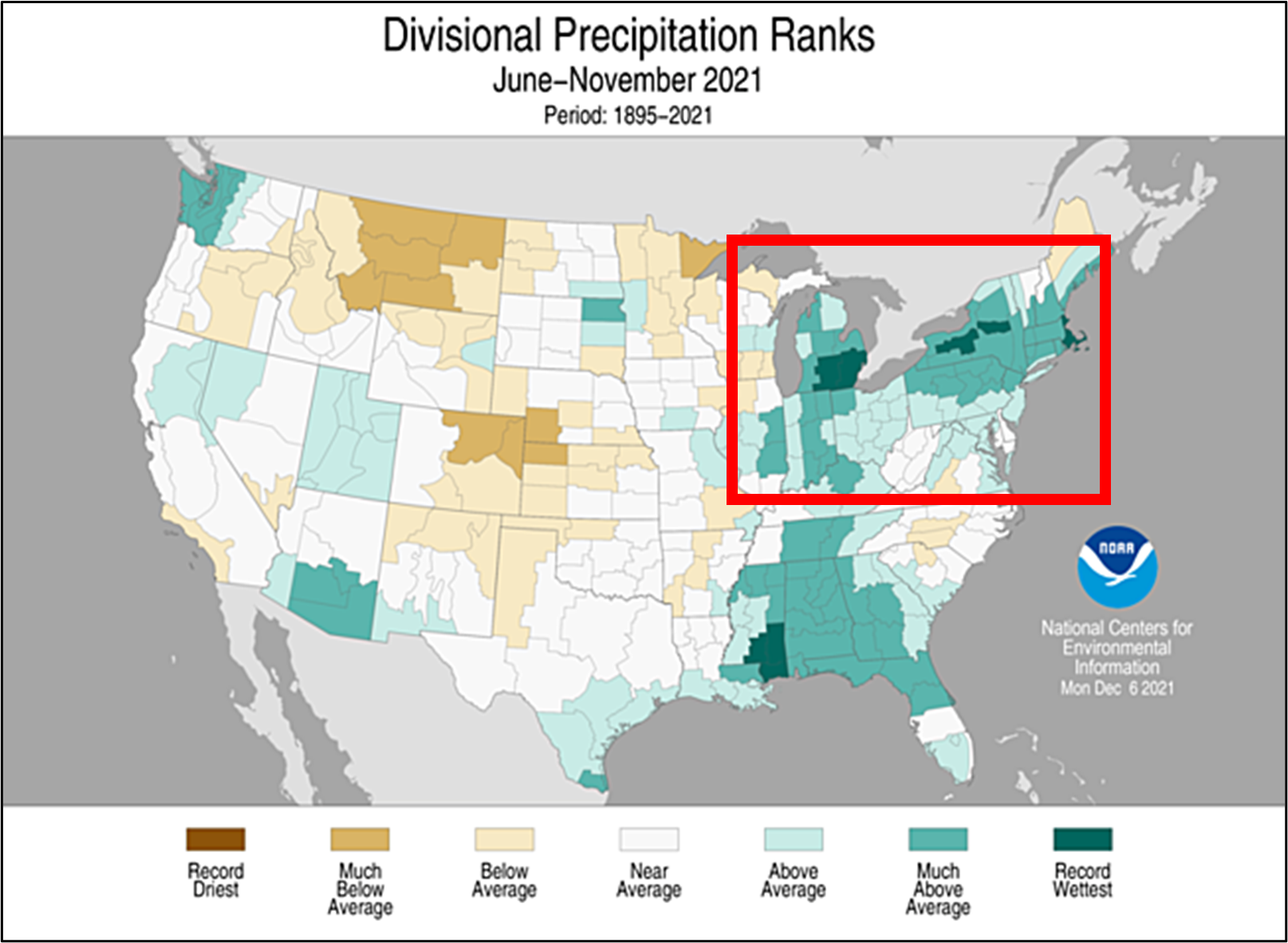
Late Summer through fall of 2021 was one of the wettest on record
in many parts of the Midwest and northeastern U.S. This excessive amount of
precipitation created long-term saturation of root zones. Especially
problematic was the over saturation during the fall - a period when cool season
turfgrass normally dedicates much of its energy to root growth and recovery. Lack
of oxygen and excessive moisture in the upper soil profile inhibited the development
of new, healthy roots.
Most cool season turfgrasses experience a typical summer
“retraction” of roots and rely on optimal growing conditions in the fall to
recover and recuperate. Worse yet, these same wet fall conditions likely
favored an influx of new infections from root-dwelling pathogens like those
that cause take-all patch, summer patch, and pythium root rot and dysfunction.
The Dry Down Period: May - June 2022
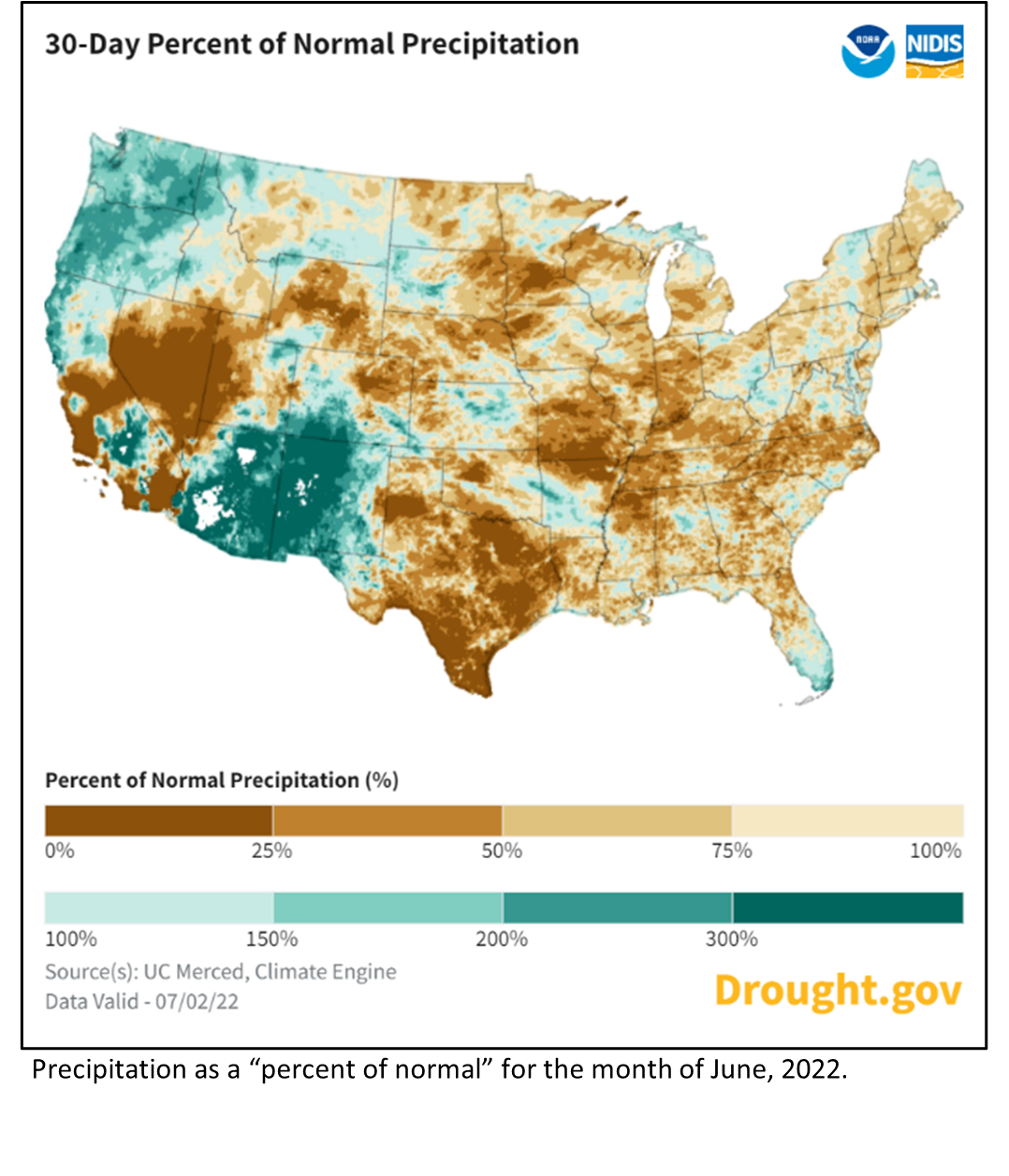
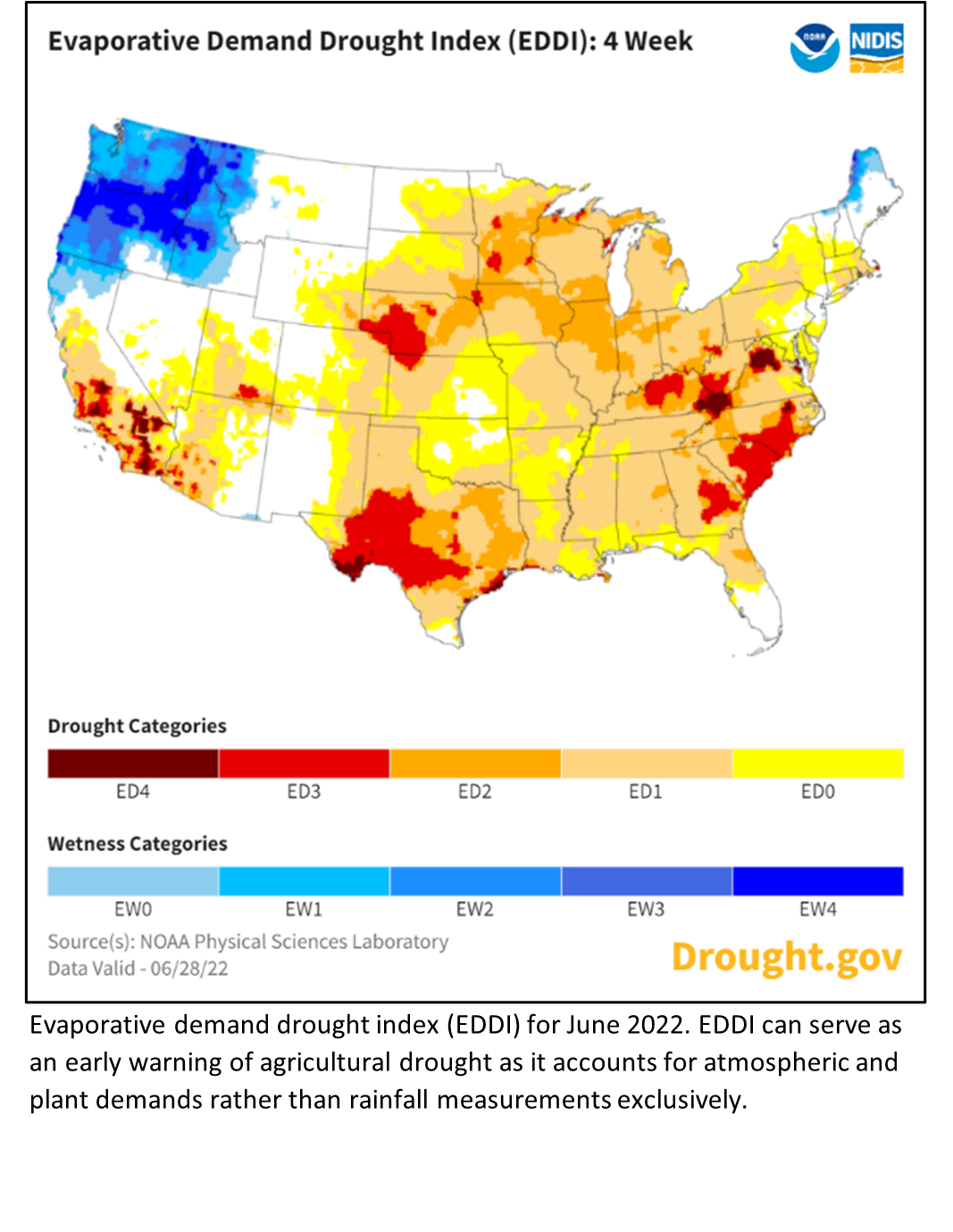
After the wet fall, it was a slow start coming out of winter for many. At best,
the bentgrass was groggy and Poa seed heads were a plenty. At worst, there
was widespread winter damage affecting weaker, more vulnerable areas on the
golf course. As we transitioned into spring and early summer, a significant dry
down started to occur in many regions.
What Does This Mean?
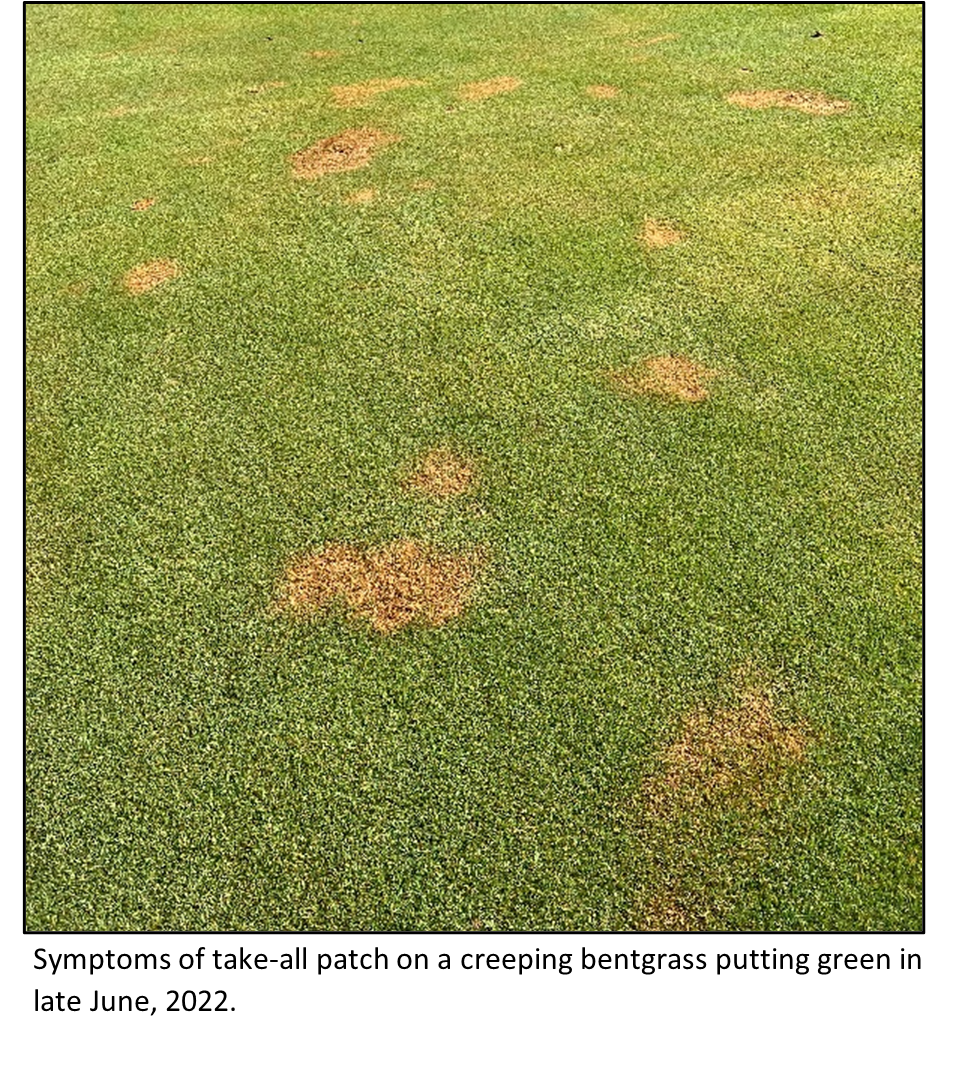
Those three maps tell a long and dire story, one that has not played out well for turf areas that were already struggling. Compromised roots can keep plants on life support through low stress growing conditions in the spring, but as soon as abiotic stress like heat or drought sets in, things go south quickly.
When I say "bad roots," I mean roots that are discolored, infected,
or compromised by pathogens, cells sloughed off and largely devoid of root
hairs or any indications of new growth. And while most other diseases like
dollar spot and brown patch have been quiet thus far in 2022 - the root
diseases have had a perfect storm of favorable conditions, and are starting to
rear their ugly heads.
What's Next?
For many, the next couple months will be a war of attrition.
With minimal or compromised root systems, summer heat and stress mean nursing
the most vulnerable turf areas through the challenging weather with judicious
use of nutrition, water, and plant protection. In areas that are clearly
suffering from a root disease, curative approaches are difficult and often slow
to correct the issue. However, remedial applications can help to prevent new
infection to surrounding areas and protect any remaining healthy roots and crown
tissues.
The strobilurin (QoI’s) and sterol inhibitors (DMI’s) tend
to be the most consistent performers when it comes to summer patch and take-all
patch efficacy. The important part to applying these fungicides is to get them
watered-in with AT LEAST 0.125” of post application irrigation. Most “failures”
are due to not getting product sufficiently into the target area of the root
zone.
Product Recommendations
Aside from fungicides, water management is going to be
critical to ensure sufficient moisture in the upper portion of affected root
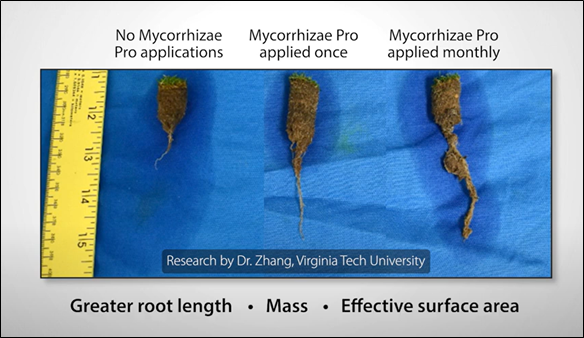
zones. When turf roots are compromised by disease, they are usually very short,
sparse, lack proper structure, and will struggle to take up water or nutrition.
Hand-watering and judicious use of wetting agents like Fleet® 100
and Symphony®
can help nurse areas through the tough stretches of summer.
Finally, as we look to help these plants grow new roots and
recover into the cooler temperatures of fall, we can lean on certain products
that have been proven to aid in root function, photosynthetic efficiency and overall
root growth. Bio stimulants like Amino Pro
V, EarthMAX®
Organic, BioMAX® 4-0-0,
Seaweed
A+E, and Mycorrhizae
Pro are excellent tools to incorporate into soil-targeted applications. All
of these products have been specifically tested and included into the Harrell’s Balanced Approach
programs, aimed specifically at root growth promotion.
Harrell’s has a full suite of offerings to help in the
prevention, recovery, and programmatic approach against root and other soil
borne issues. Reach out to your Harrell's
Territory Representative to see how our Balanced Approach can
help.
Related Resources

In addition to being the nation’s largest distributor of branded fungicides, herbicides, and insecticides, Harrell’s produces custom-blended fertilizers, specialty liquids, and wetting agents. Additionally, Harrell’s is the exclusive US owner, formulator, and distributor of all POLYON® branded products.
TEAM HARRELL'S
STAY EQUIPPED
Never stop learning. Access FREE continuing education courses from Harrell’s.
LET'S GROW
PRESS RELEASES
PRESS RELEASES
STAY EQUIPPED
Never stop learning. Access FREE continuing education courses from Harrell’s.
LET'S GROW