

Two Spotted Spider Mites - Understanding and Avoiding their Wrath
12/15/2021
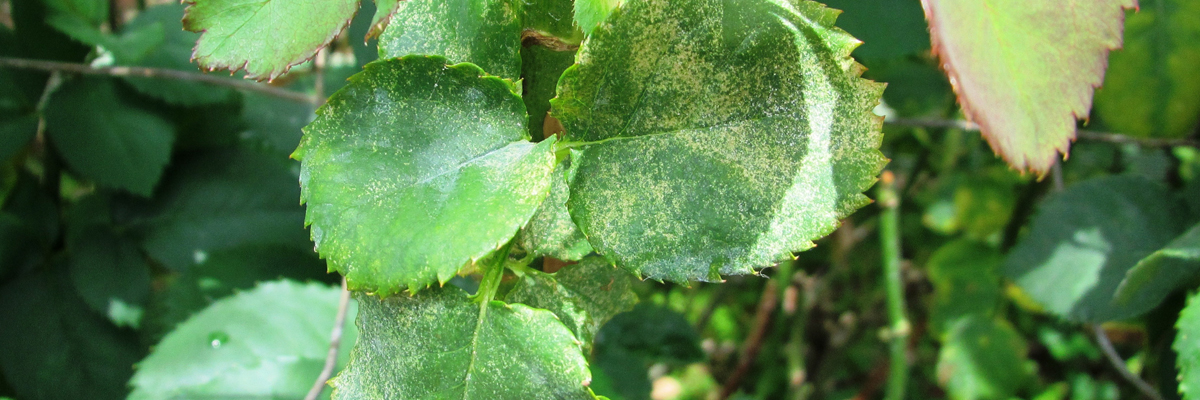
The Two Spotted Spider Mite, Tetranychus urticae, is a prolific pest in nurseries, greenhouses and landscapes, feeding on numerous species of trees, shrubs, ornamental plants and vegetables. Mites aren’t insects but rather arachnids, along with spiders and ticks.
To find spider mites, you have to look at the underside of leaves. They will appear like tiny moving dots. Although they are less than 1/20th of an inch long, you can see them easily with a 10X hand lens. Spider mites live in colonies underneath leaves and a single colony may be a population of hundreds!
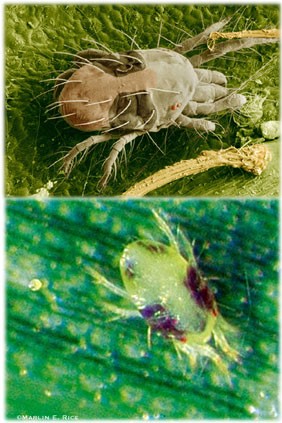
Adult mites have eight legs and an oval shaped body with two, red eyespots near the head. Females typically have a large, dark blotch on each side of the body and numerous bristles covering the legs and body. Larvae are smaller versions of the adults. Newly hatched larvae have only six legs. The other immature stages have eight legs, just like adults. Eggs are round and clear, initially colorless, they turn cream colored prior to hatching.
Lifecycle
In temperate climates, spider mites may feed and reproduce all year on plants that retain their green leaves throughout the winter. In colder areas and on deciduous trees that drop their leaves, spider mites overwinter as gravid (pregnant) females under bark and in ground leaves and debris. With warm temperatures and longer days of spring, they emerge to begin feeding and egg laying.
Spider mites reproduce rapidly in hot weather and can become numerous in June through September. With favorable temperatures (optimal development is between 80-85° F) and sufficient food, a generation can be completed in less than a week! This pest is important to detect early. A female will lay between 10 and 15 eggs each day. In 15 days, one female mite and her offspring can produce a population of ~820 mites. After another 30 days, with additional generations, you can have over 800,000 mites! This all starts with one mite.
Spider mites prefer hot, dry conditions and often are found on trees or plants adjacent to walkways or the edges of planting blocks. Water stress makes plants highly susceptible to spider mites.
As populations increase on the plants and less food is available, the mites will begin clustering at the tops of plants. This is a strategy to migrate to new food sources, as people or animals brush against the plants they can carry the mite hitchhikers to new plants. Mites will even use their silk fiber used to make webbing to “catch air”, they act as sails for wind currents to carry them great distances to new food sources.
Damage
Mites damage plants by sucking cell contents from leaves. A few mites are not a reason for alarm; however, early detection is critical to success, as we have seen with the earlier example. High populations can significantly damage plants. Initially, the damage appears like pale pinpoint dots on the leaves. There may be bronzing of the leaves. As feeding increases, the leaves turn yellow and abscise, or drop. With severe infestations and damage, the mites’ characteristic webbing covers leaves and stems, making control more challenging.
Mites will reduce yields of fruits and vegetables. On ornamentals, while the damage is more aesthetic, mites can eventually kill the plant.
Management
Spider mites have many natural enemies that help to keep populations in check. Sufficient irrigation is critical, because plants experiencing water stress are more susceptible to damage. We often see mite outbreaks proceeded by broad spectrum insecticide treatments for other pests. For example, mite populations can explode after an application of imidacloprid to combat other pests. There are multiple reasons for this. A simple explanation is the broad-spectrum insecticide kills off the native population of beneficial bugs which were keeping the mite population in check. Spider mites exposed to carbaryl (Sevin) in the laboratory reproduce faster than untreated populations. Carbaryl, some organophosphates and pyrethroids increase the level of nitrogen in leaves, favoring spider mite development.
Cultural practices play a significant role in managing spider mites. Dry conditions often lead to mite outbreaks. Applying water to walkways can help increase humidity in a localized microclimate to make conditions less hospitable for mites. While overhead watering is typically discouraged from an Integrated Pest Management (IPM) perspective, in this case it will help to reduce mite issues.
Monitoring
Spider mites are small and require attention to detail to detect. Plant damage is usually noticed first. Keep your eyes open for the mites and their perfectly round eggs, which are normally found on the undersides of leaves.
Biological Control
Spider mites have many natural enemies, which limit their numbers in many gardens and landscapes. Some of the most important are the predatory mites, including Phytoseiulus persimilisand Neoseiulus californicus.Most biocontrol programs rely on preventative applications of natural enemies to avoid pest outbreaks. While prevention is always most effective, and often most economical, spider mites are one exception that can often be treated after the outbreak occurs. Phytoseiuluspersimilis only eats spider mites and very closely related species like carmine mites. This makes it a voracious predator of spider mites!
Prevention is effectively achieved with time released sachets (beneficial mites emerge every day from sachets placed on the plants). Neoseiulus californicus is effective against spider mites and can be used preventatively in a sachet.
Gall midge larvae, Feltiella acarisuga, is often used to treat hotspots. Note that a natural dusk is required for Feltiella acarisuga to reproduce, so this may not be the best choice for indoors or where the photoperiod is manipulated with daylength extension lighting or light exclusion blackcloth.
Stethorus punctillum is a small, black, ladybug like beetle. It is known as the spider mite destroyer for good reason! After releasing these bugs into spider mite infestations, you can actually observe them chewing through the webbing to get at the spider mites!
An interesting new product is Velifer. This product contains the fungus Beauveria bassiana. We typically use this fungus against insect pests, like whiteflies. However, Velifer contains a unique strain of this fungus which shows particular efficacy against spider mites, unlike other Beauveria bassiana containing products. Velifer can be included in a spray rotation with other chemical products mentioned in the following section and is particularly useful for resistance management.
One good reason to use biocontrols for mites is that it is highly unlikely that mites will develop resistance to their natural enemies.
Chemical Control
An effective IPM program, focused on monitoring and early detection is a key to success. Preventative sprays are effective, but once populations get out of hand, spider mites can be extremely difficult to eradicate. As we have seen, spider mites reproduce extremely quickly. This means that they can also quickly develop resistance to commonly used miticides. When using chemical miticides, be certain to rotate among distinct IRAC (Insecticide Resistance Action Committee) modes of actions to prevent resistance.
There are several options for sprays that provide physical controls, which also helps with resistance management. Notably, insecticidal soap or insecticidal oil. Both petroleum-based horticultural oils and plant-based oils such as neem, canola, or cottonseed oils are used. There are also plant extracts formulated as miticides, which can be effective on spider mites. These include mint oils, rosemary oil, thyme oil and others. Avoid using soaps or oils on water-stressed plants or when temperatures exceed 80°F or if relative humidity exceeds 80%. These types of products may injure some plants, so check labels and test them out on a small area several days before applying a full treatment. These products must contact mites directly to kill them, so proper coverage, especially on the undersides of leaves, is essential, and repeat applications may be required.
A unique oil derived product is Pure Crop 1. This is in a class known as nano-supramolecular surfactants. It is formulated in a way that it only affects plant feeding bugs like mites, but is relatively harmless against beneficials, which is unique among oils used for pest control. Some of my ornamental growers report that this product is as effective or more effective against powdery mildew than many of the chemical fungicides!
Sulfur sprays can be quite effective on mites. However, use the same precautions as mentioned with the soaps and oils. Avoid temperatures above 80° F and humidity levels above 80%. Especially do not apply sulfur within 30 days of an oil spray (and vice versa) as phytotoxicity can result! Sulfur is a skin irritant and eye and respiratory hazard, as are some of the plant extracts, so always wear appropriate protective equipment (PPE). Don’t use sulfur if you plan to introduce biological controls, as sulfur residues will kill many of the beneficials for 2 weeks or more after application.
Most registered miticides won’t target all life stages, so it is good to recommend mixing an ovicidal miticide with a miticide that acts on juveniles and adults, for example, Hexygon (good residual control of eggs and immatures) + TetraSan (good residual/translaminar activity for adults).
Other reliable miticides include: Engulf (controls all life stages from egg to adult), Avid (one of the safest products for use on plants in bloom), Tame, Akari, Sanmite, Kontos (unique as it is a systemic product to prevent mites), Savate (translaminar and also effective against whiteflies), Sultan, Pylon and Xxpire (highly effective against thrips and aphids too).
Specific product mentions are educational only. Always test on a small area before treating your crop and consult the label for any product you are considering using.
Spider mites can certainly wreak havoc on our crops. But we can fight back! Arming ourselves with knowledge and the proper tools to prevent and control them we can successfully avoid their wrath.
For more information on products mentioned and how you can fight back against these pests, reach out to your local Harrell's Representative.
Related Resources

In addition to being the nation’s largest distributor of branded fungicides, herbicides, and insecticides, Harrell’s produces custom-blended fertilizers, specialty liquids, and wetting agents. Additionally, Harrell’s is the exclusive US owner, formulator, and distributor of all POLYON® branded products.
TEAM HARRELL'S
STAY EQUIPPED
Never stop learning. Access FREE continuing education courses from Harrell’s.
LET'S GROW
PRESS RELEASES
PRESS RELEASES
STAY EQUIPPED
Never stop learning. Access FREE continuing education courses from Harrell’s.
LET'S GROW