

Cooperative Connection: Turf and Mycorrhizae Fungi
8/10/2021 - By Dr. Raymond Snyder
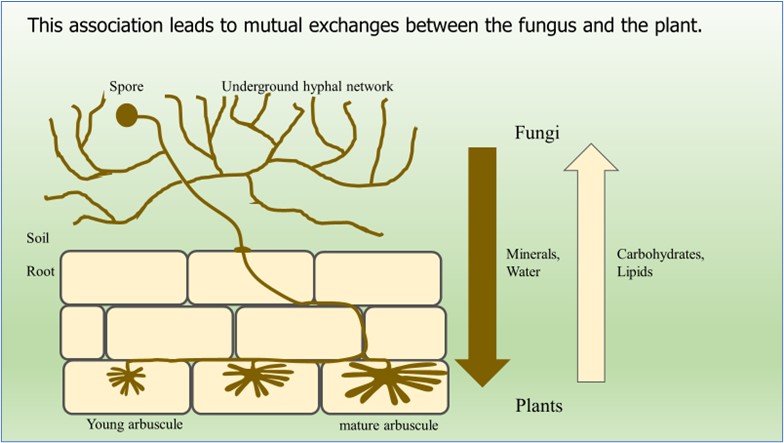
The symbiotic relationship between mycorrhizae fungi and plants is theorized to date back to the start of creation, during a time in which aquatic plants were becoming terrestrial plants, and did not have well adapted root systems for the land. Plants needed minerals, and fungi needed carbohydrates for each of them to survive and proliferate (see illustration). Thus, the fungi colonized the host plant forming a relationship that benefitted both species without negatively impacting either species. That relationship continues today with an estimation that 80% of land plants have the mechanism to form a relationship with mycorrhizae. Interestingly, more recent work suggests that mycorrhizae fungi provide more than just increased access to minerals and water to plants, in that they also improve tolerance to biotic and abiotic stress.
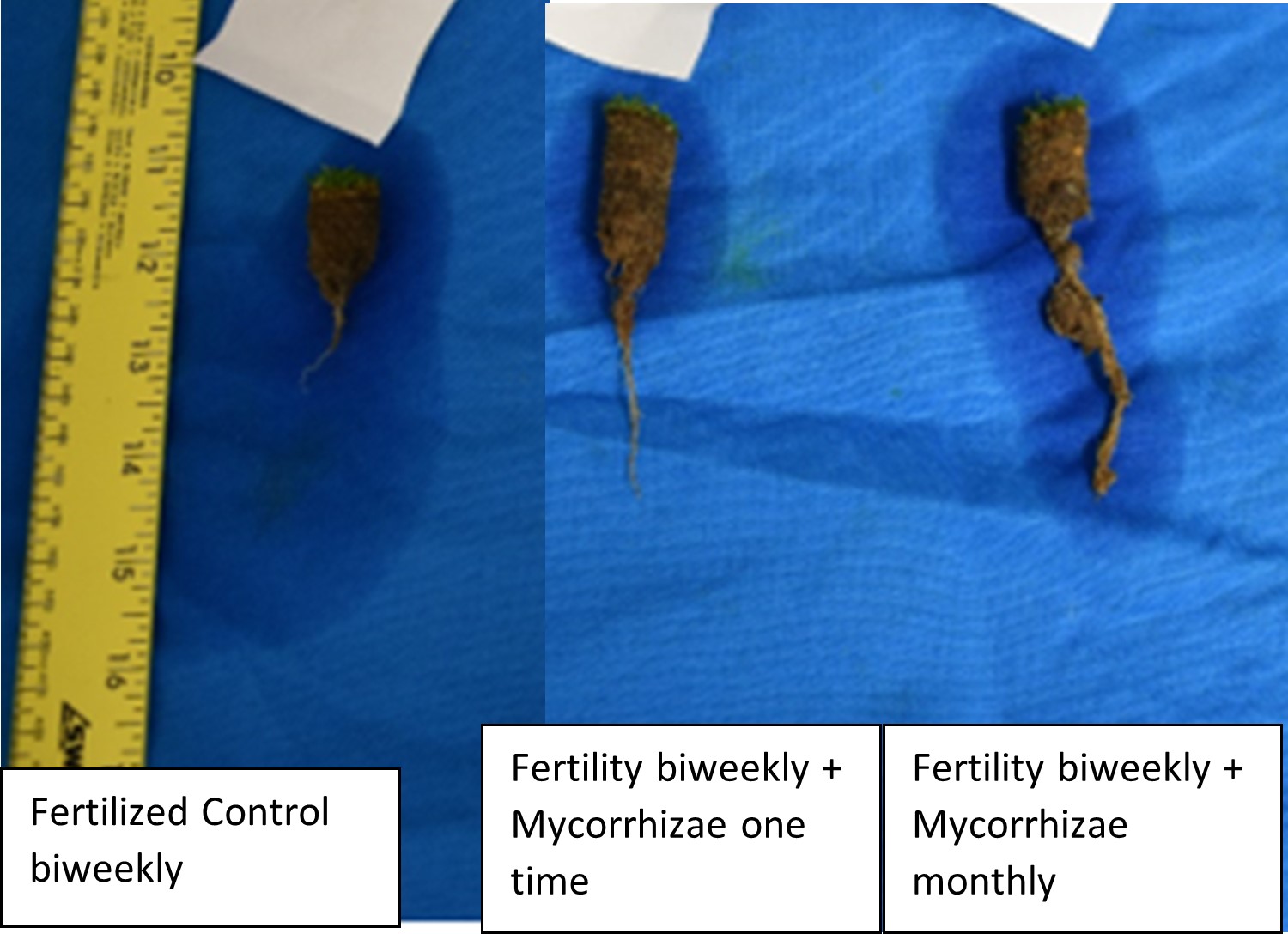
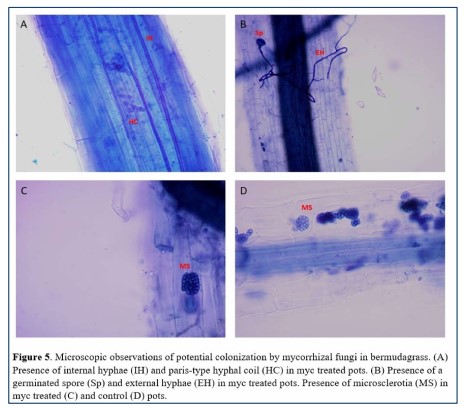
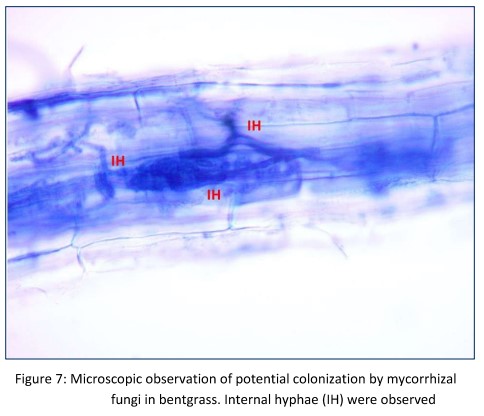
Numerous studies have observed that turfgrass can benefit from mycorrhizae symbiosis. Some of these benefits include faster establishment, enhanced phosphorous uptake, and improved drought tolerance. Our work with Dr. Zhang at Virginia Tech University demonstrated that monthly applications of mycorrhizae can increase bentgrass root biomass relative to a fertilized control (see photo). We also worked with Dr. Sessoms at the University of Minnesota to verify the potential for exogenous applications of mycorrhizal fungi to colonize the root system of both warm and cool season putting green turfgrass varieties (see photos).
 Dr. Sessoms - University of Minnesota
We hope that this relationship, will help turf managers provide healthier turf playing surfaces in the very near future! Stay tuned!
Related Resources

In addition to being the nation’s largest distributor of branded fungicides, herbicides, and insecticides, Harrell’s produces custom-blended fertilizers, specialty liquids, and wetting agents. Additionally, Harrell’s is the exclusive US owner, formulator, and distributor of all POLYON® branded products.
TEAM HARRELL'S
STAY EQUIPPED
Never stop learning. Access FREE continuing education courses from Harrell’s.
LET'S GROW
PRESS RELEASES
PRESS RELEASES
STAY EQUIPPED
Never stop learning. Access FREE continuing education courses from Harrell’s.
LET'S GROW