

What’s the Issue with your Tissue?
6/9/2020 - By Dr. Tom Reed
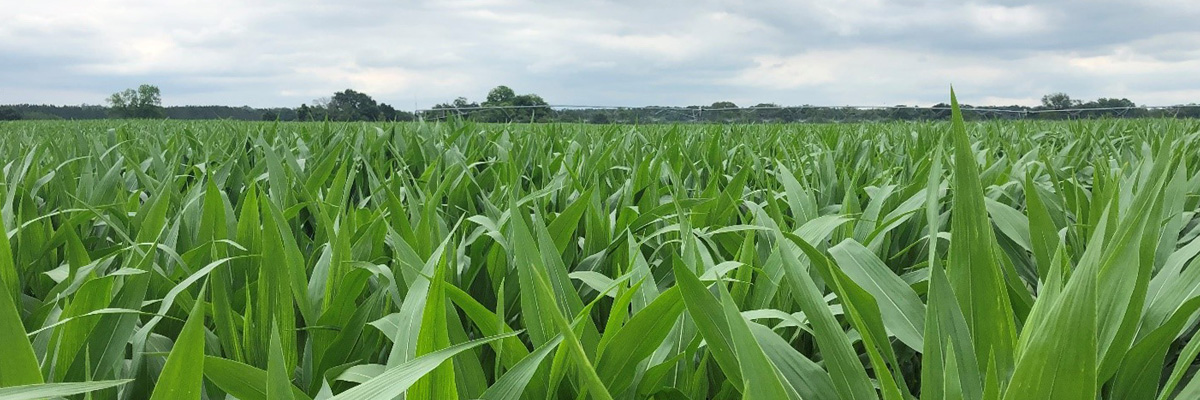
Plant tissue analysis is a valuable tool that—if used properly—can help you achieve production goals like profitable yields, optimized plant health, or reduced environmental impact. What can a tissue analysis provide? It can support in the future correction of nutrient problems or optimize a fertilizer management program by contributing information on essential macro and micronutrients. Tissue analysis may confirm a visual nutrient deficiency symptom or reveal an undetected issue. Combined with soil analysis, tissue analysis is an important means in determining proper fertilizer applications to balance the nutrient availability in the soil with the nutrient requirements of the crop. A routine sampling and analysis program can be utilized for a precise fertilization program that optimizes plant health and minimizes environmental effect.
Sampling
Plant tissue analysis and interpretation are only ever going to be as good as the sample taken. It’s important that samples are collected properly for reliable results. The plant part, maturity stage, and time of sampling are all factors that can affect plant nutrient composition. For each distinctively managed area, the number of plants and part to sample will depend on the crop, growth stage, and conducting analysis laboratory procedures. Even within a certain crop, the sampling procedure may change during the growing season. For example, corn can have three different sampling methods—one for seedling, one prior to tasseling, and one after tasseling. For all of these different stages, the part of the plant and quantity to sample will vary. Follow all guidelines provided by the lab (to which the samples are being sent for analysis) to select the plant part that accurately reflects the nutrient status of the plant. For most crops, and for many nutrients, mature, physiologically active leaves should be sampled. However, there are exceptions, and young tissue may be needed to accurately detect certain nutrients.
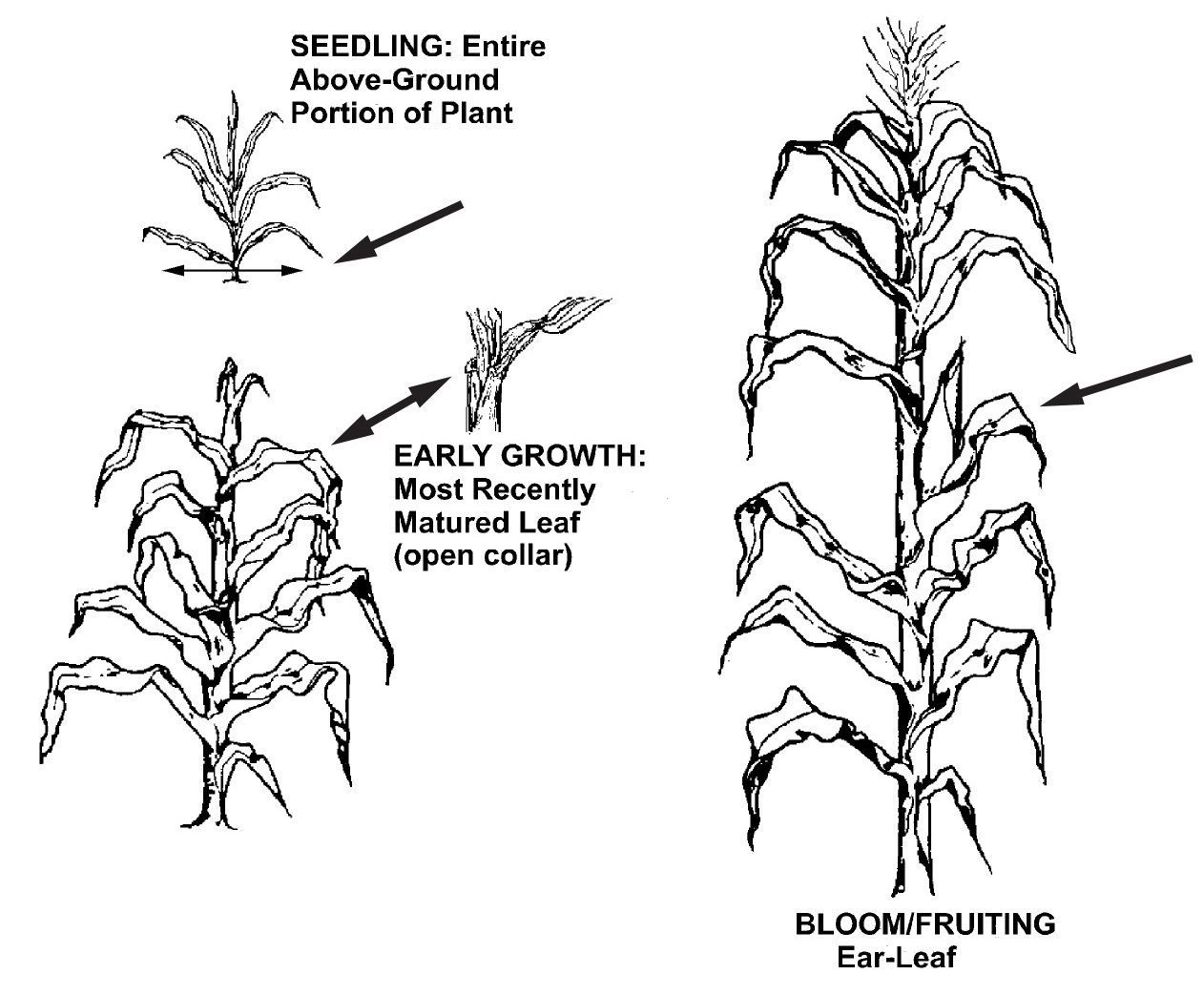
Standardizing your collection and handling process is essential for useful tissue sampling. Consistency is key. Tissue samples should be collected when the plant is actively growing. Areas that are managed differently should be sampled separately. After selecting the area to be sampled, a randomized pattern of collection should be used to obtain a sufficient quantity of samples for an accurate representation of area for lab analysis. The quantity could be 10 to 100 samples for each area, depending on the crop and growth stage, and recommendations for quantity to specific sampling should be followed. As nutrient values may change throughout the day, collect samples at the same time of day. Ideally, samples should be collected during a time of the day when climatic conditions are mild, usually in the morning. Collect from healthy areas to monitor soil fertility trends. If there is an area of concern, sample separately and compare the results with those from the standard area. Do not sample from moisture or temperature stressed areas, areas with pest pressure, and avoid areas soon after pesticides or fertilizers have been applied. Avoid sampling areas not typical of the field.
After sampling, tissue should be placed in properly labeled paper bags and sent to the lab immediately for analysis, as fresh plant material is still biologically active after collection. Avoid plastic bags as they can hold heat and moisture. When collecting, do not use a metal container as it may contaminate the sample. If it’s not possible to send the tissue samples immediately to the lab, then follow the lab-recommended instructions for storage and handling. This may include refrigeration or drying of the sample. Before shipping, follow lab protocols for cleaning and drying samples that may be contaminated with soil and chemical residues.
Analysis and Interpretation
Determining the flow of nutrients to plant tissues during the growing season is a significant factor in optimizing a crop and one that requires precision laboratory analysis of a sample. Minimizing the time between sampling to the results in the grower’s hand is essential. Depending on diagnostics, this process can be anywhere from next day to less than a week. If possible, it’s recommended to use the same lab throughout the season and over the years as lab procedures and methods can influence tissue results.
Plant tissue analysis is a chemical evaluation of nutritional status at a specific growth stage of a portion of the crop. The tissue test report indicates whether this portion of crop will respond to fertilization. Analyses may include critical values, sufficiency ranges, and ratios. Extensive research has been done to determine the relationship between available nutrients, fertilization application and yield responses for each crop. Tissue analysis can be used to efficiently diagnose nutrient deficiencies or toxicities and better manage nutrient applications. Tissue analysis can serve as an indicator as to which nutrients are in sufficient concentration. If results indicate a deficiency, an increase in fertilization for that nutrient may be required. If test results are above the sufficiency range, the fertilization program may need to be throttled back a bit. Any adjustment in fertilization should be reasonable. Laboratories may provide interpretations and recommendations based upon results—these should be compared to local field conditions. Understanding the source of labeling of values and ranges provided by each lab is needed to make further management decisions. Lab nutrient status labels may be based on true critical concentrations or averages of what the lab has observed. Various factors can influence tissue concentrations, and caution should be taken when acting on results. Tissue sampling should be conducted in combination with a routine soil testing program.
Summary
Collecting a quality, representative sample requires consistency and is worth the time and effort. Caution should be exercised when considering implementing a fertilizer application off of a single sampling event or when interpreting fertilizer recommendations generated by commercial laboratories. The grower can make a knowledgeable decision regarding crop fertilizer applications based on consistent sampling over time. Nutrients may show low or critical on a plant tissue analysis report, yet there are no signs or symptoms of deficiency on the plant. This is not always understood, and corrective fertilizer applications for these perceived deficiencies aren’t always necessary. Growers and agronomists are encouraged to look at multiple tissue sample results over a period of time to establish a trend before making a corrective application.
Recently Harrell’s partnered up with The Nature Conservancy and The Fertilizer Institute to endorse the 4R Nutrient Stewardship Program. With roots in agriculture, but applicability to all growing markets, 4R Nutrient Stewardship is an innovative and science-based approach that offers enhanced environmental protection, increased crop production and quality, increased grower profitability, and improved soil productivity and sustainability. The concept is to use the right nutrient source, at the right rate, the right time, and in the right place to support nutrient needs of plants. It’s important to improve fertilizer efficiency to conserve resources, minimize environmental effects, and reduce costs. Tissue analysis is a great way to understand the crop nutrient requirements and optimize fertilizer management.
Related Resources

In addition to being the nation’s largest distributor of branded fungicides, herbicides, and insecticides, Harrell’s produces custom-blended fertilizers, specialty liquids, and wetting agents. Additionally, Harrell’s is the exclusive US owner, formulator, and distributor of all POLYON® branded products.
TEAM HARRELL'S
STAY EQUIPPED
Never stop learning. Access FREE continuing education courses from Harrell’s.
LET'S GROW
PRESS RELEASES
PRESS RELEASES
STAY EQUIPPED
Never stop learning. Access FREE continuing education courses from Harrell’s.
LET'S GROW