

Tip Blight - Managing a Tough and Very Diverse Disease
3/21/2023 - By Dr. Aaron Palmateer
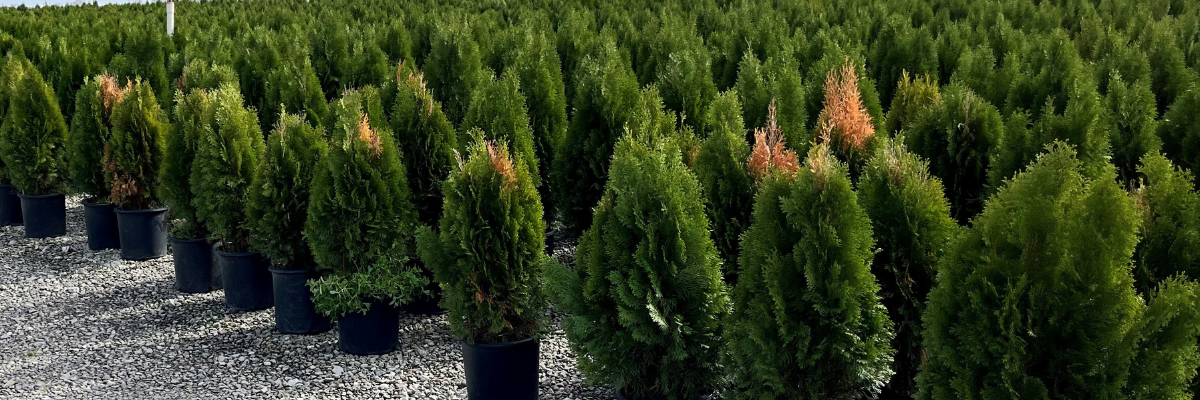
When it comes to trees and shrubs, the most common and economically
important pathogens are fungi that cause tip blight and often branch dieback
diseases. It seems most conifers including cedar, cypress, fir, juniper, pine,
redwood, spruce, and yew, are all susceptible to one or even several
fungal diseases described as a tip blight.
What is Tip Blight?
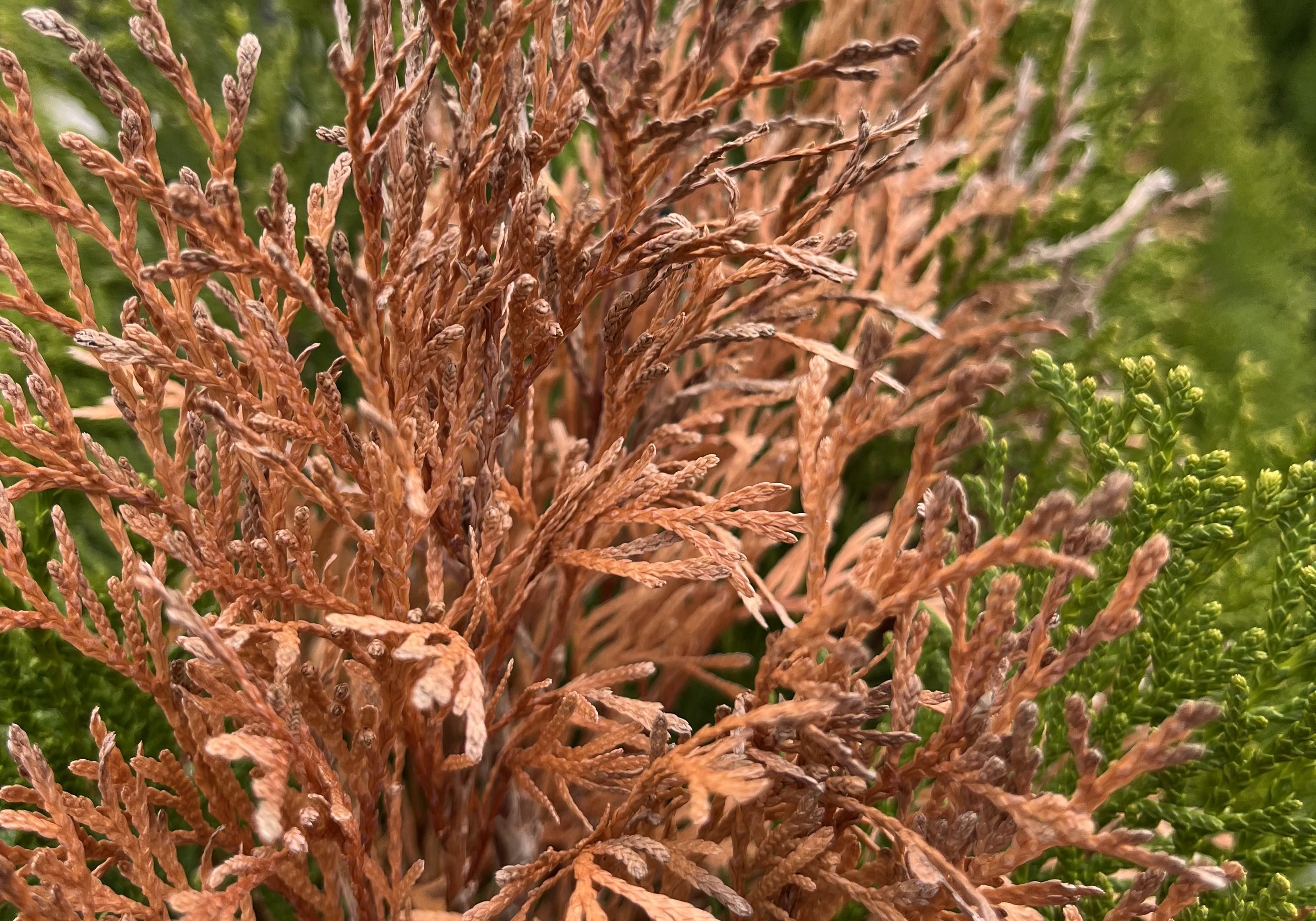
A disease characterized by general and rapid killing is a blight. Thus,
tip blight is a rapid killing of the branch tips, with small brown to black
dots or fruiting structures of the fungi often visible on diseased tissue. Some
of the names associated with these fungi include Diplodia, Kabatina,
Pestalotiopsis, Phomopsis, and Sclerophoma.
Tip Blight and Branch Dieback Disease
One thing that tip blight and branch dieback diseases have in
common is that they are mostly associated with plant stress and often occur
under adverse environmental conditions such as temperature and moisture
extremes (i.e., freeze or drought), pesticide damage (i.e., improper rate or
host incompatibility) and nutritional disorders (i.e., deficiency or toxicity).
In fact, some of these fungi are very much opportunistic, incapable of
penetrating intact healthy plant foliage and must enter through wounds made by
insects or injuries caused by ice or snow.
Examples include tip blight caused by Kabatina and Sclerophoma,
which are both common in the early spring months on diverse conifers (i.e.,
junipers, pines, firs, arborvitae), causing the tips of young branches to turn
chlorotic (yellow) and then necrotic (brown).
Other Related Diseases to Tip Blight
Here are a few of the other most common and deadly blight
diseases to watch out for in the spring/summer months:
Phomopsis Blight
Another blight disease that appears in late spring and throughout
summer, affecting many members of the cypress family, is Phomopsis blight. The
fungal pathogen attacks young succulent shoot tips leading to twig cankers and
often resulting in dieback, especially on plants that have been under stress
due to drought or temperature extremes. This is one of the major diseases of
junipers in both landscapes and nurseries. It reduces the aesthetic quality of
plants and is often associated with transplant shock and failure in the
landscape. Young, grafted nursery stock including seedlings are highly
susceptible and affected hosts will often die.
Diplodia Blight
Diplodia blight (aka Sphaeropsis blight) is one of the most common
diseases of two and three-needle pine tree species (i.e., Australian, Scots,
Red, Mugo, Ponderosa). The disease can be devastating when trees are stressed
due to water shortage, heat, compacted soil, shade, insect damage, and frost,
making it a threat to pines through the majority of the year.
Although most severe on pines, the disease has been reported on
other conifers including arborvitae, Douglas-fir, Norway spruce, Colorado blue
spruce, noble fir, silver fir, cedars, and junipers. The most common symptoms
are tip blight and death of the lowest branches, and the disease is more common
during wet spring weather, which is highly favorable for spore production,
infection, and spread.
Pestalotiopsis Tip Blight
One other common fungal tip blight disease that occurs on numerous
trees and shrubs including conifers is Pestalotiopsis tip blight. Depending on
the host plant there are many species of Pestalotiopsis associated with leaf
spot, tip blight, twig dieback, and canker diseases. These fungi can be found
colonizing and residing in healthy plant tissue as endophytes that will not
cause disease until signals from the environment or host initiates the fungus
to attack. This means that plants can appear healthy but are infected and will
develop symptoms of disease when conditions are favorable. This can be
problematic for nursery growers bringing in propagation material or for
landscapers doing new installs.
How Can I Manage Tip Blight?
Management recommendations for all these fungal tip blight
pathogens are generally the same.
·
Always purchase quality plant material that is pest and disease
free. Starting healthy
and using preventative measures requires fewer pesticide applications with
lower rates as opposed to trying to control something already present.
·
The more favorable the environment is for the plant means there
will be less stress and less stress means less disease. Most important is an attempt
to minimize stress through ideal site selection and plant installation (i.e., the
right amount of sun/shade, correct planting depth), proper horticultural
practices (i.e., adequate water/nutrition, pruning), and judicious use of
pesticides (i.e., follow the product label).
·
Prune only under dry conditions and use clean sharp blades to cut
2 – 3” into live wood to ensure diseased tissue is removed. All diseased tissue
should be removed and discarded or burned. Tools should be properly sanitized
using a commercial disinfectant such as Green-Shield® or Oxidate®.
·
Pruning should be followed with a fungicide application to protect
freshly cut tissue and minimize the potential for reinfection. Products that
are acropetal penetrants such as Azoxy 2SC and T-methyl are very
effective as foliar sprays and should be applied in rotation for managing
fungal tip blight pathogens.
Reach Out to Your Harrell’s Rep for More on Tip Blight
Managing diseases like tip blight is very tricky, but not
impossible, and your
Harrell’s Rep is here to help! Reach out for more recommendations, programs,
products, and even diagnosis on your plants for a healthy and bright growing
season.
Related Resources

In addition to being the nation’s largest distributor of branded fungicides, herbicides, and insecticides, Harrell’s produces custom-blended fertilizers, specialty liquids, and wetting agents. Additionally, Harrell’s is the exclusive US owner, formulator, and distributor of all POLYON® branded products.
TEAM HARRELL'S
STAY EQUIPPED
Never stop learning. Access FREE continuing education courses from Harrell’s.
LET'S GROW
PRESS RELEASES
PRESS RELEASES
STAY EQUIPPED
Never stop learning. Access FREE continuing education courses from Harrell’s.
LET'S GROW