

Thinking Inside the Box—A Hospitable Approach to Birds on the Course
3/8/2021 - By William Buehn
Brian Beckner has enjoyed a rather unconventional career on the golf course. Growing up with a love for the game, it was all but decided that he’d pursue a life as a golf professional, but after his freshman year in college, his draw to the outdoors and the natural world pulled him in a slightly different direction. Golf course maintenance, he realized, seemed like a much better fit.
It was the idea of learning more about the turf beneath his feet and the opportunity to better understand how to manage it that captivated his curiosity. He wondered, “How did that superintendent get the golf course to that point?”
So, he took a college job at Mira Vista Golf Club in Fort Worth, Texas to see how he liked it—he was hooked. Then, after a 20-year tenure in the industry, the 13-year golf course superintendent traded in his core puller and moisture meter for binoculars, birdhouse materials, and a passion-fueled business plan.
Growing up, he was always out in the wild. If he wasn’t sailing or exploring with his grandparents in Florida, he was pushing cattle and working the farm for his grandfather in North Texas. His affinity for nature was always there, but it wasn’t until he moved to Florida for an assistant super spot in 1996 that he fully realized the wildlife stewardship opportunities available to golf courses, particularly regarding bird habitat.
In 2013, he officially stepped out of the superintendent world to start his own business, Native Bird Boxes, but he didn’t go too far. He still spends most days out on the golf course, just in a slightly different capacity. Now, he’s living his dream by helping golf courses and other urban greenspaces implement and maintain integrated bird habitat programs.
So how did you get involved in the birding programs?
When I worked at Club Pelican Bay in Naples, Florida, I assisted in doing the Audubon International program there for bird housing. We had a gentleman who was super awesome—Mr. George McBath. He did a lot of Audubon birding programs for us, and at Pelican Bay, I was assigned to Mr. McBath when he would show up on property.
So, I got really big into birding, paying attention to what species I was seeing and their calls and their sounds. Mr. McBath was very focused on teaching audibly. It wasn't always about seeing things. Could you learn to identify them by their sound? And so that's where my interest elevated to, “Wow, this is really neat. How can I learn more?”
Then, when I left Pelican Bay and went to La Playa, I did my own birding programs with Mr. McBath. So, for the next twelve and a half years working at La Playa, I just paid strong attention to the wildlife and the birds and the ecosystem that I had, always wondering, “How could I benefit and see more wildlife?” That's what kept intriguing me.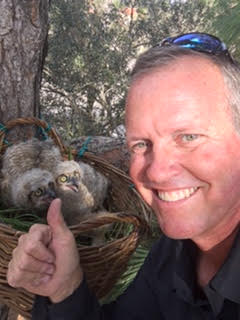
And how about setting off and making a business out of it?
In 2013, I was still at La Playa, and I just needed to change my gears. I went down to visit with Mr. McBath one day, and I said, “You know, I love your business.” He immediately looked at me and he kind of smirked and said, “Brian, you will never be able to make a living for a family on what I do.” It was almost like he knew what I was about to say.
So, I said, “But George, if a program were set up like this, and you ran it with this business model, a man could make a living.” He looked at me and said, “Possibly, but you need to really think about it.” He goes, “These are birds, and not everybody's into it.”
It was only about two weeks later, and I knew that I needed go for it. So, I dropped everything and went back to visit George again. I said, “Hey George, I would like to make an offer for your business.” And he said, “Do you have a business plan?” I then explained to him the entire business plan and the model that I had developed. He said, “You know what kid? I just sold my house here in Naples and I'm actually moving in a couple of weeks. I hope you do well, and I hope you have fun—and remember, it's all about the wildlife.” Then, he turned around and walked away from me, and that was the last time I saw him.
So, in November of 2013 I submitted my resignation, and I announced to a couple of clubs that were friends and colleagues who had used Mr. McBath about how I would be carrying the services forward. I told them, “I would love to be able to take care of what he started for you years ago, and I'm going to be your point of contact now.” And that's how this whole thing started.
How do you make the boxes?
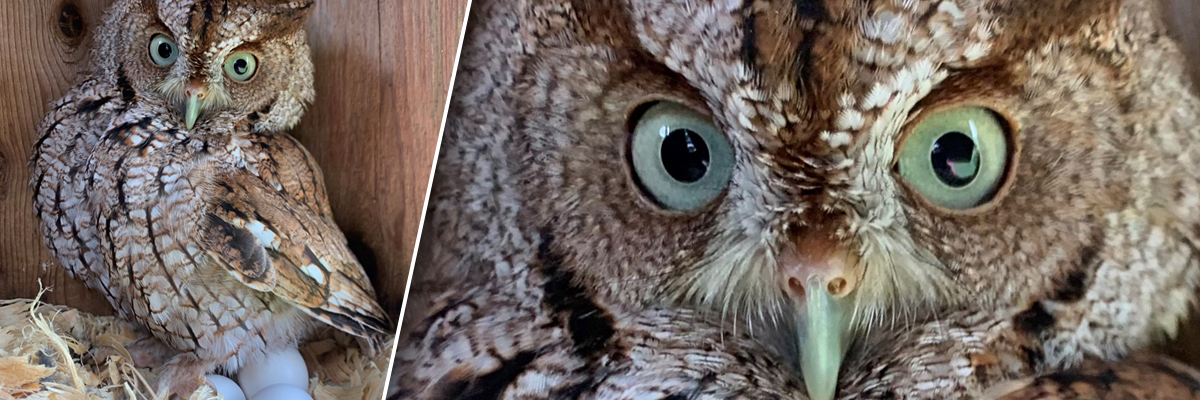
I use rough Cedar for all of my birdhouses. It’s very well known for lasting long and enduring weather. We have four basic plans that I stand by for making the birdhouses for the different species. We make them for Eastern Bluebirds, Carolina Wrens, Tufted Titmice, Red-bellied Woodpeckers and all the woodpecker families, and then you jump up into Eastern Screech Owls. A lot of it depends on the inside size of the birdhouse and the depth of cavity, but your entrance hole also determines what species you're going to get and what setting to put the birdhouse in.
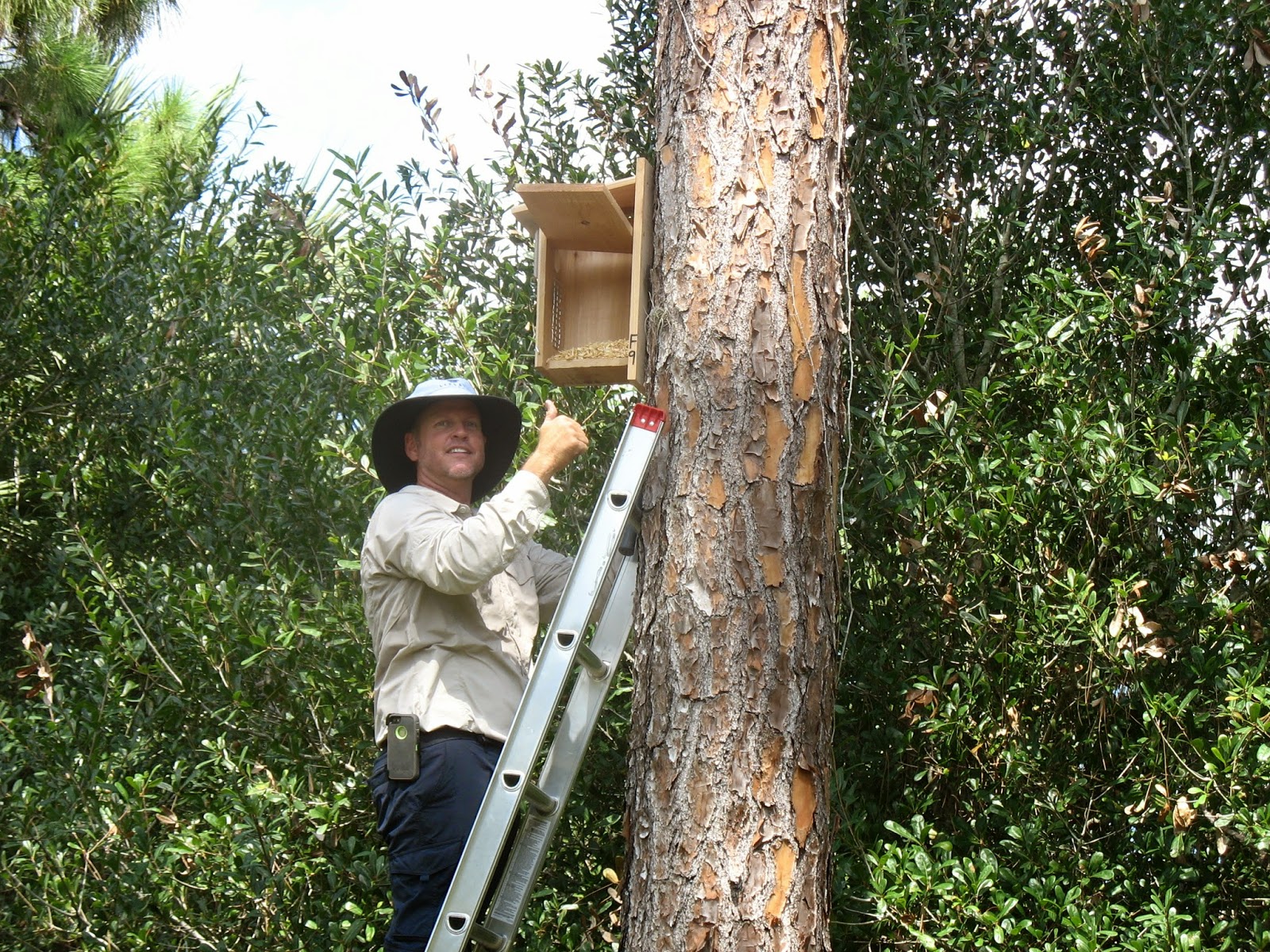 Installing an Eastern Screech Owl Bird Box
What makes a golf course a good place for the bird boxes?
So, number one—a balanced ecosystem. When you have a balanced ecosystem, you have space, shelter, and food all in proper amounts.
Your space could be the large open turf area, or it could be the open area under the pine trees. Your shelter could be habitat of vegetation, so ornamentals and trees, scrub native habitat, or lake edges where a bird like a snipe or shore bird would take cover. Then you have your food resources—we’re talking about lakes that are plentiful with fish and aquatic plants in the littoral zones or your vegetation, ornamentals, and trees.
When you put the three of those together—and if they’re properly maintained and managed—you’re going to be able to encourage more wildlife to your location. So, with all that, golf courses really are the perfect urban greenspace, and that's where golf course superintendents do such a great job because they're such great environmental stewards. Then they can implement birding programs and other unique environmental situations that show others who don't understand the golfing world about what it takes to properly maintain and manage a property.
What’s the strategy behind your box setup on a course? Do you usually put out specific boxes for certain species in mind, or is it more of a general setup?
If I go to a new club, the first thing I explain is that we're going to try to achieve the top birds that we know will nest. First, we’ll go for an Eastern Bluebird. If you have a preserve habitat, then we’ll try for Carolina Wren. We’ll set up for the Red-bellied Woodpecker, which I can promise as soon as we put up any of the birdhouses, the Red-bellied Woodpecker—the most curious species—is going to come and peck on it, and we’ll probably have one of them inside of a birdhouse by the first night. We’ll also set up an Eastern Screech Owl style box, which might get you a Screech Owl, a Pileated Woodpecker, or maybe if you’re really lucky, an American Kestrel.
And I usually try to do two of each style on the front nine and two of each style on the back nine. I also always put in there for one Purple Martin house. Purple Martins (migratory birds out of South America and very voracious insect eaters) are always appreciated by customers. So, that's what I refer to it as the starter kit, and then we build on it from there.
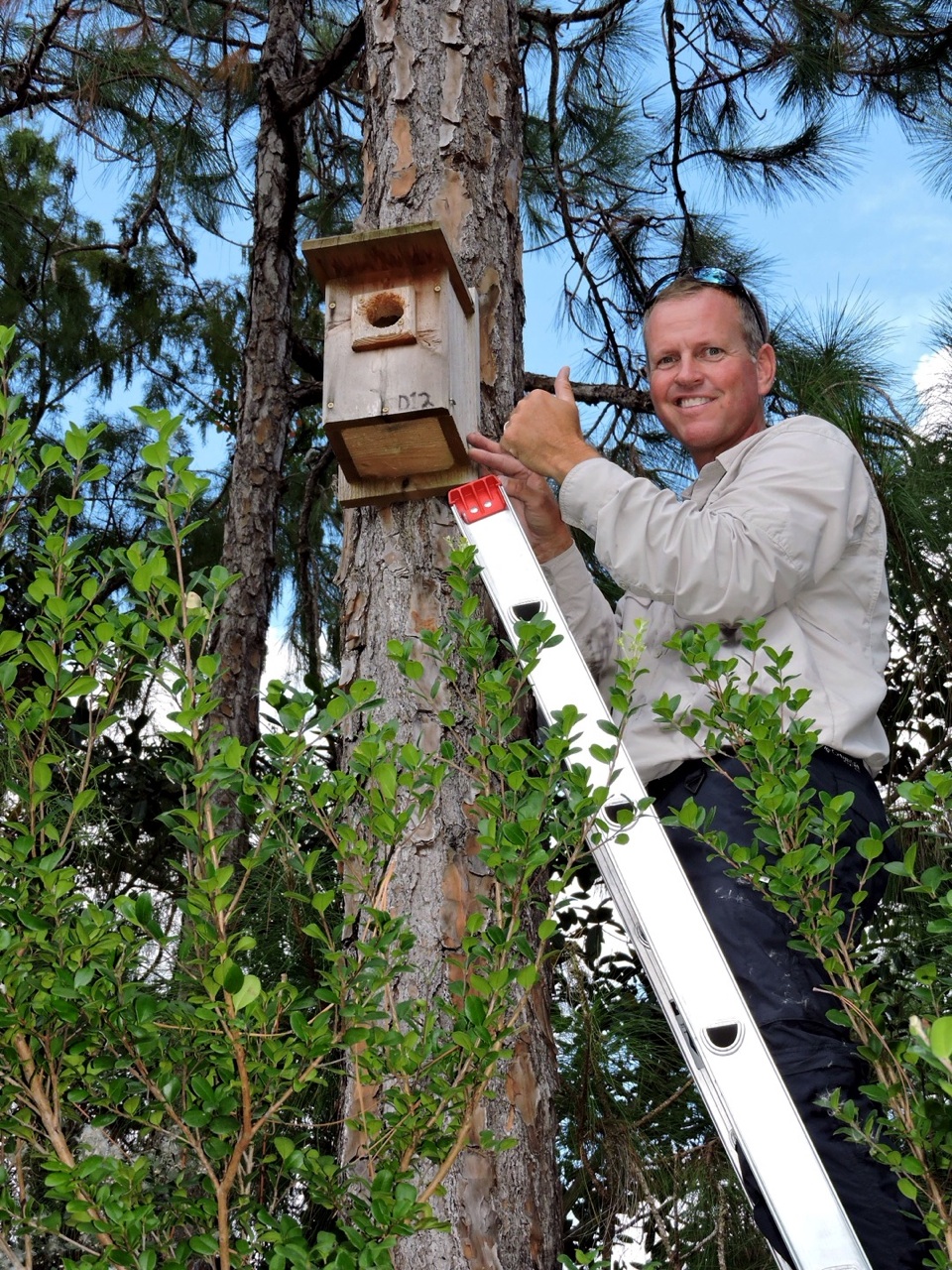 Eastern Bluebird Box
Do you ever get specific requests from customers that are looking to host certain species?
I have one specific community that wants to fledge as many screech owls as they can because they would like to reduce their rodent populations—specifically palm rats—in a natural way. So, in their community, we only have screech owl boxes.
We focus on the proper habitat and proper location for screech owls only, knowing that if we are producing a wildlife species that would eat small rodents such as rats, we are beneficially suppressing rodent opportunities in their community without using rodenticides, which could cause secondary poisoning to other species.
Any interesting projects that you’ve done lately?
Recently, I've been doing some Bobwhite Quail releases with a club, Quail Creek, right here in Naples. Back in the day, when the club was breaking ground, there were Bobwhite Quail all over the property, which some of the inaugural members at that facility remember well. So, a few of those members have led the charge in getting donations, and they procured me for the hatchery to introduce the birds back into their properties. The majority of the construction on the property has ceased because they're built out, but they have still maintained and managed a multitude of their native areas where bobwhite quail would nest or find refuge. So, that's been a lot of fun.
What’s the goal with Native Bird Boxes?
First of all, I want it to be a beneficial opportunity for anybody and everybody that would want it. I understand every situation is different because everybody's views of being a country club or a golf club are different for their membership, and I realize that this is not something for everybody. But, if we as managers ignore the fact that we could touch even five percent of our membership about wildlife on our properties, then I think we're missing the opportunity that is available for acclimation and gaining more people on our positive side.
At the same time, there's nothing negative about birdhouses and birding on a golf course. It is showing proper habitat abilities for wildlife and wildlife proliferation. If I can be an advocate and a resource for golf courses and communities in naturalizing locations to help wildlife, to share it and bring it closer to humans, and collect the data showing that they are having beneficial offspring, that's my ultimate goal.
Interested in Learning More?
Check out the Native Bird Boxes Social Media Platforms:
Related Resources

In addition to being the nation’s largest distributor of branded fungicides, herbicides, and insecticides, Harrell’s produces custom-blended fertilizers, specialty liquids, and wetting agents. Additionally, Harrell’s is the exclusive US owner, formulator, and distributor of all POLYON® branded products.
TEAM HARRELL'S
STAY EQUIPPED
Never stop learning. Access FREE continuing education courses from Harrell’s.
LET'S GROW
PRESS RELEASES
PRESS RELEASES
STAY EQUIPPED
Never stop learning. Access FREE continuing education courses from Harrell’s.
LET'S GROW