

The Bog
3/24/2020 - By Scott Martiniere
When you hear the term “bog,” your initial thought might be of someone wading through a pond, harvesting cranberries, but what really is a bog, and what are they good for? A bog is a naturally occurring low, wet area that holds a concentration of decomposing reeds, sedges, marsh grasses, cattails and other associated swamp plants. Bogs are formed when wetland vegetation fills an ancient lakebed, but doesn’t fully decay due to the moist, anaerobic environment. Rather, the plant fibers are partially preserved under these anaerobic conditions. The result is peat: a soil-like material with physical properties that can be perfect for potting soils.
It takes hundreds of years to form a bog, and experts estimate that the rate of growth for a bog in Florida is about 6 inches per 100 years. You’ll find the most peat produced in Florida, Michigan and Minnesota, respectively, of which 95% is used by the horticulture industry. Located in one of the richest native peat areas in Florida (Avon Park), the Harrell’s bog is comprised mainly of reeds, sedge, and swamp grasses. It has formed a very fibrous and uniform native peat, which makes for one of the best sources of horticulture potting soil for use in Central and South Florida. Well suited for trees or woody ornamentals, or even for tropicals in South Florida, native Florida peat has conditioning properties that enable it to hold moisture & nutrients and allow it to break down very slowly over time.
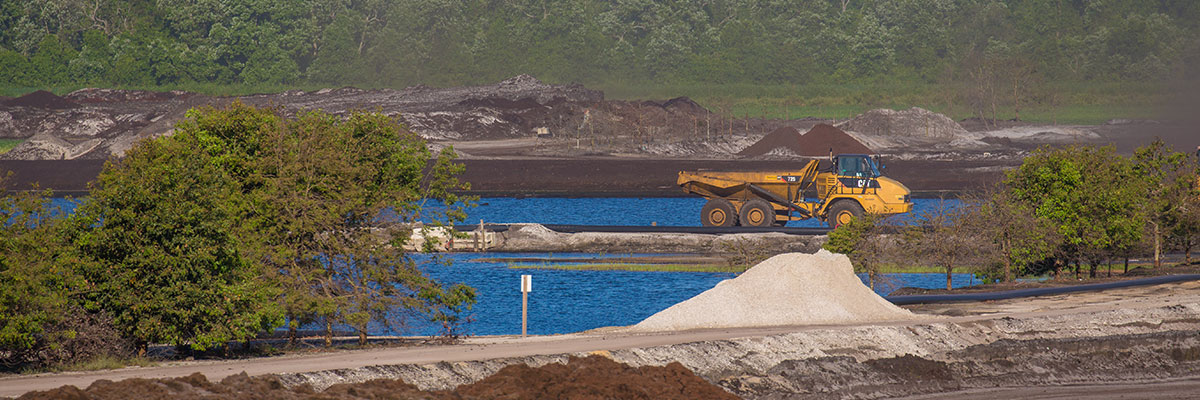
Harrell’s currently mines its bog, which was acquired in late 2010, with a state-of-the-art underwater dredge. The peat is harvested underwater and pumped into holding ponds, then allowed to dry before use. Florida peat can weigh anywhere from 900 to 1,400 pounds per cubic yard, but Harrell’s Peat is generally lighter than other Florida peat. The average pH of the Harrell’s peat is 5.0 with extremely low levels of soluble salts and a high organic matter content. At the time of harvest, Harrell’s Peat has a moisture content of about 65% or higher, but after adequate drying, the peat can be combined with items like pine bark, hardwood bark, cypress, coir, Canadian peat, etc. to produce top quality horticulture potting soils. This process is completed in a mix machine called Super Max. Super Max is an inline mixer that can custom mix the aforementioned components with other ingredients like micronutrients, Talstar, or POLYON® controlled-release fertilizer to form a consistent, uniform potting mix. Ask your Harrell’s representative about how Harrell's PROfertilizer® featuring POLYON® fertilizer combined with Harrell’s rich, pure peat from central Florida could be your path to success!
Authored by Scott Martiniere
Related Resources

In addition to being the nation’s largest distributor of branded fungicides, herbicides, and insecticides, Harrell’s produces custom-blended fertilizers, specialty liquids, and wetting agents. Additionally, Harrell’s is the exclusive US owner, formulator, and distributor of all POLYON® branded products.
TEAM HARRELL'S
STAY EQUIPPED
Never stop learning. Access FREE continuing education courses from Harrell’s.
LET'S GROW
PRESS RELEASES
PRESS RELEASES
STAY EQUIPPED
Never stop learning. Access FREE continuing education courses from Harrell’s.
LET'S GROW