

The Importance of Rate and Uniformity in Broadcast Application
3/30/2021 - By Dr. Tom Reed
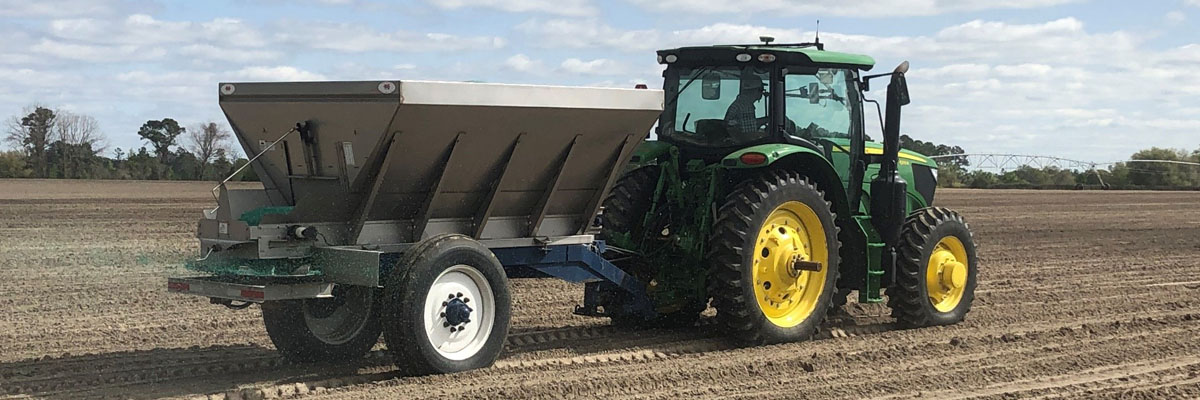
For maximum crop benefit, it is important to calibrate broadcast spreaders properly, ensuring the desired rate of granular fertilizer is applied uniformly. The correct amount of fertilizer may be applied per acre; however, if the material is not being distributed properly, then the growth of your plants may suffer. Performance failures can be directly related to uneven application of blended material. Applying fertilizer more than the desired amount may result in nutrients being lost to the environment or increased salt concentrations in the soil, which are detrimental to the crop. On the flipside, under application in other areas may compromise crop growth due to insufficient nutrients.
Spinner-disc spreaders are commonly used to surface apply granular fertilizers. Accurate metering of material, correct material delivery onto the spinner-discs, and uniform distribution of the material across the swath are important aspects to ensure accurate spreading, with these applicators. A lot of factors influence spreader performance, to achieve expected application with spinner-disc spreaders proper calibration is required. This article provides an outline to accurately evaluate spread pattern uniformity.
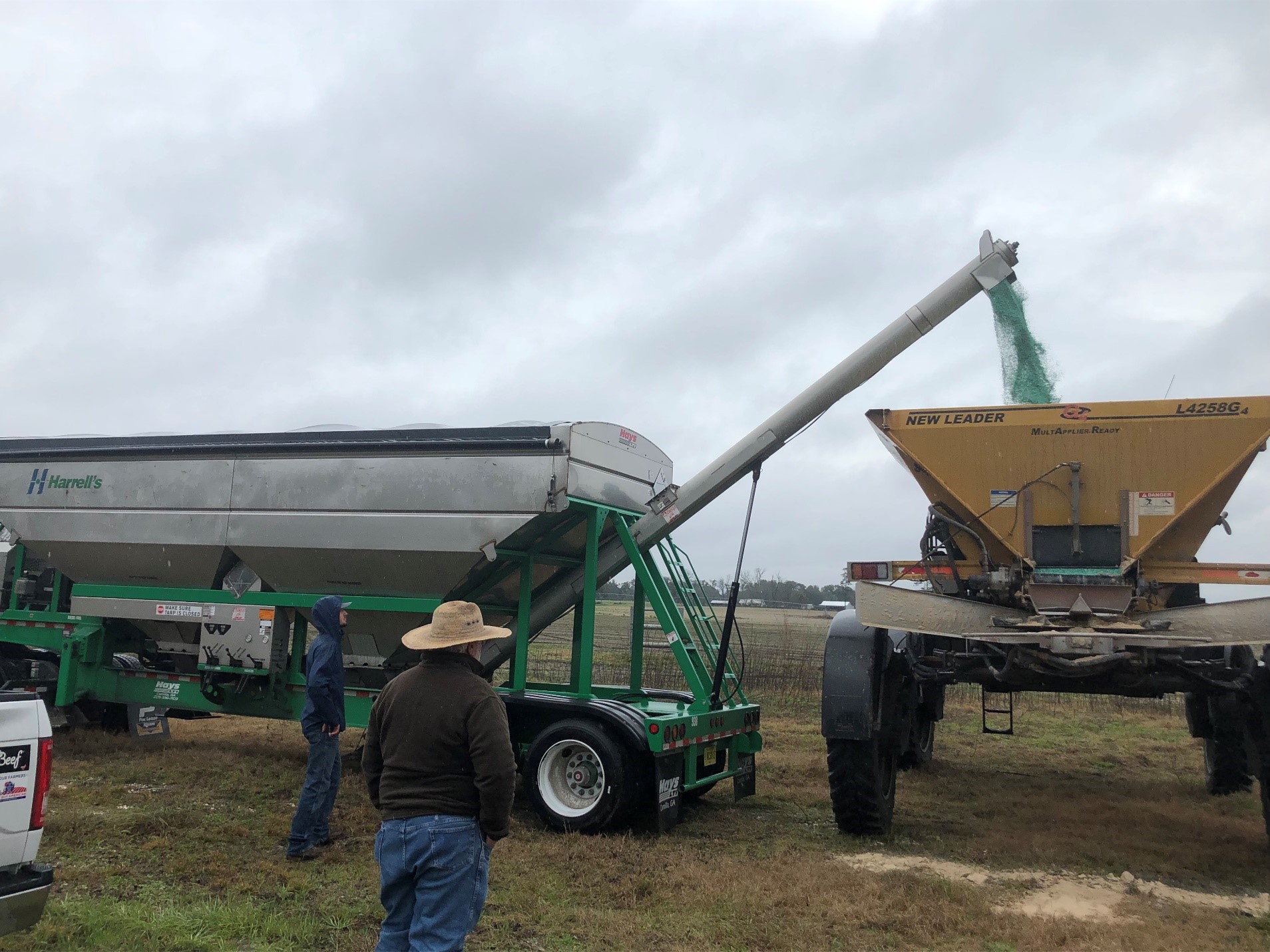
Conducting a standard pan test:
Conducting a standard pan test is a way to evaluate the degree of uniformity across application swath, spread pattern, swath width, and rate of application. The standard pan test method can be conducted using the following procedure:
- Place identical collection pans (1-3 ft2, approximately 4 in deep, grid baffle on bottom to prevent fertilizer bouncing out) level on 2.5 ft intervals, removing pans in way of spreader tires. The number of collection pans needed will depend on the desired swath width of the applicator. It is recommended to place pans at twice the width of the target swath to catch all material being spread. The size of the pans should be in proportion to the rates of application being evaluated.
- Gather appropriately sized test tube for each collection pan to measure material collected, placed on a rack to evaluate spread pattern visually. Alternatively, collection samples can be weighed immediately without use of test tubes.
- Calibrate on a level field at a constant field speed and engine rpm. Check that spinner discs are operating at a correct, constant speed.
- Convert the amount of material in each collection pan to an application rate by dividing the mass of material by the area of the collection tray.
- Evaluate if the spread pattern is desirable for field application. If an undesirable spread pattern is measured, the next step is to adjust the spreader setup to obtain uniform spread, conducting one adjustment at a time. Depending on the type of spreader and spread pattern, proper adjustments can be made through this process. If spread is still undesirable, check for mechanical issues causing irregularities.
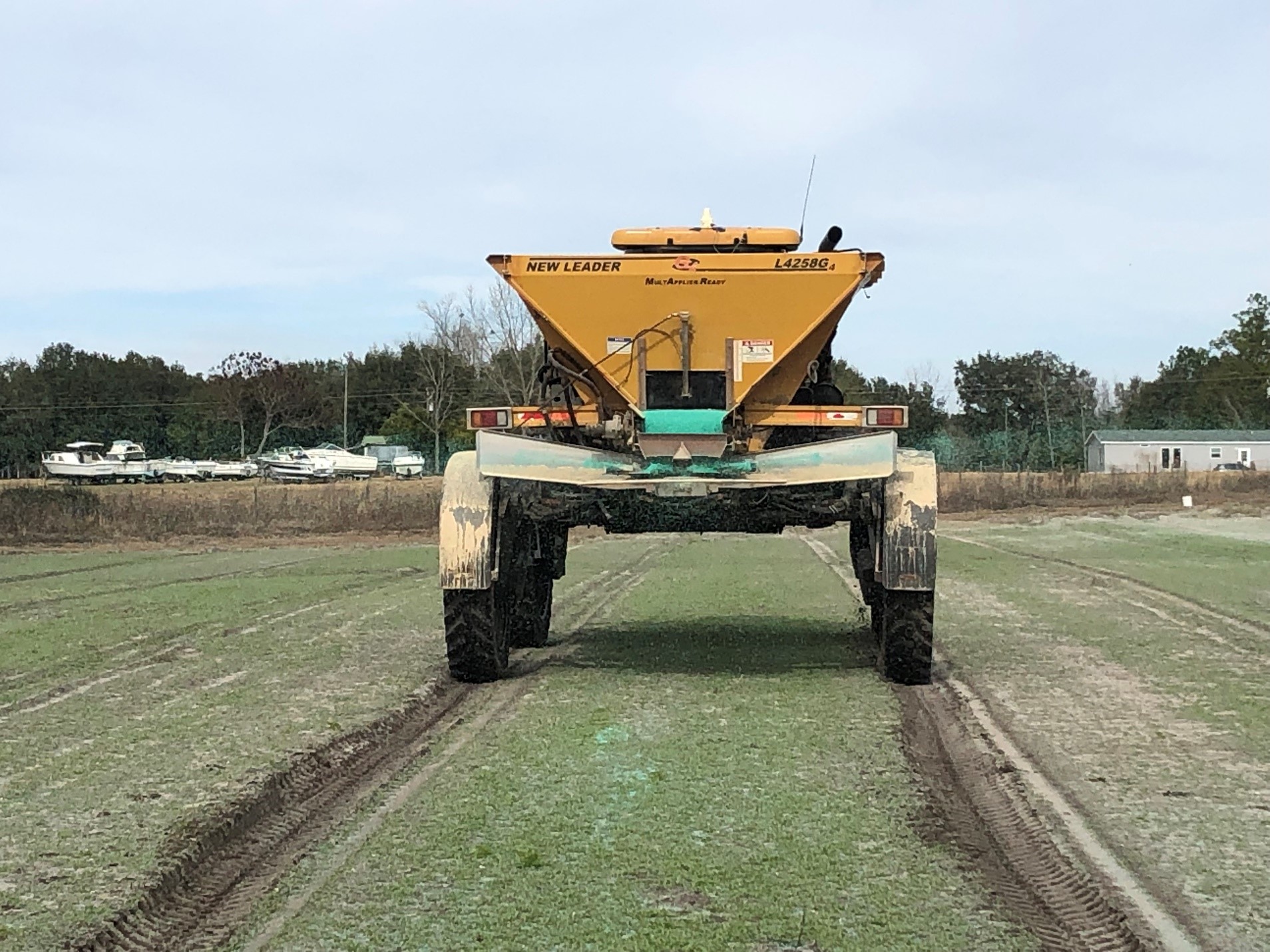
Proper calibration of equipment and evaluation of its performance are critical for best results. Calibration checks are especially important when changing from one type of material to another, to different rates of application, and when altering speeds or other operating conditions. It may take some trial and error to calibrate the spreader, but with a few calibrations you can achieve the desired rate for optimal distribution, and in turn, growth.
Related Resources

In addition to being the nation’s largest distributor of branded fungicides, herbicides, and insecticides, Harrell’s produces custom-blended fertilizers, specialty liquids, and wetting agents. Additionally, Harrell’s is the exclusive US owner, formulator, and distributor of all POLYON® branded products.
TEAM HARRELL'S
STAY EQUIPPED
Never stop learning. Access FREE continuing education courses from Harrell’s.
LET'S GROW
PRESS RELEASES
PRESS RELEASES
STAY EQUIPPED
Never stop learning. Access FREE continuing education courses from Harrell’s.
LET'S GROW