

The Cost of Over Irrigating
2/27/2024 - By Dr. Tom Reed
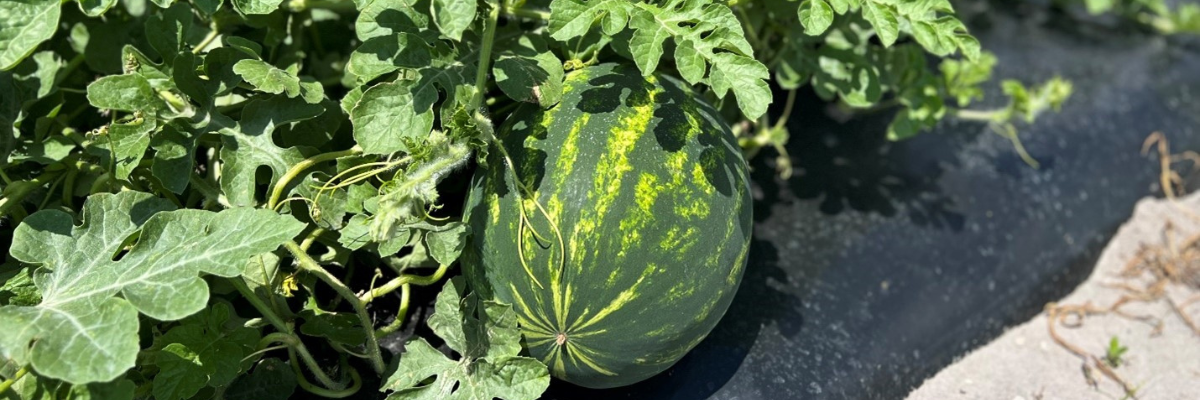
Irrigation management is
important to maximize any fertilizer investment. When utilizing a technology
like POLYON® controlled-release fertilizer (CRF) it is sensible to conduct
practices to optimize that application.
Irrigation has a significant
impact on fertilizer in the soil. Producers who apply too much water may not only
waste that resource but also lose applied conventional fertilizer or nutrients
that have been released from a CRF source. Consequently, this leaching of
nutrients results in reduced yields and profits. This applies across cropping
systems but is particularly relevant in Florida watermelon production.
Over-Irrigating
Watermelon requires considerable
irrigation, particularly in warm seasons that lack rainfall, and because production
is predominantly on sandy soils that have minimal nutrient-holding capacity. Growers
should be cautious about protecting what nutrients are in the soil. Early in
the season, before plants are well established, is an especially vulnerable
time for nutrients to be carried away from the root zone by over-irrigating due
to watermelons having approximately 3/4 of their roots in the top 12” of soil.
Fertilizer moves with water applied, therefore, if the irrigation wetting zone
is past 12” it is unlikely for much of those nutrients to be utilized with the
limited plant roots at that depth.
Managing Irrigation
Shorter duration and higher
frequency irrigations may result in less nutrient loss due to leaching and
maintaining consistent nutrient levels in the root zone. To best manage water
and nutrients it is important to know:
·
The crop
growth stage and evapotranspiration
·
The root zone
of the crop
·
Soil
water-holding capacity
·
Proper drip
tape placement
·
Emitter spacing
·
And flow rate
These factors will determine when
to start and how long to run the irrigation system.
Irrigation Moisture Monitoring Methods
Soil moisture monitoring
technology can assist growers in providing adequate moisture for the crop
growing season, reducing the likelihood of leaching nutrients. Remember to
always factor in the wetting pattern of the drip tape, root zone, and soil type
to best place your soil moisture sensors. Placement should be beside an
emitter, within the wetting pattern not between emitters, approximately half
the distance of lateral water movement from the emitter, and between plants
within a row.
Your Harrell’s Rep is Here to Help
Familiarizing oneself with the
data and graphs being generated by soil moisture monitoring is essential to
effectively manage irrigation at the correct times while monitoring rainfall
events. Great irrigation management will increase your efficiency from a
resource, economic, and environmental perspective.
Harrell's POLYON® blends are
engineered to provide nutrients over time at a predictable rate under specified
conditions. To find the right POLYON® CRF product for you, or if you have
questions on proper irrigation maintenance and monitoring, reach out to your Harrell's Rep.
Related Resources

In addition to being the nation’s largest distributor of branded fungicides, herbicides, and insecticides, Harrell’s produces custom-blended fertilizers, specialty liquids, and wetting agents. Additionally, Harrell’s is the exclusive US owner, formulator, and distributor of all POLYON® branded products.
TEAM HARRELL'S
STAY EQUIPPED
Never stop learning. Access FREE continuing education courses from Harrell’s.
LET'S GROW
PRESS RELEASES
PRESS RELEASES
STAY EQUIPPED
Never stop learning. Access FREE continuing education courses from Harrell’s.
LET'S GROW