

End of Summer Plant Diseases to Watch Out For
8/19/2025 - By Dr. Aaron Palmateer
As we approach mid-to-late summer months with hot and wet conditions across most of the country, plant diseases are running rampant. Warm temperatures with frequent rain events are favorable for plant growth, but these conditions are also highly favorable for disease. Some of the most aggressive pathogens are on the move, including those that cause anthracnose, root and stem rots, crown rots, foliar blights, and wilts. 'Tis the season for Colletotrichum, Fusarium, Phytophthora, and Xanthomonas, to name a few of the pathogens you’ll see this time of the year.
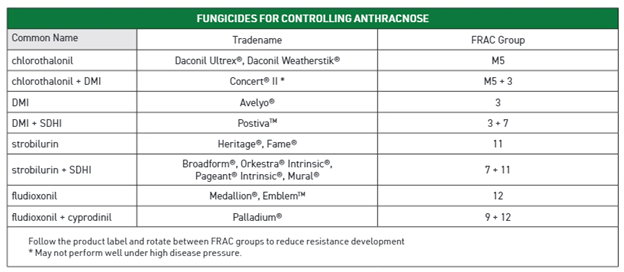
Anthracnose Plant Disease
Colletotrichum species are among the most common fungi that cause anthracnose on ornamental plants, affecting leaves, stems, flowers, and fruit. The disease is highly prevalent when temperatures start to warm up in the spring, but it can thrive all summer long under warm and wet conditions.
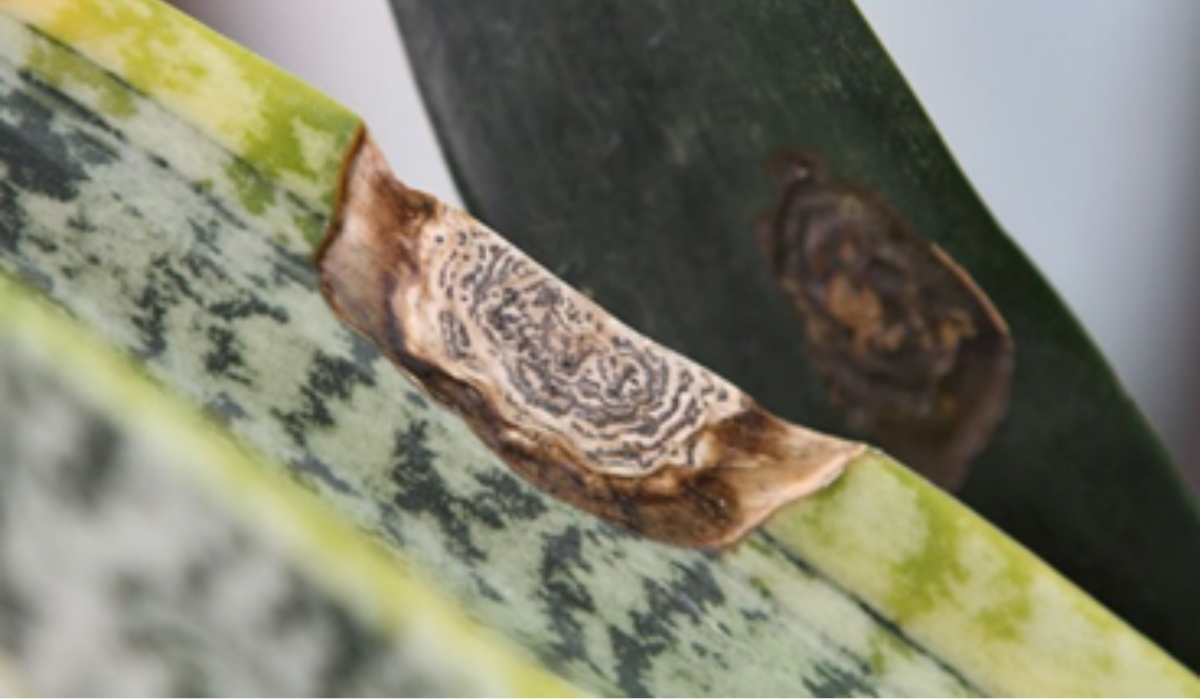
Characteristic sunken lesion with spore-producing acervuli of the anthracnose pathogen Colletotrichum sanseveria.
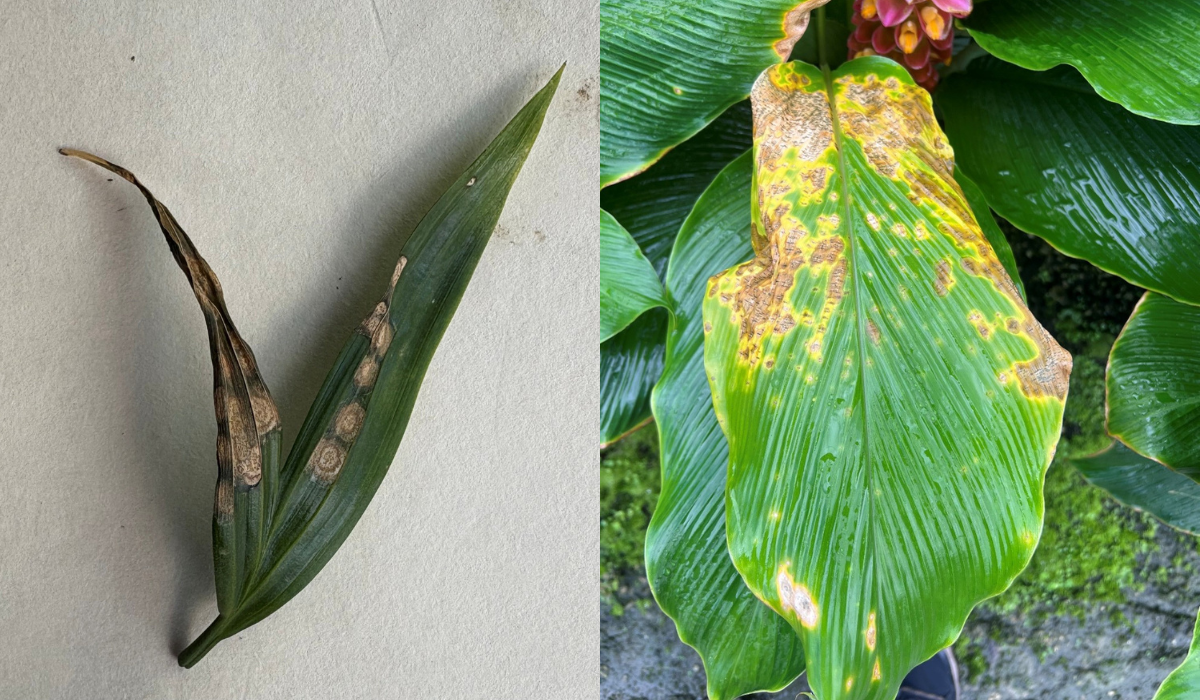
(Left to right) Anthracnose caused by a Colletotrichum species on Majesty Palm. Severe anthracnose affecting the leaves of Cucurma.
Anthracnose Management Recommendations
Eliminate overhead irrigation or exposure to rainfall. Maintaining adequate plant nutrition, including micronutrients, is very important and can reduce disease severity. Always avoid using infected plugs or cuttings to minimize disease spread.
Fusarium Plant Disease
Fusarium diseases are some of the most damaging, where root, stem, crown, bulb rots and wilts can often result with dead or unsellable plants when preventative management practices are not in place. Infected propagation tissues, such as cuttings and bulbs, will most likely lead to significant losses unless removed and discarded early. Excess water and overhead irrigation with poorly drained potting media create ideal conditions for Fusarium. Do not reuse potting soil from diseased plants, and properly disinfect pots when reusing to minimize diseases caused by Fusarium.
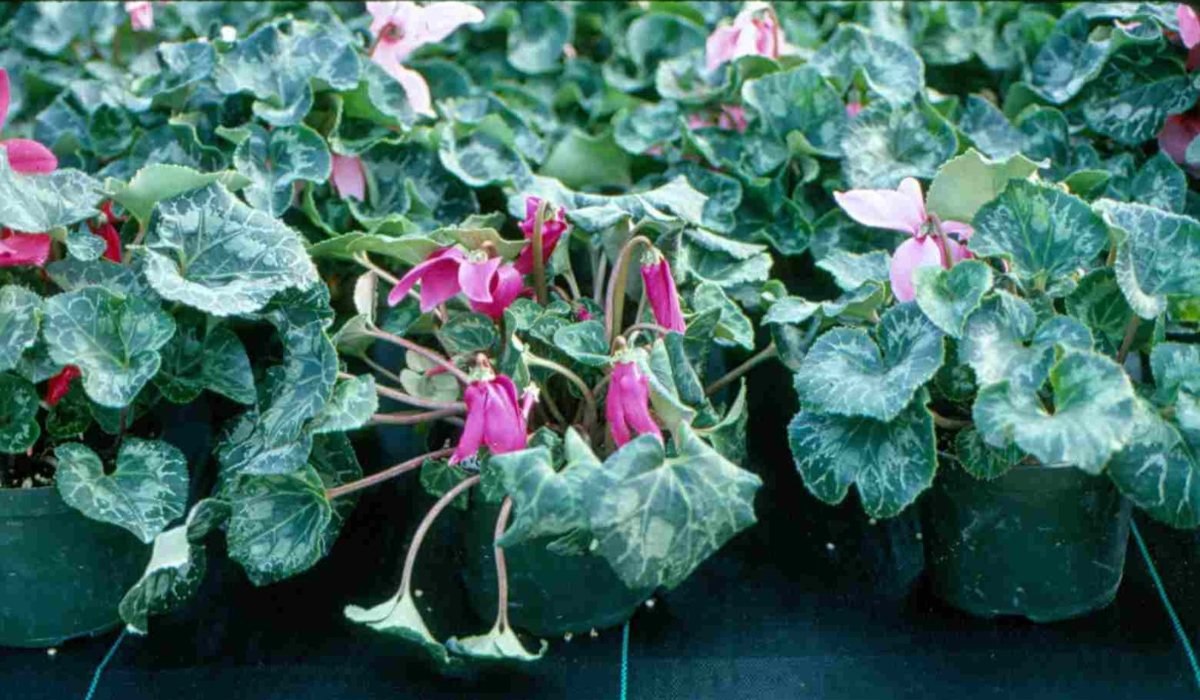
Fusarium wilt of Cyclamen.
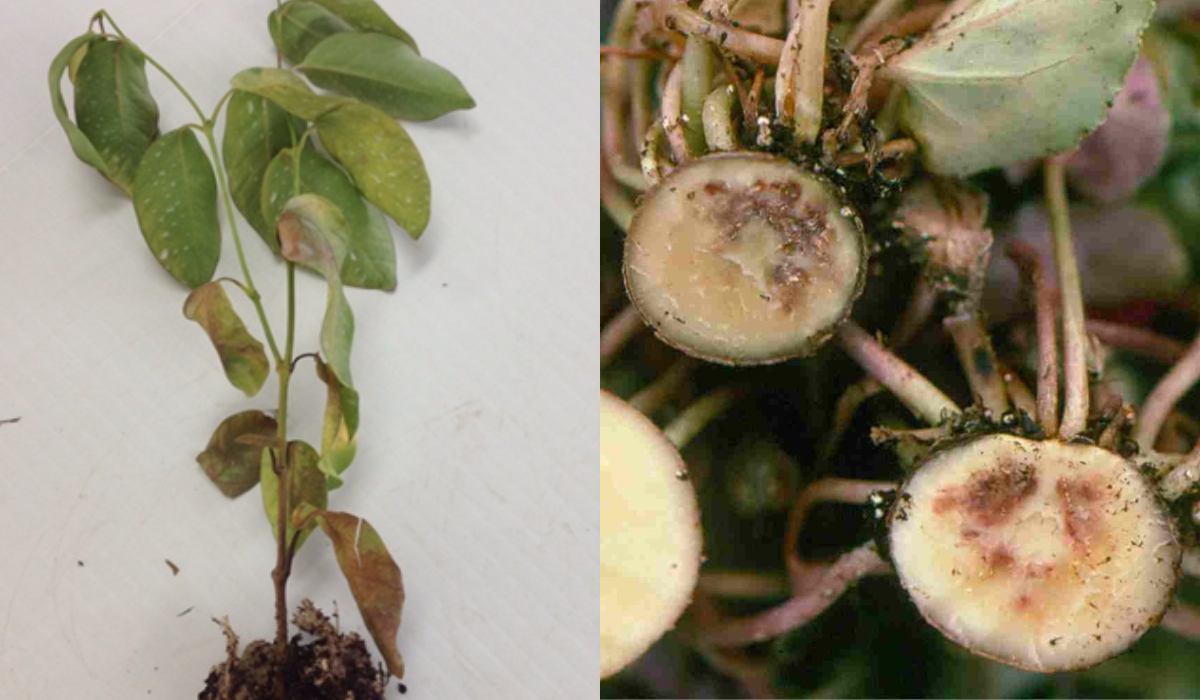
(Left to right) Vascular discoloration from infection of Fusarium on Cyclamen. Fusarium root and stem rot of Mandevilla.
Fusarium Management Recommendations
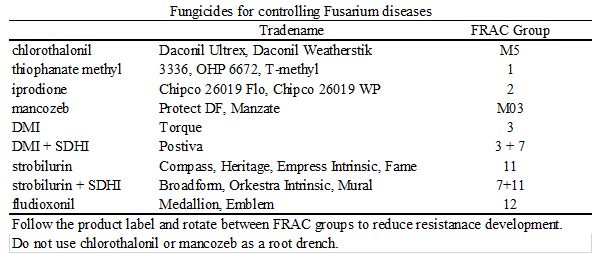
Some cultivars of the same plant may be highly susceptible or resistant. Do not reuse pots or flats without thorough cleaning and disinfecting. Never reuse potting media. Avoid overhead irrigation. Do not use dips in propagation unless using a DDAC (i.e., Kleengrow), which can kill spores in the dip solution. Be sure to get an accurate diagnosis, as unrelated pathogens can cause similar symptoms. Fusarium diseases are difficult to control with fungicides, so sanitation and maintaining a disease-free environment are important.
Phytophthora Plant Disease
Phytophthora species are known to cause root rots, stem and crown rots, cankers, and aerial blights. Warm, humid, and wet conditions are highly favorable for Phytophthora, and we often see symptoms of the disease above ground. Overwatering and saturated soil conditions most often lead to root rot. Both field-grown and containerized plants are more likely to be affected by Phytophthora in nurseries prone to flooding. Due to the moist environment, propagation houses and plants on mist benches are highly susceptible. Sanitation is a must in production areas of the nursery or greenhouse.
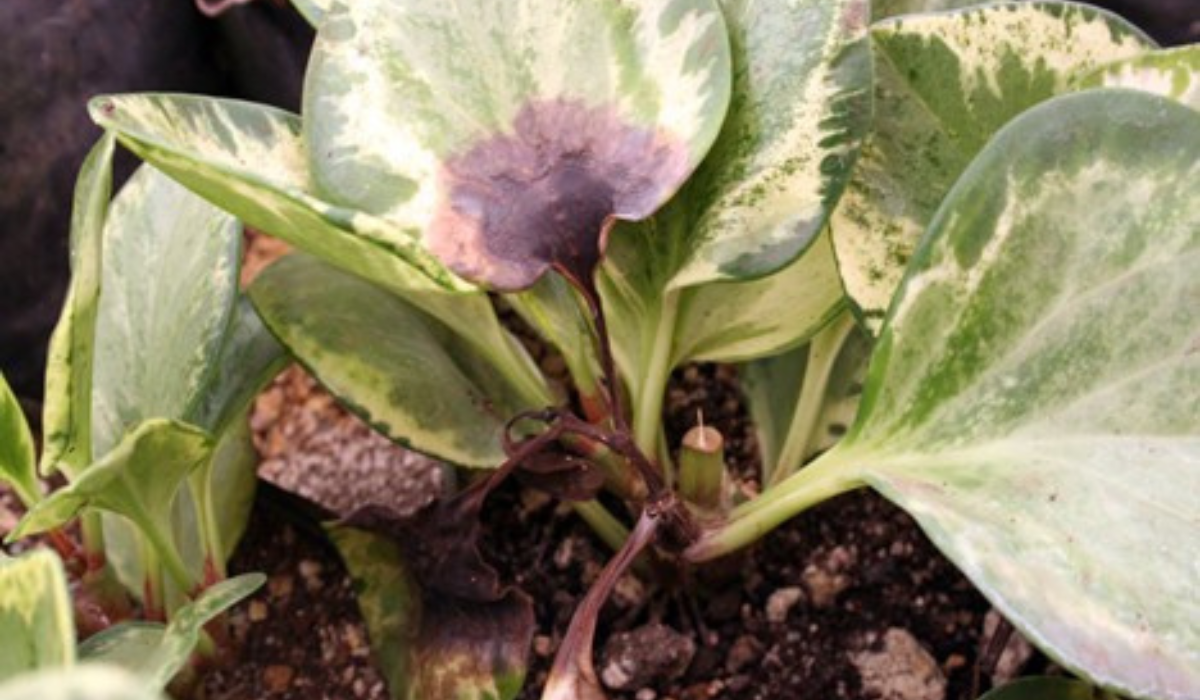
Phytophthora root and stem rot of Peperomia.
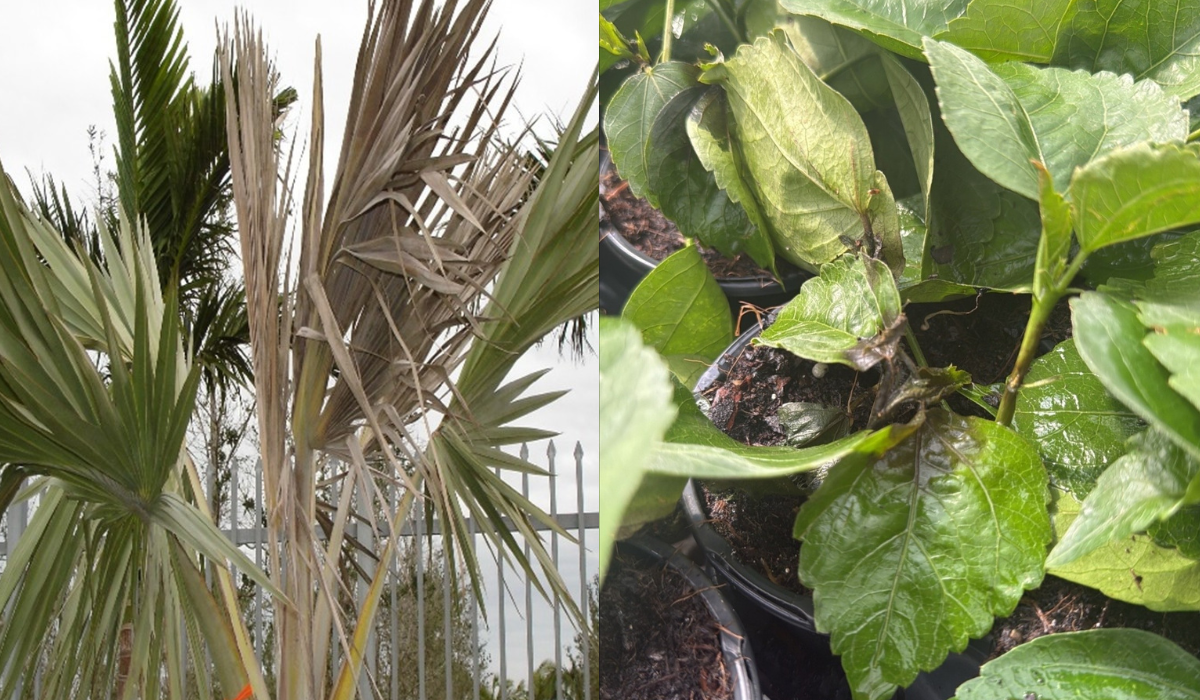
(Left to right) Phytophthora root and stem rot on Hibiscus cuttings. Phytophthora bud rot of Latan Palm.
Phytophthora Management Recommendation
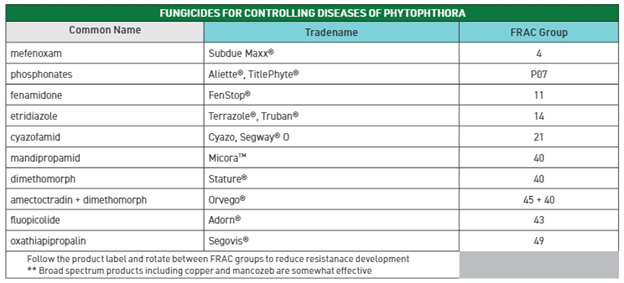
Monitor irrigation to avoid saturated conditions. Thoroughly clean and disinfect pots and avoid reusing potting medium. Get an accurate diagnosis, as many diseases can look alike, and not all fungicides will be effective against phytophthora.
Bacterial Leaf Spots
Xanthomonas is one of the most common plant pathogenic bacteria, causing leaf spots and blights on ornamental plants during the summer months. Xanthomonas can spread readily in splashing irrigation water and windblown rain. Like all plant pathogenic bacteria, the cells of Xanthomonas enter the plant through wounds or natural openings such as stomates or hydathodes. Xanthomonas can easily be spread by insects, and the cells of the bacterium enter the plant through damaged tissue as a result of insect feeding.
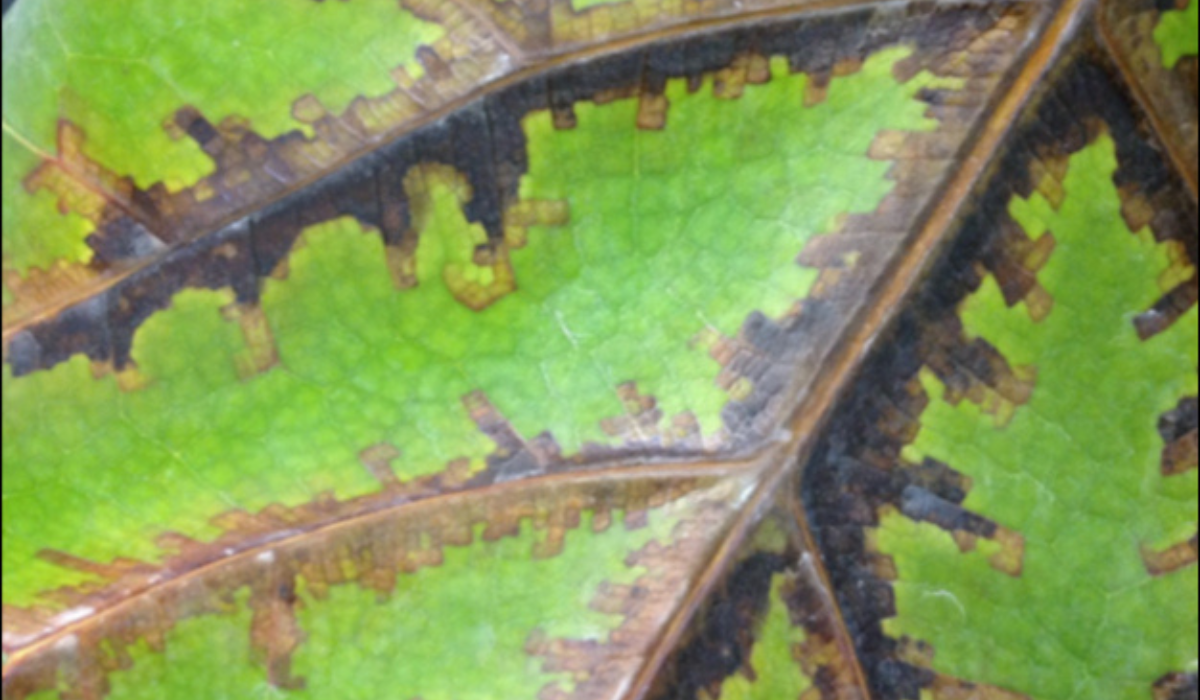
Xanthomonas infection in the leaf of Ficus.
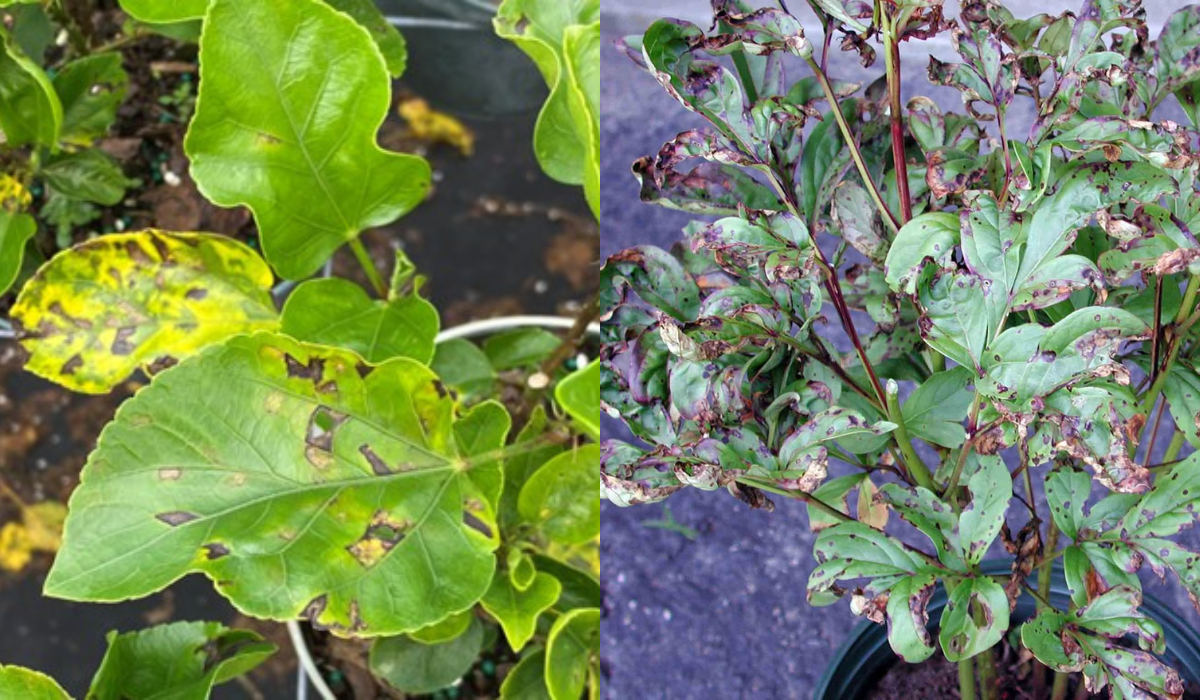
(Left to right) Angular leaf spot lesions caused by Xanthomonas on hibiscus. Necrotic reddish purple to dark purple spots on Peonies caused by Xanthomonas.
Bacterial Leaf Spot Management Recommendation
Use pathogen-free cuttings, plugs, and bulbs. Tools, equipment, containers, and all surfaces should be properly cleaned of any organic debris and thoroughly disinfected with sodium hypochlorite or a less corrosive disinfectant containing quaternary ammonia or peroxide material. Eliminate overhead irrigation (or irrigate when the leaves dry as quickly as possible). Scout crops as they are received and once a week in production. Do not recycle water (especially in propagation) or use water from canes or ponds without first treating it. Preventative sprays with copper products, mancozeb, hydrogen peroxide, peroxyacetic acid, or DDAC (KleenGrow), streptomycin sulfate (Agri-Mycin 50, Harbour), and biologicals (Cease, Triathlon BA) can be helpful with control of bacterial leaf spot diseases. Additionally, some fungicides, including Postiva and those containing chlorothalonil, can be very effective on this group of bacterial pathogens.
Connect with your Harrell’s Rep
No matter what challenge you’re facing, your Harrell’s rep is your best resource for disease ID and management. Connect with them today to help you get on top of diseases and get the products you need before they become a larger issue.
Related Resources

In addition to being the nation’s largest distributor of branded fungicides, herbicides, and insecticides, Harrell’s produces custom-blended fertilizers, specialty liquids, and wetting agents. Additionally, Harrell’s is the exclusive US owner, formulator, and distributor of all POLYON® branded products.
TEAM HARRELL'S
STAY EQUIPPED
Never stop learning. Access FREE continuing education courses from Harrell’s.
LET'S GROW
PRESS RELEASES
PRESS RELEASES
STAY EQUIPPED
Never stop learning. Access FREE continuing education courses from Harrell’s.
LET'S GROW