

A Sit Down with Carolina Fresh Farms and New Life Turf
3/22/2022 - By Clay Breazeale
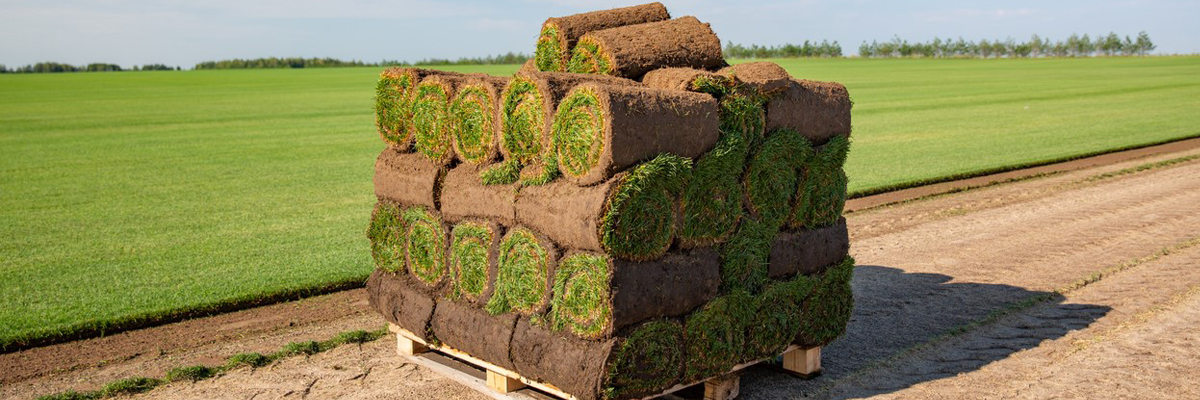
Every industry is experiencing the supply crunch and the financial demands created by current world events. The turf industry has not been spared from this volatility. All sectors are feeling the pressure to deliver under these new demands.
What about the sod farms that produce the turf many turf managers need for projects and renovations? How have they been impacted and what challenges are they facing? I sat down with Mills Grant of Carolina Fresh Farms and New Life Turf based out of Neeses, SC to help shed some light on this sector of the turf industry.
Where are your farms located and what markets do you serve?
The farms are located in Orangeburg County,South Carolina, with easy access to I-20, I-26, and I-95. We serve the Carolinas and part of Georgia daily. Specialty varieties such as Diamond zoysia and TifEagle are shipped as far south as Florida and as far west as Louisiana. We also have a network of 7 retail outlets located in major markets in South Carolina. In addition to sod, retail outlets inventory a wide range of products including aggregates, hardscape products, fertilizers, and mulch products.
What varieties of turf do you produce?
In addition to greens grade TifEagle and Diamond zoysiagrass, we also produce the following:
- Centipede
- TamStar St. Augustine
- Palisades zoysiagrass
- Cavalier zoysiagrass
- Chisholm zoysiagrass
- Royal zoysiagrass
- TifWay 419
- Tahoma 31
- TifDwarf
What are some specific agronomic or production items that most of your customers don’t realize are involved in sod production?
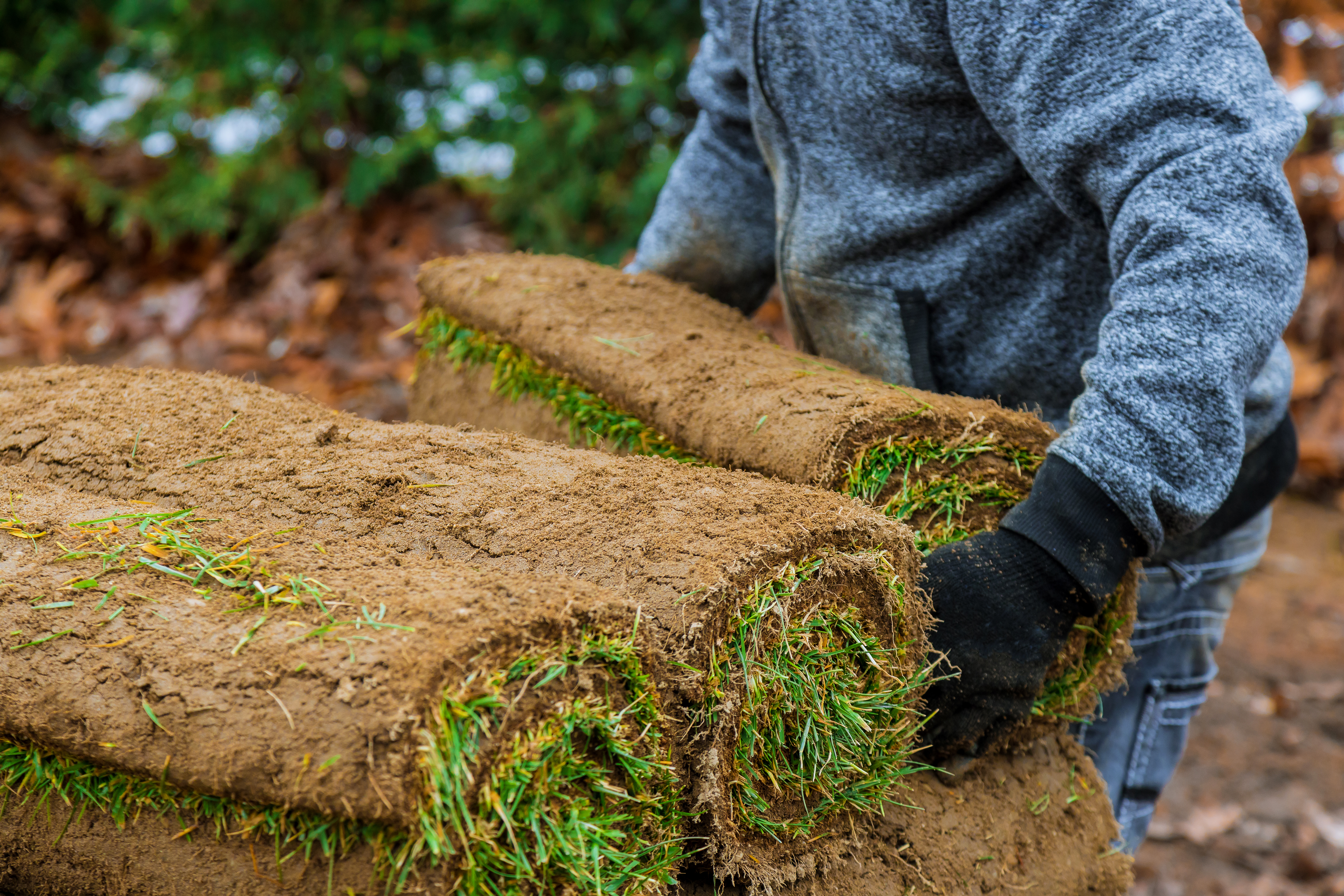
Agronomics of sod production has many challenges. Although the public rarely lays eyes on the field, we still have many of the same hurdles that any turf manager will face. One must remember that our goal and livelihood rely on being able to harvest a quality product any time during the year. We strive to promote a strong root system. When a root system is weak, the quality is certainly diminished. This poses a problem that most customers can understand as the product crumbles in their hands, but I see it as a bigger problem for the grower long term. If the root system is weak, the regrowth in the field suffers. Although we know our customers value aesthetics, our fertility programs are designed around root density and plant health.
In the south, what are the goal production turns per field/species in a given year or season?
Building upon our philosophy regarding agronomic programs, we know the longer a field matures the quicker the regrowth post-harvest. It may seem like we would like to harvest a bermudagrass field 2x per year, but this is not a reality. We prefer a COMPLETE growing season before harvest. A new production field would require a longer growth period to ensure the complete maturity of a dense root system before the first harvest.
What are the biggest challenges facing sod farmers both economically and agronomically?
One of the largest concerns this year is inventory. The last two years have seen increased sales across the south but decreased inventory. The solution seems simple, but the grass can only grow and mature so fast. Could we increase fertility? Possibly, but at current fertilizer prices, I’m not certain the customer would like the price.
Another challenge is freight cost. We have seen freight rates increase by nearly $2 per loaded mile in the last year. Diesel fuel cost is the cause and unfortunately, fuel is used throughout every single step in sod production, including planting, maintaining, harvesting, and delivery.
Last but certainly not least, Labor continues to be an ongoing issue in farming. There have been advancements in automated machines to eliminate the number of bodies needed each day, but the automated sod harvester comes at a large cost and a 14 month wait period to build the machine. So it isn't the most economically sound solution.
Your farm is known for valuing branded products. What value do you receive from these relationships?
We have used branded products for more than 20 years and will continue to do so for the foreseeable future. There are certainly opportunities to apply agriculture labeled products as well as generics, but you must remember our livelihood depends on harvesting products.
When we treat 1,000 acres with chemicals, we like the assurances that there is a manufacturer who will stand behind their chemistry. We also feel that if our product is being shipped to an athletic field or golf course, we should spray what is appropriately labeled for that environment. We may spray today and deliver tomorrow.
We have found over the years that we may spend a little more on branded products, but that is a small percentage versus the potential issues which may arise. Furthermore, we never worry about a pesticide inspector asking for justification of any product we have stored. We have also found that a close relationship with our suppliers and manufacturers has been extremely beneficial. It is not uncommon for us to ‘partner’ with these companies at trade shows and other events. After all, we are servicing the same customer.
Having used Polyon on your farm, do you see a difference in the need for additional inputs or in the quality of turf you are producing and delivering?
Fertilizer has become one of the largest expenses at the farm.
Most think that cheap agricultural fertilizer would be best because we are regularly harvesting our product, but we have found that this is not always the case. We have utilized nitrogen efficient and controlled-release fertilizers such as POLYON® for many years. The consistent feed and predictable release of nitrogen not only allow us to price a field quicker, but the overall quality of the sod field is much improved.
Have you ever seen zoysiagrass fertilized with 4lbs of nitrogen from ammonium sulfate in a season? Thatch production is through the roof. We can use the consistent, predictable aspect of POLYON® to accurately apply fertilizer, maximizing our nutritional inputs with less labor inputs. Very rarely do we need more fertility inputs between our normal scheduled spreads. No doubt utilizing products such as POLYON® controlled-release fertilizer has made our crop grow-in times more predictable and increased their quality.
For more information on Carolina Fresh Farms and New Life Turf, check out their website!
And if you have any questions about any of the products, procedures, or business mentioned, give your local Harrell's Rep a call.
Related Resources

In addition to being the nation’s largest distributor of branded fungicides, herbicides, and insecticides, Harrell’s produces custom-blended fertilizers, specialty liquids, and wetting agents. Additionally, Harrell’s is the exclusive US owner, formulator, and distributor of all POLYON® branded products.
TEAM HARRELL'S
STAY EQUIPPED
Never stop learning. Access FREE continuing education courses from Harrell’s.
LET'S GROW
PRESS RELEASES
PRESS RELEASES
STAY EQUIPPED
Never stop learning. Access FREE continuing education courses from Harrell’s.
LET'S GROW