

Reading Fertilizer Labels - It's Just Numbers.. Right?
3/28/2023 - By Dr. Jeff Atkinson
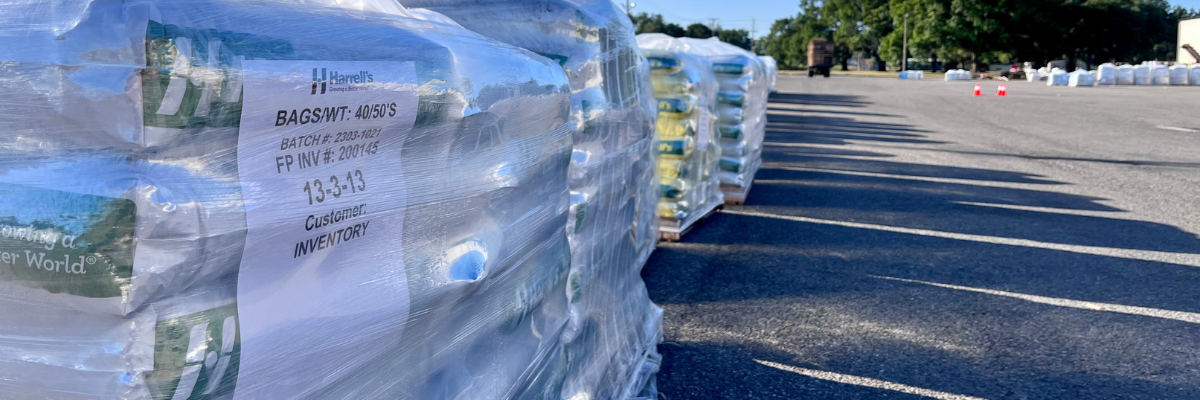
Fertilizer labeling can be inconsistent from manufacturer to manufacturer. Harrell’s sticks to state regulations and guidance as described by the Association of American Plant Food Control Officials. To ensure a fertilizer blend matches an agronomic objective, a few important pieces of information should be considered on each fertilizer label before application.
When purchasing a pesticide, it is immediately clear what is
included in the bag or jug. Percent active ingredient, formulation type, and
manufacturer are easily determined by referencing information required by the Environmental Protection Agency (EPA) to be
included on every pesticide label. Unfortunately, fertilizer labels often do
not provide the same level of clarity.
Understanding the Fertilizer Label
While pesticides are regulated on both a federal and state level, to date, fertilizer regulations are left to just the states. Without guidance from the federal government, inconsistency in labeling between manufacturers is common. The Association of American Plant Food Control Officials (AAPFCO) is an organization made up of members from state regulatory agencies, with the objective to develop uniformity among state fertilizer regulatory agencies. The definitions and label recommendations formulated by AAPFCO bring clarity and consistency to fertilizer labels, providing enhanced protection and information for the consumer. A fertilizer label that follows AAPFCO guidelines is rich in information of agronomic importance.
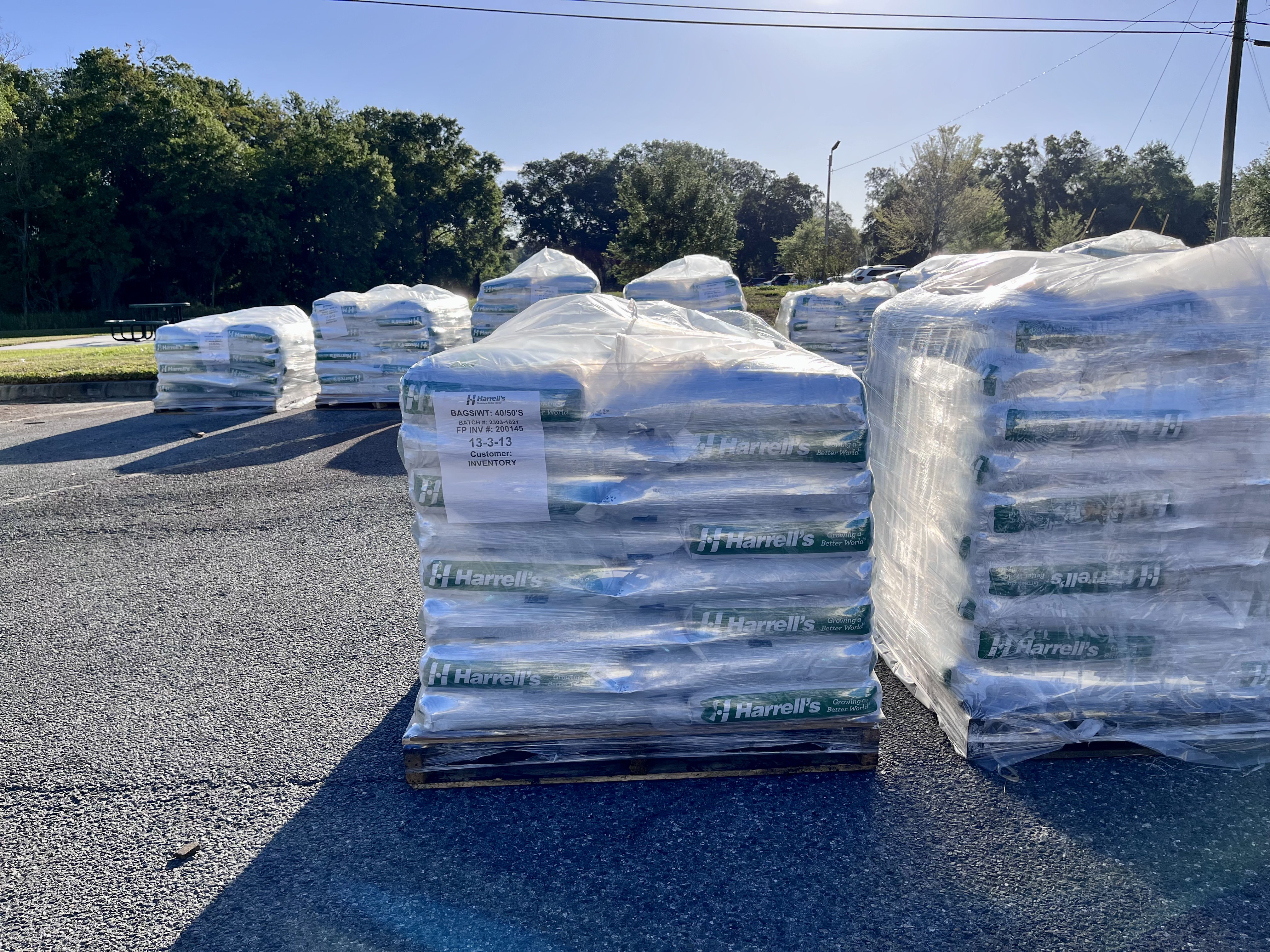
Here are 7 pieces of information to consider on a fertilizer
label before application:
#1 N-P-K Analysis | Understanding a Fertilizer Label
Every fertilizer, regardless of ingredients, will include
three numbers separated by a dash and often placed in a prominent location. In
the example below these numbers are 24-8-12 and indicate the blend includes 24%
nitrogen,
8% P2O5,
and 12% K2O.
For example, a 50 lb bag would contain 12 lbs of N, 4 lbs of
P2O5, and 6 lbs of K2O. If the desired
nitrogen application rate is 1 lb nitrogen per 1000 square feet, this bag will
cover 12,000 sq. ft. It’s important to note that P2O5 and
K2O percent are different than elemental P and K. To calculate
elemental P and K, the P2O5 and K2O percent
must be multiplied by 66% and 83%, respectively.

Figure 1. N-P-K
analysis is a key component of every fertilizer label.
#2 Guaranteed Analysis
While the N-P-K analysis describes the total percent of
nitrogen, phosphorus, and potassium in a blend, the ‘Guaranteed Analysis’ includes
this information in greater detail, along with the percent of other macro and
micronutrients included in the blend (Figure 2).
Information such as the percent of soluble and insoluble nutrients (aka
immediate plant available vs. unavailable) and form(s) of nitrogen is also
described here.
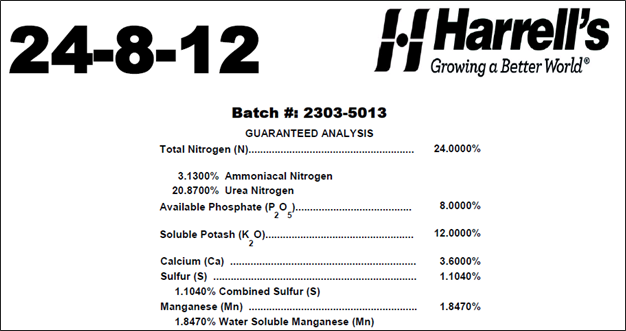
Figure 2. The Guaranteed Analysis provides
more detail about the forms of nitrogen and the percent of other macro and
micronutrients in the blend.
#3 Derived from Statement
Using the example above, a variety of ingredients can be
included to formulate a 24-8-12 fertilizer blend. If only looking at the N-P-K
analysis or Guaranteed Analysis, an applicator may not be able to determine how
long the fertilizer will feed, its burn potential, or if the ingredients are
appropriate for the agronomic situation. This information can be found in the
‘Derived From’ statement. The ‘Derived From’ statement is typically located
directly below the fertilizer guaranteed analysis and includes the recipe list of
the fertilizer blend.
For example, a ‘Derived From’ statement for two unique
24-8-12 blends are included in Figure 3
and Figure 4.
The blend in Figure 3
is comprised of nitrogen and potassium ingredients which each have a high salt
index or increased likelihood of causing fertilizer burn. Alternatively, the
blend in Figure 4
is comprised of POLYON® fertilizer coated nitrogen and potassium ingredients,
which have an extremely low salt index and low likelihood of causing fertilizer
burn.
Note - This information is not accessible by only looking at
the N-P-K or guaranteed analysis.
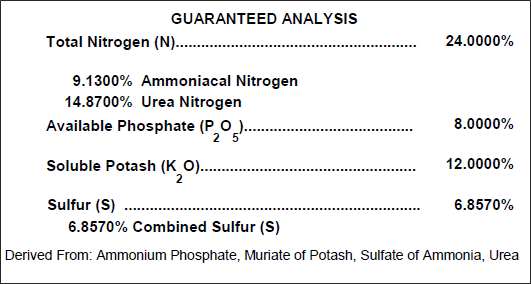
Figure 3. This 24-8-12 blend has a high salt
index and a high potential to cause fertilizer burn.

Figure 4. this 24-8-12 blend has a low salt
index and very low potential to cause fertilizer burn.
#4 Bulk Density
The efficacy of a granular fertilizer blend is limited by
the calibration of the spreader that applies it, regardless of the quality of the
ingredients. The bulk density of a fertilizer blend, or pounds of fertilizer
per cubic foot, is an important piece of information when beginning the calibration
process. Unfortunately, bulk density is not listed on all fertilizer labels;
however, bulk density can be found below the Guaranteed Analysis on all of
Harrell’s fertilizer labels (Figure
5).
Along with application rate, particle size, and spreader
type, bulk density can be entered into Harrell’s Spreader
Calculator to determine the spreader setting start point for spreader
calibration. Due to manufacturing variation, wear, and tear, walking speed,
etc., every spreader is different, so the setting suggested by Harrell’s
Spreader Calculator should be confirmed for accuracy before full-scale application.
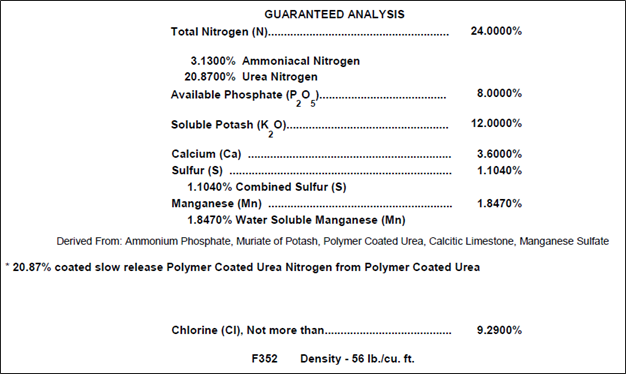
Figure 5. Bulk Density is included on all
Harrell's fertilizer labels and is an important piece of information for
accurate spreader calibration.
#5 Active Ingredient(s)
In today’s tight labor market, everyone is looking for ways
to be operationally efficient. Sparging pesticides on a fertilizer carrier is a great way to accomplish two tasks
at once. The process allows for the application of fertilizer and a pesticide,
such as a preemergence herbicide, in a single application. If a fertilizer
blend is sparged with a pesticide, it should be described on the fertilizer
label as illustrated in Figure 6.
Some blends may include more than one active ingredient.
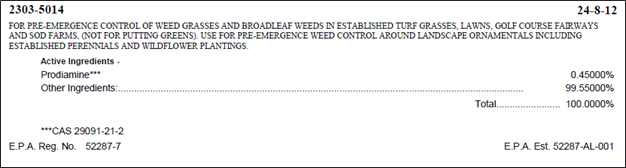
Figure 6. If a fertilizer blend is sparged
with a pesticide, the sparge ingredients and concentration should be described
on the fertilizer label.
#6 Controlled-Release Statement
If a fertilizer blend contains controlled-release
fertilizer, the label should describe how much of the nitrogen included in the
blend is controlled-release. Buyer beware, there is no minimum amount of
controlled-release fertilizer required to claim ‘Controlled-Release’ in
fertilizer marketing materials. All Harrell’s blends that include a
controlled-release POLYON fertilizer include a controlled-release statement
below the Guaranteed Analysis, which describes exactly how much
controlled-release fertilizer is included in the blend. In Figure 7,
the blend contains 20.87 units of controlled-release nitrogen, or 87% of all
nitrogen in the blend.
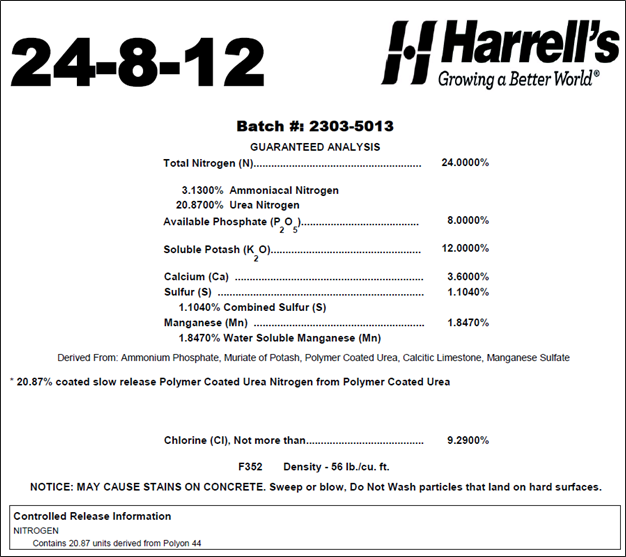
Figure 7. All Harrell's POLYON blends include
a controlled-release statement that describes the amount of controlled-release
fertilizer in the blend.
#7 Manufacturer
Harrell’s takes pride in the selection, processing, and
blending of raw materials. The cumulative effect of these efforts is
high-quality blends and guaranteed performance for POLYON fertilizer blends.
Reach out to your local Harrell’s rep
for more information, or to understand how a fertilizer blend matches up with
specific agronomic objectives.
Related Resources

In addition to being the nation’s largest distributor of branded fungicides, herbicides, and insecticides, Harrell’s produces custom-blended fertilizers, specialty liquids, and wetting agents. Additionally, Harrell’s is the exclusive US owner, formulator, and distributor of all POLYON® branded products.
TEAM HARRELL'S
STAY EQUIPPED
Never stop learning. Access FREE continuing education courses from Harrell’s.
LET'S GROW
PRESS RELEASES
PRESS RELEASES
STAY EQUIPPED
Never stop learning. Access FREE continuing education courses from Harrell’s.
LET'S GROW