

Preventing Blossom End Rot
12/27/2022 - By Dr. Tom Reed
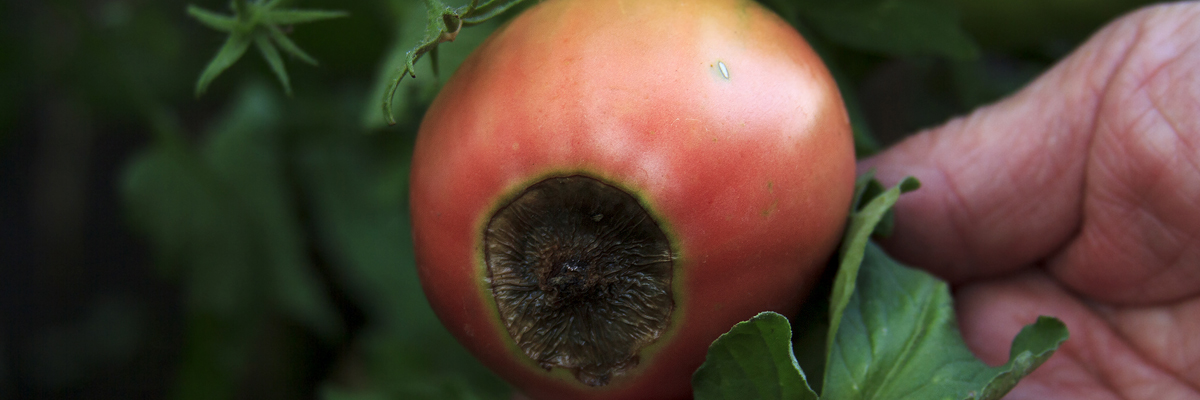
Field crop problems are often the result
of a combination of factors. From nutrient deficiency to temperature change, to
pests and disease, crop problems can cause significant economic consequences
for producers.
Blossom End Rot
Blossom end rot is a disorder in
vegetable crops, such as peppers and tomatoes, that have calcium (Ca)
deficiency. Calcium is a required element for plants to grow normally and
produce healthy fruits and seeds. Thus, blossom end rot results from a Ca
deficiency in young, rapidly expanding fruit tissues and causes major
production loss. However, it may be prevented with adequate fertilization and
irrigation.
Calcium deficiency in fruits and vegetables results from either insufficient Ca in the soil solution, or insufficient amounts of Ca being delivered to the rapidly growing tissues. Calcium in the soil solution comes from soil mineral sources, fertilizer, and irrigation water.
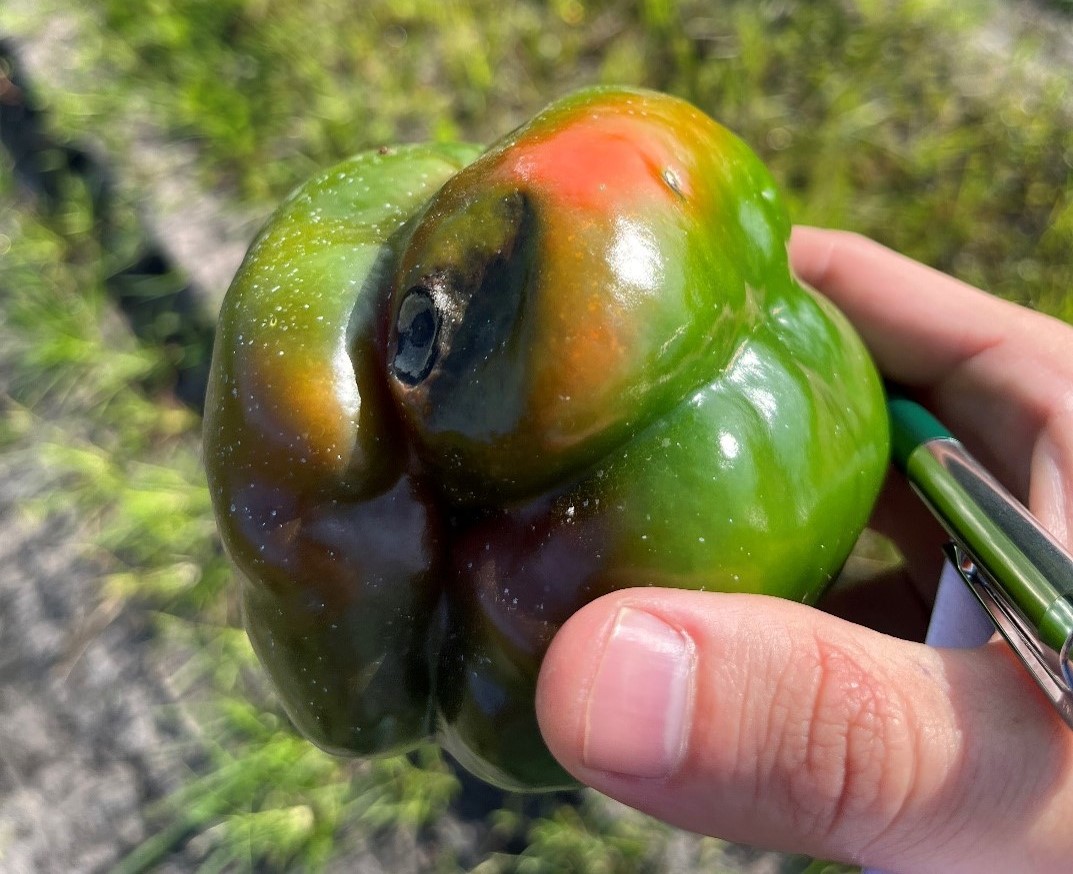
Symptoms of Blossom End Rot
Blossom end rot symptoms begin as light
discolored spot that then expand into a larger area, which begins to turn
darker in color from colonization, typically by fungal species. Blossom end rot
spots can be subject to infection from bacteria, and symptoms may occur
at the blossom end of the fruit or on the side of the fruit.
Factors that predispose fruit to
blossom end rot include:
-
Excessive fertilization, leading to a rapid increase
in vegetative growth as Ca is preferentially moved to growing leaves, rather
than fruits.
-
High soluble salt concentrations in soil solution
around plant roots and inadequate irrigation, result in less water and nutrient
uptake.
-
Damage to
the root system by nematodes, diseases, or mechanical cultivation can also
increase chances of blossom end rot.
Often, blossom
end rot occurs when irrigation is irregular and soil Ca does not get carried to
the developing fruit. More
specifically, inconsistent irrigation programs with wet and dry cycles on
sandy, well drained soils.
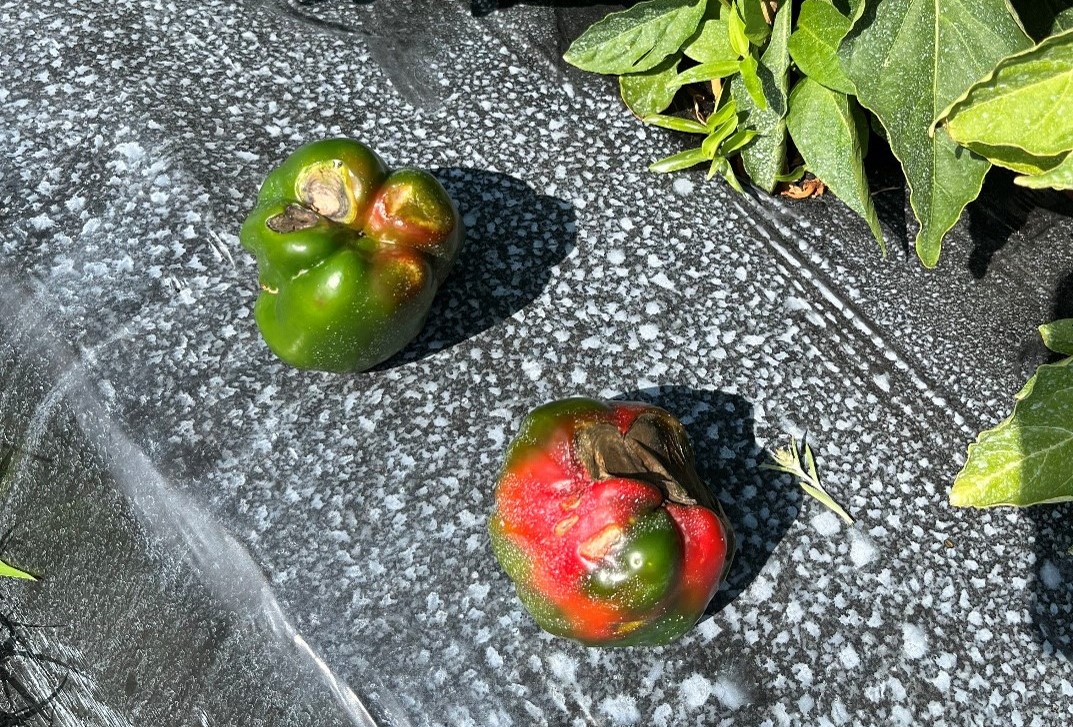
How to Reduce the
Chances of Blossom End Rot
There are ways to reduce the
likelihood of blossom end rot in a crop including:
-
Maintaining a consistent level of soil moisture
throughout the fruiting cycle.
-
Utilizing an irrigation system that can supply
adequate water especially during high stress periods of drought and wind. (Soil
moisture monitoring technology can assist growers in providing adequate
moisture for crop growing season.)
-
Avoid applying excessive nitrogen fertilizer to
prevent excessive vegetative growth.
-
Provide sufficient soil solution Ca concentrations
available to the crop plant. Foliar-applied Ca fertilizers are
not likely to correct or prevent blossom end rot. Calcium ions are not actively
mobilized from the leaf downward to the fruits.
- Management of pests that can damage roots and preparing soil with limited compaction zones, that may restrict root growth, will allow for better water and nutrient uptake.
Reach Out to Your Harrell's Rep
Blossom end
rot is not always a straightforward fruit disorder, in either cause or
prevention. However, producers can minimize blossom end rot with optimal
fertilization and irrigation management. Harrell's POLYON® fertilizer
blends are
engineered to provide nutrients over time at a predictable rate under specified
conditions. To find the right POLYON® controlled-release fertilizer product
for you, reach out to your Harrell's Rep.
Related Resources

In addition to being the nation’s largest distributor of branded fungicides, herbicides, and insecticides, Harrell’s produces custom-blended fertilizers, specialty liquids, and wetting agents. Additionally, Harrell’s is the exclusive US owner, formulator, and distributor of all POLYON® branded products.
TEAM HARRELL'S
STAY EQUIPPED
Never stop learning. Access FREE continuing education courses from Harrell’s.
LET'S GROW
PRESS RELEASES
PRESS RELEASES
STAY EQUIPPED
Never stop learning. Access FREE continuing education courses from Harrell’s.
LET'S GROW