

Preemergence Herbicide Fertilizer Sparge Options
2/28/2025 - By Dr. Jeff Atkinson
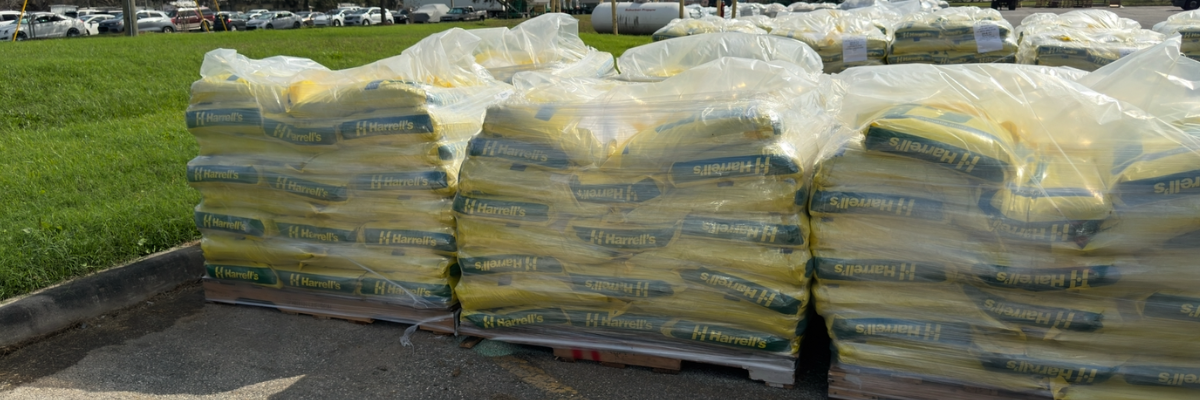
Applying a fertilizer blend coated with another material (i.e., a sparged fertilizer blend), such as a preemergence herbicide, is an effective and labor-efficient method to apply both fertility and preemergence weed control in a single application.
Similar to spray-applied preemergence herbicides, the active ingredient selection process must consider desirable plant species, seasonality, and target weed(s). Here are a few considerations for both turfgrass and ornamental preemergence applications utilizing sparged fertilizer technology.
Barricade On Fertilizer
Active Ingredient: Prodiamine
Mode of Action: Group 3 – Dinitroaniline inhibitors
Labeled Use Sites: Established turf grasses, lawns, golf course fairways, and sod farms. Use for preemergence weed control around landscape ornamentals, including established perennials and wildflower plantings.
Common uses: Barricade sparged fertilizers provide excellent crabgrass control, moderate to good goosegrass control, and a limited broadleaf control spectrum, when compared to alternative active ingredients. They also provide good preemergence control for Poa annua when applied before Poa germination. If you miss it and need to apply after Poa germination, combine with a post-emergence herbicide.
Considerations: As with all Group 3 Herbicides, Barricade works by inhibiting root growth. While most turfgrasses are overall tolerant to Barricade, Group 3 herbicides can negatively affect root development and function of tolerant turfgrass species without causing visual shoot injury. If turfgrass recovery from traffic, divots, or cultural practices is needed, the root growth inhibition caused by the application of Group 3 herbicides may not be desirable.
Think about these things and the grasses you will be applying on. If you have any further questions, reach out to your local Harrell’s Rep.
Dimension on Fertilizer
Active Ingredient: Dithiopyr
Mode of Action: Group 3 – Dinitroaniline inhibitors
Labeled Use Sites: Ornamental landscape areas, established lawns and ornamental turf, including golf course fairways, roughs and tee boxes.
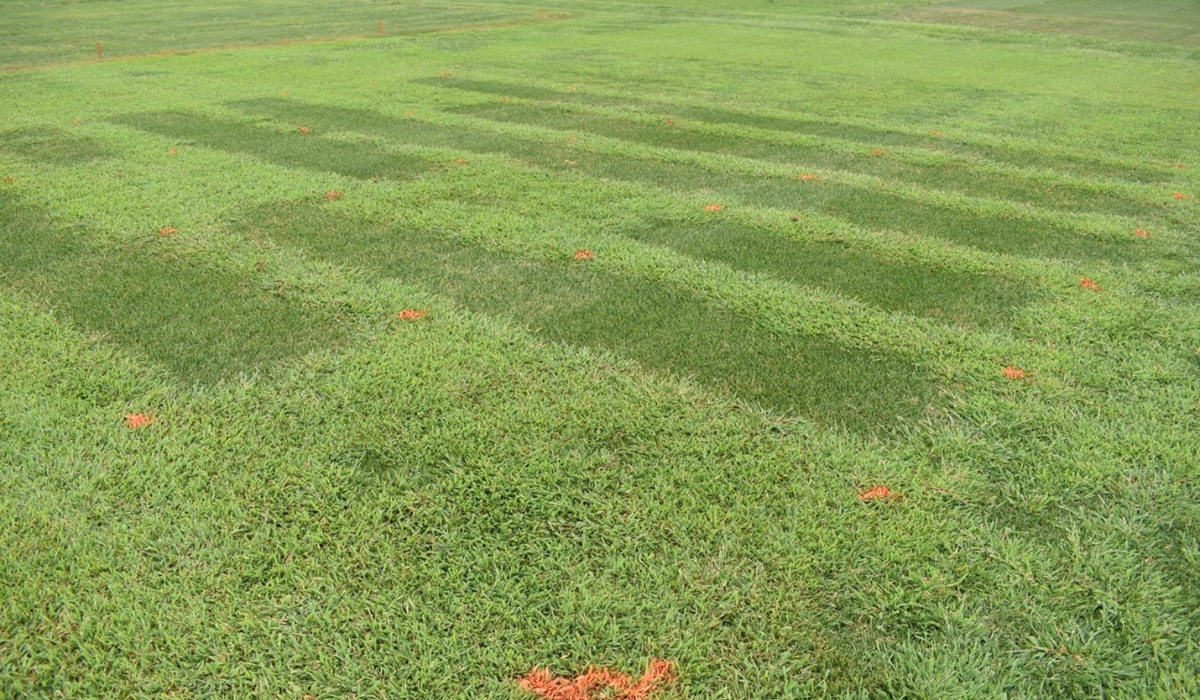
Common uses: Dimension sparges provide excellent crabgrass control and possesses the somewhat unique ability to provide postemergence control of young, pre-tillered crabgrass, thus extending the window for effective preemergence crabgrass control. Dimension provides poor goosegrass control, and a limited spectrum of broadleaf weed control. It also provides good preemergence Poa annua control when applied prior to Poa germination. Combine with a post emergence herbicide when applied after Poa annua germination.
Considerations: As with all Group 3 Herbicides, Dimension works by inhibiting root growth. While most turfgrasses are overall tolerant to Dimension, Group 3 herbicides can negatively affect root development and function of tolerant turfgrass species without causing visual shoot injury. If turfgrass recovery from traffic, divots, or cultural practices is needed, the root growth inhibition caused by application of Group 3 herbicides may not be desirable. Compared to Barricade, Dimension typically elicits less of a root growth inhibition effect on desirable turfgrass species.
Think about these things and the grasses you will be applying on. If you have any further questions, reach out to your local Harrell’s Rep.
Pendimethalin on Fertilizer
Active Ingredient: Pendimethalin
Mode of Action: Group 3 – Dinitroaniline inhibitors
Labeled Use Sites: Turfgrasses and established ornamentals in the landscape.
Common Uses: Pendimethalin sparges provide your turf with excellent crabgrass control, Okay to good goosegrass control, and better broadleaf control spectrum compared to other Group 3 active ingredients. The active ingredient gives you good preemergence Poa annua control when applied prior to Poa germination, combine with a post emergence herbicide when applied after Poa annua germination. Pendimethalin is unique in that it is more resistant to breaking down via phytodegradation (sunlight), which is helpful when treating an area that may not receive irrigation or rainfall for an extended period of time, such as a golf course naturalized area.
Considerations: As with all Group 3 Herbicides, pendimethalin works by inhibiting root growth. While most turfgrasses are overall tolerant of pendimethalin, Group 3 herbicides can negatively affect root development and function of tolerant turfgrass species without causing visual shoot injury. If turfgrass recovery from traffic, divots, or cultural practices is needed, the root growth inhibition caused by application of Group 3 herbicides may not be desirable.
Think about these things and the grasses you will be applying on. If you have any further questions, reach out to your local Harrell’s Rep.
StayGuard on Fertilizer
Active Ingredient: Flumioxazin
Mode of Action: Group 14 — PPO inhibitor
Labeled Use Sites: Landscape grown ornamental shrubs, trees, Christmas trees, ground covers, non-bearing fruit and nut trees, vines, bare ground non-crop areas, and established turfgrass.
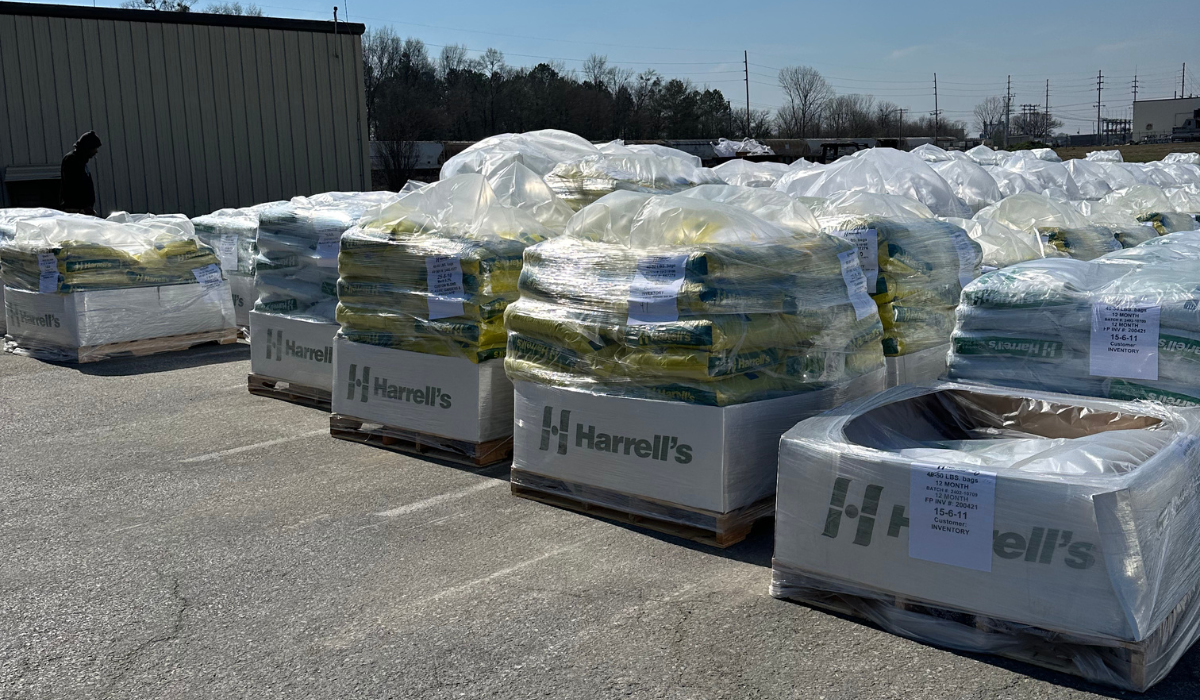
StayGuard is a new on-fertilizer preemergence herbicide for bermudagrass applications. This sparge is unique because of the active ingredient in StayGuard were spray applied to green turfgrass, severe phytotoxicity would result, however, the active ingredient is safened by sparging it on a granular fertilizer blend.
When applied to dry bermudagrass then immediately irrigated, granular fertilizers generally bypass green leaf tissue and work their way into the thatch layer. For sparged fertilizer blends, this minimizes contact between the active ingredient and the turfgrass leaf, thus significantly reducing potential for phytotoxicity to occur. Currently, StayGuard is only labeled for bermudagrass applications. Unlike Group 3 herbicides, StayGuard does not inhibit rooting and allows stoloniferous and rhizomatous turfgrass species to establish, spread, and recover.
Common uses: StayGuard delivers good to excellent crabgrass control. Similar to Dimension, StayGuard has demonstrated an ability to provide postemergence control of young, pre-tillered crabgrass in university trial work, thus extending the window for effective preemergence crabgrass control. StayGuard provides a broad spectrum of preemergence broadleaf weed control and will elicit postemergence herbicide symptoms on many broadleaf weeds, although complete postemergence broadleaf weed control should not be expected from a StayGuard application. StayGuard provides good to excellent preemergence Poa annua control when applied prior to Poa germination and will need to be combined with a post emergence herbicide when applied after Poa annua germination.
Considerations: StayGuard may cause phytotoxicity when applied to bermudagrass turf under physiological stress, when trafficked within 24 hours of application, when applied to wet turf, or when not irrigated following application. Talk to your local Harrell’s Rep about best management practices when applying StayGuard.
Ronstar on Fertilizer
Active Ingredient: Oxadiazon (Restricted Use Pesticide)
Mode of Action: Group 14 — PPO inhibitors
Labeled Use Sites: Turf, ornamentals, nursery trees, rights-of-way, and landscape planting. Not for use on turfgrass on residential properties.
Similar to StayGuard, if the liquid formulation of Ronstar, Ronstar FLO (Restricted Use Pesticide) is spray applied to green turfgrass, severe phytotoxicity will result, unless the product is sparged directly on a granular fertilizer carrier, safening the product. Ronstar (Restricted Use Pesticide) is labeled for application to several turfgrass species, and similar to StayGuard, Ronstar (Restricted Use Pesticide) does not inhibit rooting and allows stoloniferous and rhizomatous turfgrass species to establish, spread, and recover.
Common uses: This sparge allows for okay to good crabgrass control, excellent goosegrass control, and is labeled for preemergence control of several broadleaf weed species. Ronstar (Restricted Use Pesticide) sparged fertilizer is frequently applied as a preemergence herbicide during bermudagrass establishment from sprigs. It provides good preemergence Poa annua control when applied prior to Poa germination. Combine with a post-emergence herbicide when applied after Poa annua germination.
Drawbacks: Ronstar (Restricted Use Pesticide) application was recently limited to 30% of managed turfgrass acreage among other limits imposed by the EPA and designated as a Restricted Use Pesticide during the recent oxadiazon reregistration review process. More information on the new Ronstar limitations can be found here: How Label Changes to Oxadiazon Will Affect Golf Courses - USGA.
If you have any questions about this product or its uses/restrictions, reach out to your local Harrell’s Rep.
Echelon on Fertilizer
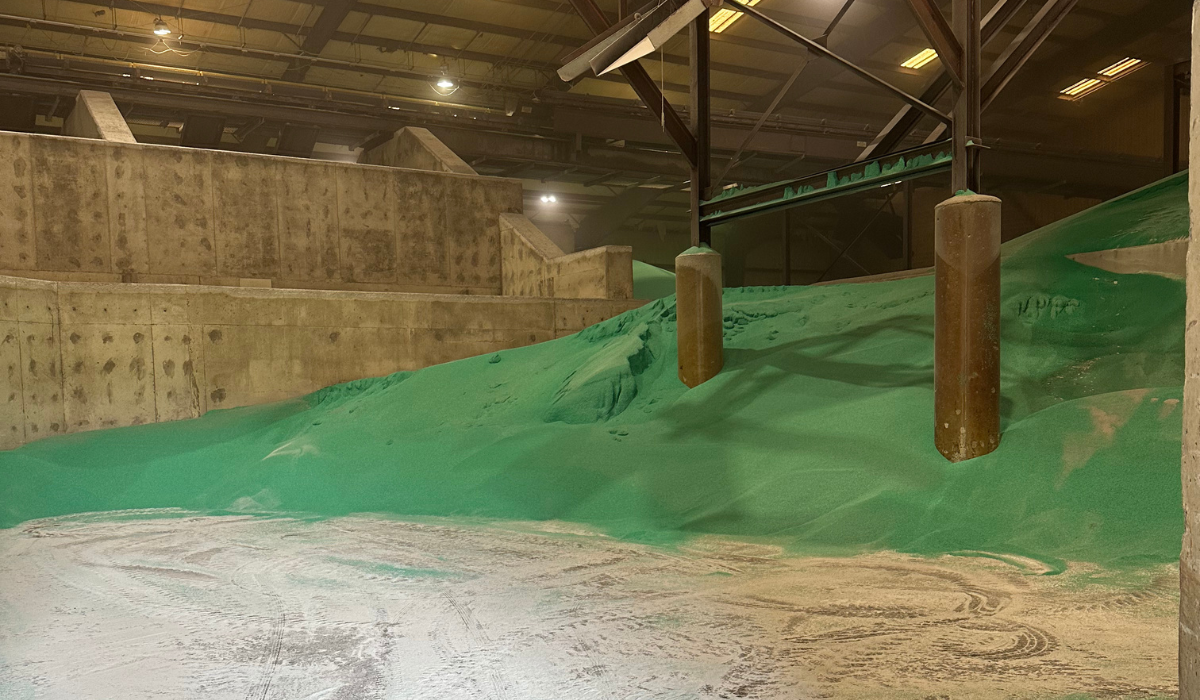
Active Ingredient: Prodiamine + Sulfentrazone
Mode of Action: Group 3 + Group 14 – PPO Inhibitor + Dinitroaniline Inhibitor
Labeled Use Sites: Residential and institutional lawns, athletic fields, commercial sod farms, golf course fairways and roughs, roadsides, utility rights-of-way, railways and industrial areas.
Common Uses: Primarily used for preemergence grassy weed control and some postemergence broadleaf and sedge control.
Considerations: As with all Group 3 Herbicides, Prodiamine (Echelon sparges) works by inhibiting root growth. As always, keep in mind that group 3 herbicides can negatively affect root development and function of tolerant turfgrass species without causing visual shoot injury. If turfgrass recovery from traffic, divots, or cultural practices is needed, the root growth inhibition caused by application of Group 3 herbicides may not be desirable.
If you have any questions about this product or its uses/restrictions, reach out to your local Harrell’s Rep.
Ronstar + Barricade on Fertilizer
Active Ingredient: Oxadiazon (Restricted Use Pesticide) + Prodiamine
Mode of Action: Group 14 + Group 3 – PPO Inhibitor + Dinitroaniline Inhibitor
Labeled Use Sites: Golf course applications only
Common uses: This combo delivers good to excellent crabgrass and goosegrass control and is labeled to control more broadleaf weed species than Group 3 herbicides alone. Utilizing a preemergence herbicide product formulated with multiple modes of action can help prevent the development of herbicide resistance, giving this formulation a unique advantage.
Considerations: Since a Group 3 herbicide is included in the formulation, application will result in less lateral growth, establishment, and recovery of stoloniferous and rhizomatous turfgrasses compared to application of Group 14 herbicides alone. Since oxadiazon (Restricted Use Pesticide) is a component of the formulation, Ronstar + Barricade on fertilizer is subject to the same application restrictions as Ronstar on fertilizer alone, being that it is now a restricted use pesticide.
If you have any questions about this product or its uses/restrictions, reach out to your local Harrell’s Rep.
Gallery on Fertilizer
Active Ingredient: Isoxaben
Mode of Action: Group 21 – Cellulose Inhibitors
Labeled Use Sites: Established turfgrass, landscape ornamentals, container-grown ornamentals, field-grown ornamentals, groundcovers/perennials, non-cropland, ornamental bulbs, Christmas tree/conifer plantations, non-bearing fruit and nut trees, and non-bearing vineyards.
Common uses: Gallery is a preemergence broadleaf specialist. Providing limited preemergence grassy weed control, Gallery is an excellent option when broadleaf weed control is the objective. Gallery provides the broadest spectrum of broadleaf weed control of herbicides included in this list, so it is definitely a good option to keep in mind.
Considerations: Gallery provides limited grassy weed control, a separate preemergence application will be required to provide grassy weed control. If fertility is not required with the application, an alternative product to consider is Crew Specialty Herbicide. Crew includes the active ingredients from both Gallery and Dimension and provides both preemergence broadleaf and grassy weed control.
If you have any questions about this product or its uses/restrictions, reach out to your local Harrell’s Rep.
Know Your Sparge Options and Contact Your Harrell’s Rep
There are many active ingredient options to choose from when formulating a sparged granular fertilizer blend, however, no single active ingredient covers all weed control scenarios. Remember, preemergence herbicide mode of action should be considered prior to application with frequent mode of action rotations worked in to prevent the development of herbicide resistance.
Harrell’s reps are well-versed in ways to use active ingredients to your agronomic advantage, reach out to yours prior to this year’s preemergence herbicide application window to narrow down which option will be best for you.
*Not all products are registered in all states. Always read and follow all labeled instructions.
Related Resources

In addition to being the nation’s largest distributor of branded fungicides, herbicides, and insecticides, Harrell’s produces custom-blended fertilizers, specialty liquids, and wetting agents. Additionally, Harrell’s is the exclusive US owner, formulator, and distributor of all POLYON® branded products.
TEAM HARRELL'S
STAY EQUIPPED
Never stop learning. Access FREE continuing education courses from Harrell’s.
LET'S GROW
PRESS RELEASES
PRESS RELEASES
STAY EQUIPPED
Never stop learning. Access FREE continuing education courses from Harrell’s.
LET'S GROW