

Top 4 Winter Diseases to Watch Out For
1/20/2025 - By Dr. Paul Giordano
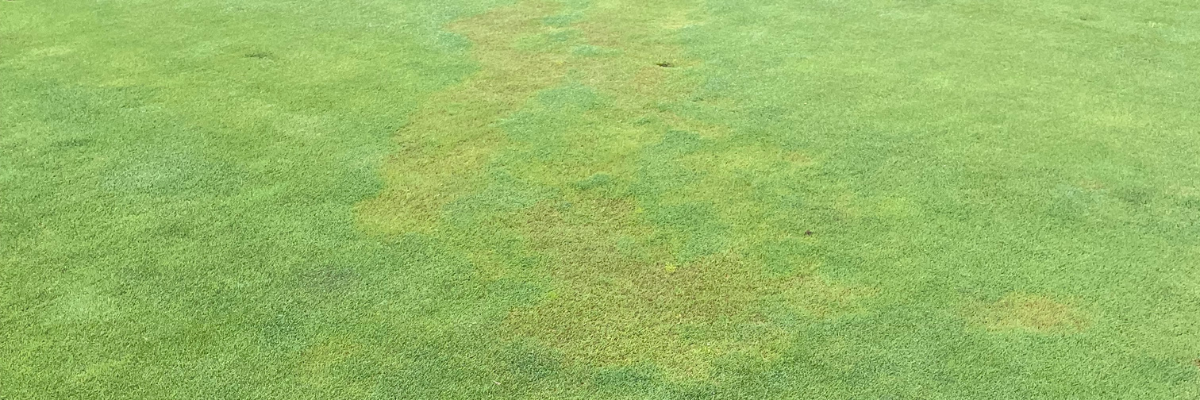
With the days being shorter, temperatures cooling off and rainfall often frequent, the winter months can bring some destructive winter diseases to the southern parts of the United States. Today, we want to cover a sometimes-neglected subject, winter diseases on warm season turfgrass. Here are the four arguably most prolific diseases, how you can identify them, and some tips on what to do for prevention.
Top Winter Diseases #4 – Large Patch
One of the most unsightly diseases in the turf world, this disease can affect many different species of warm season turfgrass including Seashore Paspalum, centipedegrass, zoysiagrass, St. Augustine, and even Bermudagrass.
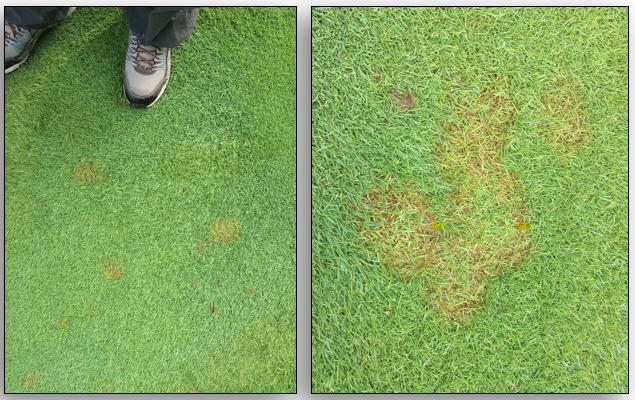
Large patch starts to develop when the weather begins to warm up in the spring or fall but can remain problematic throughout the winter. This is especially true in southern states where soil temperatures may stay in the optimal zone for extended periods. Symptoms may not appear until springtime in some cases, when warm turf starts to green up, the infection is most severe in cool, wet stretches of weather, which can last several months.
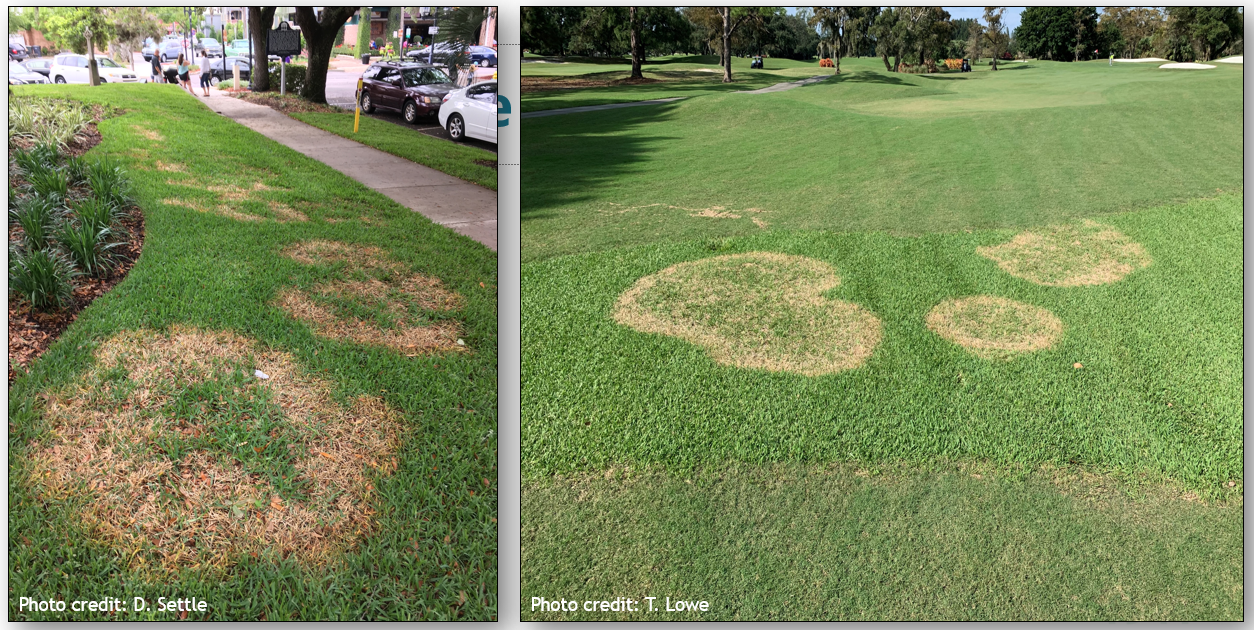
You can spot large patch by the size of the patches which can often be up to 20 ft. in diameter, and will start as light brown, sunken areas that are often noticeably slow to recover when coming out of winter. Bright and sometimes even beautiful orange borders are often associated with the disease as well.
How to Manage Large Patch
Utilizing cultural management practices and strategies is one great way to help manage large patch. Keeping a careful eye on how much irrigation you are using and lowering leaf wetness are critical to keeping disease to a minimum. Avoiding unnecessary N fertilization when the turf is growing slowly in the fall/winter has been shown to impact large patch severity, as well as improving drainage and controlling traffic to reduce compaction. It is also important to begin your preventative fungicide program starting when soil temps drop below 75° F.
The top fungicides for large patch management are first the DMI’s or sterol inhibitors. Products like Mirage®, Tourney®, or ProtectMAX® tebuconazole consistently perform best on this disease. Next, we have the Qol’s or strobilurin fungicide class – products like Heritage®, Insignia®, and ProtectMAX® Fluoxastrobin all do well on Rhizoctonia disease-like large patch, and are all labeled for use on home lawns and athletic fields. Combination products that incorporate multiple active ingredients from different classes including Ascernity™, Headway®, and Lexicon™ are also very effective. Finally, flutolanil is highly effective on large patch, making it somewhat unique amongst its peers.
Top Winter Diseases #3 – Dollar Spot
Number 3 on our list is possibly the most widely managed disease in the world, dollar spot. This disease is primarily a monster on cool season grasses but does cause some significant headaches during the fall, winter, and spring months for warm season turf, especially seashore paspalum.
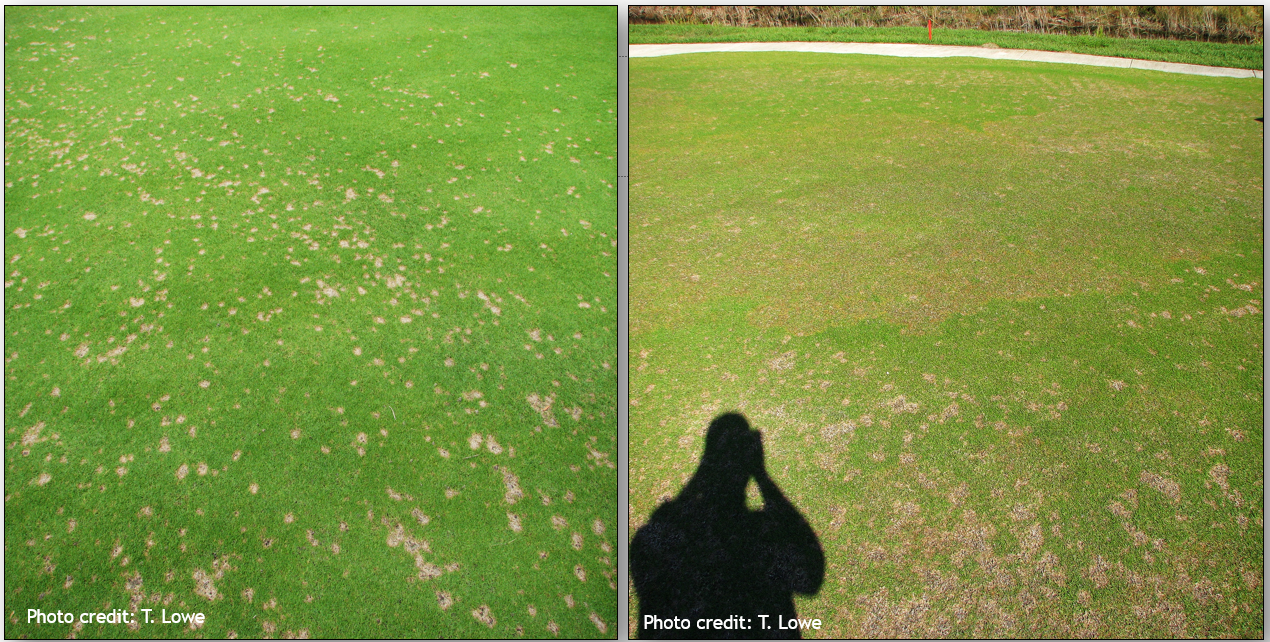
Dollar spot is one of several diseases that thrive in low-nitrogen environments and can be especially devastating on turf that is malnourished and growing slowly. The disease starts as straw-colored lesions across the leaf blade and eventually develops into silver dollar-sized spots, which can merge to form larger spots of dead turf. Dollar spot is spread by typical spores and cobweb-like mycelia and hyphal cells that can often be seen in early morning dew.
How to Manage Dollar Spot
Due to dollar spot’s nature as a foliar disease, management begins with minimizing leaf wetness where possible through improving, rolling, dragging, or whipping dew, and strategically using irrigation to break up moisture and humidity at the surface. As always, healthy turf is happy turf, and keeping it well-fed with nitrogen is important for managing disease, as lean and hungry turf is more susceptible to disease pressure.
Many different fungicides will be effective against dollar spot. Preventative applications before peak season are recommended and curative applications can be effective, but turf recovery may be slow during winter months. Top fungicide options include SDHI class products like Emerald®, Exteris®, Posterity®, and Xzemplar® are excellent for control and can offer extended intervals of controls when used preventatively. Iprodione products like 26GT®, 26019, and Interface® Stressgard® are not only highly effective but also aid in controlling other diseases.
Fluazinam (found in products like Secure and ProtectMAX® fluazinam) and chlorothalonil (found in products like Daconil and ProtectMAX® chlorothalonil) are two more great options. Finally, DMIs are also great tools for dollar spot and offer a broad spectrum of control on many other key diseases, products like Maxtima®, Banner Maxx® and Densicor® are all strong on the disease.
Top Winter Diseases #2 – Leaf Spot
Leaf spot primarily affects bermudagrass during winter months and is caused by species of Bipolaris and Dreschslera. Similarly to others, this disease prefers cool, wet periods of fall and winter, especially long stretches of prolonged cloud cover and low sunlight, and is most severe on slow-growing turf. The disease starts primarily as a foliar infection but can move to the crowns and roots of the plant and cause much more significant damage if left unchecked.
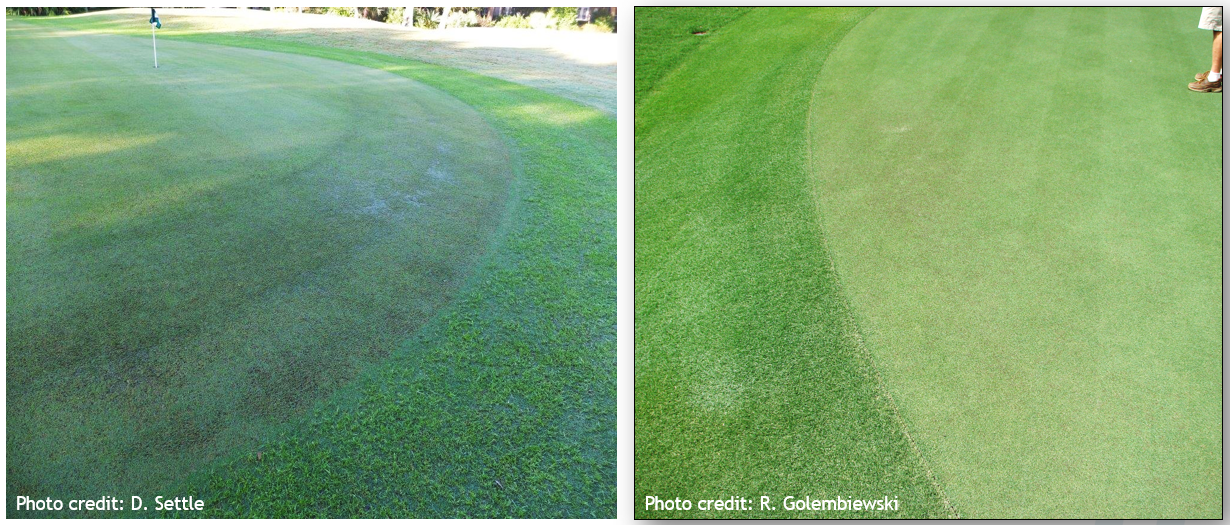
Leaf spot spreads by spores and can spread with equipment traffic. Symptoms start as water-soaked lesions on leaves but progress to a more red/purple spotting of the turfgrass, sometimes in irregularly shaped patterns.
How to Manage Leaf Spot
Managing leaf spot is very similar to dollar spot, minimizing the time the leaves of the plant stay wet and improving air movement/sunlight where possible. Not over-feeding on N and increasing mowing height is one big stress reduction practice that can make a huge difference, as well as implementing a preventative fungicide program during cloudy/rainy periods with slow growth.
Your top fungicide options for this disease are Qols like Heritage®, Insignia®, or ProtectMAX® Fluoxastrobin. Iprodine fungicides like 26GT® or Interface® Stressgard® are great options, as well as Fluazinam for multiple sites of leaf spot control, as well as chlorothalonil. Finally, Mancozeb (like ProtectMAX® Mancozeb) is another contact fungicide option that is good on leaf spot and highly effective against algae.
Top Winter Diseases #2b – Microdochium Patch
One more honorable mention before we get to the #1 slot is Microdochium Patch, which in many ways mirrors the favorable conditions for leaf spot. The disease causes unsightly damage to bermudagrass and other warm season turf species when humidity is high in cool temperatures.
Control options for Microdochium remain the same as leaf spot, however, one valuable addition for this disease is Harrell’s ProtectMAX® Title Phyte Systemic Fungicide. Title Phyte is one of the only registered phosphite fungicides labeled for control of Microdochium patch.
Top Winter Diseases #1 – Pythium
Finally, in our number 1 slot for top winter diseases on warm season turf is Pythium. The disease strikes fear in all turf managers due to its prolific nature and propensity to cause a lot of damage very quickly. In the winter, some species favor the cold, but all pythium like the humid, wet, rainy, cloudy weather.
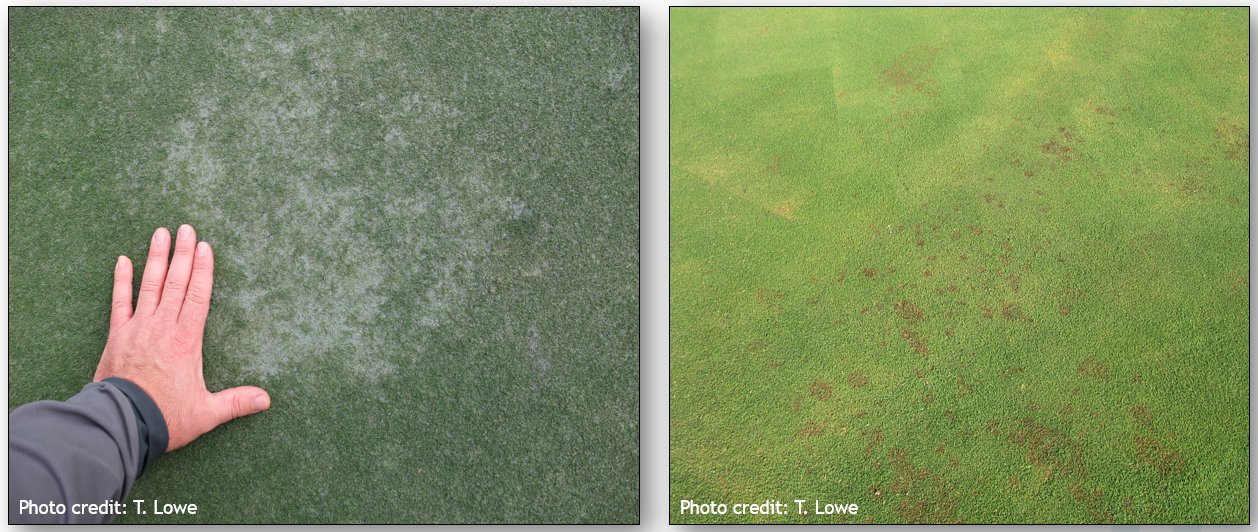
Pythium blight spreads very rapidly through highly mobile and transferable spores. The disease can easily be mistaken for leaf spot on bermudagrass and often works in tandem with leaf spot during conducive weather. Symptoms start as small, greasy, or matted leaves that are dark or orangish in color, then forming gray, cottony mycelium visible in morning dew, but not always. The spread is rapid, especially during rain due to it being transferable through water/equipment, and causes widespread damage quickly.
How to Manage Pythium
Like a broken record, many of the cultural strategies are identical to the other fungal diseases we’ve already covered. Wetness, soil moisture, and drainage are all important to manage or improve to combat Pythium successfully. It is important to note that mowing during Pythium outbreaks is ill-advised as again, spreading of the disease can occur very easily.
Fungicides when it comes to Pythium are somewhat unique, contrary to cultural practices, due to the pathogen not being a true fungus. Specialty products like Banol®, SubdueMaxx®, Serata™, and Harrell’s ProtectMAX® Cyazo are important to keep in the rotation for Pythium management. Phosphonate fungicides like Signature™ XTRA, Appear® II, and ProtectMAX® Title Phyte systemic fungicide all do a good job keeping Pythium under control when used preventatively in programs.
Similarly, the Qol fungicides also exhibit a fair level of Pythium control when used preventatively in broader targeted programs. Finally, the contact fungicide mancozeb (a good option would be Harrell’s ProtectMAX® Mancozeb) is a good rotational tool for Pythium management that also offers a broader spectrum of control of other diseases as well.
Reach Out to Your Harrell’s Rep
Our previously mentioned Harrell’s ProtectMAX® product line is ever-expanding as we continually find solutions to the toughest problems facing our industry today. Your Harrell’s Rep is here for you if you have any questions about our products or any of the information previously mentioned, connect with them today for all of your agronomic needs.
Related Resources

In addition to being the nation’s largest distributor of branded fungicides, herbicides, and insecticides, Harrell’s produces custom-blended fertilizers, specialty liquids, and wetting agents. Additionally, Harrell’s is the exclusive US owner, formulator, and distributor of all POLYON® branded products.
TEAM HARRELL'S
STAY EQUIPPED
Never stop learning. Access FREE continuing education courses from Harrell’s.
LET'S GROW
PRESS RELEASES
PRESS RELEASES
STAY EQUIPPED
Never stop learning. Access FREE continuing education courses from Harrell’s.
LET'S GROW