

Get the Most Out of Every Application
7/23/2026 - By Dr. Paul Giordano
This article was a joint effort between Harrell's and Nufarm, and was co-authored by Harrell's and Nufarm.
Herbicide failure is one of the most common frustrations in professional turf management. Weed control failures can cause costly customer callbacks and are the #1 reason they may switch companies.
Common Reasons Postemergence Herbicides Underperform
The Product Never Reached the Target
Wind drift and volatilization can prevent a product from reaching its intended target—and can move it onto desirable plants instead. Turf managers can’t control the weather, but they can reduce risk by using drift retardants and by reserving ester-formulated herbicides for cooler conditions when volatility is less likely. (Learn more about Harrell’s SprayMAX® Nonionic Penetrant Plus).
The Product Didn’t Stay on the Target
Even when spray droplets reach a weed, they can bounce or slide off waxy leaf cuticles. Surfactants mitigate this by reducing surface tension, thereby helping droplets spread across a larger area of each leaf. Nonionic surfactants (NIS) and methylated seed oil (MSO) are especially valuable in midsummer, when weeds like crabgrass have developed thicker cuticles that resist penetration. Learn more about Harrell’s SprayMAX® Nonionic Spreader Sticker and Methylated Seed Oil.
Water Quality Is Working Against You
Spray-water quality is easy to test but often overlooked. High pH can degrade certain active ingredients before they reach the plant. Aim for a finished tank-mix pH between 5 and 7.
Hard water is another factor that can affect herbicides, especially weak-acid herbicides, such as 2,4-D. Free calcium and magnesium ions can bind to weak-acid herbicides and other chemistries, dramatically reducing plant uptake. Adding ammonium sulfate (AMS) to the tank first, before other products, sequesters those ions and keeps your chemistry working as intended. Learn more about Harrell’s SprayMAX® pH Buffer and Herbicide Activator.
Application Timing Affects Efficacy
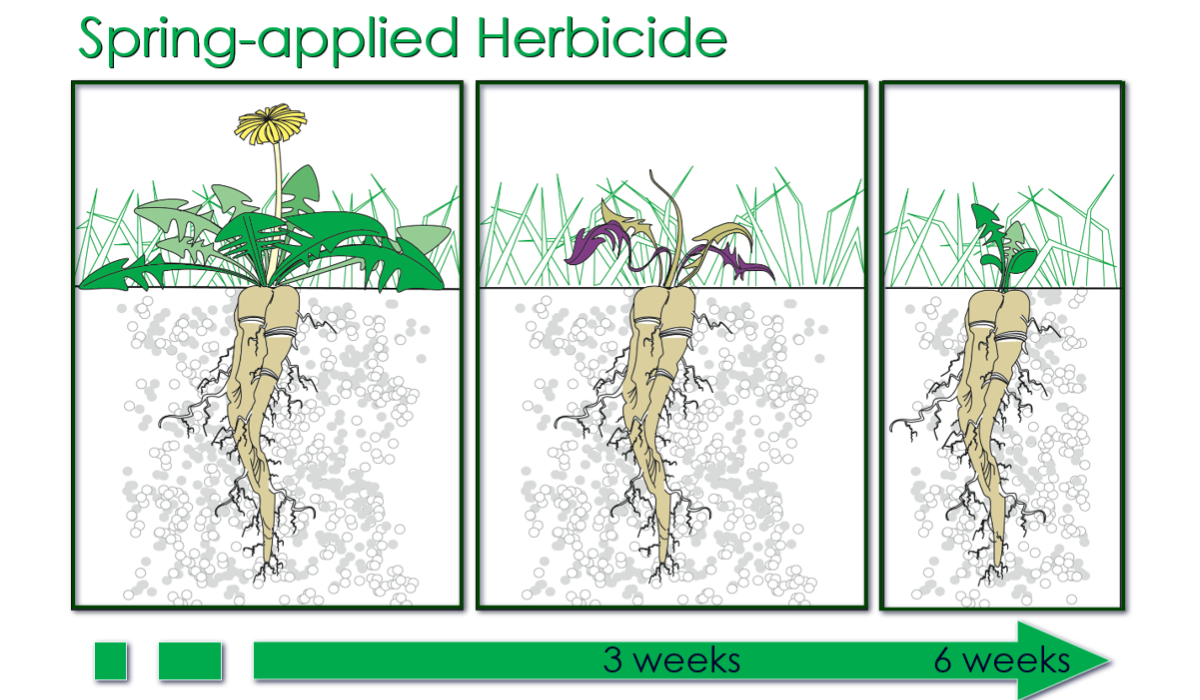
Plants aren’t equally vulnerable to herbicides all season long. During midsummer heat, cool-season weeds slow or stop growing, which limits the movement of systemic herbicides to their active sites. In late spring, rapid vertical growth can push herbicides upward too quickly, burning visible foliage while leaving storage organs such as taproots and rhizomes untouched.
For perennial broadleaf weeds, fall is typically the most effective time for application. As temperatures cool, plants redirect energy into their root systems, and translocating herbicides travel right along with it. Early spring can also be highly effective, since overwintering perennials have depleted their carbohydrate reserves and are at their weakest.
How Premium Formulations Overcome These Challenges
Correcting application variables—water quality, timing, surfactants—matters. But the active ingredients and formulation chemistry you choose can be just as important. Premium postemergence herbicides are designed to get more products into the plant and move it where it needs to go.
Ester Formulations: Better Penetration Through Waxy Cuticles
Ester-formulated broadleaf herbicides penetrate waxy cuticles more effectively than their amine counterparts. Products like Cool Power® and 4-Speed® XT take advantage of this chemistry. Esters are ideal for the cooler temperatures of spring and fall, when volatility risk is low. They can also be used for spot treatments during difficult midsummer windows; just be mindful of nearby sensitive plants, since esters are more volatile in heat.
Pyridine Herbicides: Superior Translocation for Perennial Weeds
Poor translocation and low activity are big reasons postemergence herbicides fail on perennial weeds. The herbicide may injure visible foliage but never reach the underground storage organs—rhizomes, stolons, and taproots—that allow the plant to regrow.
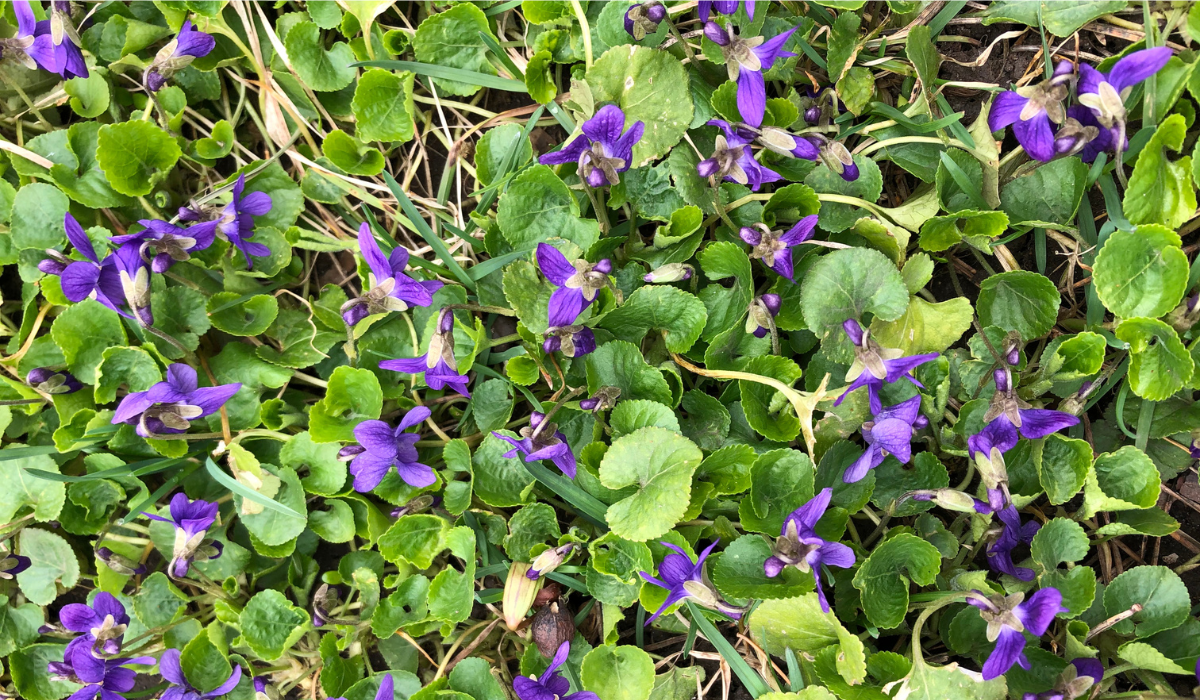
Pyridine herbicides, specifically fluroxypyr and triclopyr, are among the best translocators available for broadleaf weed control. They move readily through plant vascular systems, reaching the vegetative structures that other chemistries miss. This makes them especially effective against tough perennial species like wild violet and ground ivy, which rely on extensive below- and above-ground networks to survive conventional treatments.
Look for these active ingredients in premium formulations. Products containing fluroxypyr or triclopyr consistently outperform standard three-way herbicides on the weeds that generate the most callbacks.
PPO Inhibitors: Contact Activity That Opens the Door
PPO-inhibiting herbicides (such as carfentrazone, sulfentrazone and pyraflufen-ethyl) add a fast-acting contact component to post-emergent formulations. By rapidly disrupting cell membranes on the leaf surface, they serve a dual purpose: they provide visible burndown of treated foliage and help break down waxy cuticle barriers so that companion systemic ingredients can penetrate more effectively.
This contact-plus-systemic approach is especially valuable in two situations:
Tough-to-control weeds. Species with heavy cuticle wax or dense canopy structure benefit from the membrane disruption caused by PPO inhibitors, allowing systemic herbicides to reach their sites of action.
Difficult timing windows. When you’re forced to spray outside the ideal window—midsummer heat, drought stress, or late-season conditions. PPO inhibitors increase the likelihood that enough herbicide reaches the plant to do its job.
4-Speed® XT combines pyraflufen-ethyl with ester-formulated broadleaf actives, pairing contact-driven cuticle breakdown with strong systemic movement. The result is faster visual response and more reliable long-term control, especially on tough annual and perennial broadleaf weeds.
For operations also dealing with yellow nutsedge sedge or kyllinga pressure, formulations containing sulfentrazone, like Allstar, can address those species while contributing to the same membrane-disrupting benefits.
Nufarm Premium Broadleaf Weed Herbicides

The Bottom Line
Most herbicide “failures” aren’t caused by a single mistake—they’re the result of several small disadvantages stacking up: an application timed too late, hard water that wasn’t addressed, no surfactant in the tank, or an herbicide that doesn’t move well enough in the plant. No single adjustment is transformative on its own, but addressing multiple variables at once—especially choosing premium formulations built with pyridine and PPO-inhibitor chemistry—can make programs dramatically more reliable.
Start by identifying which failure mode is most likely affecting your results and work backward from there. Often, the biggest gains come not from changing how you spray, but from changing what you spray.
Reach out to your Harrell's Territory Manager for more information about optimizing your weed control program with Nufarm herbicides and a full lineup of Harrell’s SprayMAX® adjuvants and spray utility products.
*Not all products are registered in all states. Always read and follow label instructions.
Related Resources

In addition to being the nation’s largest distributor of branded fungicides, herbicides, and insecticides, Harrell’s produces custom-blended fertilizers, specialty liquids, and wetting agents. Additionally, Harrell’s is the exclusive US owner, formulator, and distributor of all POLYON® branded products.
TEAM HARRELL'S
STAY EQUIPPED
Never stop learning. Access FREE continuing education courses from Harrell’s.
LET'S GROW
PRESS RELEASES
PRESS RELEASES
STAY EQUIPPED
Never stop learning. Access FREE continuing education courses from Harrell’s.
LET'S GROW