

POLYON® - Snap Bean CRF Rate Study
12/23/2021 - By Dr. Tom Reed
Study: | Effect of Nitrogen Rate and Source on Snap Bean Yield, Quality, Leaf Tissue Nitrogen, and Soil Nitrate-Nitrogen When Using Controlled Release Nitrogen in Comparison to Conventional Ammonium Nitrate as the Source of Nitrogen in Snap Beans |
Location: | Live Oak, FL |
Collaborator: | Bob Hochmuth (UF|IFAS NFREC) |
Date: | 4/2021-6/2021 |
Conclusion:
The objective of this study was to compare conventional (CON) fertilizer and controlled release fertilizers (CRF) sources of nitrogen on the impact on snap bean yield, leaf tissue nitrogen, and nitrate-nitrogen in the soil at three depths. A base 0-9-19 plus micronutrients fertilizer was banded 15” wide on the surface at 284 lb/ac on April 1 followed by either Harrell’s POLYON® CRF 40-0-0 and ammonium nitrate conventional fertilizer treatments banded 15” wide on the soil surface. There was also a POLYON® broadcast treatment and a control without N application. Planting was on April 5, the second (April 28) and third (May 14) CON applications of ammonium nitrate were applied in a 15” band over the row. On May 5, a 0-0-20 fertilizer was broadcast applied at 250 lb/ac over the entire experimental area. On average CRF banded treatments yielded 8% greater than the CON treatments across N rates and harvests. The current recommended N rate from the University of Florida is 100 lb/ac. In this trial, the 100 lb/ac treatments of CRF, both banded and broadcast-applied, were among the top yielding treatments at both harvest dates and were significantly greater than the 100 lb/ac rate of CON N at first harvest, but not significantly different at second harvest, indicating a single CRF preplant application of a CRF was equal to or better than 100 lb/ac of a CON source split into three applications. Average bean length was greater in CRF treatments with minimal difference for bean width and color between treatments. Typically, the higher the N rate, regardless of N source, the higher the leaf N level. The CRF broadcast application was statistically similar to the banded application at the same rate. Soil nitrate-nitrogen data suggests the CON treatments N was leached below the root zone during much of this trial and that it appears the CRF sources are more likely to maintain higher levels in the root zone that is available for plant growth throughout the season.
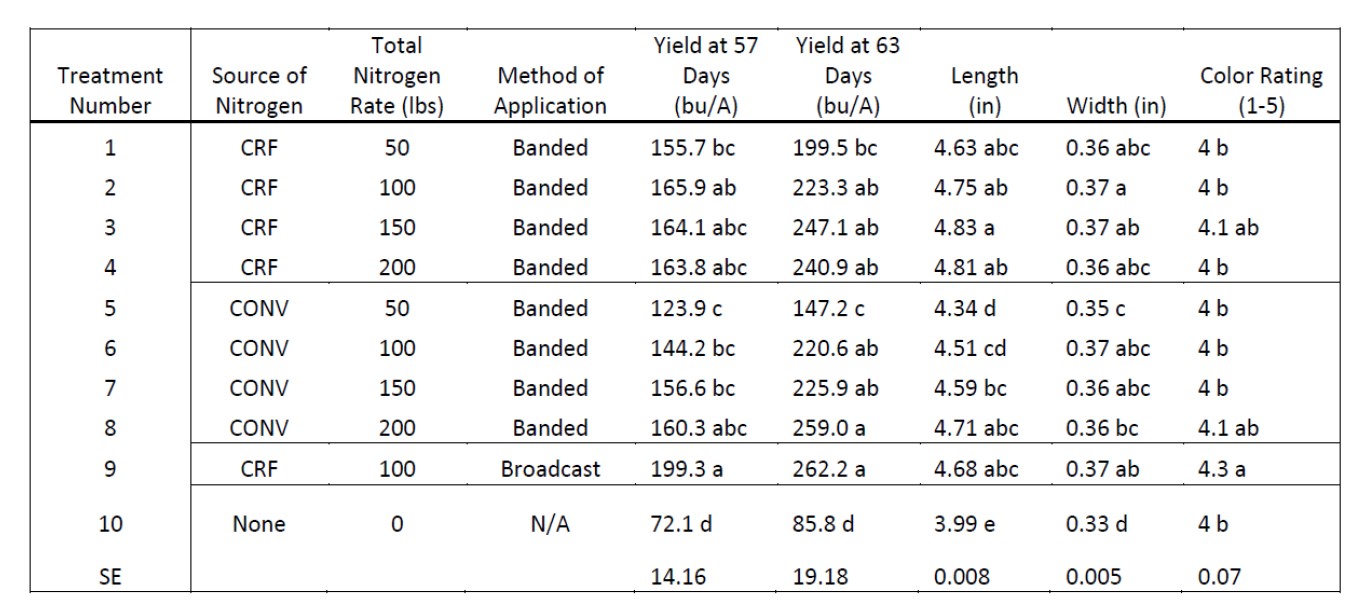 Figure 1: Snap bean yield data from conventional and POLYON® CRF N treatments.
Related Resources

In addition to being the nation’s largest distributor of branded fungicides, herbicides, and insecticides, Harrell’s produces custom-blended fertilizers, specialty liquids, and wetting agents. Additionally, Harrell’s is the exclusive US owner, formulator, and distributor of all POLYON® branded products.
TEAM HARRELL'S
STAY EQUIPPED
Never stop learning. Access FREE continuing education courses from Harrell’s.
LET'S GROW
PRESS RELEASES
PRESS RELEASES
STAY EQUIPPED
Never stop learning. Access FREE continuing education courses from Harrell’s.
LET'S GROW