

POLYON® - Grapefruit Planting Density Study 2
11/26/2021 - By Dr. Tom Reed

Study: | ‘Ray Ruby’ Grapefruit Affected by Huanglongbing II. Planting Density and Soil Nutrient Management |
Location: | Fort Pierce, FL |
Collaborator: | Rhuanito “Johnny” Ferrarezi, PhD (UF|IFAS IRREC) |
Date: | 2018 - 2020 |
Conclusion:
The study investigated the effects of three planting densities, two Harrell’s controlled release fertilizer (CRF) blends, and four foliar applied micronutrients rates on bearing age (5 to 7-year-old) ‘Ray Ruby’ grapefruit on Kuharske citrange in a split-split-plot design. Fertilizer blends were applied three times per year (February, July, October). Target application rate was 161 lb N/ac (180 kg N/ha). In 2018–19, the fertilizer blend did not affect fruit quality. In 2019–20, a 12-3-14 blend was used with 70% CRN with recommended or increased micronutrient levels. That season CRF 1 with higher micronutrients induced 10% higher soluble solids, 7% higher ratio, and 86% greater yield of solids than CRF 2 as well as increasing photosynthesis (17%) compared with CRF 2. The CRF 1 blend combined with the highest planting density produced greater yield of solids than other treatments with reduced fruit number. Balanced nutrient application can mitigate Huanglongbing (HLB) disease, high-density planting optimizes yield under HLB-endemic conditions, higher micronutrients increased canopy volume and foliar micronutrient application did not enhance yield and excessive supplemental application may increase vegetative growth resulting in reduced yield.
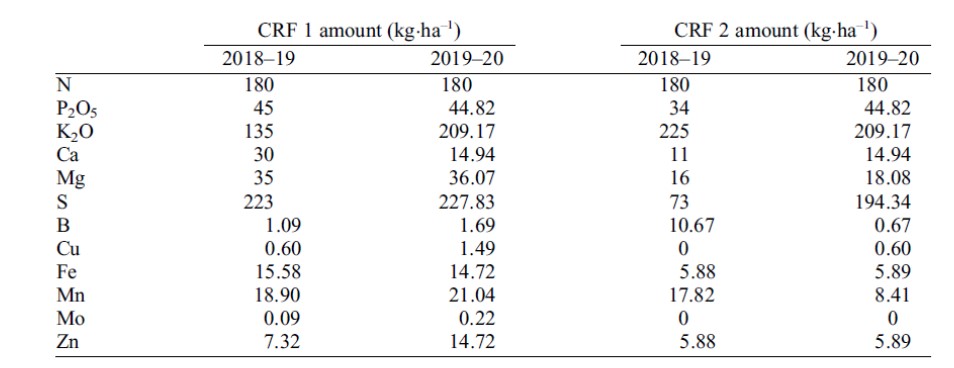
Figure 1: Nutrient rates for Harrell’s CRF blends in study.
Related Resources

In addition to being the nation’s largest distributor of branded fungicides, herbicides, and insecticides, Harrell’s produces custom-blended fertilizers, specialty liquids, and wetting agents. Additionally, Harrell’s is the exclusive US owner, formulator, and distributor of all POLYON® branded products.
TEAM HARRELL'S
STAY EQUIPPED
Never stop learning. Access FREE continuing education courses from Harrell’s.
LET'S GROW
PRESS RELEASES
PRESS RELEASES
STAY EQUIPPED
Never stop learning. Access FREE continuing education courses from Harrell’s.
LET'S GROW