

POLYON® for Ornamentals – The Ornamental Easy Button
10/25/2022 - By Dr. Jeff Atkinson
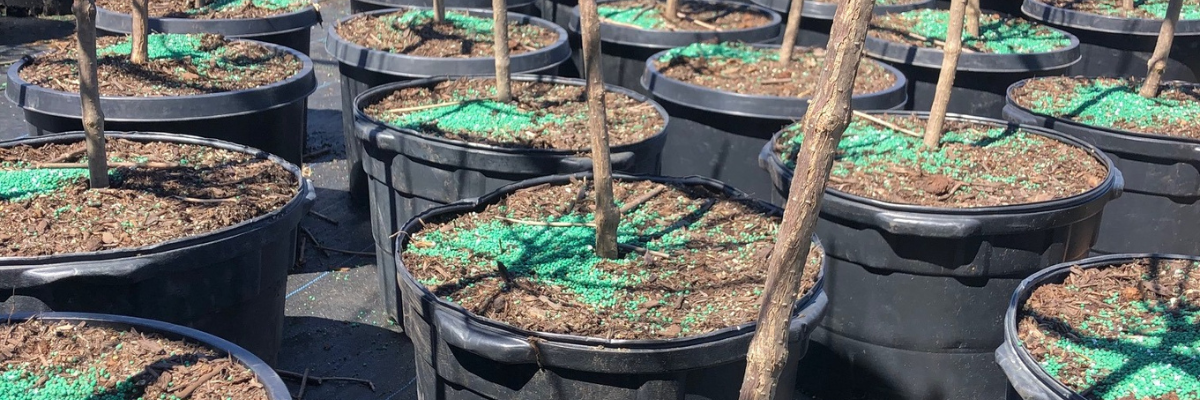 " data-mce-src="https://s3.us-east-1.amazonaws.com/files.harrells.com/blog/2022/POLYON%20Hort%20Banner.png">
Each spring I travel to my local nursery to stock up on
spring annuals to add color to my home landscape. I always start out with the
best of intentions.
·
I amend the media with compost.
·
I place the plants at the appropriate spacing.
·
I then nourish the plants with an appropriate
dose of fertility and water to set them up to flourish.
·
Over the next few weeks, I will continue to
water and fertilize on a frequent basis, then less and less regularly as summer
draws on and life gets busy.
Inevitably, the ornamentals decline in quality, ultimately
ending up as part of next year’s batch of compost and not reaching their
ornamental potential.
I am sure many, regardless of position as a homeowner, golf
course superintendent, or landscape manager can relate. Today’s atmosphere of
doing more with less labor does not allow for extra time to tend to ornamental
plantings. Turf fertility, water management, and cultural practices often take
priority leaving ornamentals to mostly fend for themselves. Which begs the
question…
What Can We Do?
It may be surprising to learn that not only is POLYON® controlled-release fertilizer a
predictable, consistent tool for turfgrass management, but also an equally
useful tool for ornamental management. As a controlled-release fertilizer, a
unique characteristic of POLYON® fertilizer is Harrell’s ability to coat a
variety of fertilizer substrates with our proprietary POLYON® reactive layer coating
technology.
POLYON® Fertilizer
Whereas urea serves as the substrate of choice for turf
POLYON® fertilizer applications, Harrell’s manufactures a variety of N-P-K and
N-P-K + micronutrient POLYON® fertilizer products formulated specifically for
ornamental applications. Similar to POLYON® fertilizer for turf, these
ornamental blends are manufactured with a range of coating thicknesses which
can be selected based on desired nutrient release longevity. Release
longevities range from 2 to 12 months, plenty of longevity for a single
application to last for an entire growing season.
Learn
more about POLYON® fertilizer's physical characteristics.
Incorporating POLYON® Fertilizer into Your Program
A natural question is how to determine application rates
considering most ornamentals are not planted on a per 1000 sq. ft. or per acre
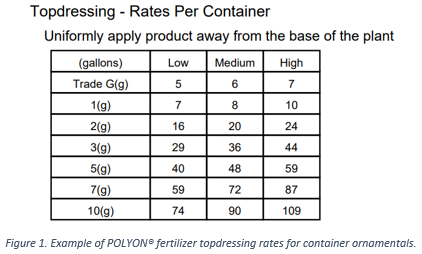
basis. The label of Harrell’s POLYON® fertilizer ornamental blends includes easy-to-understand rates for media incorporation and container topdressing (Figure
1). These rates should serve as a starting point to determine the appropriate
application rate, with consultation with your Harrell’s representative being the
final step in your decision.
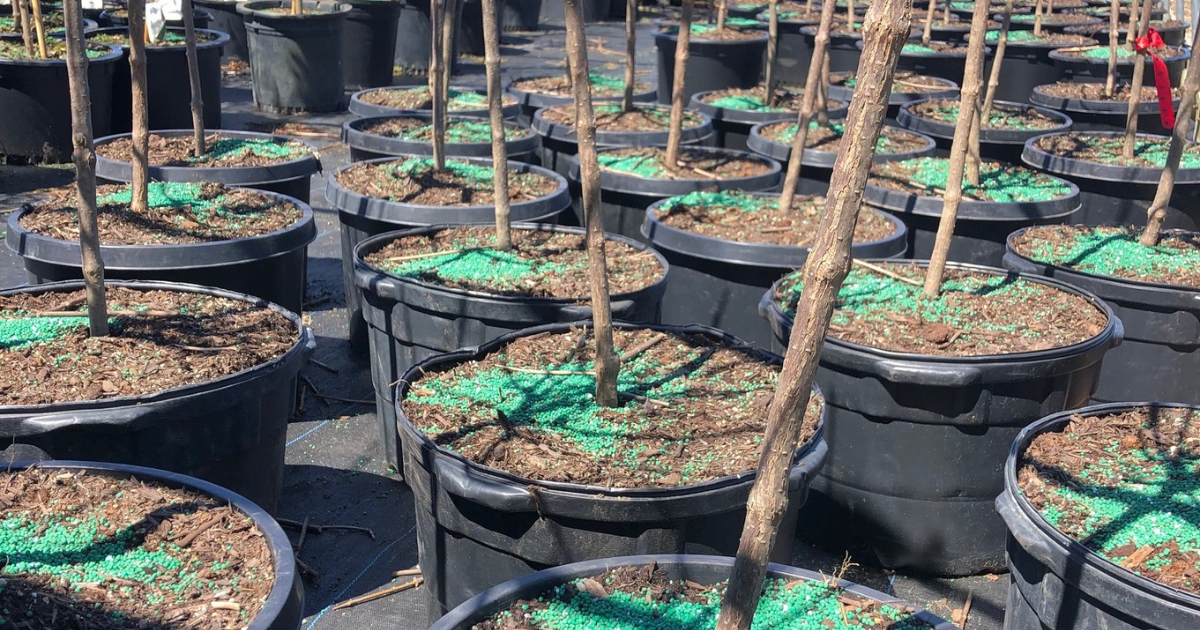
Application is easy as measuring the appropriate amount of material and then either
placing it on the soil surface close to the ornamental planting or
incorporating it into your soil or planting media (Figure 2).
 " data-mce-src="https://s3.us-east-1.amazonaws.com/files.harrells.com/blog/2022/POLYON%20easy%20Figure%201.PNG" width="566" height="341">
Reducing Labor and Knowing What's Ahead
Finally, much like POLYON® fertilizer for turf applications,
release can be predicted for POLYON® fertilizer ornamental blends using
Harrell’s proprietary Polygraph® software. Based on laboratory-determined
release characteristics of POLYON® fertilizer and historical weather data for a
given location, the Polygraph® will provide an accurate description of week-to-week and month-to-month nutrient release so that adequate fertility is ensured
through a growing season.
Utilizing POLYON® fertilizer technology for ornamental
fertility is an effective way to reduce labor needs, related to ornamental
maintenance while enhancing plant quality and health. As always, your Harrell’s representative is the
best resource for selecting the appropriate products and application rates for
you to build a successful and comprehensive POLYON® fertilizer program.
Dr. Aaron Palmateer is Here to Help
Dr. Aaron Palmateer is our newest Directory of Agronomy at Harrell's, specializing in horticulture and working hard to solve the toughest of Horticulture diseases and problems. Although Dr. Palmateer's main workspace is horticulture, he will support Golf Course Superintendents as they care for the ornamentals plantings on or around the golf course. "Golf courses have plants too, and I look forward to collaborating with my colleagues who support the turfgrass industry by providing expertise on managing pests and diseases of ornamental plantings on and around golf courses."
The Lawncare industry will also benefit from Dr. Palmateer's research and service. Regarding lawncare, he said, "As a Plant Pathologist and Extension Specialist at the University of Florida, I had the opportunity to work with numerous landscape professionals and horticultural consultants on solving pest and disease issues in the landscape, and I look forward to continuing these efforts in collaboration with my colleagues at Harrell’s."
Related Resources

In addition to being the nation’s largest distributor of branded fungicides, herbicides, and insecticides, Harrell’s produces custom-blended fertilizers, specialty liquids, and wetting agents. Additionally, Harrell’s is the exclusive US owner, formulator, and distributor of all POLYON® branded products.
TEAM HARRELL'S
STAY EQUIPPED
Never stop learning. Access FREE continuing education courses from Harrell’s.
LET'S GROW
PRESS RELEASES
PRESS RELEASES
STAY EQUIPPED
Never stop learning. Access FREE continuing education courses from Harrell’s.
LET'S GROW