

Sound Advice for Effective Nutsedge Control
8/11/2020 - By Eric Reasor, Ph.D.
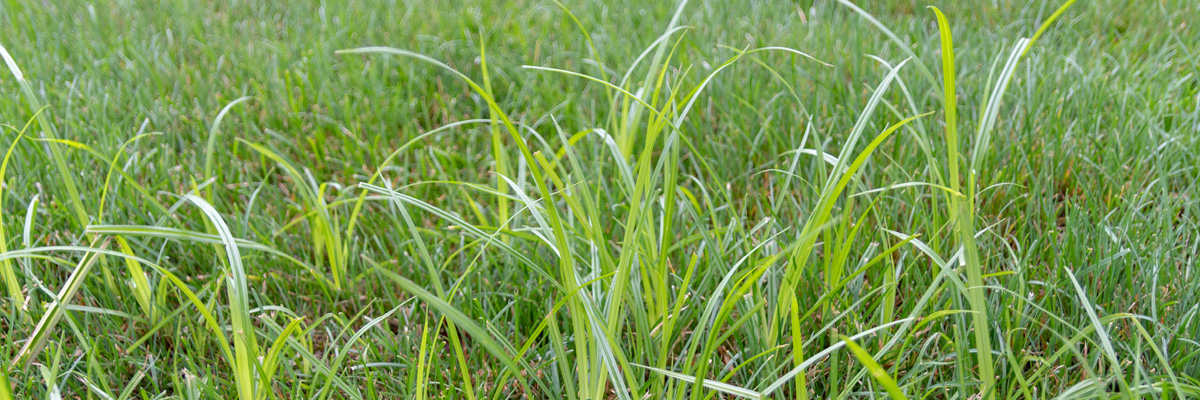
At some point during every growing season, turfgrass professionals are faced with a familiar foe: nutsedge. The warm-season perennial weed emerges in mid- to late-spring in most parts of the U.S. and actively grows in warm weather.
Though it will grow in drier areas, nutsedge prefers moist and saturated soil conditions. Typically, it has a glossy, light-green leaf color and veined triangular stem. If you run your fingers along the stem, you should notice a sharp edge because “sedges have edges.” Each plant can produce several hundred tubers each season, and those tubers can remain dormant in the soil for several years before they emerge as a new plant.
As with every weed, a well-maintained, healthy, actively growing turfgrass is the number one way to manage nutsedge. This includes proper mowing, irrigation, fertilization, and cultivation. Pulling it by hand is usually ineffective because yellow nutsedge tubers are not removed. Post-emergent herbicide applications should be made in late spring and early summer before the plant matures and produces additional tubers. Repeat applications over multiple growing seasons may be required to achieve effective chemical control.
Pre-emergent herbicide options are available; however, post-emergent herbicides are typically required for acceptable control since nutsedges are perennial weeds. PBI Gordon recommends Vexis® Herbicide Granular. Herbicide application timing is critical for effective nutsedge control. It is important to apply herbicides soon after nutsedge emergence in the spring. This application timing limits the number of rhizomes and tubers the plant can produce to further spread. Waiting until mid-summer to treat for nutsedge gives the plants time to grow more rhizomes and tubers to re-grow and survive herbicide applications. Typically, multiple herbicide applications are required for season-long nutsedge control. Herbicide active ingredients for nutsedge control include, but are not limited to: pyrimisulfan, flazasulfuron, halosulfuron, sulfentrazone and trifloxysulfuron.
For more information on how to tackle nutsedge, check out these tips on the PBI Gordon website.
Related Resources

In addition to being the nation’s largest distributor of branded fungicides, herbicides, and insecticides, Harrell’s produces custom-blended fertilizers, specialty liquids, and wetting agents. Additionally, Harrell’s is the exclusive US owner, formulator, and distributor of all POLYON® branded products.
TEAM HARRELL'S
STAY EQUIPPED
Never stop learning. Access FREE continuing education courses from Harrell’s.
LET'S GROW
PRESS RELEASES
PRESS RELEASES
STAY EQUIPPED
Never stop learning. Access FREE continuing education courses from Harrell’s.
LET'S GROW