

Meet the TurPh.Dudes – Paul Giordano
9/7/2021 - By Mike Hess
At Harrell’s, we are always seeking the best ways we can serve you. Through quality service, rigorously tested products, and cutting-edge scientific insights from some of the foremost experts in the field. Bringing you a peace of mind having an entire team of experts ready to help you succeed, every step of the way.
In this article, I had the opportunity to interview Dr. Paul Giordano, Director of Agronomy, and hear his story through the years he has spent in the industry.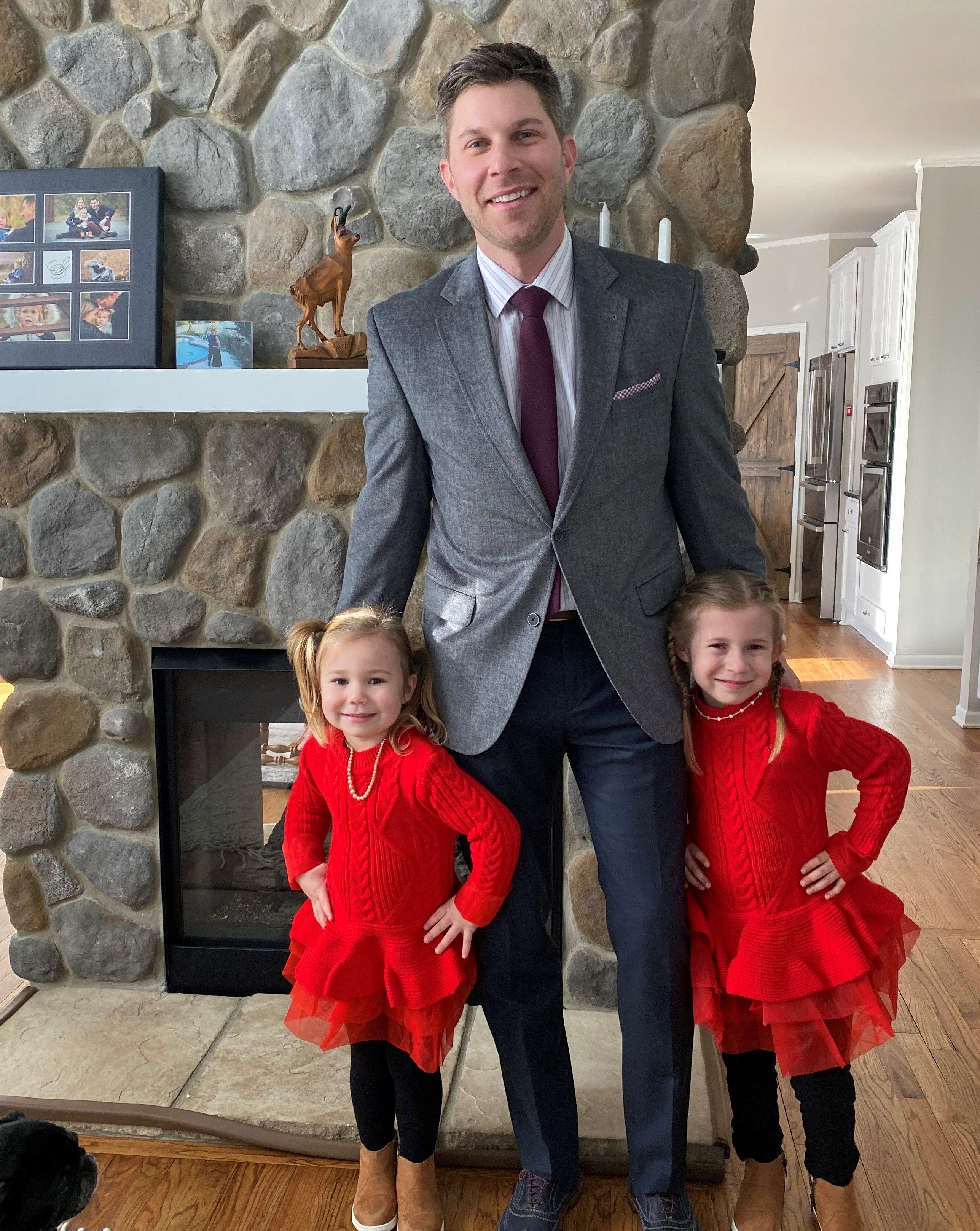
How long have you been in the industry?
I’ve worked in the turf industry in some shape of form for 22 years (sounds weird even saying that…).
How did you get started in the Turfgrass industry?
I got an early jump being introduced to the game by my father and other members of my family when I was a kid. My first job at age 14 was at a local driving range as a ball picker, driving a caged tractor and working for pocket money and free-range balls. After a couple summers of that, I took a job at a local municipal golf course on the maintenance crew. As I earned more responsibilities over time, I started to really immerse myself in the agronomy and science of turf maintenance. I had a great mentor superintendent, Dennis Nordling who helped me to understand the educational and professional opportunities that exist in the turf industry.
What was your academic journey like?
I enrolled in the four-year B.S. program in Crop and Soil Sciences at Michigan State University with intentions of becoming a golf course superintendent. I continued to work on golf courses while in school and did an internship on the north shore of Chicago at Lakeshore Country Club with another great superintendent and mentor Jeff Frentz. As I came to the completion of my B.S. degree, the economy sucked, and jobs were somewhat scarce. I always had an interest in pursuing an advanced degree in turf and staying in school, so by happen stance I ran in to a former professor of mine at a bar one night…the rest as they say, is history.
That professor I linked up with was one of the “godfathers” of turf science, Dr. Joe Vargas. I began a M.S. degree in Plant Pathology under his guidance in 2008. While working in the Vargas lab I was able to not only conduct my own novel thesis research but had the unique opportunity to oversee hundreds of fungicide and plant health product trials for several years. Additionally, I was fortunate to gain invaluable experience in practical turfgrass disease diagnostics under Dr. Vargas and his long-time technicians Ron Detweiler and Nancy Dykema – three experts who collectively have over 130 (!) years of experience in this area. 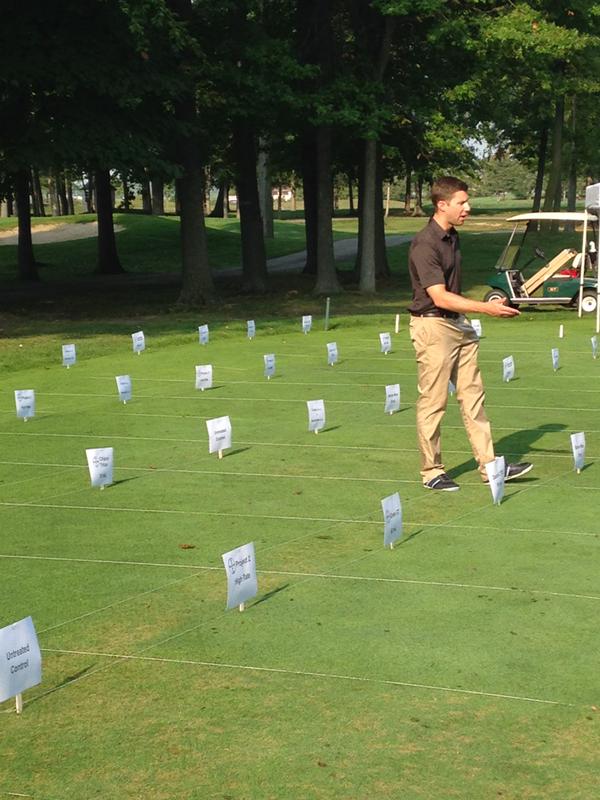
I got the research bug and stuck around to work on a Ph.D project that was a hot topic at the time - a new bacterial disease of creeping bentgrass that our lab originally identified and characterized. I finished my Ph.D dissertation and defense in 2014 and had an awesome opportunity to move to the greater Toronto area, leading R&D efforts and technical sales support with Bayer Environmental Science in Canada.
After 4 great years in Canada, helping turf managers, launching numerous new fungicides, and leading the charge in developing several other pipeline products, I made the jump down to the U.S. with Bayer’s Turf and Ornamental division to join the Green Solutions Team as a Technical Services Manager. This ultimately led me to my current role as Director of Agronomy with Harrell’s today.
What first got you interested and what kept you coming back? Has this grown through experience?
I remember in my early teenage days, the very first summer I worked on a golf course; we were building/redesigning several new holes. It was a miserably hot summer, and I was doing most of the grunt labor in the beginning (picking rocks, digging trenches etc.). I was never a morning person (as most teens aren’t), but for several months in a row I got up every day at 5:00 am with no complaints. One day, my mother made a profound observation (as a mother tends to do) and said, “you must really like this job to be getting up so early every day”. I had never thought about it that way, but I realized there was something different about this job - I was hooked.
As the new holes around the course began to take shape, I started to understand what it was that kept bringing me back – it was the unique gratification one gets in seeing the true fruits of their labor in the unrivaled beauty of a golf course landscape. This instant feedback (both negative and positive) taps into something visceral. No other job or project I had done up to that point gave me the same level of satisfaction or sense of accomplishment.
Tell me more about your experiences, this can be anywhere along the line; when you were in school, when you first started working, when you picked up coffee this morning, etc.
I spent many summers as a pesticide and fertilizer application technician, affectionately known as a “spray jockey.” Over time, I gained an appreciation for why and how we were making these targeted applications for diseases, weeds, insects, etc. Later, I started taking an interest into what we were spraying and the nuanced differences between the chemistries we were applying.
One summer, my boss went for a long weekend vacation and left me and another kid in charge of irrigation. It was brutally hot (as it always is when the boss goes away). We naively overwatered an area that looked rather dry/wilted for 2 straight days. By the time the boss came back, the entire fairway had been overrun by Pythium blight (and anthracnose, and brown patch…). This was my unfortunate entry into the wonderful world of turf pathology; the first, but certainly not the last lesson I learned in the subject – don’t screw around with fungi!
Why Harrell’s? What about this company stand out to you?
I’ve watched Harrell’s grow and establish themselves as a leader in this industry over the past 15 years of my career. Working alongside the Harrell’s team in various capacities while at the university as well as a business partner at Bayer, it was always clear to me that they pride themselves on hiring the very best people and in turn taking care of those people.
My goal has always been to use my skillset to foster new ideas and help turf managers succeed in their jobs. Harrell’s has the same vision and continues to set themselves up as a company to lead our industry successfully into the future. With an already impressive team of technical sales representatives and agronomic experts, it was an easy decision for me to join the Harrell’s family. My goal is to add value and hopefully a unique perspective that can complement Dr. Atkinson’s and Dr. Snyder’s incredible wealth of knowledge.
How does Harrell’s compare to other places/areas you have worked in?.png)
Harrell’s is not just a collection of passionate professionals, it’s a family. I always knew there was something special about this company working alongside the people as a business partner in the industry. Joining the team this year confirmed all those things and then some. There is a culture that emphasizes “taking care of people,” and it’s not just lip service, it’s the real deal. The common vision among employees and collaboration toward shared goals is unique from anything I’ve experienced in the workplace – I’m fortunate to be here and look forward to helping build toward these goals with the best team in the industry.
What’s your vision for where Harrell’s can grow to, product and industry wise? Basically, where do you see the company having the potential to go short and long term?
Short term, our team will continue to provide best in class agronomic recommendations and product insights that put our customer’s success first. With the ever-changing portfolios of products and rapid pace of innovation throughout the industry, we are well equipped to help guide our team and our customers in making the best decision for their turf and their bottom line.
Long-term, Harrell’s sits in a great position to continue to bring new ideas and innovations to the turf industry. Our team will play an integral role in scouting technologies, testing and developing novel products, and fostering solutions to turf managers that ultimately help them do their jobs more effectively and efficiently.
What is it like having a team of experts in the field all working toward the same goal?
Throughout my career, I’ve been fortunate to work with some of the best turf scientists this industry has to offer. I’ve learned so much from these individuals, each with their own area of expertise and experiences. The “TurPh.Dudes” team at Harrell’s has been assembled intentionally with three Ph.D.’s who are well diversified in subject matter specialization and expertise. We have Dr. Raymond Snyder, who is a second-generation expert in soil fertility and turfgrass nutrition. We have Dr. Jeff Atkinson, a weed scientist and turf physiologist with a vast array of experiences in both academia and industry. Now, as I come on board with my background in turf pathology and product development, we are in a unique position as a manufacturer and distributor to provide customers with scientifically proven, yet practical solutions and recommendations across a broad portfolio of offerings. To my knowledge, no other company in the turf industry has this level of R&D and direct to customer technical sales support.
What is your favorite thing about working in this field?
By far and away, the people. This industry hooked me early on with the instant gratification, fast-paced outdoor work, and ever-interesting agronomic nuances – but I’ve stayed in this industry because of the outstanding community of professionals of which it is comprised. I always say, we are no more than 1 or 2 degrees of separation from anybody in this industry – and I love that about it!
What are you most excited for coming down the line? This can be any advancements, industry progression, growth specific to Harrell’s, etc.
The turf industry is often late to the party when it comes to technological advancements that occur in other agricultural settings. That said, I’m excited to see what digital tools will continue to bring to this industry in the realm of diagnostics and agronomic decision making. I’m also keenly interested in what gene editing advancements with biological technology like CRISPR Cas-9 can offer our industry, through breeding and genetics in the years to come. The world is changing at a rapid pace, and our industry will continue to adjust/adapt as necessary.
Get to know the Harrell’s TurPh.Dudes team. Check out their individual articles:
Related Resources

In addition to being the nation’s largest distributor of branded fungicides, herbicides, and insecticides, Harrell’s produces custom-blended fertilizers, specialty liquids, and wetting agents. Additionally, Harrell’s is the exclusive US owner, formulator, and distributor of all POLYON® branded products.
TEAM HARRELL'S
STAY EQUIPPED
Never stop learning. Access FREE continuing education courses from Harrell’s.
LET'S GROW
PRESS RELEASES
PRESS RELEASES
STAY EQUIPPED
Never stop learning. Access FREE continuing education courses from Harrell’s.
LET'S GROW