

Managing Elk on a Golf Course—Mess with the Herd, You Get the Hoof
11/10/2020 - By William Buehn
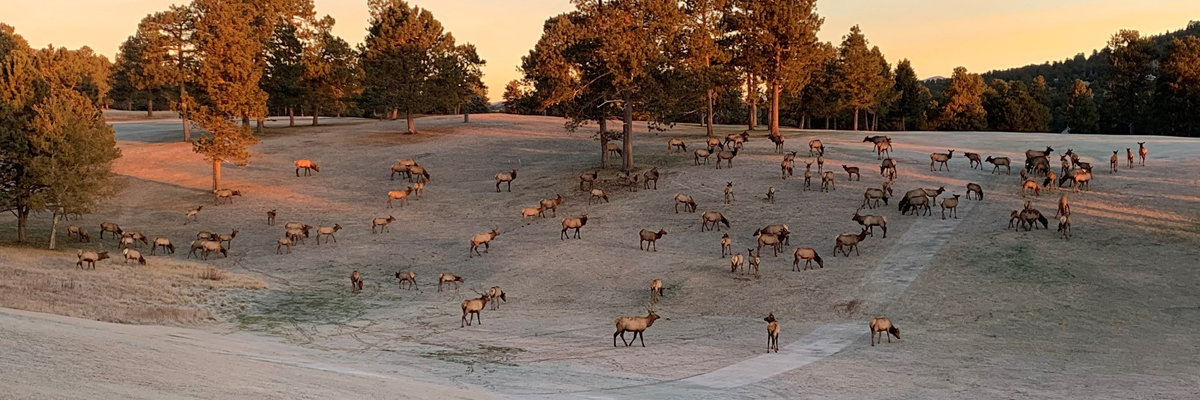
Imagine you’re making the turn and getting ready to start your Sunday back nine. You’re halfway through your hot dog and anxious to shake off that 50 on the front. You approach the tenth hole, and you see a caution sign: “Warning, please skip holes 10 & 11 and proceed to 12.” You wonder why you can’t play the two holes. You think, “maybe they’re doing maintenance,” but then you read on to see that the caution is due to heightened elk activity on those holes! For most of us, that kind of detour would probably be a first, but for the members of Hiwan Golf Club in Evergreen, Colorado, it’s just another day during the rut.
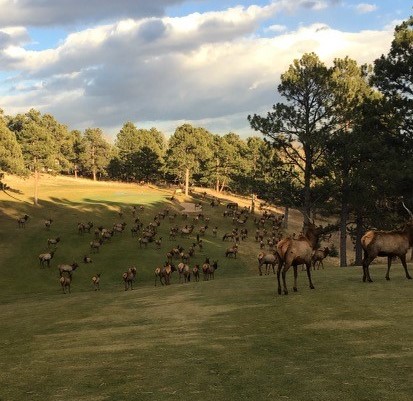 Sean Parsons, who’s been the head superintendent at Hiwan since 2010, says that the elk have been around since the late 80’s or early 90’s—that’s when the previous superintendent first started noticing them on the course—but they really started showing up in numbers in the early 2000’s. And since Parsons has been on board, there’s always been a few hundred elk that call Hiwan home. “Once they got here, they didn’t want to leave,” says Parsons. Can you blame them? The golf course is like a forage fantasy for the 700-lb vegetarians. They’ve got lush grass and drinking ponds on tap as well as constant protection from threats, like mountain lions and hunting. The Colorado Parks and Wildlife (CPW) says that the golf course is the best salad bar that the animals could have. CPW has even conducted tagging efforts to determine if the Evergreen elk are migrating, and they’ve found that the elk are in fact not. Normally a migratory species, these elk seem to have set their roots in Evergreen.
Unfortunately, however, despite the animals being elegant, majestic creatures, they haven’t exactly been upstanding members of the club over the years. Apart from not paying members fees for a few decades, they also don’t seem too concerned with respecting the property, and their presence definitely takes its toll. Of course, many facilities have to deal with some folks not filling their divots or not fixing their ball marks, but how many are faced with hoof marks every morning? Parsons says that when it comes to dealing with the elk, “The big issue is damage to the greens. You put a six or seven-hundred-pound animal with hooves on it, and they're going across [the green], and if they're running around, or a bull is chasing them, or anything like that, they leave a lot of marks—deep marks.” Parsons and his crew are faced with the aftermath of the nightly parades every morning during the shoulder seasons (especially during the fall rut), and they’re forced to resort to everything from your standard ball-mark repair tool to screwdrivers, knives, and forks in order to repair the marks.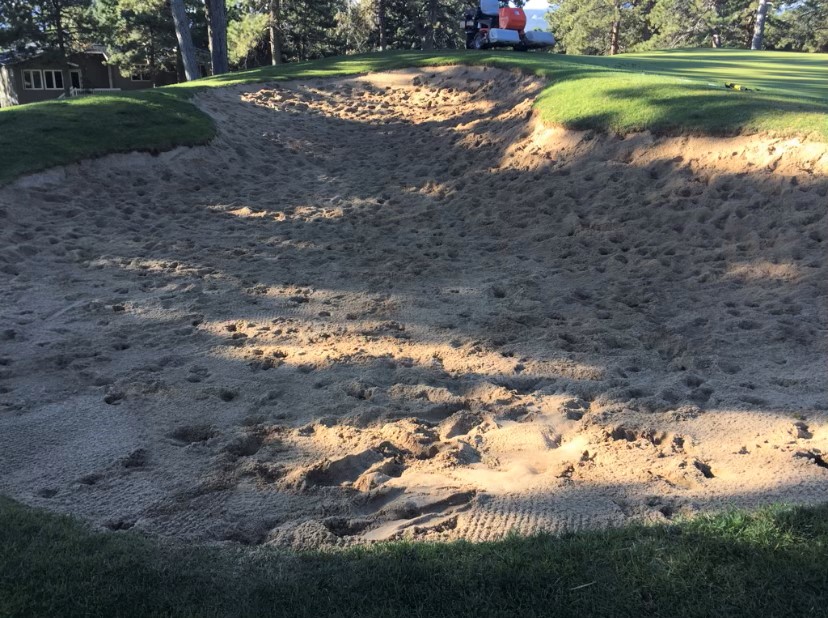
The animals also tend to mix it up in the bunkers, especially the younger bulls and the young calves, who love to play in the sand. Parsons says, “They think it's a riot. They'll get in there and just run around in circles in them. I don't know if it's a different texture or whatever, but they have a blast in them. And they turn over our bunkers. The old superintendent used to call it roto-tilling, but within a week, they get every bunker on the whole place. We have about 40 bunkers, and they will be in every one.” It might be a riot for the elk, but it’s more of a chore for the crew, who then have to rake the bunker as best as they can, water it, and then hit it with a plate compactor (one that they bought specifically for post-elk-rampage recovery) to get it back to playable. Parsons says that it’s pretty funny to watch, but the entertainment for him wears off pretty quickly, replaced with the sobering thought of what it’ll take to fix it.
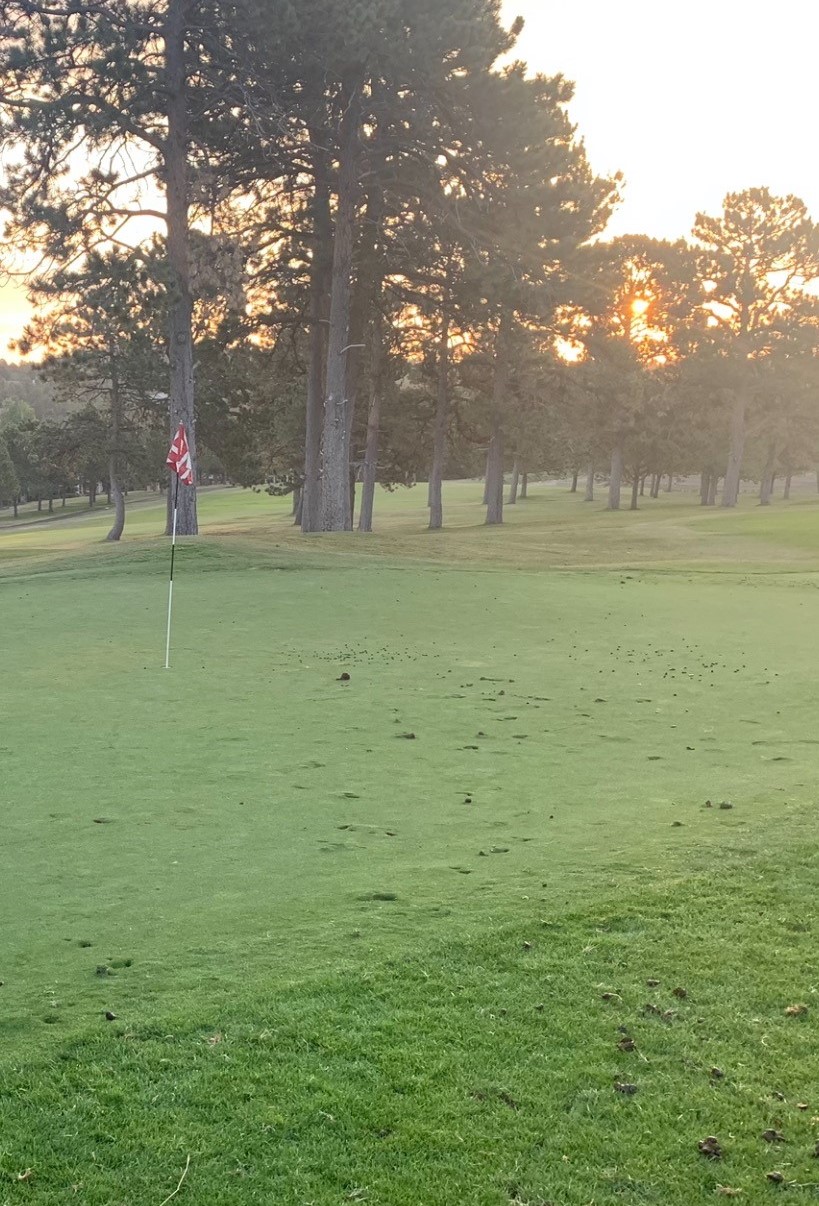 The other major side effect of entertaining such a unique wildlife experience on the golf course is what the animals leave behind. Parsons and his team have to play cleanup crew every morning to deal with the elks’ bathroom breaks from the night before. He explains, “The urine is extremely damaging to [the greens]. It’s just so concentrated, it'll kill the spot right away unless you get it watered in, so we have a couple of rollers and everybody carries a hose.” Each morning, they make sure to thoroughly water the greens that got hit the night before, and then follow up with a good roll and hoof-mark repair. But that’s nothing compared to the efforts they take to manage the droppings on the course. To deal with that, Parsons says, “We have three separate sweepers that we put out […] I have a guy with a drag mat and a guy with a big AgriMetal blower on a tractor. We drag the fairway, blow it off, and then there’s two guys outside sweeping up around the outside and then all the guys have hand blowers and shovels to clean up everything around tees and greens.” Even with his team of eight, it still takes them about four and a half to five hours each morning during the spring and summer to get everything cleaned up and repaired for the day.
It can be tough to keep the elk from doing what they do, but Parsons and his crew have come up with a few mitigation measures. He notes that the animals “really kind of hang out around everything and then walk across things,” so he’s come up with some ways to focus them away from certain areas, like the greens and bunkers. Recently, he’s started using water bottles with holes in them filled with mothballs and placed on stakes around the greens and bunkers to keep the elk away, because, well nobody really wants to come too close to mothballs. He read about it in some online gardening articles and also had some local homeowners report success with the strategy. So far, it’s been working pretty well.
At night, he also runs little red lasers from those same stakes to trick the animals into thinking there is a fire or something else that they just don’t want to be a part of in those vulnerable areas. And to create a little more controlled chaos, he’s tweaked his irrigation schedule so that at least one head is running at all times on each green for most of the night. So, instead of running a head once for 10 minutes, he’s running that head five times throughout the night at two-minute intervals. This just gives the elk one more reason to avoid the greens during the night.
Hiwan isn’t the only facility in the area that struggles with the elk, though, and one of the biggest issues with them is how aggressive they can be, especially during the fall rut. Parsons says, “It does become very dangerous out here.” He’s dealt with his fair share of aggressive bulls, which sometimes chase after golf carts or attack and ram cars if they feel threatened or challenged, but thankfully he hasn’t had any major injuries. He does everything he can to keep his membership aware of the risks that the deceptively dangerous animals can present. He keeps them updated on the activity via their email newsletter, he posts signs on certain holes to avoid each day, and he personally implements measures to coax the elk into the outer reaches of the course, if necessary. If they’re encroaching on a specific hole, he says, “I'll run a bunch of irrigation to kind of push them off into the native around the golf course so that people can actually play.” It’s definitely something to take seriously. In fact, a man was recently attacked by a bull elk at neighboring Evergreen Golf Course, where similar preventative measures are implemented. He also says that he’s talked to other supers in the region, and it seems like the animals have been moving into areas of lower elevation over the past few years, including places like Golden, which is closer to Denver.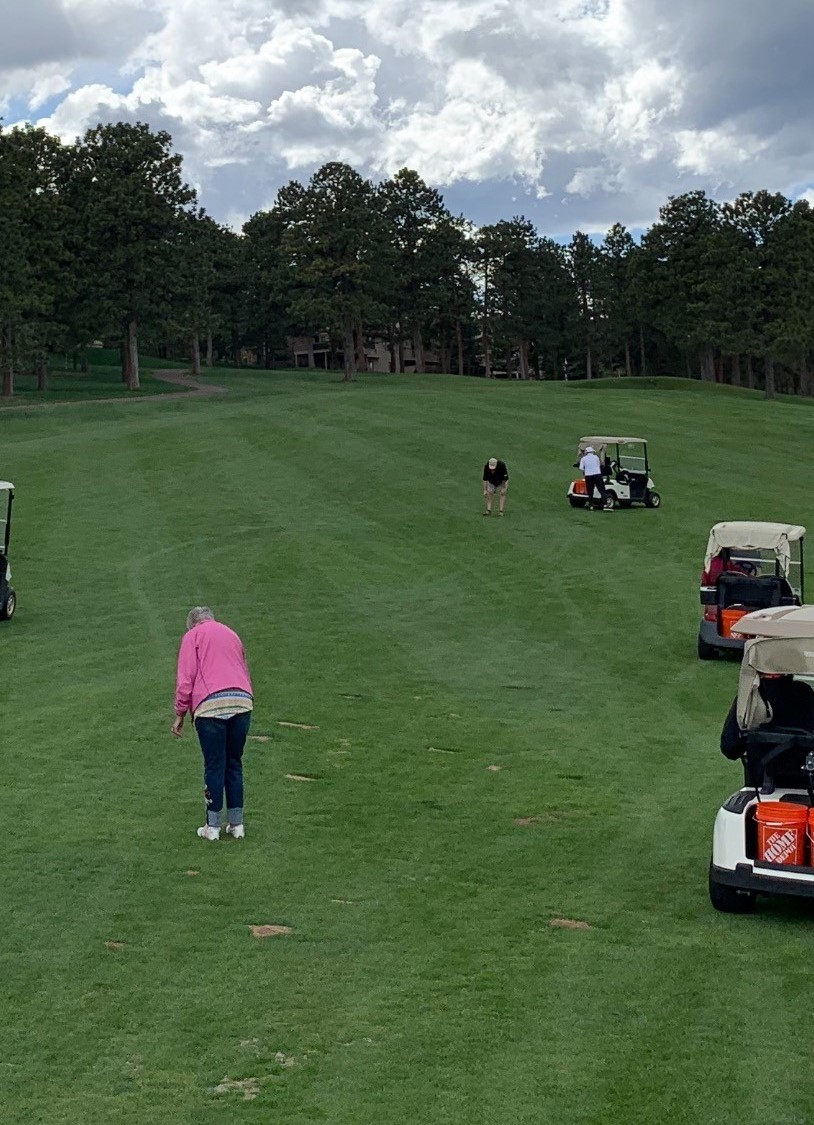
There’s no doubt that every course has its own unique challenges that require a little extra attention. In Parsons’ case, his challenge just so happens to have four hooves and hang out by the hundreds. All in all, it is a lot of work for him and his team, but the animals are a part of what makes the club and area great. Parsons has even created a club event each spring to get the course back in order after the winter. While his irrigation is shut off during the winter, there’s not really anything he can do to prevent damage to the turf from the elk urine. So, each year, they have a party (affectionately known as the Elk urine-mark divot party, which doubles as Parsons’ birthday party) with their members to repair the damaged turf spots. Over the winter, the elk leave about 3000 to 4000 marks on the fairways from where the urine killed the grass. Parsons and his team go out a week or so before the party to scratch up the marks, remove the dead grass, aerify, and then water in some gypsum and calcium to neutralize the turf as best they can. Then for the party, members load up a bucket of Divot Recovery Mix and head out to fill in the spots. Once they’ve filled their fair-share, then they can fill up on cake of course. It’s a huge time-saver for his crew, and it’s a fun event to rally the community. Parsons says last year, “We did all the marks, and it was about two and a half hours, which would take me and my guys probably a full week, if not more.” Now that’s how you make the most of a messy situation.
Related Resources

In addition to being the nation’s largest distributor of branded fungicides, herbicides, and insecticides, Harrell’s produces custom-blended fertilizers, specialty liquids, and wetting agents. Additionally, Harrell’s is the exclusive US owner, formulator, and distributor of all POLYON® branded products.
TEAM HARRELL'S
STAY EQUIPPED
Never stop learning. Access FREE continuing education courses from Harrell’s.
LET'S GROW
PRESS RELEASES
PRESS RELEASES
STAY EQUIPPED
Never stop learning. Access FREE continuing education courses from Harrell’s.
LET'S GROW