

Nutrient of the Month: Magnesium
6/17/2022 - By Lynn Griffith
What is Magnesium?
If you look at the chemical structure of chlorophyll on the Internet, you will see that there is a magnesium atom smackdab in the middle of it, surrounded by four nitrogens with the rest of the chlorophyll being carbon and hydrogen. Interestingly, the chemical structures of chlorophyll and hemoglobin are virtually identical. The only difference is that there are magnesium atoms in the middle of chlorophyll, which is why plants are green. In the middle of hemoglobin, you will find iron, which is why our blood is red, but otherwise, they are the same.
Why Does it Matter?
Magnesium has many more functions in plants besides chlorophyll. It activates more enzymes in plants than any other nutrient and is also one of the most commonly deficient nutrients in ornamental horticulture. Among the plants that we commonly see with magnesium deficiency include poinsettia, vinca, hydrangea, magnolia, viburnum, cannabis, and many palms. Some plants such as oaks and pines have very low magnesium requirements, meaning they are both uncommon to see deficient and easy to fix if they are.
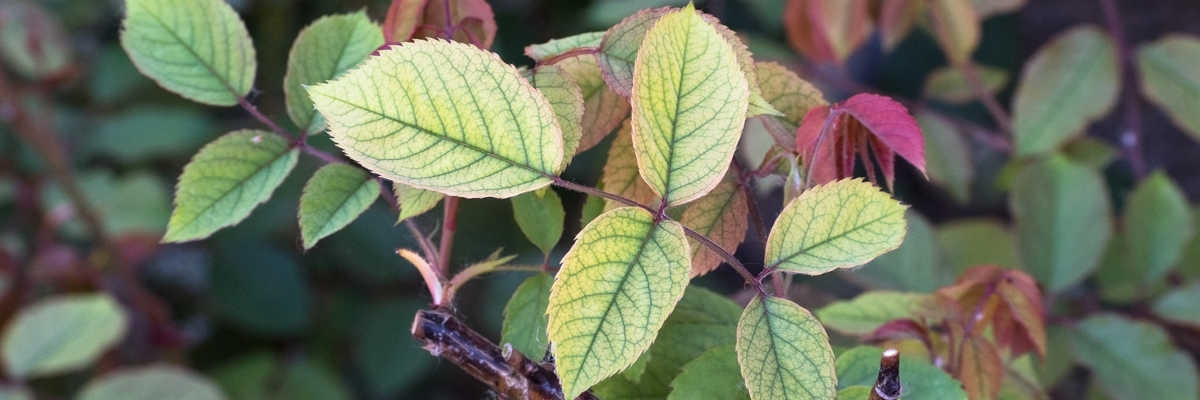
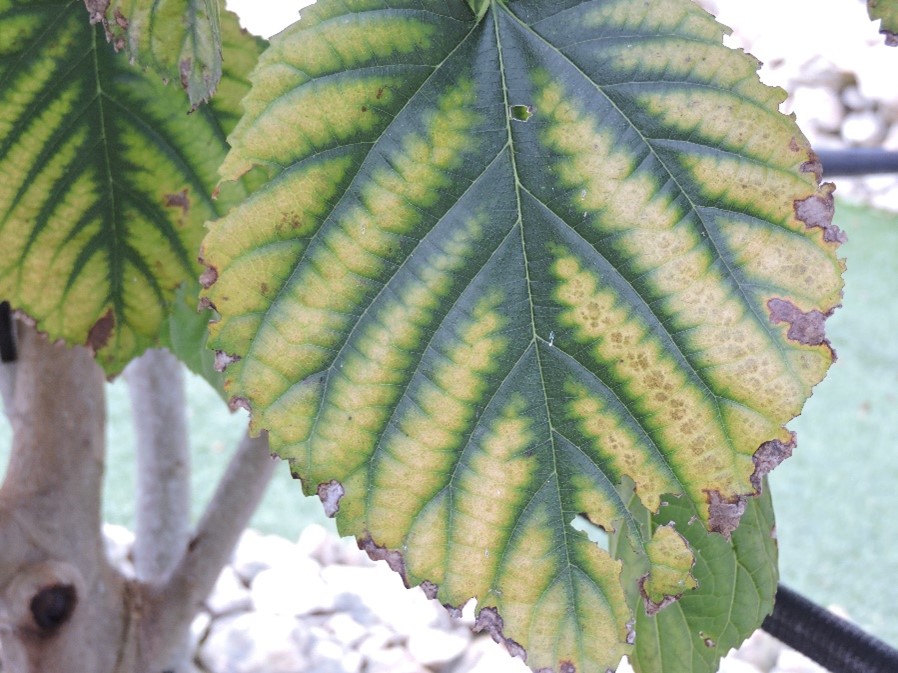
This nutrient is very mobile in plant tissue. When plants start running low in magnesium, they steal it from the old leaves and move it into the new leaves. You, therefore, see a lack of magnesium and thus a lack of chlorophyll in the older leaves. Magnesium deficiency virtually always appears in older leaves as a marginal yellowing.
Calcium and magnesium are very similar chemically. They both have a double positive charge and are about the same size atom, therefore, too much of one can induce a deficiency of the other. The calcium to magnesium ratio is important in soil and media. In most situations, a ratio of about 8:1 is ideal, when the ratio is much more than 10:1 you may observe magnesium deficiency in susceptible species.
How Can I Supplement Magnesium
A common source of magnesium is the dolomite often used in substrates, and to lime field-grown nursery stock. Harrell’sMAX® Nitrate Plus is a particularly good source, as magnesium nitrate is a direct precursor of chlorophyll. Harrell’sMAX® Magnesium is a great 4% liquid chelated magnesium. K-mag, either coated or uncoated is a terrific source of magnesium as well as potassium for top-dressing or soil incorporation.
Many 20-20-20 and 20-10-20 sources contain little to no magnesium. Excellent soluble fertilizers with good magnesium levels include Harrell’s 17-5-17 and 14-2-14. Supplemental magnesium can be applied to plants via foliar sprays, soil drenches, or granular applications. And you can rest assured that you won't over-apply, at least in my experience, I have never seen magnesium toxicity on any plant anywhere in the world.
For more info on the mentioned products or maintaining their nutrient levels, reach out to your local Harrell's representative.
Related Resources

In addition to being the nation’s largest distributor of branded fungicides, herbicides, and insecticides, Harrell’s produces custom-blended fertilizers, specialty liquids, and wetting agents. Additionally, Harrell’s is the exclusive US owner, formulator, and distributor of all POLYON® branded products.
TEAM HARRELL'S
STAY EQUIPPED
Never stop learning. Access FREE continuing education courses from Harrell’s.
LET'S GROW
PRESS RELEASES
PRESS RELEASES
STAY EQUIPPED
Never stop learning. Access FREE continuing education courses from Harrell’s.
LET'S GROW