

Leaf Spot Disease - Bedding Plants
3/30/2023 - By Dr. Aaron Palmateer

Leaf spots
are among the most common plant diseases in the greenhouse and are mostly
caused by fungi and bacteria. Some of the major fungal plant pathogens that
cause leaf spots include Alternaria, Cercospora, Colletotrichum
(anthracnose), and Myrothecium. The two most common bacterial
plant pathogens that cause leaf spots include Pseudomonas and Xanthomonas.
When Does Leaf Spot Occur?
Alternaria
alternata is the primary species associated with a wide
host range of ornamental plants. Other Alternaria species exist with reports on
Dianthus, marigold, impatiens, annual vinca, and zinnia. Depending on the host,
spots can occur on the leaves, stems, and flowers. Seed transmission is a
concern and especially for diseases of bedding plants. Favorable temperatures
for Alternaria leaf spot range from 77 – 86 ℉.
Anthracnose
The fungus
Colletotrichum gloeosporioides is one of the most common pathogens that
cause anthracnose,
but other Colletotrichum species and Gloeosporium species can cause
anthracnose. Anthracnose is the term used to describe a symptom appearing as a
black sunken lesion on the leaf, stem, or fruit of a plant. Anthracnose can be
common on begonia, daisy, dahlia, dusty miller, geranium, gerber daisy,
poinsettia, primrose, verbena, and vinca. Cyclamen is the most affected where
the disease can severely disfigure leaves and petals. Depending on the host plant
spots can occur on leaves, stems, and flower petals with disease development
favoring the spring and summer months, when greenhouses are warm, and plants
are frequently irrigated.

Myrothecium Leaf Spot
Myrothecium
leaf spot is most common on pansies, salvia, and new guinea impatiens. The
disease is not as common on poinsettia, but outbreaks do occur especially in the
southeast US. Disease development favors temperatures in the 70s with high
relative humidity. The fungus is an excellent opportunist and often the
pathogen attacks wounded plugs during transplanting.
Leaf Spot Disease From Bacteria
Among
the bacteria, Pseudomonas cichorii, P. syringae, and several
species of Xanthomonas are the most common leaf spot pathogens of ornamental
plants with, extensive host ranges including woody species, grasses, and
vegetables. Leaf spots caused by Pseudomonas and Xanthomonas (varies based on the
host plant) first appear water-soaked and as they expand in size the tissue
turns black. Under dry conditions, the spots often turn brownish tan and do not
expand in size. Leaf spots caused by bacteria are favored by wet conditions, so
the disease is most common when plants are watered using overhead irrigation
and during periods of heavy rainfall.
Diseases
caused by Pseudomonas cichorii are most prevalent when temperatures
range from the low 70s to mid-’80s whereas P. syringae favors cooler
temperatures from the upper 50s to the upper 60s. Temperature range can vary
based on the species of Xanthomonas, but generally favorable temperatures are the upper
70s to low 80s.
Spot Streaks and Bacteria
Bacteria
are single-celled organisms and the cells of plant pathogenic bacteria are not
capable of directly penetrating plant tissue and require wounds or natural
openings. Thus, leaf spots often originate within the stomata or along the leaf
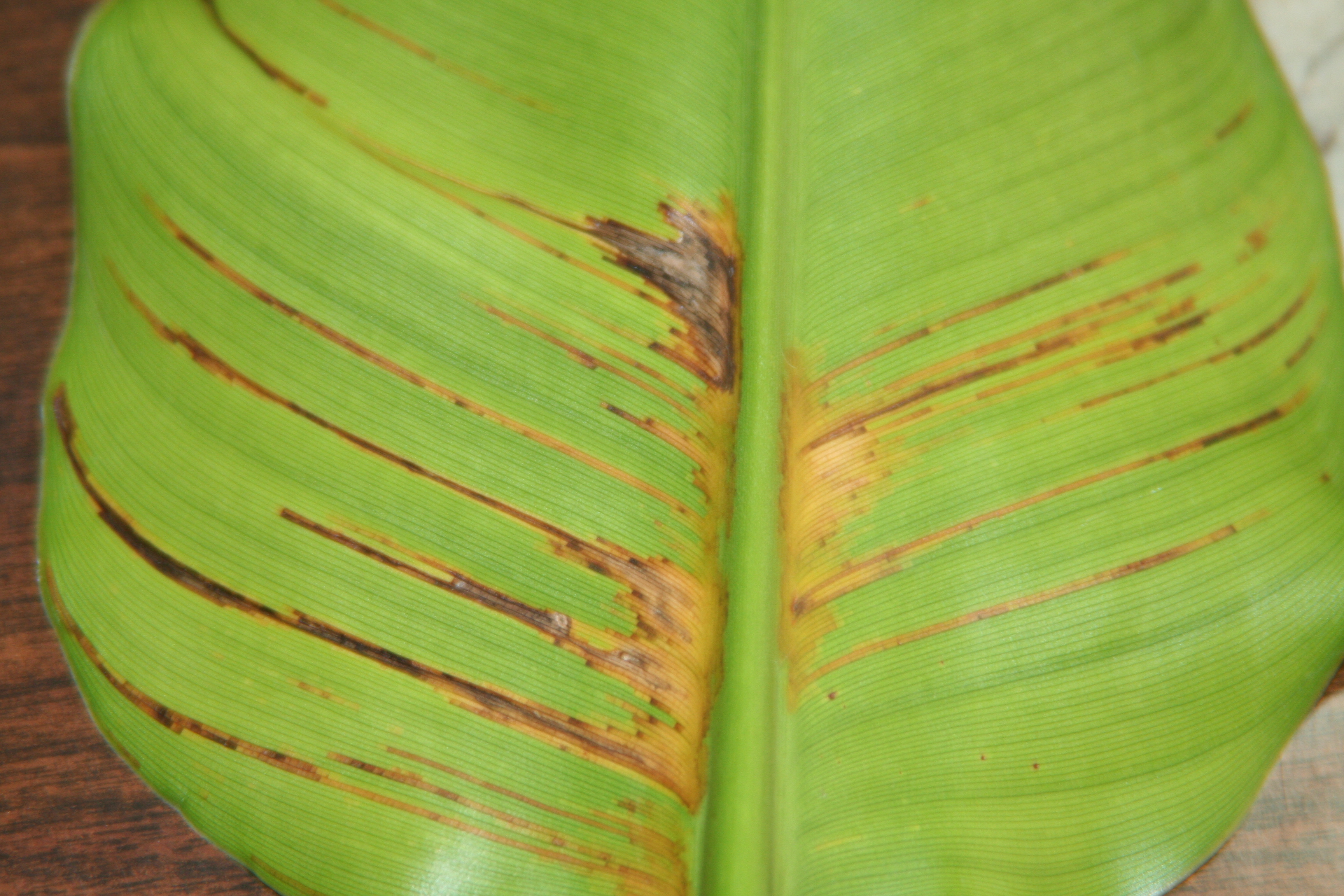
margins where hydathodes are present. Spots are often delineated by the veins
in the leaves and therefore can appear angular or sometimes like straight lines
that run parallel with the leaf veins and are often referred to as a streak. These
differ from leaf spots caused by fungi as they can actively penetrate plant
host tissue where the spots often cross leaf vein tissue.
A Few Tips and Warnings
Whether
it’s fungal spores or bacterial cells both are easily spread in splashing water
and windblown rain where they come into contact with the leaves of plants. Growers
should avoid overhead irrigation and minimize periods of leaf wetness when
possible. Frequently scout highly susceptible plants and especially those that
are closely spaced for symptoms. Minimize wounding of plants and remove symptomatic
leaves and severely diseased plants to reduce inoculum. Pesticide applications
should be preventative and applied before favorable conditions occur.
Azoxystrobin: has been a standard in ornamental fungicide disease control and is highly effective against leaf spot pathogens of bedding plants. Azoxystrobin is highly effective against leaf spot pathogens of bedding plants. Azoxystrobin is a strobilurin fungicide that enters the plant systemically to offer both preventative and curative control. Several fungicides for greenhouse production contain azoxystrobin, including Harrell's ProtectMAX® Azoxy, Heritage®, and Mural.
Propiconazole: is a systemic DMI fungicide that has activity against leaf spot pathogens and should be considered in disease control programs. Propiconazole can provide both curative and preventative control of a broad spectrum of ornamental diseases. Additionally, Banner Maxx® contains Propiconazole.
Thiophanate-methyl: is a member of the benzimidazole class of chemistry and can be a good rotational product for ornamental disease control programs. It has protective and curative properties and can be effective against leaf spot pathogens. T-methyl and Cleary's 3336 are two fungicides containing thiophanate-methyl.
Fluoxastrobin SC: One of the strongest solo active ingredients on anthracnose and a great option for a broad spectrum of other diseases on ornamentals. With systemic movement in the plant and excellent knockdown and curative activity, Fluoxastrbin is a versatile tool in any program. Check out the all new ProtectMAX® Fluoxastrobin as a great option.
Reach Out to Your Harrell’s Rep for More Information
If you
have any further questions or want to know more about leaf spot/how to protect
your plants from it’s appearance, reach out to your
local Harrell’s rep.
Related Resources

In addition to being the nation’s largest distributor of branded fungicides, herbicides, and insecticides, Harrell’s produces custom-blended fertilizers, specialty liquids, and wetting agents. Additionally, Harrell’s is the exclusive US owner, formulator, and distributor of all POLYON® branded products.
TEAM HARRELL'S
STAY EQUIPPED
Never stop learning. Access FREE continuing education courses from Harrell’s.
LET'S GROW
PRESS RELEASES
PRESS RELEASES
STAY EQUIPPED
Never stop learning. Access FREE continuing education courses from Harrell’s.
LET'S GROW