

La Jolla Country Club - A Kikuyugrass Marvel
3/19/2024 - By Mike Hess
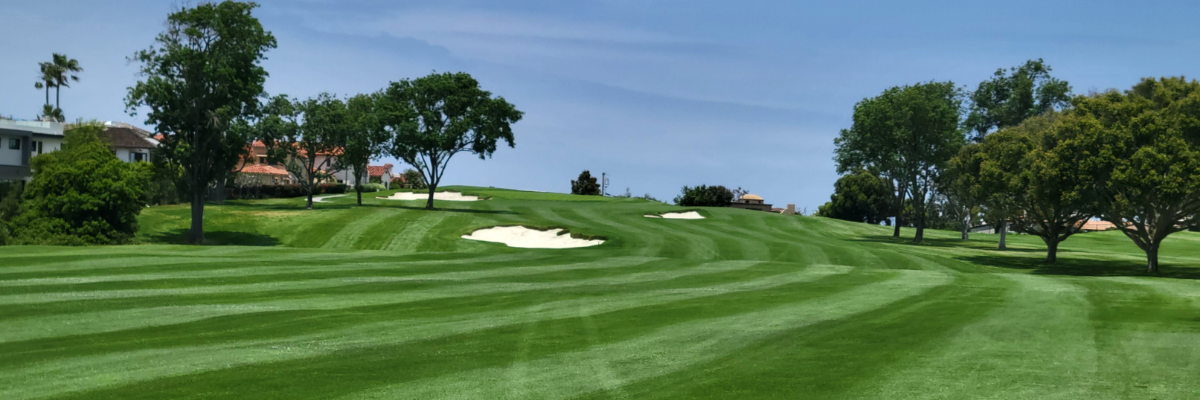
La Jolla Country Club sits atop the hills in La Jolla,
California. Overlooking the Pacific Ocean, the property boasts beautiful views
from every vantage point, granting customers a truly unique golf experience. The
course is maintained and operated by Superintendent, Dennis Fowler, and his
team who expertly train, trim, and nurture some of the toughest grass around,
the infamous Kikuyugrass grass.
La Jolla started as just 6 holes etched into the landscape
on Prospect Street and Exchange Avenue. Then, the golf club obtained the land
to build the original 9-hole course on the site of the current club. In 1926,
the first rendition of the 18-hole course came together and has been built and
re-built over 105 acres (33 acres of fairway) since then. Over the years, the
course has earned its reputation of challenging but rewarding play through
notable events and players, including PGA legend, Gene Littler who has a
memorial dedicated to his famous swing outside the clubhouse.

Kikuyugrass and Superintendent Dennis Fowler
Dennis Fowler started his career at La Jolla in 2008 on grass
that was in decent shape, but he knew it could be great with the proper time
and technique. “I’ve figured out how to get the Kikuyugrass to where we need it
over the years. It just takes time, lots of cuts, and the right products to
almost “tame” it to where it’s manageable,” Dennis said. When Dennis came to La
Jolla, the course was utilizing a liquid rotation from other suppliers. The
product was making the cut. However, Nick Spardy (Harrell’s rep and vice
president of sales for the west) knew that if Dennis used products from the Harrell’s
liquid line, the turf could propel forward even more.
Kikuyugrass grass in its wildest form requires very minimal
fertility and grows like wildfire. Because of this and its overall resistance
to heat, Kikuyugrass is considered a weed in the coastal and parts of inland
California.
By definition from the University of California Agriculture & Natural Resources, “Kikuyugrass
is a tough, low-growing perennial grass with an extensive network of coarse
creeping stems. Introduced to California to control erosion on hillsides, it
has escaped cultivation and become weedy in many agriculture and landscape
situations in California.”
Regardless, Kikuyugrass is still very popular and widely used as turf on golf
courses even though many have a hard time keeping it at bay and playable
through the year.
The method and overall course quality that Dennis has
developed over the years are a marvel to behold and a true feat when it comes
to working with grass this aggressive. So, what does it take?

Maintaining Kikuyugrass
Kikuyugrass is low maintenance in the sense that it grows
rapidly with little help from outside fertility, does very well in the harsh
California sun, and can recover from drought conditions that the area often
sees. However, the true trick (and very high-maintenance aspect) comes in
taming back the normally vine-like rhizomes and stolons into a cohesive, thick,
and shorter turf appearance through cycles of frequent mowing, spraying, and
careful monitoring.
Previously, Dennis implemented a program from another
supplier. However, shortly after switching to Harrell’s products, he observed
an improvement in density, color, and roots, and better overall health and
improved disease tolerance. Working alongside Nick Spardy, they developed programs
for greens, as well as fairways and roughs.
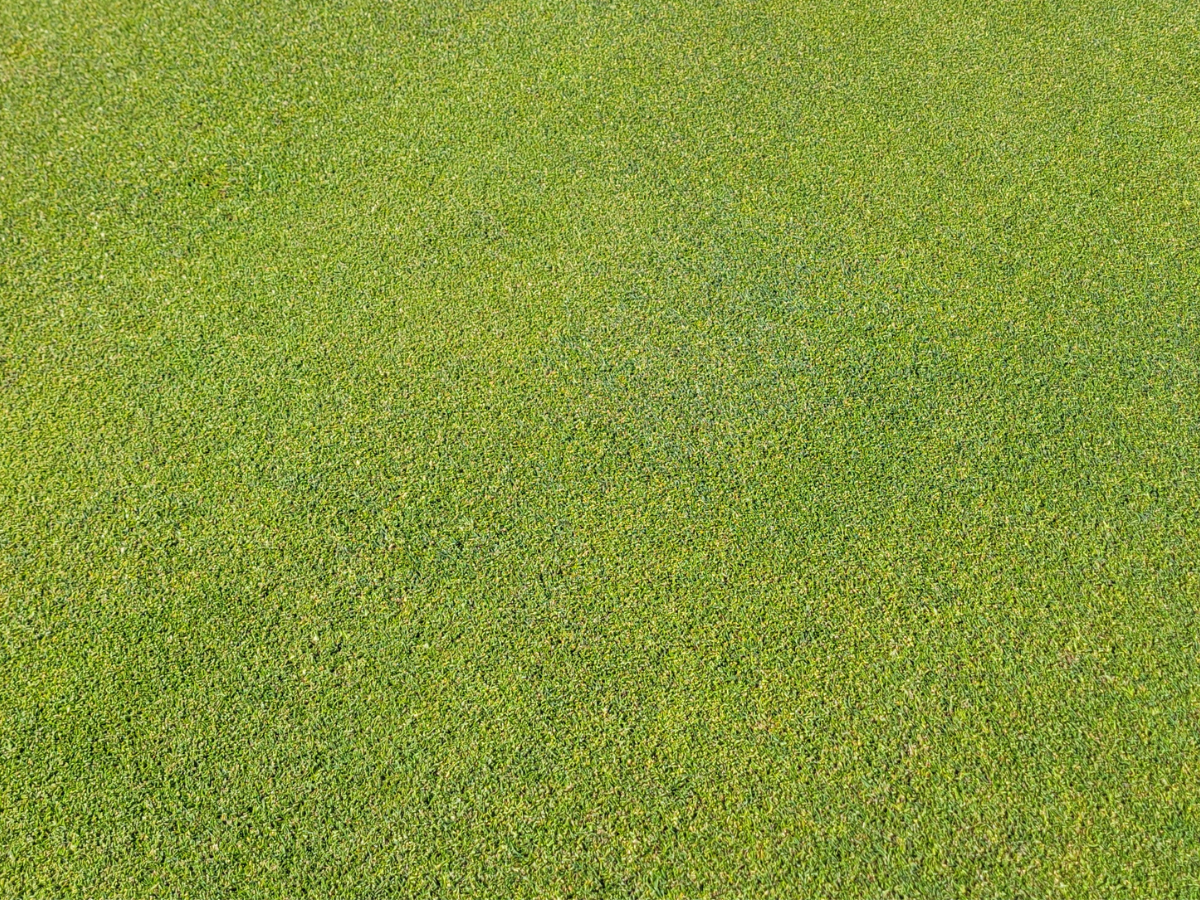
Poa Greens Program
·
CalMAX
·
18-3-6
·
Seaweed A+E in Spring and Summer
La Jolla Kikuyugrass Fairways and Roughs Program
·
HydroCure®
monthly
·
ProtectMAX® T-Methyl two times per year
o
Along with other fungicides in rotation, due to
kikuyugrass being susceptible to gray leaf spot and rhizoctonia
·
An Iron supplement
·
Divot Mix throughout the course for divot repair
·
30-0-9 mini 80% POLYON® 43 with NuVital, when and where needed to improve density
Developing and maintaining a spray and fertility plan are
vital for healthy turf development and protection against both lots of play,
and natural challenges.
Natural Challenges for Kikuyugrass
Minimal rainfall throughout the year plagues golf courses in
the San Diego area and is perhaps the greatest natural challenge that courses
face in the area. On average, the San Diego area only sees around 5” of rain
per year, a far cry from many other areas of the country, and truly emphasizes
the problem. With low rainfall, there is nothing to carry sodium down through
the ground, so it sits and builds in the turf on top, which is not good in high
concentrations. Even for grass as tough and resilient as Kikuyugrass, high
sodium will eventually choke it out without proper care.
Here’s what Dennis and his team do, “we first measure with
meters to see what kind of levels we’re looking at, then we apply a calcium
product (CalMAX)
to displace the sodium and put low-volume sprinklers in the middle of the
greens. Once the greens achieve field capacity it will create enough gravity to
pull all the water down to the drain tiles, and then, because we put the
calcium products out, you’re able to leach the sodium safely away from the
grass roots.”
Having an effective product that will displace, leach out,
and safely flush away the sodium (without hurting the environment surrounding)
is the key to the issue.
Kikuyugrass Control Methods on Other Grasses
Though controlling Kikuyugrass is, in many ways,
incomparable to other grass types there are some throughlines that turf
professionals can transfer from their work with others to Kikuyugrass or visa versa.
Dennis has worked with multiple courses over the years and become well
accustomed to various grass types, utilizing and building different tactics
from his experiences that he still maintains today in his work on Kikuyugrass,
and the other grasses the team uses at La Jolla.
“You look at tall fescues, for example. They can have that
coarse characteristic. They’re just more upright and more bunch type grass
whereas Kikuyugrass is more of a spreader type. But, you could probably take
some of the practices from Kikuyugrass and apply them to the broader grass
types, with whatever modifications are needed.” Dennis said on his work with
different grass over the years, which was evident through the mixed grass types
that La Jolla uses in shadier areas and roughs.

Maintaining Kikuyugrass and Healthy Relationships
A course that requires so much careful attention means a lot
of on-the-spot treatments and recommendations, so having a good Rep makes all
the difference. Dennis and Nick have known each other for many years, even to
the point that Dennis and La Jolla are one of the few accounts that Nick
personally attends to since taking on his role as VP of sales in the west for
Harrell’s, “I always keep this one because Dennis and I have a relationship and
trust, and that’s important.” Nick said.
“It’s been a good relationship with Nick, with Harrell’s,
and the process of turning the course around. We have a lot of projects that
require some one-off applications and most of those single applications that
we’re doing are products that I wouldn’t use on the fairways. But now, for
example, I’ve got a new project and I’ve got this product from one of those
one-offs, and I need something more from what we’re doing on the fairways to
get me where I need to be, Nick is always available to bring even a single
application product specifically for those needs. And he does without fail, and
we move forward from there.” Dennis responded.

Your Harrell’s Rep is Here for You
One of the greatest lessons that Dennis and Nick have
learned over their years and experience with La Jolla it’s that at the end of
the day, your team and your course’s success all comes down to relationships,
and your Harrell's Rep is here for you to build your program from the ground
up. Reach out today to get started and let us help you develop the program you
need.
Related Resources

In addition to being the nation’s largest distributor of branded fungicides, herbicides, and insecticides, Harrell’s produces custom-blended fertilizers, specialty liquids, and wetting agents. Additionally, Harrell’s is the exclusive US owner, formulator, and distributor of all POLYON® branded products.
TEAM HARRELL'S
STAY EQUIPPED
Never stop learning. Access FREE continuing education courses from Harrell’s.
LET'S GROW
PRESS RELEASES
PRESS RELEASES
STAY EQUIPPED
Never stop learning. Access FREE continuing education courses from Harrell’s.
LET'S GROW