

Can Irrigation Water be Too Pure?
10/3/2019
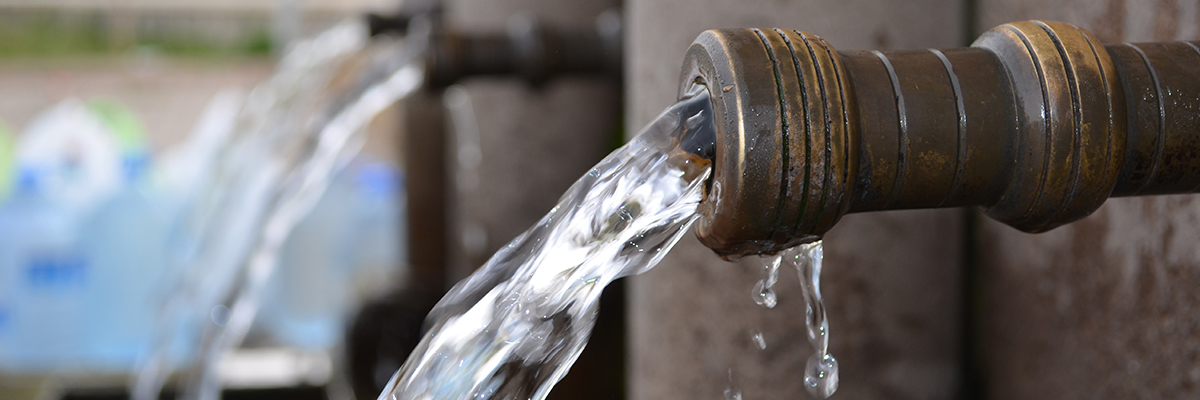
In any growing operation the water flowing to your crops is the lifeblood of the system. The most important factors that determine the ability of your water to effectively provide nutrients to plants are pH and Alkalinity.
Alkalinity represents the ability of water to neutralize an acid, also known as the buffering capacity. Higher alkalinity water will require more acid to reduce the total alkalinity and lower the pH. Alkalinity is comprised of bicarbonates, carbonates, and / or hydroxides paired with calcium, magnesium, or sodium atoms. Alkalinity is expressed as ppm calcium carbonate (CaCO3) equivalent. A high ppm CaCO3 concentration indicates that more of these molecules are present in the water. The pH usually rises as concentration increases. For these reasons it is vital to know not only the pH of your water but also the alkalinity as well to make sure that fertilizer elements are available to the plant.
Growers often inject acid (sulfuric or phosphoric) into the water or to use acidic fertilizers. Sulfuric acid is commonly used and is the most economical option for the grower. Acidic fertilizers and acid injection are historically the most common ways growers have managed high alkalinity source water.
Today, it is common for some growers, particularly in indoor vertical farms, to turn to Reverse Osmosis (RO) filtration to purify alkaline water. While RO purification is very effective at removing alkalinity from water, it does pose a new set of challenges for the grower.
RO systems are highly effective at removing most anything from water, resulting in virtually pure H2O. However, the alkalinity of the RO water is virtually 0 ppm. Exposing plants to water devoid of alkalinity can be hazardous to the crop. The water will leach away essential ions and may damage the root system, just as ultra-pure water can damage metal pipes. Further, certain nutrients may become available in toxic amounts.
It is important to distinguish between pH (potential hydrogen) and alkalinity. While increasing the alkalinity of water may likely increase the pH, alkalinity is really a representation of the buffering capacity of water. Another way of thinking of buffering capacity is “resistance to change.”
Water lacking alkalinity (such as produced by reverse osmosis) will not resist change. Rather, it will be susceptible to wide swings in pH, depending on the influencing factor. Bases, containing Hydroxyl anions will cause dramatic increases in pH, while Acids, containing Hydrogen (H) cations will result in significant drops in pH. Most fertilizer sources are acidifying in water and when dissolved in solution in RO water, the effect on pH can be surprising, often resulting in pH crashes. Even plain RO water sitting in a tank can be acidified. Interaction between H2O and carbon dioxide (CO2) in the air forms carbonic acid (HCO3) which will cause the pH of stored water to drop over time.
The analogy of driving a car on the highway comes to mind. To keep the car in the lane requires making small course corrections with the steering wheel. At highway speeds, even changing lanes requires minimal steering motion. Jerking the wheel to the left or right causes undesirable overcorrection and may result in a crash. The same is true with managing the irrigation water in a growing operation, particularly related to pH. Small adjustments are best, to keep the pH within the desirable range for the crop produced. Buffer is required in the source water to avoid drastic swings in pH. It provides the desired resistance to change that permits small course corrections to keep the pH within the target range.
Yes, it is possible for irrigation water to be too pure. Growers with saline or highly alkaline water sources who use RO systems to purify their water have different options for adding buffer into the water to make it more stable. If the source water is alkaline, it already has the type of buffer required, but perhaps in excessive quantities. If this is the case, RO systems may be set up to decrease the rejection % of water from the system. Adjusting this % can leave in enough alkalinity to create stability. If adjusting the rejection % of this water is not possible, it is possible to blend in a small amount of original source water with the RO water to result in desired alkalinity.
Other options for buffering RO water include addition of alkalinity boosters such as potassium carbonate or potassium bicarbonate.
With water as the lifeblood of your fertigation system, starting with desired quality makes one aspect of the grower’s job a bit easier. An alkalinity of 100 ppm (160 meq) is a good starting point for water that is stable enough to resist sharp swings in pH.
Related Resources

In addition to being the nation’s largest distributor of branded fungicides, herbicides, and insecticides, Harrell’s produces custom-blended fertilizers, specialty liquids, and wetting agents. Additionally, Harrell’s is the exclusive US owner, formulator, and distributor of all POLYON® branded products.
TEAM HARRELL'S
STAY EQUIPPED
Never stop learning. Access FREE continuing education courses from Harrell’s.
LET'S GROW
PRESS RELEASES
PRESS RELEASES
STAY EQUIPPED
Never stop learning. Access FREE continuing education courses from Harrell’s.
LET'S GROW