

Insect of the Month: Lacewings
6/14/2021 - By Harrell's
This month, we’re taking a look at a beneficial insect which often gets overlooked but serves a critical role in a sound Integrated Pest Management (IPM) program, the Lacewing. Lacewings, not to be confused with the plant damaging Lacebugs, are predacious and feed on other insects. Due to their eating habits, Lacewings are very beneficial when present on plants. Some species will feed on aphids, mites, whiteflies, scales, leaf hoppers and other soft bodied insects. All larvae of Lacewings are predators of other insects, while only some species of adults are predacious, and other species are pollen and nectar feeders.
To ensure that Lacewings will stick around to help your plants, you must provide them the food sources they need, depending on which species are around. Some Lacewings are carnivorous, and some are herbivores, so a steady source of both smaller insects and nectar/pollen must be provided, to accommodate all Lacewing species. Because it might not be just one type. During the summer months, eggs will hatch in about 7-10 days. The larvae which emerge have two large mandibles extending from their mouths, resembling large claws, which help the Lacewing larvae to catch and hold its prey while it feeds.
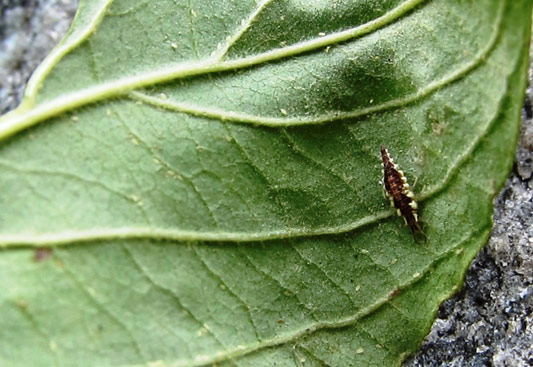 |
Lacewing larvae feeding on scale crawlers – photo by Matthew Shultz |
Lacewing larvae feed voraciously on soft bodied insects for anywhere from a few days to a couple of weeks, depending on conditions and food availability, before they spin their cocoon. Once metamorphosis is complete, the adult will emerge soft bodied, losing the mandibles and gaining its signature wings. The insects have 4 wings which delicately lay down the insect’s back, the wings are divided by hundreds of tiny veins, which is actually where its order name Neuroptera is derived from, meaning “Nerve Wing,” and gives them the lacey look which they are known for. Lacewings are not strong fliers but are very quick to fly away when disturbed, a very similar flight pattern to a moth or butterfly.
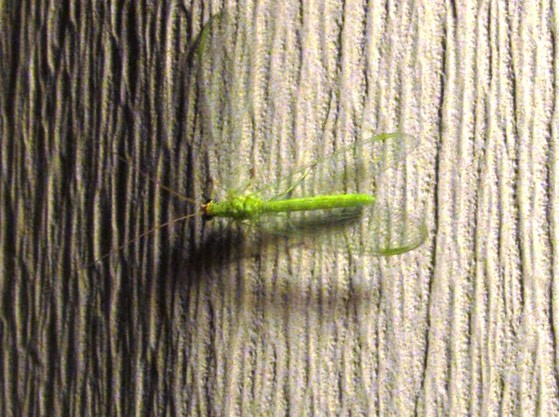 |
Green Lacewing Larvae – Photo by Matthew Shultz |
The Green Lacewing, in the family Chrysopa, is commercially available for purchase and is easy to integrate into most IPM programs. Green Lacewing females lay their eggs on silk stalks, suspending them, and preventing them from being eaten by other predators. Contact your Harrell’s Tertitory Manager today for more information about adding Green Lacewings and other beneficial bugs into your IPM program.
 |
Eggs of Green Lacewing – Photo by Matthew Shultz |
Related Resources

In addition to being the nation’s largest distributor of branded fungicides, herbicides, and insecticides, Harrell’s produces custom-blended fertilizers, specialty liquids, and wetting agents. Additionally, Harrell’s is the exclusive US owner, formulator, and distributor of all POLYON® branded products.
TEAM HARRELL'S
STAY EQUIPPED
Never stop learning. Access FREE continuing education courses from Harrell’s.
LET'S GROW
PRESS RELEASES
PRESS RELEASES
STAY EQUIPPED
Never stop learning. Access FREE continuing education courses from Harrell’s.
LET'S GROW