

Increased Turf Quality and Color in the Fall? YES!
11/13/2023 - By JJ Jansen
 " data-mce-src="https://s3.us-east-1.amazonaws.com/files.harrells.com/blog/2023/PAR%20and%20DG%20Plus%201200x400.png">
As we move away from the summer solstice, our daylight
length interval becomes shorter, and the light quality and intensity are
dramatically reduced, leading to reduced photosynthetic activity (PA) in plants.
This begs the question, what can turf managers do to maximize PA and
carbohydrate production before the onset of plant dormancy? The following 2011
publication by Harell’s Director of Agronomy, Dr. Raymond Snyder, sheds some
light on this question and more about Photosynthetically Active Radiation.
What is PAR® SG?
Some think it is just a simple colorant to enhance the aesthetic color of the playing surface, while others think Harrell's SprayMAX® PAR® SG relates to a golf acronym. The letters “PAR” actually stand for “Photosynthetically Active Radiation.”
What is PAR® SG on a Plant Physiology Level?
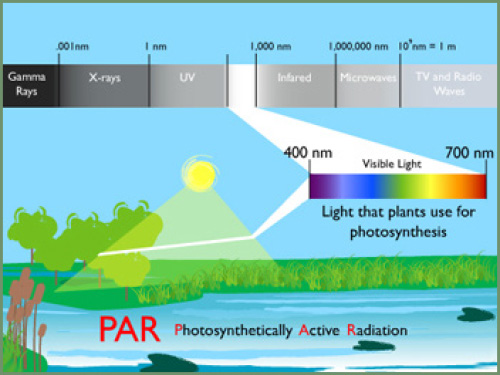
PAR is the amount of light a plant has available for photosynthesis. The
chlorophyll within the plant utilizes available light in the 400 to 700-nanometer
wavelength range, see illustration. Several external factors can reduce the
amount of PAR available to plants, this may include anything that reduces the
amount or quality of sunlight. Seasonal changes are primarily the largest
component, affecting light angle and the photoperiod interval. Some secondary
regulators may be cloud cover, shading by trees, and buildings. Air pollution
has also been documented to affect PAR by filtering out the amount of sunlight
that can reach plants.
 " data-mce-src="http://files.harrells.com/hydromax/The Science Behind PAR SG_image.jpg" width="539" height="404">
How is PAR® SG Useful? And why is it Important?
By applying consistent applications of Harrell’s PAR® SG,
you are in essence reducing the severity of harmful UV and infrared
wavelengths. So, in essence, what PAR® SG is providing the plant is a selective
light filter by reducing UV-b and UV-a, allowing the transmission of blue to
red wavelengths into the plant (Snyder, 2011). These blue-to-red wavelengths
are the key to a plant's photosynthesis, by providing the correct light spectrum
to the plant and reducing UV-b and UV-a, you achieve increased turf quality and
color.
How does PAR® SG Aid in Plant Health?
Many turf managers remove PAR® SG applications from their
spray rotation as summer ends and we transition into the shadier fall and winter
months. But, by adding PAR® SG to your overall, year-round nutritional program,
you are potentially providing the plant with greater opportunities to build
root mass and achieve maximum plant health throughout the growing season. Potentially
increasing carbohydrate production to help overcome any abiotic stresses the
winter months may present.
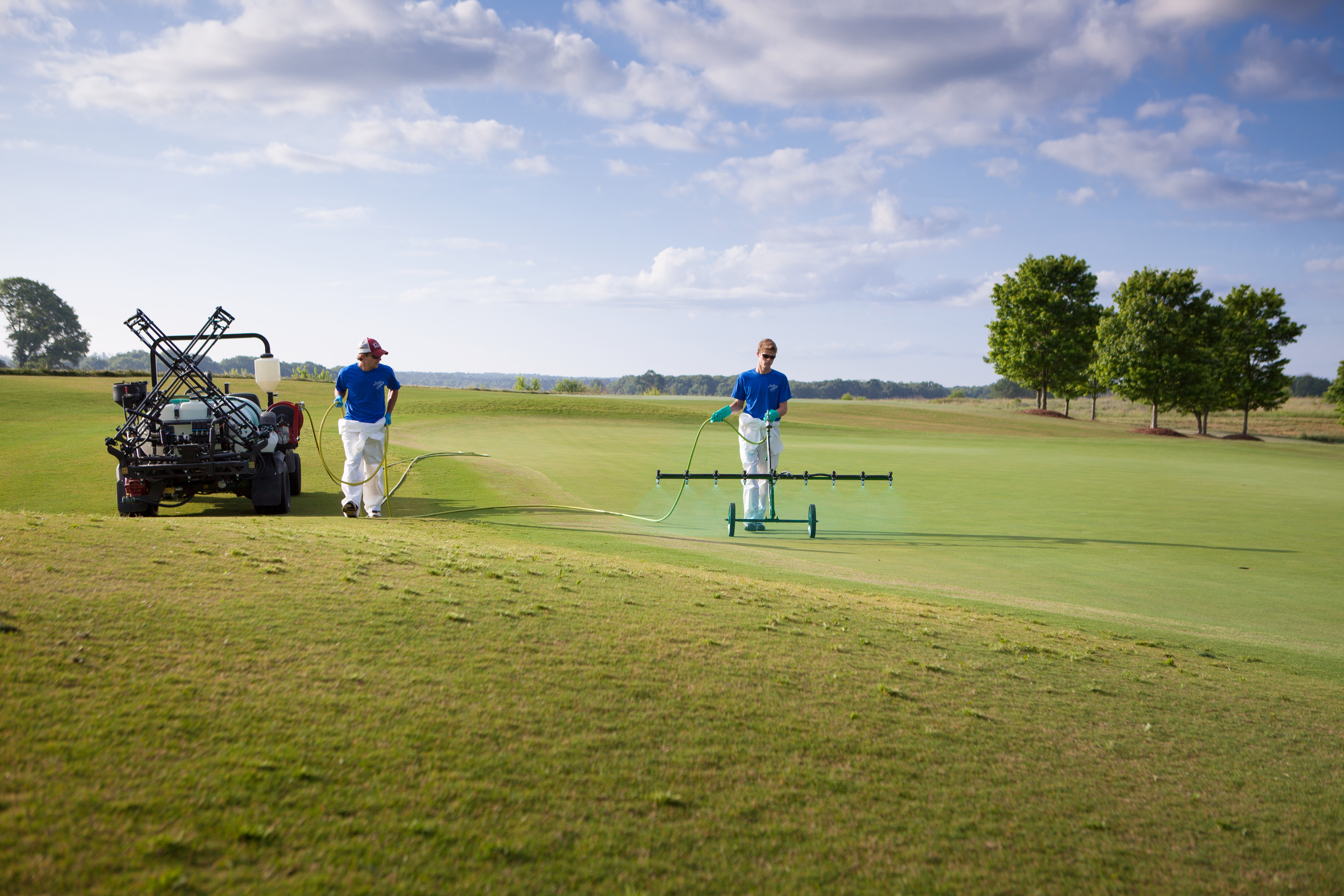
Note for applications, depending upon the desired color
intensity and your frequency of spray interval, apply Harrell's PAR® SG at 8 to 16 oz.
per acre.
 " data-mce-src="https://s3.us-east-1.amazonaws.com/files.harrells.com/blog/2023/RS590_120502HF_spray_0319.jpg" width="701" height="467">
Your Harrell’s Rep Can Help You with Your PAR® SG Application
If you have any questions on Harrell'sSprayMAX® PAR® SG, what rates you should apply, or how it works further, please reach out to your local Harrell's Representative. They are your best resource for application planning and making the most out of Harrell’s products, like PAR® SG.
References:
Snyder, R. 2011. Investigation of UV Blocking Pigments and
Known UV Protectants. PHD Laboratory, Davie, FL.
Related Resources

In addition to being the nation’s largest distributor of branded fungicides, herbicides, and insecticides, Harrell’s produces custom-blended fertilizers, specialty liquids, and wetting agents. Additionally, Harrell’s is the exclusive US owner, formulator, and distributor of all POLYON® branded products.
TEAM HARRELL'S
STAY EQUIPPED
Never stop learning. Access FREE continuing education courses from Harrell’s.
LET'S GROW
PRESS RELEASES
PRESS RELEASES
STAY EQUIPPED
Never stop learning. Access FREE continuing education courses from Harrell’s.
LET'S GROW