

Ice Damage to Turf
12/29/2020 - By Matt Gregg
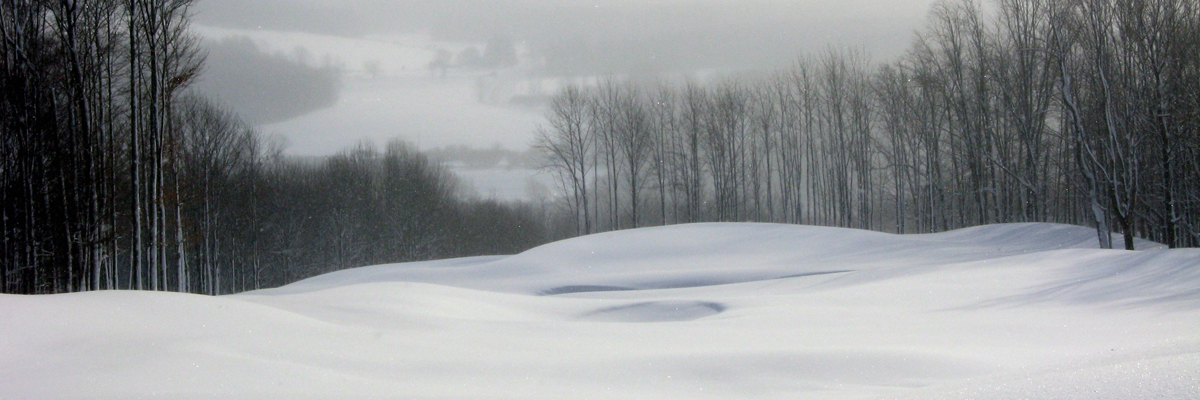
At the time of this writing, it’s December 21st, which means we’re only ten days away from turning the page to 2021, and we’re officially into winter. As we move past the winter solstice, those managing turf or ornamental plants have reason to rejoice, as our daylight hours will once again begin increasing with every passing day! That means we’re moving in the right direction, but we’ve still got a long way to go.
With winter upon us, it means one thing—snow, ice, or rain is likely for the next 3 to 4 months! So, if you’re in a region where ice or snow cover is a common theme on putting surfaces, let’s take a quick dive into what’s really going on.
In the event of snow- or ice-covered greens, the number of days your turf is ‘under the ice’ or ‘blanketed in snow’ will determine the level of injury come spring. The biggest concern with either scenario is Gas Exchange.
Regardless of turf type—warm or cool season—dormant turf still demands oxygen for respiration. When you have an impervious layer such as an ice barrier, gas distribution and exchange in the turf-soil interface is drastically inhibited. In essence, you end up with a concentration of gases that cannot escape into the atmosphere, resulting in an accumulation of carbon dioxide.
Even with dormant turf, the plant is still metabolizing very slowly and still producing carbon dioxide as a by-product of respiration. Additionally, carbon dioxide is being produced by the microbial populations below the turf canopy. That accumulation of carbon dioxide and depletion of oxygen will lead to an anerobic situation, which will eventually injure your turf.
What can you do about it?
Try to relieve that imbalance of gas exchange. One of the best ways to do that is to break the ice barriers, either mechanically or manually, to allow for gas exchange. If you can create a way for that proper exchange of gases, then you can prevent more severely anerobic conditions. Ultimately, if you can do that, you can reduce the odds of damaged turf in the spring transition.
Related Resources

In addition to being the nation’s largest distributor of branded fungicides, herbicides, and insecticides, Harrell’s produces custom-blended fertilizers, specialty liquids, and wetting agents. Additionally, Harrell’s is the exclusive US owner, formulator, and distributor of all POLYON® branded products.
TEAM HARRELL'S
STAY EQUIPPED
Never stop learning. Access FREE continuing education courses from Harrell’s.
LET'S GROW
PRESS RELEASES
PRESS RELEASES
STAY EQUIPPED
Never stop learning. Access FREE continuing education courses from Harrell’s.
LET'S GROW