

High pH Irrigation Water: Jeff Sexton Takes a Simple Approach to a Basic Problem
7/8/2020 - By William Buehn
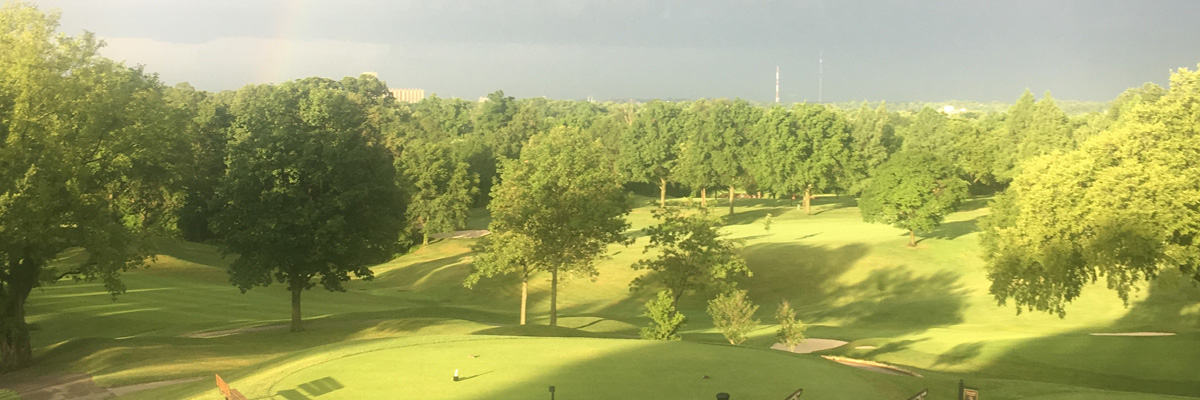
When I called Jeff Sexton of Evansville Country Club in Evansville, Indiana, he was in the middle of jarring honey from the thousands of honeybees that his team maintains on the course. This is their fifth year with the bees, and with over 140 pounds of honey harvested—all of which they’ll sell back to their members—it’s their best haul yet. His club also has a pretty impressive greenhouse for annual flowers. They manage 14,000 annuals throughout the course, all of which are grown from seed to plant in their on-property greenhouse. Needless to say, Sexton never has to look very hard to find something to work on at his property. Just like most superintendents, he’s always got a project (or ten) that he could devote his time to. His latest endeavor? Lowering the pH of his irrigation water. After seeing success in his greenhouse plants as a result of lowering their growing medium pH, he decided to give it a go out on the golf course too. It’s still a work in progress, but things are looking pretty good. And as he heads deeper into the heavy-irrigation season, he’s excited to see what kind of beneficial results he might uncover.
 So, give me the background on your turf pH lowering project. What made you set out on this quest?
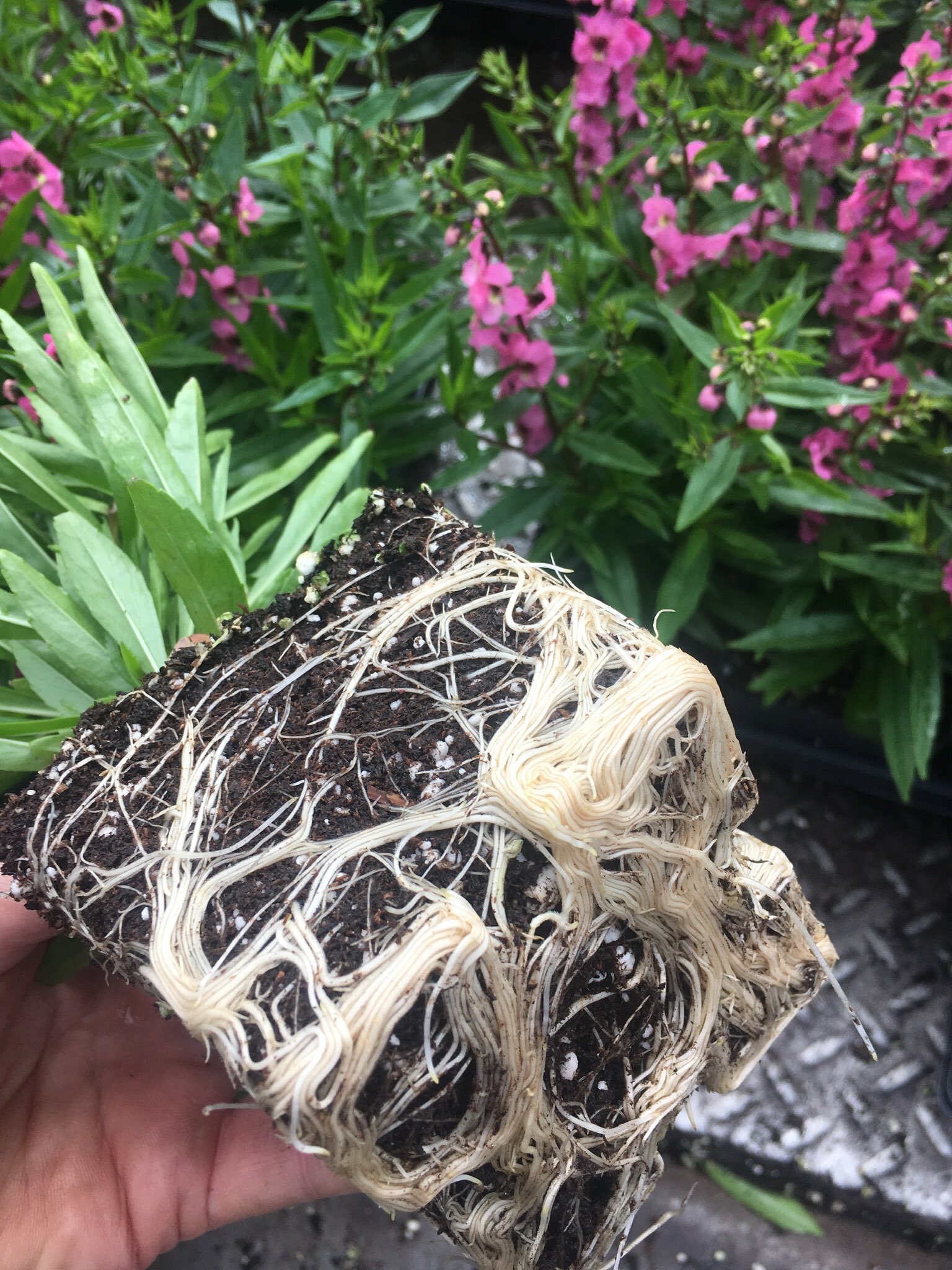
Well, we obviously have a massive greenhouse operation here, and it seems like every year I was just struggling with keeping things green. We've had to use a lot more fertilizer to keep the plants healthy. It seemed like the disease pressure got up pretty high inside there. So, working with Purdue [University] in 2017, after we had an issue with some of our Vinca, it was really pinpointed on the fact that the growing medium pH was just too high. It was recommended by Purdue that we begin treating our water inside the greenhouse to lower the medium pH and lower the fertilizer inputs for those plants. So, in late 2018 (that’s when we got that diagnosis) Matt [Matt Schreiber—Harrell’s Rep] got me a two-and-a-half-gallon jug of [Harrell’s MAX 15-0-0] Neutralizer. We started injecting that into the water and noticed a pretty decent green up with the lower pH of the water. Then in 2019, we did a full season of neutralized water from seeding to planting. Much healthier plants and a lot less nutrients required to keep the plants green. And then, 2020 was our second full season with it. So, in 2019, after this huge success in the greenhouse, we decided we wanted to try it on the golf course. So, that's what began the project, or the treatment option, in the irrigation water for the golf course.
What’s the source of your irrigation water? Is it the same for the greenhouse and golf course?
Well, the greenhouse water is actually city, or municipality water, and the pH of that is about 7.8 to 8. We can afford to treat that water down. We try to water around 5.8 to 6.2 in the greenhouse. Now, on the golf course, we pump out of a creek [Pidgeon Creek], which that water really gets stagnant during the summer months. Last summer, we were testing out of our sprinkler heads and had pH’s about as high as 8.6-8.8 in August, which is pretty detrimental I think. We pump it out of the Creek and put it into our irrigation pond, which is on our 11th hole.
What do you think is causing the high pH in the water?
Well, I just think, we've had it tested a couple times by Raymond [Dr. Raymond Snyder—Harrell’s Director of Agronomy] and such, and it’s the bicarbonates. It’s just, when the creek quits flowing and it quits collecting water from the sky and from runoff, the salt content and such just really starts building up in that water. I tested it last week [mid-June], and I think it was like 8.6 coming out of there right now.
Were you noticing any effects in the turf indicative of high pH irrigation water?
Well, we've always struggled to have really deep roots after the summer, and really, that's the only issue that I've seen. But of course, you don't know any different because you've always irrigated with the same water, you know? And I guess that's information that I don't really have for you guys at this moment—What am I seeing now? It seems like the grass is definitely greener. I think my turf quality wall-to-wall is the best going into July as it's ever been.
What’s your target pH?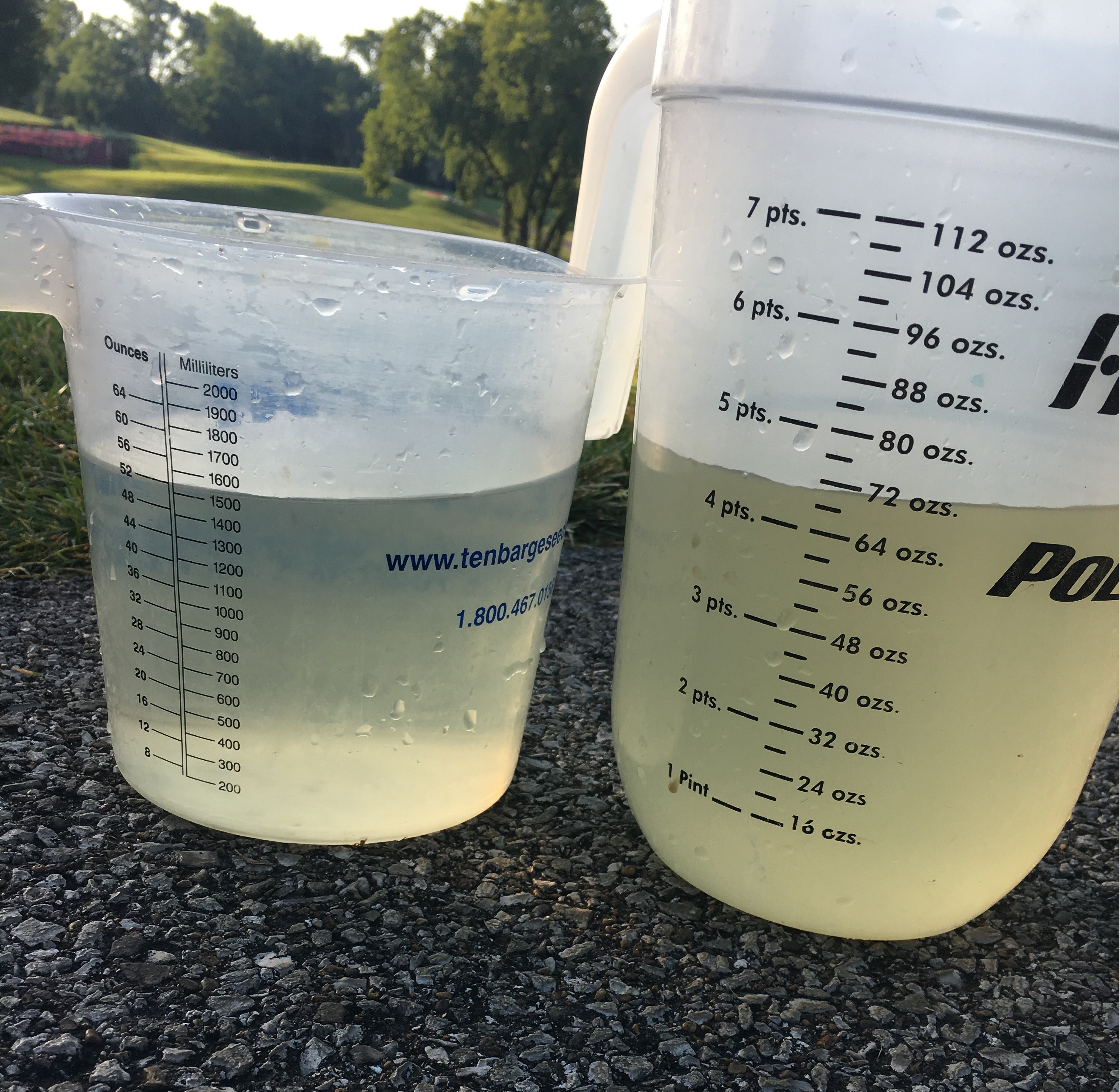
I would like to get to 6.8. I don't know if I can afford to get to 6.8, but I'm around 7.3 right now, which I think is a whole heck of a lot better than 8.8. The thing we have noticed visually … the clarity of the water is unbelievable. If I take a half-gallon measuring cup and dunk it out of my lake, and then I grab some water out of a quick coupler out of my irrigation system and put them side by side, the treated water looks like drinking water. So, Raymond seems to think that's probably the bicarbonates that have dropped out of the water.
That’s really interesting about the water clarity. Have you noticed anything else like that?
Well, we're kind of watching goofy stuff, like when we do irrigation repairs, to see if the walls of the pipes clean up over time. It's a little bit interesting, and I'll have more information later in the year, but we have a very aged irrigation system and we probably fix a dozen glue-joint leaks a year, like pin holes you know, the glue joints are breaking down. I haven't had to fix one yet this year, so I don't know if the higher pH is harder on the glue.
Oh, wow, so normally by this time of year, you would’ve already had to fix one?
At least, yeah. Probably six.
What’s the process been like to dial in the right rate of inject for your irrigation water?
Well, we worked with Raymond obviously, and did those titration testings, but I really think it’s kind of site specific. I've got a measuring cup and a pH meter in my golf cart and I just keep testing it and I just keep turning the dial to increase the amount if I feel like I want to.
Speaking of “turning the dial,” talk to me about the setup.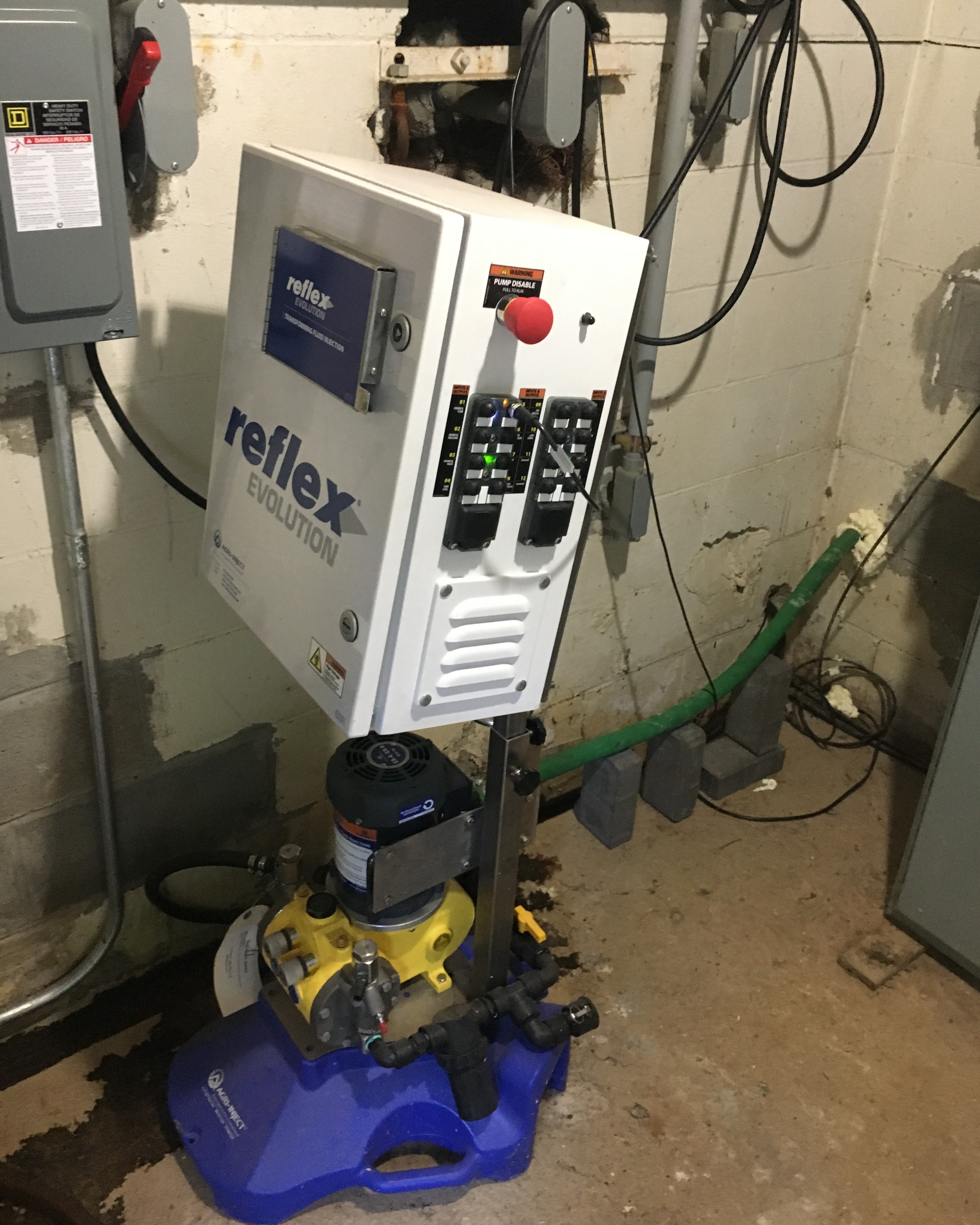 Matt hooked us up with that Agri-Inject out of Colorado, I believe. Really good company, you know—helped me with the pump, worked with Matt on the dimensions of the tote that we're using. We chose to build a pad that was elevated from the pump itself. Agri-Inject recommended that you have a nice gravity-pull down to their pump, so we built a pad with a fence structure around it and then we just slide the tote right into there and close up the gate and lock it. And we just have a hose that goes down and through the wall of my actual control room of my pump house where the Agri-Inject pump sits. Then we just paid a local plumbing company to put a couple of ports in—one for the flow meter and one for the actual Mister Mist’r® injector nozzle.
Nice, and how about for the greenhouse?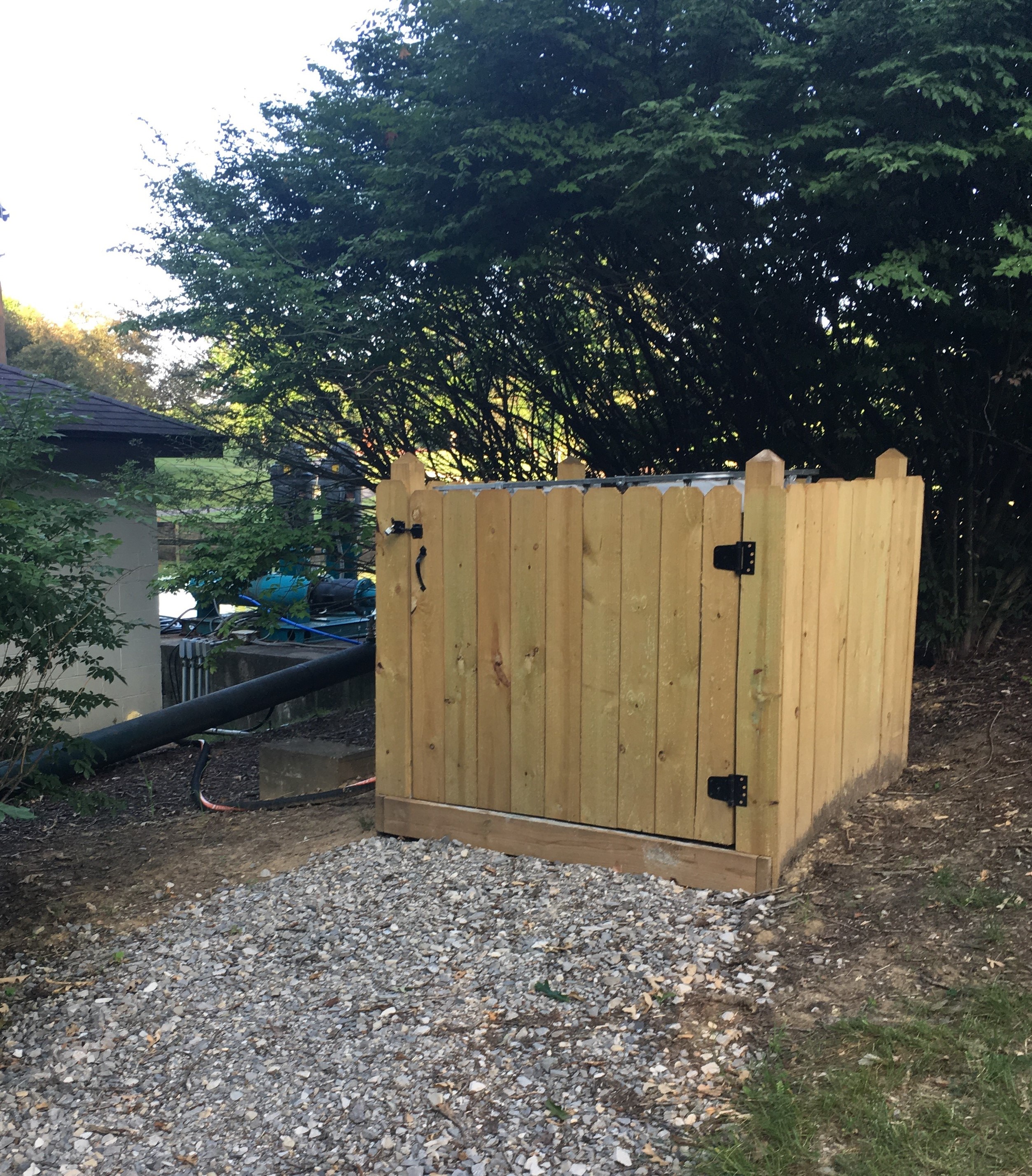 So, we use a little Dosatron injector in there. It has a 5-gallon bucket, and we know now, we put 2 ounces of Neutralizer in that bucket with some fertilizer and it brings the pH of that city water down to about 6.8 to 6.5, something like that. And a neat experience detail in the greenhouse was that, after you would water in there a whole bunch and by the time you go out to your beds to plant your flowers, there was always a crust that would develop on top of the little 3-inch pot that the flowers are in. So, when you would plant the flower, that crust with kind of break off and you would see it. We don't have that crust anymore, so I think it was just all those heavy metals and bicarbonates building up on top of that potting soil in the greenhouse.
And once you plant the flowers out on the course, what’s their water source at that point?
Well, irrigation water. So, now that's going to be new for us this year too … because they [the flowers] kind of want to start petering at the end of July. They kind of start getting yellow and nasty looking and I just think that used to be that the water was really getting hard on them. So, we'll see if our flowers last longer into the fall with better water.
Anything else that you’re going to be keeping your eye on as the project continues?
Well, I was going to mention, it seems like when I hand water in the mornings with my hose, the treated water percolates into the soil profile a little bit faster. I have noticed that. You know, we've always used Fleet®, and that's a good product, but it seems like it's even faster coming out of the hose.
So, although Sexton still has several really intriguing unknowns left on the table, one thing’s for sure—the pH of his irrigation water is going down. Ultimately, that’s exactly what he set out to do, but hopefully he’ll also be seeing some added benefits as a result of that lowered pH over the next few months.
Related Resources

In addition to being the nation’s largest distributor of branded fungicides, herbicides, and insecticides, Harrell’s produces custom-blended fertilizers, specialty liquids, and wetting agents. Additionally, Harrell’s is the exclusive US owner, formulator, and distributor of all POLYON® branded products.
TEAM HARRELL'S
STAY EQUIPPED
Never stop learning. Access FREE continuing education courses from Harrell’s.
LET'S GROW
PRESS RELEASES
PRESS RELEASES
STAY EQUIPPED
Never stop learning. Access FREE continuing education courses from Harrell’s.
LET'S GROW