

Health Challenges for Urban Plants in Landscapes
11/21/2024 - By Dr. Raymond Snyder
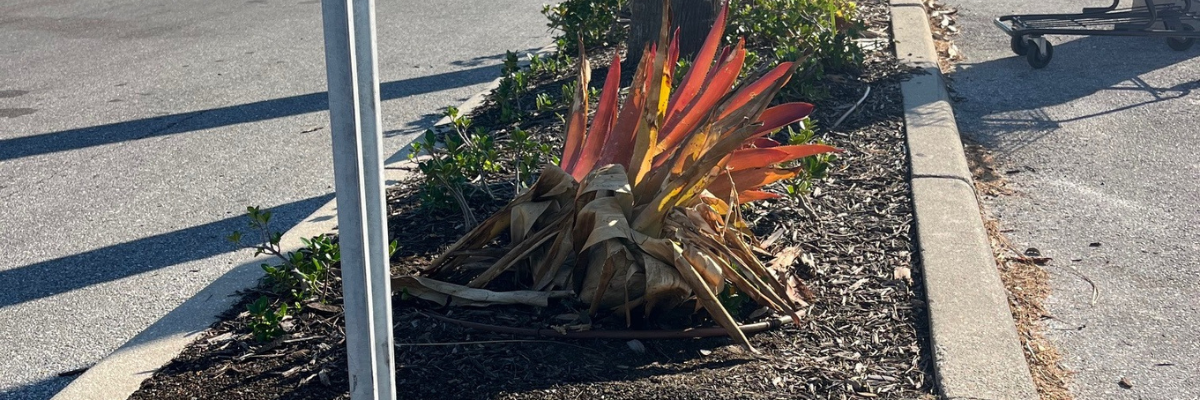
Maintaining healthy, resilient plants in the landscape
can be challenging, especially in urban landscape settings. Urban growing
environment size, shape, and soil conditions are often not conducive to
establishing and maintaining landscape plants and turfgrass. All that to say,
assessing and understanding the anomalies inherent to urban landscape
environments is critical for achieving high-quality plants and turfgrass. This
article will help you recognize issues and offer solutions via products and practices.
Irrigation for Urban Plants
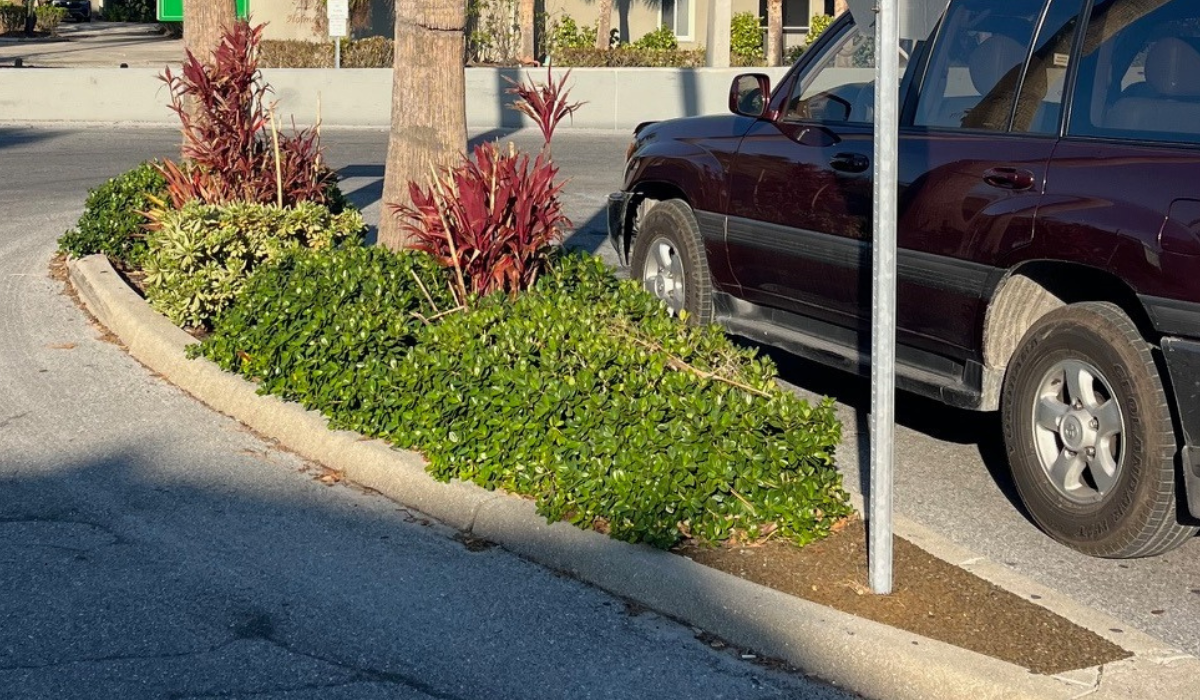
The necessity for narrow, confined root zones is inherent
to space-limited urban landscape settings, especially shopping centers and
planned communities. These “island” landscape settings can be difficult plant-growing environments due to irrigation, soil, and traffic/wear challenges.
Properly designed irrigation systems can be impacted in
urban environments with complex underground piping and subsurface drip
emitters. Pop-up irrigation heads are often found malfunctioning in urban
settings resulting in either grossly over or underirrigated landscape beds. Irrigation
audits should be conducted monthly to confirm that both the system hardware, operational
frequencies, and times are properly set based on meteorological conditions. Taking
visual observation of every irrigation head operating properly should be
confirmed monthly as well so you know you are not wasting resources.
Maintaining Healthy Soil for Urban Plants
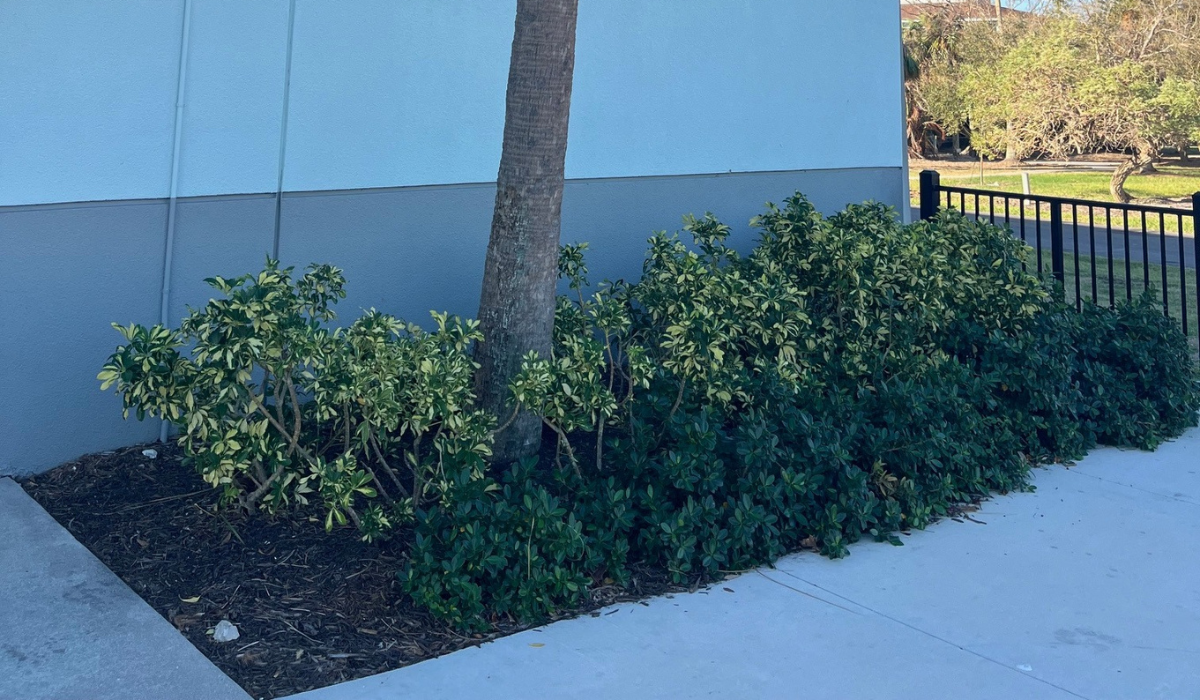
It is not surprising that plants with micronutrient
deficiencies are often found in urban landscapes. These soils are found
to be high in limestone rocks or shells whose constituents impart
undesirably high pH conditions in the soil that reduce the availability of
critical micronutrients, such as Iron (Fe) and Manganese (Mn).
Utilizing acidifying forms of fertilizer, chelated
micronutrients, and potentially incorporating elemental sulfur are all
techniques one can implement to overcome high pH soil conditions. Consider replacing the entire root zone with soil that is a combination of preblended sand
and organic matter free of limestone particles in settings where overcoming
high-pH soil conditions is not a viable strategy.
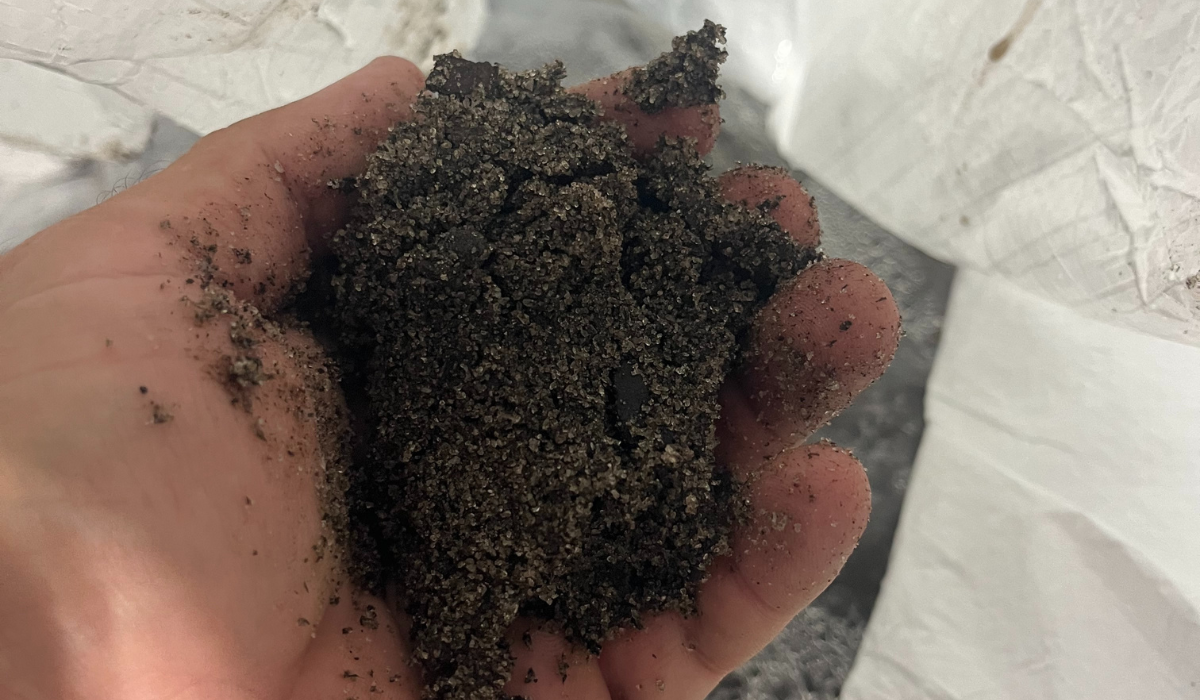
One option is Harrell’s Landscape/Media mix, which is a premix
of medium to coarse sand blended with organic matter, resulting in a limestone-free soil that has a pH of approximately 5.5 and is 7% organic matter on a weight
basis. The Harrell’s Landscape/Media mix also contains plant essential elements
necessary for establishment.
Turfgrass in Urban Environments
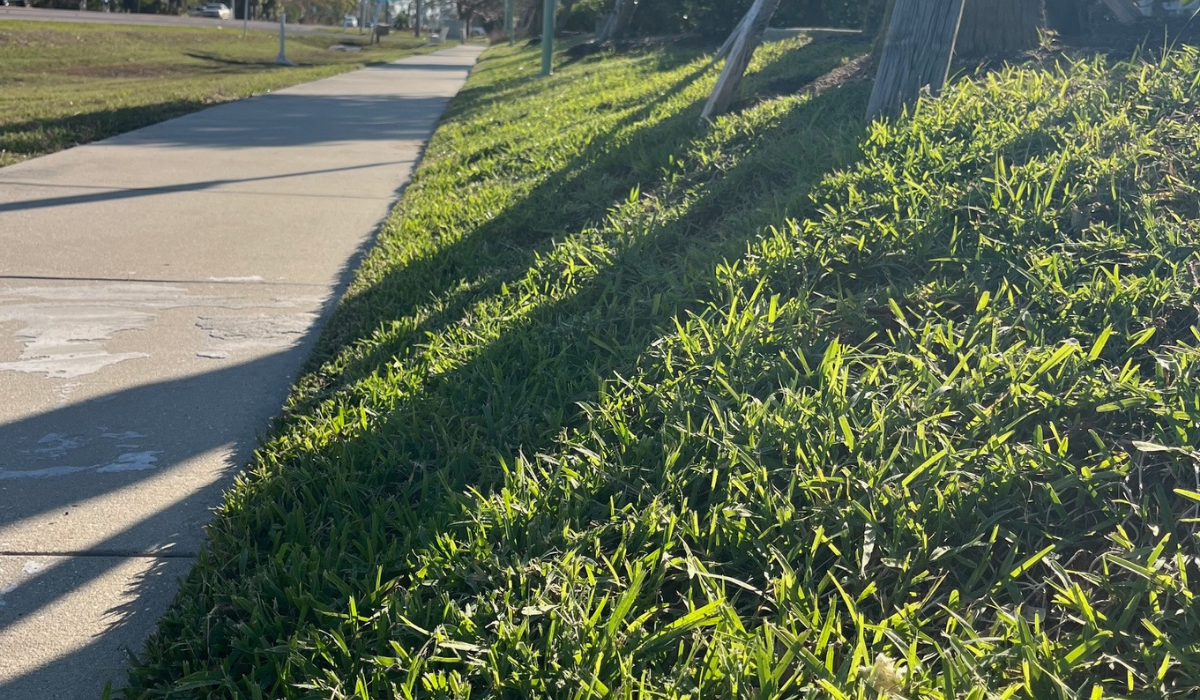
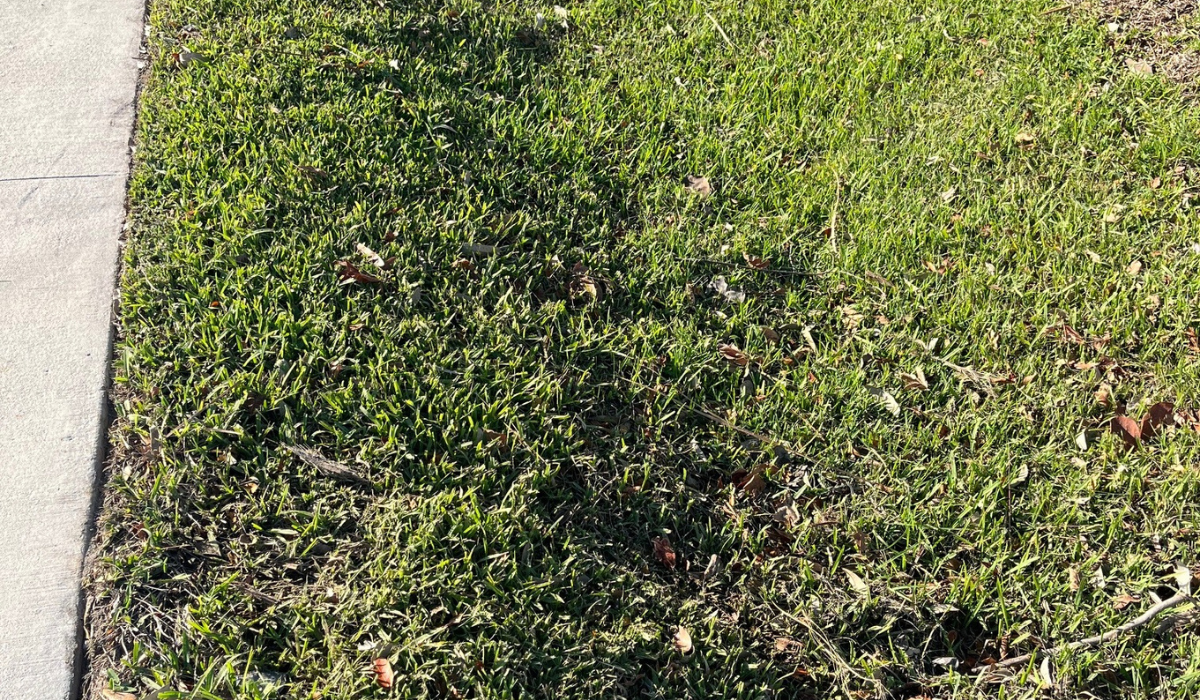
Finally, turfgrass growing in urban landscapes faces
unique challenges relative to conventional turfgrass growing environments such
as home lawns. Urban landscape turf is often maintained in narrow, high-traffic
areas. Turfgrass maintained on steep slopes associated with elevated properties
or drainage can get damaged by mowing stress due to the scalping of uneven
surfaces and ride-on, center pivot mowing units.
Urban turf is also likely subjected to the same poor,
high pH soil conditions and irrigation limitations as the adjacent landscape
plants. Turf growing in such conditions should receive inputs of chelated
micronutrients and acidifying forms of nitrogen. As noted above, if the
conditions are extreme, consider amending the soil with organic matter or
Harrell’s Landscape/Media mix.
Your Harrell’s Rep Knows Urban Plants
If you have any other questions regarding urban plants or
any other growing areas, your local Harrell's Rep is your best resource. They
are ready and equipped to help you find the best products, practices, and
programs for you and all your efforts. Reach out today to get started and
conquer the challenges of the season.
Related Resources

In addition to being the nation’s largest distributor of branded fungicides, herbicides, and insecticides, Harrell’s produces custom-blended fertilizers, specialty liquids, and wetting agents. Additionally, Harrell’s is the exclusive US owner, formulator, and distributor of all POLYON® branded products.
TEAM HARRELL'S
STAY EQUIPPED
Never stop learning. Access FREE continuing education courses from Harrell’s.
LET'S GROW
PRESS RELEASES
PRESS RELEASES
STAY EQUIPPED
Never stop learning. Access FREE continuing education courses from Harrell’s.
LET'S GROW