

Harrell's ProtectMAX® Southside Broadleaf and Sedge Herbicide - What You Need to Know
8/29/2024 - By Dr. Jeff Atkinson
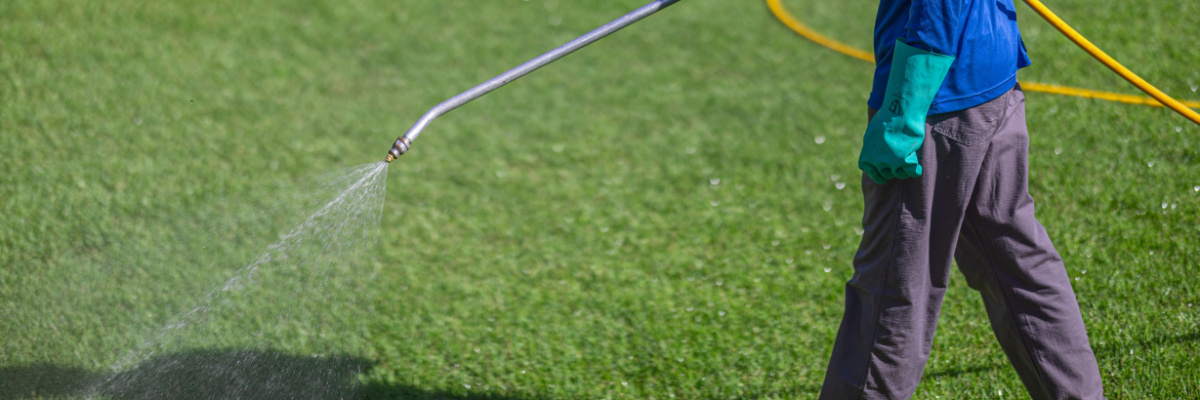
Weed control starts with accurate turf ID, weed ID, and
active ingredient selection, but weed control can be a risky business. For an
herbicide application to be successful, the desirable turf and weed species
must be properly identified and the appropriate active ingredient must be
selected to balance turf safety with control of the target weed. In many cases,
misidentification of the desirable turf species can lead to severe turf injury
or turf death. Misidentification of the weed species can lead to less than
desirable control and wasted money.
Utilizing herbicide formulations that are safe to apply
across a wide range of turf species and are effective against the most common
problematic weeds is an effective way to minimize risk while ensuring effective
weed control.
In the southern United States, four warm-season turfgrass
species predominate: bermudagrass, Zoysiagrass, St. Augustine grass, and centipede
grass. Often, these grasses are planted adjacent to one another or comingle in
the same sward. However, several of the herbicides that are safe to apply to
bermudagrass and zoysiagrass will injure St. Augustine and centipede. Harrell's ProtectMAX® Southside Broadleaf and Sedge Herbicide is safe to apply to
bermudagrass, zoysiagrass, St. Augustine, and centipede.
Harrell's ProtectMAX® Southside Makes Broad-Spectrum Sedge and Kyllinga Control Affordable
Common preemergence herbicide programs are most effective at
preventing grassy weed germination and establishment. But the same preemergence
programs do not provide effective control of sedge species, kyllinga species,
or broadleaf weed species. Preemergence programs can provide some control of
these weeds, but not to the same level as grassy weeds.
Sedge and broadleaf weed control in managed turf is further
complicated by accurate weed identification. Sure, a keen, trained eye can
determine the difference between sedge species and kyllinga species, but these
weeds are more easily identified when their seedheads are visible. Unfortunately,
in a turfgrass setting sedge and kyllinga seedheads are often not observed
since frequent mowing removes the seedhead before it has an opportunity to
develop.
Sedge and kyllinga control are further complicated by the
spectrum of control (or lack thereof) provided by herbicide active ingredients.
Some active ingredients provide a narrow spectrum of control, while others provide
a broad spectrum of control. Historically, broad acre application of broad-spectrum
sedge and kyllinga herbicides was cost-prohibitive. By formulating Harrell's ProtectMAX® Southside Broadleaf and Sedge Herbicide with sulfosulfuron and making it available at
an affordable price, applicators can achieve tremendous value in balancing cost
with broad-spectrum sedge and kyllinga control.
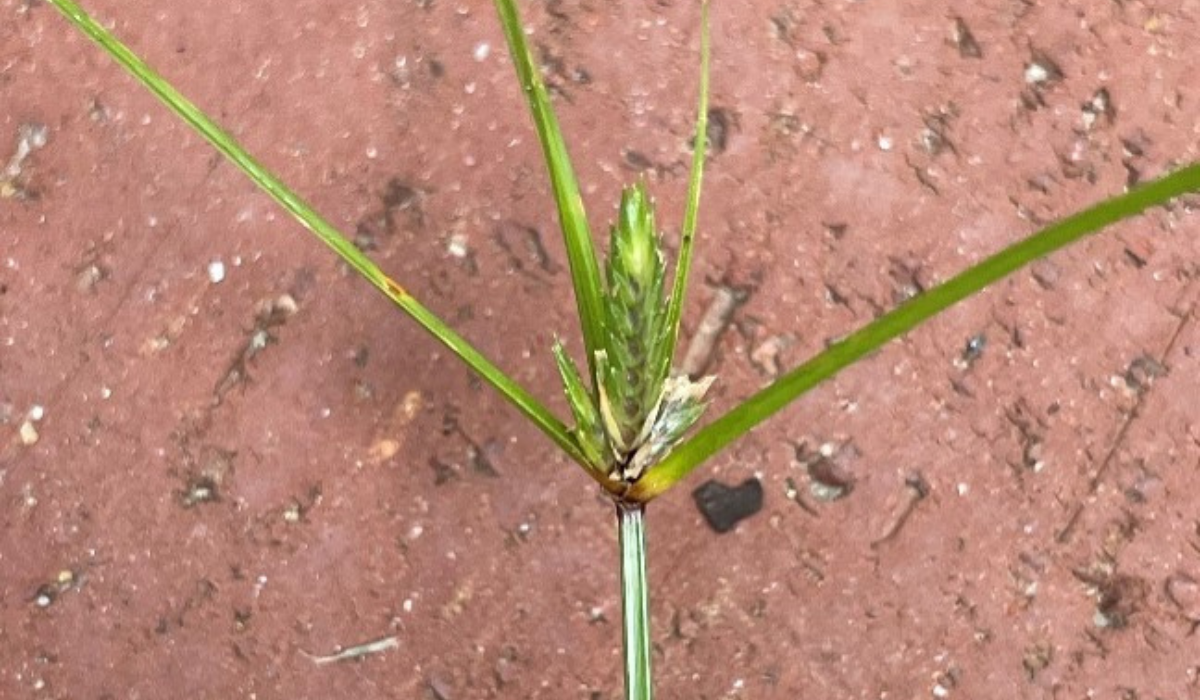
Figure 1. Sedge and kyllinga species are easier to
identify when a seedhead is present. Annual sedge (Cyperus compressus L.) can
be easily confused for yellow nutsedge (Cyperus esculentus L.) if a seedhead is
not visible.
Harrell's ProtectMAX® Southside Balances Broadleaf and Sedge Control with Turf Safety
It is not hard to find active ingredients that control
broadleaf weeds; however, finding options that are safe on many types is
harder, as many of them have issues with safety on St. Augustine and centipede
grass. The second active ingredient in Harrell's ProtectMAX® Southside Herbicide,
metsulfuron, provides effective control of a wide variety of broadleaf weeds
and is safe to apply on bermudagrass, zoysiagrass, St. Augustine, and
centipede.
This is an important characteristic of Harrell's ProtectMAX® Southside for a golf course superintendent or a lawn care operator who may manage a variety of turf species within a small proximity, preventing the need for two separate products to treat bermudagrass and zoysiagrass areas, separate from St. Augustine and centipede grass areas. In short, the mix of sulfosulfuron and metsulfuron creates operational efficiency by optimizing the balance between broadleaf and sedge control with turfgrass safety.
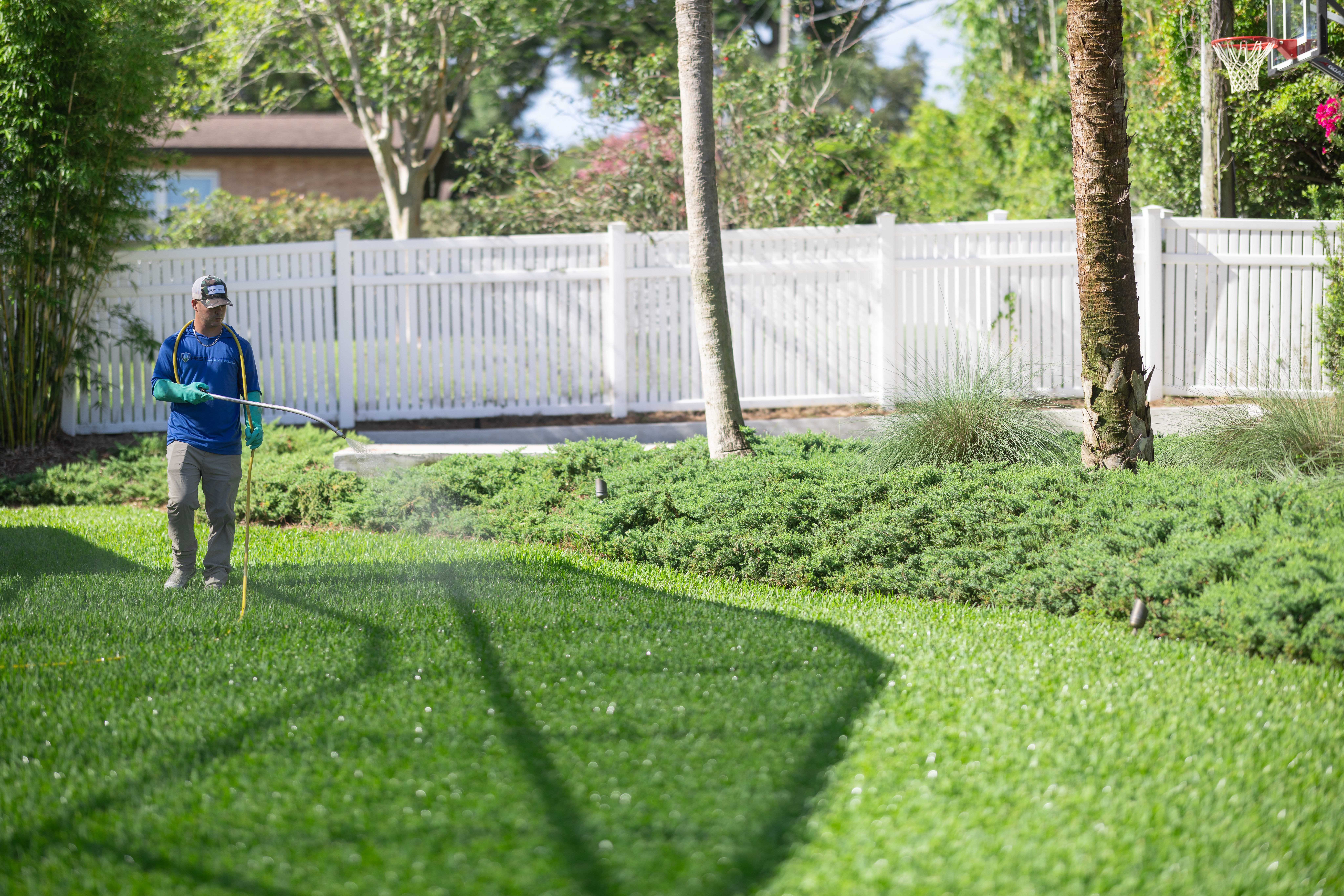
Harrell's ProtectMAX® Southside’s mode of action
When applying Harrell's ProtectMAX® Southside Broadleaf and Sedge Herbicide it is important to understand the mode of action and how it applies to applicator and customer expectations. Both metsulfuron and sulfosulfuron are group 2 herbicides, meaning they work by inhibiting an enzyme named acetolactate synthase, or ALS. Amino acids are required by all biological organisms, weeds included, and if the ALS enzyme is not functional in a plant, the plant cannot manufacture three essential amino acids critical to sustain plant life.
Shortly after application, the function of the ALS enzyme in susceptible plants is inhibited; however, plants have a reserve stock of these essential amino acids that a treated plant must work through before herbicidal symptoms appear. This process does not happen overnight, thus the reason why it may take several days to visually observe herbicidal symptoms following the application of Harrell's ProtectMAX® Southside. The positive part about this process is that it enhances a complete and systemic kill of the target weed. Fast-acting, burn-down herbicides can be tank-mixed with Harrell's ProtectMAX® Southside, however, long-term weed control efficacy may be compromised.
It is important to keep in mind the Harrell's ProtectMAX® Southside mode of action when considering application timing. Since essential amino acid reserves must be depleted before herbicide symptoms appear, it makes sense that Harrell's ProtectMAX® Southside will be most effective when weeds are actively growing. Application to drought-stressed plants and application during environmental conditions that are not conducive to weed growth will further reduce or slow control.
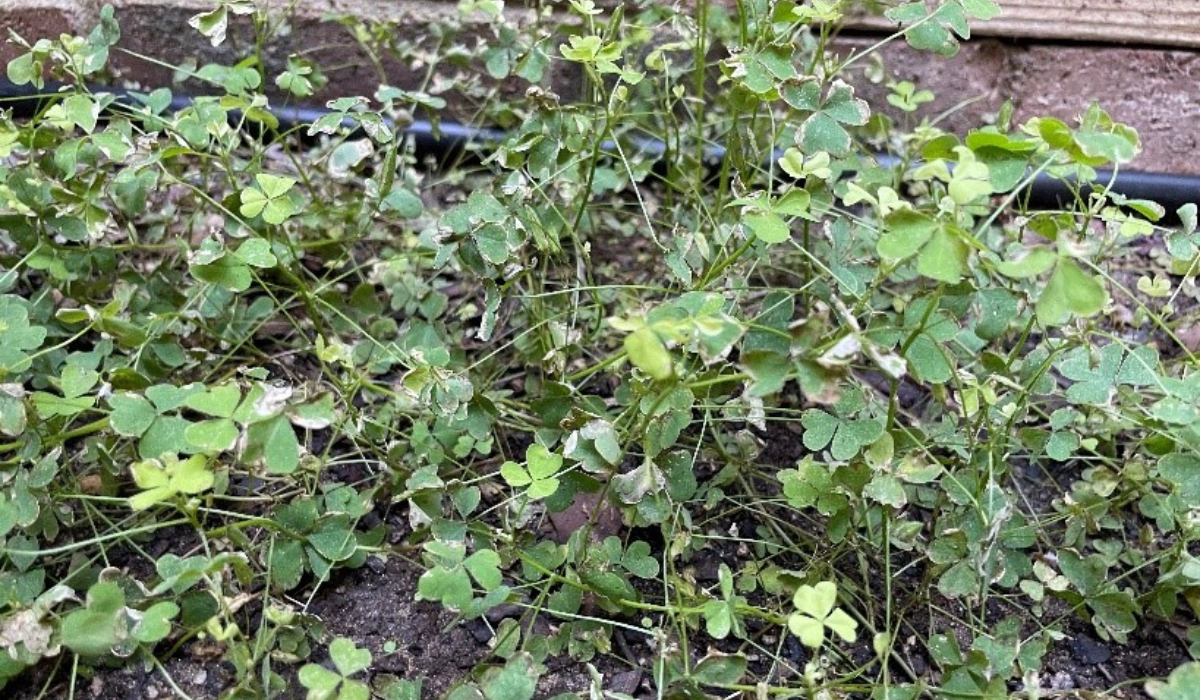
Figure 2. Yellow woodsorrel is beginning to show herbicidal symptoms 10 days after treatment. Herbicide symptoms include yellowing and browning of leaves. Harrell's ProtectMAX® Southside was applied when the target weed was actively growing to enhance control.
Adjuvant Recommendation for Harrell's ProtectMAX® Southside
Finally, the number one reason herbicides fail to work relates to the inability of the active ingredient to reach the target site of action. As is common with group 2 herbicides, Harrell's ProtectMAX® Southside needs a little help from a non-ionic surfactant to penetrate the leaf cuticle so that it can move systemically within the target weed. Two Harrell’s options for a non-ionic surfactant include Harrell's SprayMAX® Nonionic Penetrant and Nonionic Penetrant Plus – both great options with Nonionic Penetrant Plus providing an additional drift control feature.
Reach Out to Your Harrell’s Representative
Harrell's ProtectMAX® Southside Broadleaf and Sedge Herbicide herbicide is formulated to balance turf safety across bermudagrass, zoysiagrass, St. Augustine grass, and centipede grass with weed control efficacy of common broadleaf and sedge species. Reach out to your Harrell's Rep to learn more about how Harrell's ProtectMAX® Southside can fit into your weed control program, and as always, read and follow label directions for proper use.
Related Resources

In addition to being the nation’s largest distributor of branded fungicides, herbicides, and insecticides, Harrell’s produces custom-blended fertilizers, specialty liquids, and wetting agents. Additionally, Harrell’s is the exclusive US owner, formulator, and distributor of all POLYON® branded products.
TEAM HARRELL'S
STAY EQUIPPED
Never stop learning. Access FREE continuing education courses from Harrell’s.
LET'S GROW
PRESS RELEASES
PRESS RELEASES
STAY EQUIPPED
Never stop learning. Access FREE continuing education courses from Harrell’s.
LET'S GROW