

Greenhouse Operations - Start Clean, Stay Clean.
9/28/2022 - By Marlon Carrera
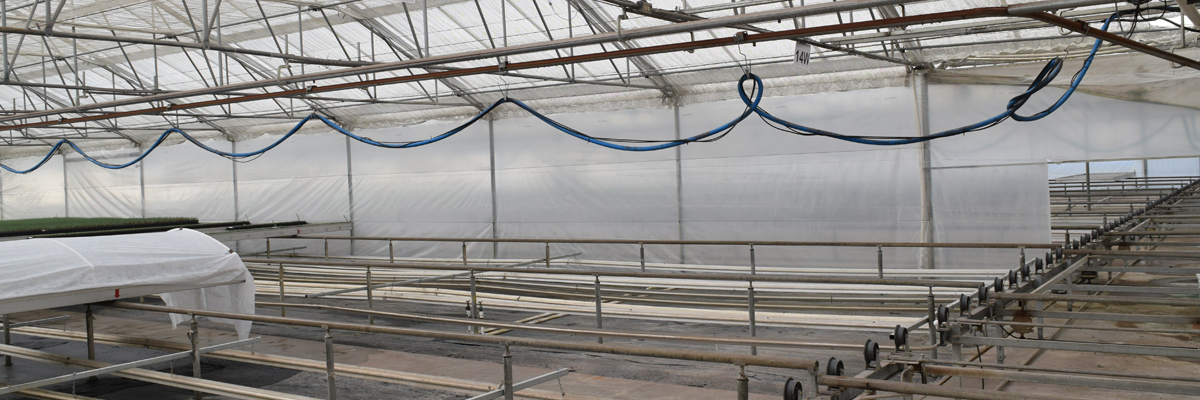
Greenhouse operators have been challenged over the years
with how to keep their production free of pests and diseases. This is
applicable to products like vegetables, ornamentals, fruits and many others. In
most operations, the approach is to “attack” the problem by using conventional
control or bio controllers. However, some of the most successful operations are
going beyond that by working at the root cause of pests and diseases.
This proactive approach includes taking appropriate steps ahead of time to ensure a production with minimal risks of severe pest pressure or disease dissemination.
10 Tips for a Start Clean, Stay Clean Operation:
1.
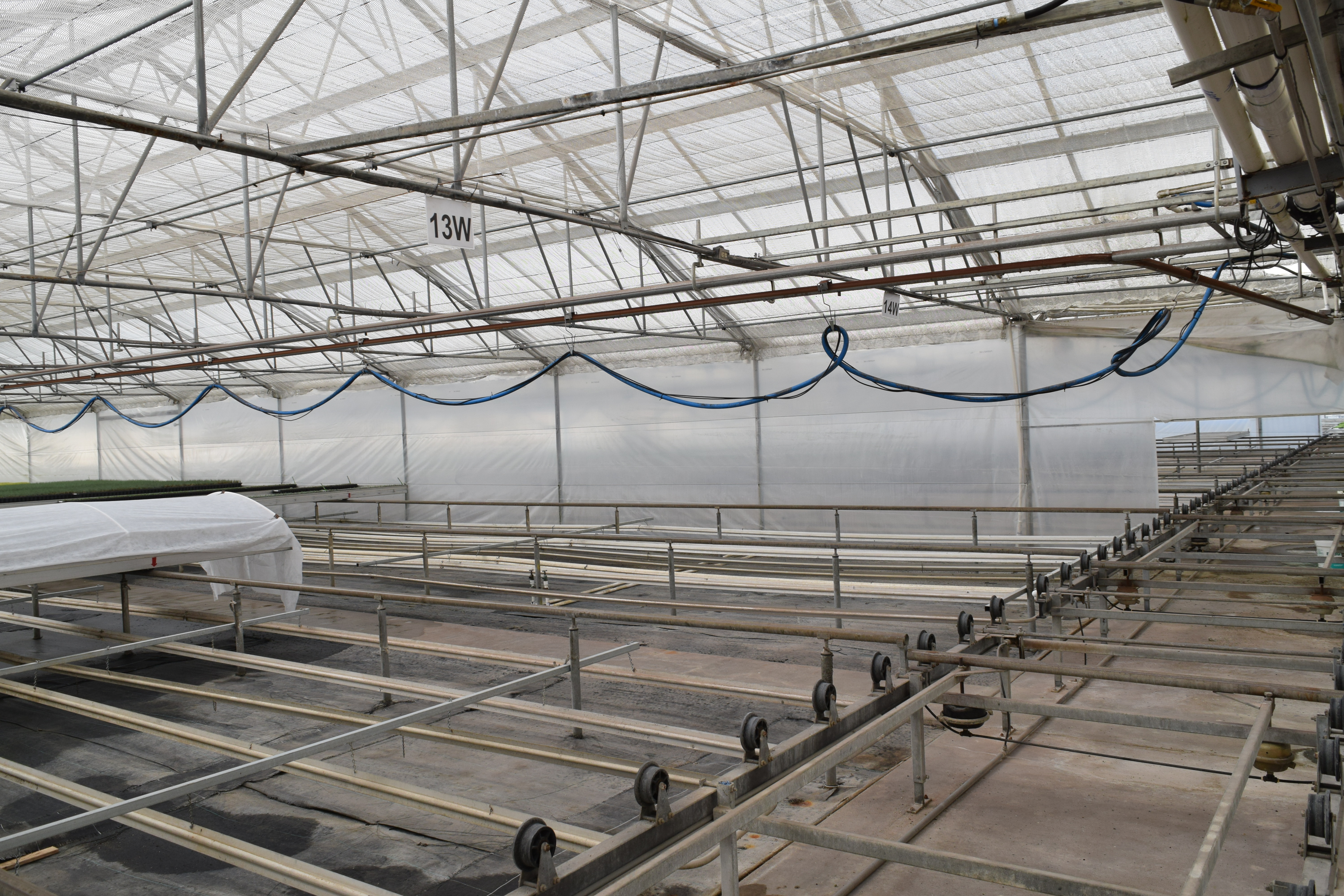
Greenhouse Operations - Cleaning out: At
the end of their production cycle, or the season, operations remove all the
remaining products in their space and clean out all the debris or green waste
that might still be in the greenhouse. All this is properly disposed of far
away from the greenhouses.
Outcome: No alternative hosts for
bacteria, fungus spores or pests.
2.
Greenhouse Operations - Facility Disinfections:
After the mechanical cleaning of the greenhouse, it is important to incorporate
a chemical disinfectant to eradicate any possible bacteria, viruses and spores
in all the surfaces, including the floor, walls, tables, recycled pots or trays,
tools and equipment.
Outcome: Sterilized facilities and
equipment free of pests and diseases.
3.
Greenhouse Operations - Weed Prevention:
A good practice to avoid weeds inside the greenhouse is the application of a
pre-emergent herbicide, mostly on the edges of the greenhouse bays, or wherever
is needed. Some pre-emergent herbicides' effectiveness can last up to 6 months
and maintain a house and production environment free of weeds.
Outcome: No weed presence hosting pests
or diseases.
4.
Greenhouse Operations – Clean Soil or Growing Media:
A clean soil or growing media is one of the easiest ways to promote a Start
Clean, Stay Clean. program. There are several options for soil media in the
market and it is important to ensure your operation is using the cleanest
possible media. If recycling is happening, it is encouraged to have the media
disinfected via pasteurization or from a steam system.
Outcome: Prevention of possible pathogens
in the soil and consequently, reduction of possible root or plant diseases.
5.
Greenhouse Operations - Clearing out the Pipelines:
Cleaning of the irrigation pipelines that support the usage of irrigation
booms, sprinklers, irrigation drips or fog/mist systems is highly encouraged.
This action requires the use of a safe disinfectant that can kill all the
bacteria, spores or algae that may be inside the pipeline. Some products
require a line shock and clean water flush after, to secure the eradication of
pathogens in the pipelines.
Some of the most common products that have been used for this purpose are
Hydrogen Peroxide or Quaternary Ammonium based products. Chlorine is not
recommended for this protocol since Chlorine loses effectiveness during contact with organic material as well as the volume of water sitting in the
pipes.
Outcome: Avoid inoculation of bacteria or
fungus, as well as algae dissemination.
6.
Greenhouse Operations - Water Treatment:
Greenhouse operations might use well water, recycled water, river water or
public water and for that reason, it is vital to get a water test to ensure your
water source is free of pathogens. However, the injection of a safe
disinfectant can provide a piece of mind [SB3] to
any greenhouse operator. There are several different injector[SB4]
systems that can be adapted to support this practice. Here (California, Bay
Area) it is common to see operations using Chlorine as well as Hydrogen
Peroxide or Quaternary ammonium-based products.
Outcome: Prevention of bacteria or
disease outbreak, as well as algae control.
7.
Greenhouse Operations - Green Goods Source: Greenhouse
operations use different input sources, these can be tissue culture (TC), unrooted
cuttings (URC), liners (RC), seed and divisions. The safest but more expensive options are [SB5] the
TC inputs since they are coming from a sterilized lab environment. Every
greenhouse operation manages different inputs, and it is important to ensure
that whatever they are using is coming preferably from a certified supplier.
However,
a regular practice is also self-propagation where the greenhouse operation has its
own mother plants and takes URCs from them on a regular basis. Clean and
reliable inputs are 99% of the success in a greenhouse operation.
Outcome: Inputs free of pests and
diseases.
8.
Greenhouse Operations - Water Management:
In greenhouse operations, we use the terms " wet grower" and "dry
grower." When water is used in excess, the production might be classified
as a wet grower and possibly cause more problems of fungus, algae and weeds,
due to the wet environment. Therefore, it is important to have the mindset of a
dry grower and ensure that products are getting just what they need and not an
overabundance of liquid.
Outcome: Suppression of diseases,
algae and weeds.
9.
Greenhouse Operations - Scouting program:
A solid scouting program can support the “Start Clean, Stay Clean.” program
by establishing rigorous thresholds, validating the effectiveness of all the
previous steps, as well as any preventive, conventional or biological
applications used along the way. Most operations are using yellow or blue
sticking cards for this purpose, but a visual scouting on plants is also
recommended.
Outcome: Awareness about pest or disease
presence in the operation and factual control decisions.
10.
Greenhouse Operations - IPM: Closing the
cycle of actions with a comprehensive pest and disease management program would
support your efforts to maintain facilities with the lowest possible risk of
common pests. These greenhouse pests include thrips, whiteflies, mites, aphids,
mealybugs and fungus gnats. But also, for diseases like botrytis, rhizoctonia,
fusarium, Pythium, Colletotrichum and virus. Preventive applications are by far
more of an economical solution than control applications.
Outcome: Facilities free of pests and diseases.
For more information on any of the tips mentioned, reach out
to your local Harrell's representative.
Check the links below for additional references of the Start
Clean, Stay Clean program.
How
Greenhouse Sanitation Helps You Start Clean and Stay Clean - Greenhouse Grower
Start
clean, stay clean! - Greenhouse Management (greenhousemag.com)
Start Clean. Stay Clean. (growertalks.com)
Related Resources

In addition to being the nation’s largest distributor of branded fungicides, herbicides, and insecticides, Harrell’s produces custom-blended fertilizers, specialty liquids, and wetting agents. Additionally, Harrell’s is the exclusive US owner, formulator, and distributor of all POLYON® branded products.
TEAM HARRELL'S
STAY EQUIPPED
Never stop learning. Access FREE continuing education courses from Harrell’s.
LET'S GROW
PRESS RELEASES
PRESS RELEASES
STAY EQUIPPED
Never stop learning. Access FREE continuing education courses from Harrell’s.
LET'S GROW