

Combatting Lawn Disease | How to Treat and Identify Gray Leaf Spot
7/25/2023 - By Dr. Paul Giordano

Gray leaf spot can ravage turfgrass, killing large areas
quickly if left unchecked. It is a common disease caused by the fungus Pyricularia grisea that affects many grass species. Including tall
fescue, Kentucky bluegrass, perennial ryegrass, and St. Augustine.
Identifying the Lawn Disease Gray Leaf Spot
The disease can sometimes be confused with other issues or
maladies, including drought or stress (biotic or abiotic). Below are some key descriptions of how to identify gray leaf spot
on lawns:
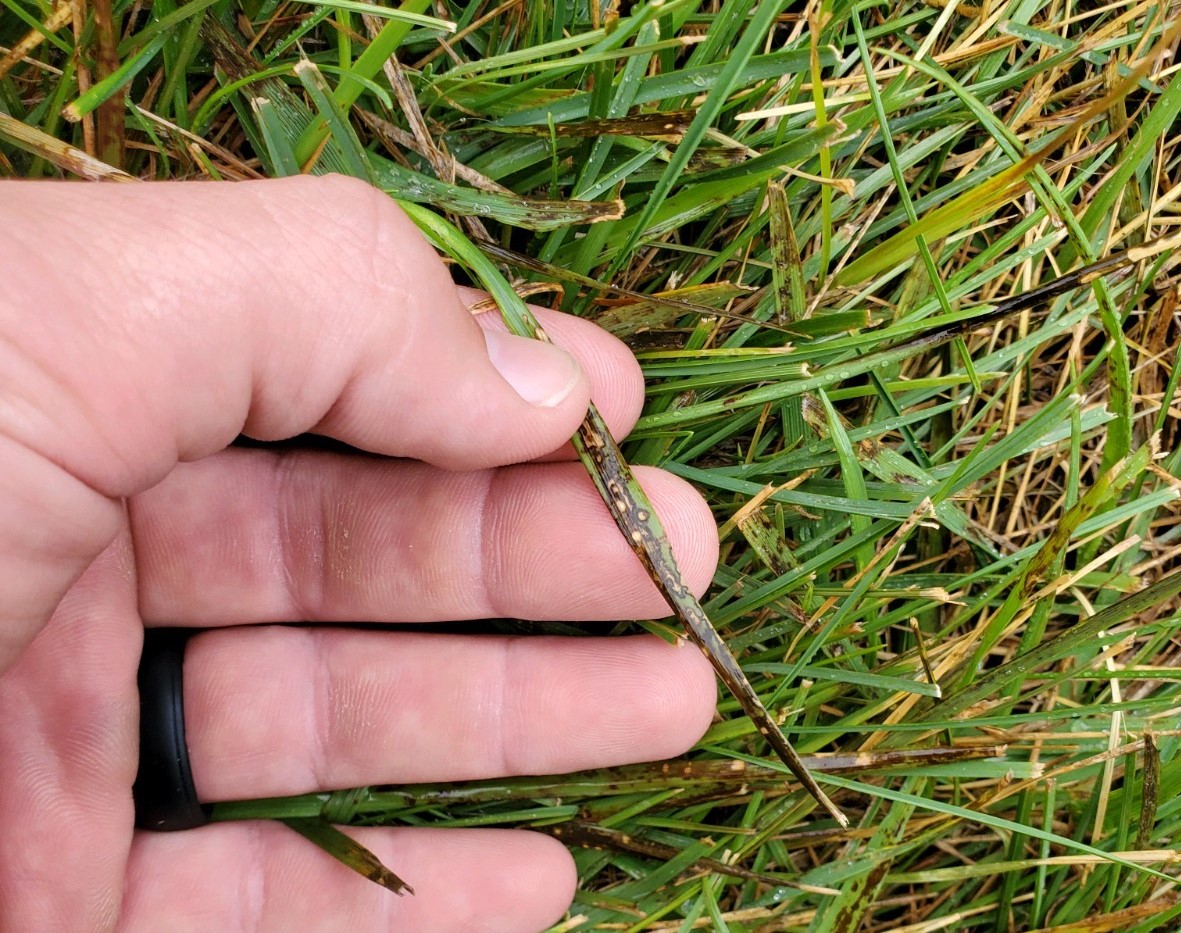
- Lesions:
The disease starts as small, water-soaked spots on the leaf blades. These
spots gradually enlarge and develop into elongated tan/brown lesions with dark-colored
borders. The lesions can range in size from a few inches to several inches
long.
- Coloration:
The lesions initially have a water-soaked appearance and later turn tan or
light brown. As the disease progresses, the affected areas may take on a
grayish coloration, hence the name "gray leaf spot."
- Shape:
The lesions are typically elongated and often have a rectangular or
cigar-like shape. They can run parallel to the leaf veins.
- Borders:
Gray leaf spot lesions have distinct dark borders or margins that separate
the infected tissue from the healthy grass. These dark borders are more
noticeable as the lesions mature.
- Distribution:
Gray leaf spot infection may appear scattered or in clusters across the
lawn. Disease often starts in lower, older leaves and gradually moves up
the grass blades as the disease progresses.
How and Where Does Gray Leaf Spot Develop
Gray leaf spot typically occurs in warm, humid conditions
and thrives in areas of high humidity and prolonged leaf wetness. It is most
severe during periods of hot and humid weather, typically in the mid-to-late
summer months. The disease can spread rapidly, especially when the
environmental conditions are favorable.
The disease weakens the affected grass, making it more
susceptible to other stresses, such as drought, heat, and other diseases. If
left untreated, gray leaf spot can result in significant damage to the
turfgrass stand, leading to bare patches and an overall decline of large areas.
Combatting the Lawn Disease Gray Leaf Spot
Effective management of gray leaf spot involves a
combination of cultural practices and, if necessary, the use of fungicides. Proper lawn maintenance, including regular mowing, appropriate
watering, and good air circulation, can help reduce the risk of gray leaf spot.
Fungicides labeled for gray leaf spot control are best used in a preventive
manner before widespread disease symptoms appear. Curative treatments can help
stop the spread of gray leaf spot to new areas but are only marginally
effective at curing the disease that has occurred.
When it comes to selecting fungicides for gray leaf spot,
it's essential to consider the specific products labeled for use on gray leaf
spot and those labeled specifically for residential lawn care. The availability
of fungicides may vary depending on your location and local regulations.
Remember to always follow the application recommendations
on the product label or otherwise reach out to your Harrell's Representative
for application advice.

Fungicides for Gray Leaf Spot
Your Harrell’s rep can provide you with tailored solutions
and implement Harrell's Balanced Approach programs to address lawncare issues like insects, weeds,
and diseases while optimizing overall plant health. Harrell's ProtectMAX® line of products includes some commonly used fungicides that have shown
effectiveness against gray leaf spot on fescue grass:
- Azoxystrobin:
This active ingredient is commonly found in fungicides used for
controlling gray leaf spot. It provides both preventive and curative
action against the disease.
- Propiconazole:
Another active ingredient used in fungicides for gray leaf spot control.
It is a systemic fungicide that helps protect the grass by inhibiting
fungal growth.
- Thiophanate Methyl: This fungicide is effective against various fungal diseases,
including gray leaf spot. It provides preventive and curative activity
against the disease.
You can learn more about these products in our Lawn Care Disease Trips article, which includes quick facts about common lawn care diseases.
For Gray Leaf Spot Diagnosis and Management, Contact Your Harrell’s Rep
It's important to note that the appearance of gray leaf spot
can vary slightly depending on the specific turfgrass species and environmental
conditions. If you suspect gray leaf spot on your lawn, consult with your Harrell's Rep, who can provide a definitive diagnosis and appropriate
management recommendations.
Not all products are registered in all states. Always read
and follow the instructions on the fungicide label, including
application rates, timing, and safety precautions.
Related Resources

In addition to being the nation’s largest distributor of branded fungicides, herbicides, and insecticides, Harrell’s produces custom-blended fertilizers, specialty liquids, and wetting agents. Additionally, Harrell’s is the exclusive US owner, formulator, and distributor of all POLYON® branded products.
TEAM HARRELL'S
STAY EQUIPPED
Never stop learning. Access FREE continuing education courses from Harrell’s.
LET'S GROW
PRESS RELEASES
PRESS RELEASES
STAY EQUIPPED
Never stop learning. Access FREE continuing education courses from Harrell’s.
LET'S GROW