

Don’t Rule Out the Liquid Option: Feeding Alternatives for the LCO Market
5/14/2021 - By Ike Faulkenberry
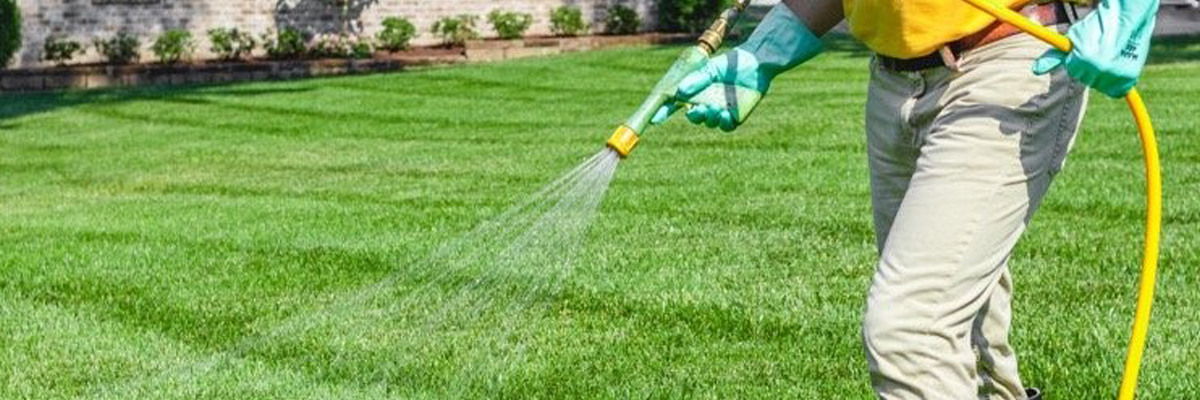
Unless you purchased your Spring/Summer fertilizer last Fall, you have no doubt observed that fertilizer prices seem to be rising along with the temperature. There are many reasons for this steady increase, but simply put, it boils down to supply and demand. Raw material demand is up internationally and domestically, supply chain constraints have caused delays, and supply has not been able to meet demand. From fertilizer to automotive to lumber to any sector of manufacturing, the production and shipping lag from 2020 has simply not caught up to normal or increased demand in 2021.
From an LCO perspective, the volatility of the raw materials market (particularly Urea) has led to a twofold problem: budget strain and inconsistent supply. Even if your supplier is fortunate enough to have their own blending capability, your fertilizer pricing has increased steadily along with raw material costs, and lead times have increased. If you are purchasing from a 3rd party vendor who does not blend their own, you may be waiting several weeks for your pallets to hit the floor of your shop. All this to say, you may need a backup plan.
I have been in the LCO industry as a sales representative/territory manager for 15 years. I spent the first 14 of those years telling my clients that liquid slow-release fertilizer was not affordable. Sometimes it takes looking at something through a different lens to see the light, and sometimes necessity breeds change. Whether replacing Urea for green-up, as a stop-gap for a delayed granular order, or as a Summer supplement, liquid slow-release is indeed a viable option. Perception is often reality, and a common misconception is that it is not affordable to spray an accepted amount of Nitrogen with a liquid slow-release fertilizer. The fact is that you do not need to apply as much Nitrogen if most of it is available, getting into the plant, and not drained through the soil via leaching and/or evaporated via volatilization. A considerably lower amount of Nitrogen can provide an effective short-term feed due to the efficiency of the Nitrogen sources.
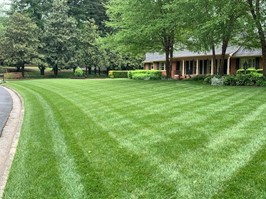
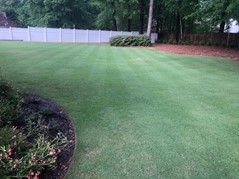
This Spring I switched the vast majority of my partners away from Urea plus a stabilizer to Harrell's® Tall Turf 30-0-0 for Spring green-up, based on Urea cost and supply issues. Switching to a liquid slow-release not only allowed them to retain the flexibility of an all-spray green-up round, but they all also saved money in the process. The Ammonium Nitrate component also ensures a response even in the cooler weather of early Spring. The images below resulted from a 9oz/1000 (3gl/acre) rate of Tall Turf 30-0-0 on Fescue, Zoysia and Bermuda. Results were achieved with just under ¼ LB of Nitrogen, and all spent less on their green-up round than in years past. Beyond green-up, Tall Turf 30-0-0 is a safe and effective supplemental application to follow a season-long POLYON® controlled-release fertilizer application, or between short-term feeds to give you a more flexible and cost-effective mid-Summer or late-Summer round.
 |  |
 | |
Benefits of Tall Turf 30-0-0
- Safe and effective on Warm-Season and Cool-Season turf
- Non-clogging, compatible tank mix partner
- Protects against both forms of Nitrogen loss
- 79% of the Nitrogen is either stabilized or slow-release (64% stabilized via Dicyandiamide (DCD) and 15% slow via Urea Triazone)
- Excellent plant uptake qualities- not dependent upon watering in quickly and stable in wet conditions
- No buildup/All Nitrogen is released short-term
- Cost-effective vs granular Nitrogen and even sprayable Urea
- Application flexibility (no double applying)
Granular fertilizer remains the most cost-effective option for seasonal feeding, particularly long-term feeding. But a liquid alternative like Tall Turf 30-0-0 is a very efficient, safe, and affordable option for a short-term feed or a supplement between granular applications. Contact your Harrell’s Sales Representative for more information, and have a great summer!
Related Resources

In addition to being the nation’s largest distributor of branded fungicides, herbicides, and insecticides, Harrell’s produces custom-blended fertilizers, specialty liquids, and wetting agents. Additionally, Harrell’s is the exclusive US owner, formulator, and distributor of all POLYON® branded products.
TEAM HARRELL'S
STAY EQUIPPED
Never stop learning. Access FREE continuing education courses from Harrell’s.
LET'S GROW
PRESS RELEASES
PRESS RELEASES
STAY EQUIPPED
Never stop learning. Access FREE continuing education courses from Harrell’s.
LET'S GROW