

Cold Weather Recommendations for Plants
2/17/2026 - By Dr. Aaron Palmateer
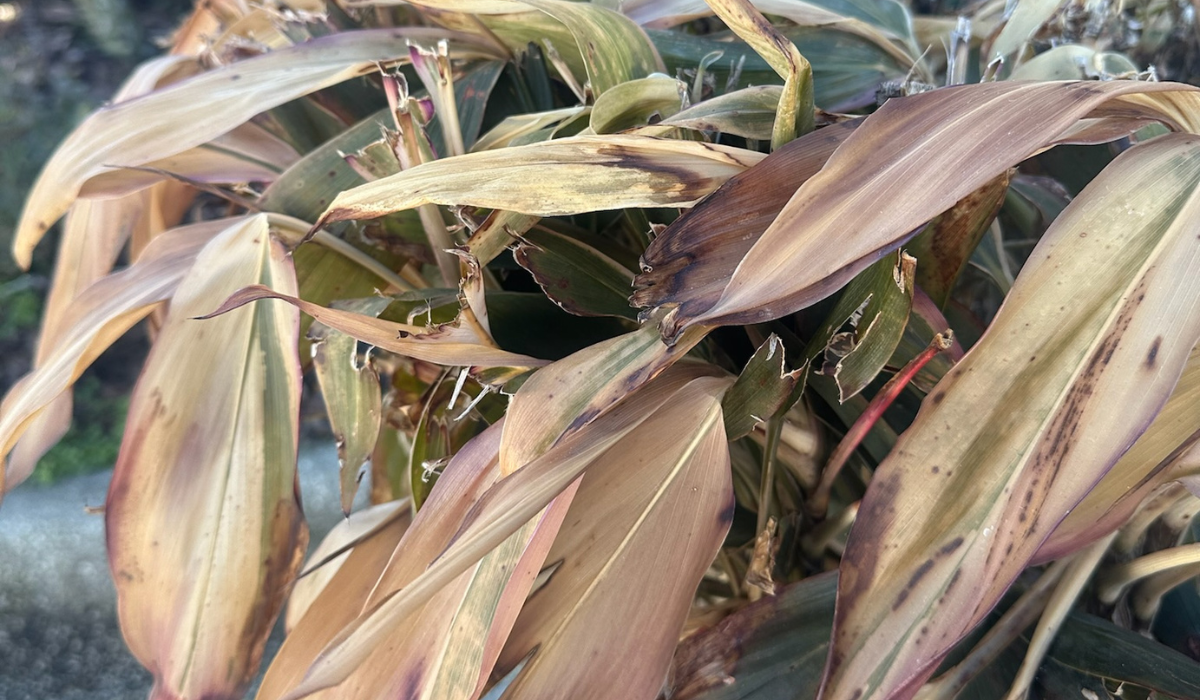
After a cold event, especially freezing temperatures, it’s very important not to rush in and start pruning. Even though plants may look burned up, the damaged tissue is often protecting living tissue underneath. It’s best to wait until new growth begins before pruning to determine what’s alive and what’s not, as premature pruning can make cold injury worse. How…pruning stimulates new growth, and young, tender growth is more susceptible to cold temperatures, so it’s best to wait until the threat of cold has passed.
Pruning creates a wound, which adds additional stress and increases the potential for disease. It’s difficult to determine the extent of the damage, as cold injury can take days, weeks, or even months to show fully. Also, avoid pushing plants with fertilizer and focus instead on proper irrigation, good drainage, and reducing additional stress. With a little patience, many plants should recover just fine.
One to two days before a cold front arrives, give the plants a good soaking, as moist soil holds and releases heat better than dry soil, which can help raise root temperature. Applying a 3 – 6” layer of mulch around the base of plants can also help to insulate roots. Avoid applying high-nitrogen fertilizers or pruning before a cold event, as both stimulate new growth, which is the most tender and susceptible to cold and freezing temperatures.
When it comes to minimizing the potential for cold damage, two essential nutrients are potassium and calcium, which play critical roles in improving plant cold hardiness. Potassium helps regulate osmotic balance and stomatal function, allowing plants to better manage water movement and reducing cellular dehydration caused by cold temperatures. Calcium strengthens cell walls and membranes, improving structural integrity and reducing tissue damage during a freeze or frost event.

Helpful Applications for Cold Weather
Harrell’sMAX® Potassium plus Calcium provides the right amount of Ca and K+ in a ratio proven to support stronger cell structure, improved stress tolerance, and enhanced overall plant resilience heading into colder conditions. Potassium Plus Calcium can be drenched or sprayed at 32–48 fl oz/100 gallons.
Another element linked to improving cold hardiness is Silicon, which can be taken up and deposited in plant cells, strengthening cell walls and structures, boosting resistance to pests and diseases, improving stress tolerance, and enhancing nutrient uptake. Note Silicon is not an essential plant nutrient, so not all plants take it up and accumulate it, but many tropical and subtropical plant species are well-known accumulators, especially monocots such as palm trees and ornamental grasses.
Harrell’sMAX® Potassium Silicate can be applied as a drench or foliar spray at 32–48 fl oz/100 gallons. Preventive applications should begin in the Fall, before the threat of cold weather, and continue until the threat subsides.
Connect with Your Harrell’s Rep
Cold weather can pop up out of nowhere in the winter, limiting response time and making last-second preparations vital to plant survival. Make sure you have a plan and know what and when to apply to protect your plants throughout the year. Connect with your Harrell’s Rep today to make sure you have all the products you need and to help refine your strategy.
Related Resources

In addition to being the nation’s largest distributor of branded fungicides, herbicides, and insecticides, Harrell’s produces custom-blended fertilizers, specialty liquids, and wetting agents. Additionally, Harrell’s is the exclusive US owner, formulator, and distributor of all POLYON® branded products.
TEAM HARRELL'S
STAY EQUIPPED
Never stop learning. Access FREE continuing education courses from Harrell’s.
LET'S GROW
PRESS RELEASES
PRESS RELEASES
STAY EQUIPPED
Never stop learning. Access FREE continuing education courses from Harrell’s.
LET'S GROW