

Bundle Up Those Greens, Winter is Coming
10/1/2021 - By Clay Breazeale
September 22 started arguably the best season of the year, FALL! Regardless of the date, we often wait for the break in summer temperatures to know fall is here. In much of the US, fall seems to have started early. Parts of the southeast have already experienced lows in the 50's. Even in Florida, we've started to notice a small break in humidity and morning time temperatures. The day lengths are noticeably shorter as the kids are coming home from playing outside much earlier, due to the streetlights coming on sooner (do kids in 2021 still do this?). While fall brings wonderful past times like football, trick-or-treating and the holidays; what does it mean for ultra-dwarf bermudagrass turf managers?
The initial onset of fall is often a relief allowing agronomy teams a break from the overwhelming summer activities. It is also time to change focus from aggressive, proactive management strategies to defensive strategies, in preparation for mother nature and her unpredictable cold weather. Throughout many of the ultra-dwarf regions, especially in the northern transition zone, front rollers are changing from grooved to smooth and heights of cut are being adjusted in preparation for cold weather and shorter day lengths. In the Gulf Atlantic regions, turf managers are fighting through excessive rainfall from tropical systems and anxiously awaiting the drop in humidity that should come in October/November.
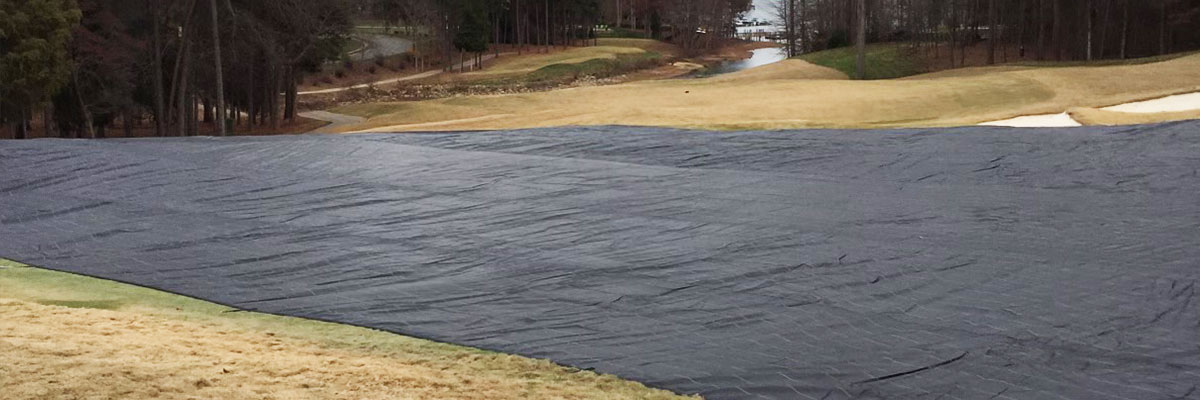
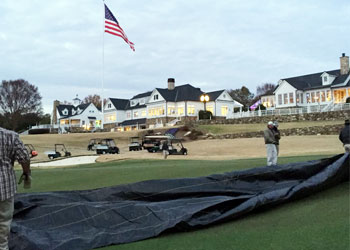
One item that is often discussed, debated and implemented throughout these regions is the use of covers during excessively cold periods. It won't be long before agronomy teams look like a carney tent or sailboat crews as they begin dragging greens covers out, to protect the club's investment on the coldest of days. Some covers will stay on for days, some will be installed and removed daily. Either way, this activity is often contested and debated as it impacts club operations and staff hours.
As the use of ultra-dwarf bermudagrass has moved further north, the data and research available regarding covering greens has increased significantly. The USGA and universities throughout the southeast have researched the use of greens covers to help offset the negative agronomic impacts of mother nature's winter fury, as well as, helping to manage labor inputs and revenue impacts more efficiently. While some of the thoughts can be debated from location to location, the use of greens covers is an insurance policy for clubs to implement during winter months.
Based on reviews of recent research, there are a few key points to help protect ultra-dwarf bermudagrass greens through winter:
- Manage soil moisture to prevent winter desiccation and turf decline.
- Research supports the use of wetting agents prior to the onset of cold weather and throughout the winter. These products have a positive impact on ensuring adequate and uniform moisture levels. This will reduce the risk of turf injury during cold weather.
- Use a moisture meter. These tools have changed the way moisture is more accurately managed in all turf types. They are critical for winter ultra-dwarf management when the turf is already off color due to the stress from winter temperatures. Take the subjectivity out of moisture management and set a Volumetric Water Content Percent baseline for your greens.
- Remember that even though it is cold, winter weather is often accompanied by high winds and low humidity. These conditions can cause the rootzones to dry down quickly.
- Winter desiccation often appears to be the primary culprit of poor spring transitions.
- Manage winter shade.
- The day lengths are already short. Additional reduction in sunlight can reduce potential of unwanted photosynthesis while further lowering soil temperatures and the ability of soil to re-warm during daylight hours; thus, increasing the turf's susceptibility to winter damage.
- Use covers to protect your ultra-dwarf greens.
- Set the temperature. Research out of Mississippi State University suggests that courses that regularly experience temperatures 25 degrees Fahrenheit or below should strongly consider the use of turf covers. The USGA concludes that courses who have used this as a guideline have performed well.
- Pick a cover. Research from universities suggest that there isn't a statistical difference in results from the various types of greens cover materials; thus, the material selection should be made based on efficiency of use for staff members.
- Consider establishing an air gap between the turf cover and surface of the green, especially during severely cold time periods when temperatures drop below 15 degrees Fahrenheit. This can be completed with pinestraw between the turf cover and the green's surface. Preliminary research states that this process can increase soil temperatures during excessively cold temperatures. This process can also be implemented selectively on colder, north facing or more shaded areas in place of entire greens if desired.
- Have a club standard operating procedure for covering and uncovering the club's greens.
- Covering greens is a labor-intensive process that also impacts the revenue stream of the club. Course closures are often needed to complete the installation and removal of greens covers. Additionally, extended closure periods may be needed during longer periods of extreme weather to provide proper protection. Work with your club operations to establish a standard operating procedure for covering greens. A standard operating procedure will help establish the facts and eliminate the emotion when making the decision to close and cover the club's greens.
- If you're looking for a template for a SOP for greens covering, an example is included below.
- Make sure you allot enough time to fully cover. A typical 18-hold course takes roughly 4-6 hours to complete covering, with a 4-6 person team.
Regardless of your location, winter weather will be sure to throw curve balls at turf managers. What strategy will you implement to ensure your turf transitions smoothly in the spring? Plan the work, work the plan.
Golf Course
Winter Inclement Weather Greens Covering and Course Closure
Standard Operating Procedures
- The Golf Course Superintendent will monitor weather conditions/forecasts and alert the Golf Professional on duty, concerning possible and scheduled upcoming Greens Covering events. Notice may be provided to the Golf Professionals as early as Seven (7) Days in advance of a covering event. However, if weather forecasts fluctuate, the Golf Course Superintendent may alert the Golf Professional on duty with minimal notice, possibly the day of a covering event.
- The Golf Professional on duty will work with the Golf Superintendent on duty regarding tee closures to accommodate covering the golf course greens.
- Once a covering event has been forecasted, the professional on duty will work with the scheduled tee times to allow the Agronomy staff adequate time to cover the greens. Closing of the tee may vary depending on scheduled levels of golf.
- The golf shop will monitor pace-of-play to ensure the golf course is clear of golfers at dusk
- The Agronomy Department and Golf Course Superintendent will keep in contact with the golf shop concerning availability of Golf Holes, so they can be covered without affecting golf play
- GOLF COURSE GREENS WILL BE COVERED UNDER FOLLOWING CONDITIONS:
- Overnight Temperatures will remain at or below 25 degrees for 4 hours or more.
- Green Covers will be removed from greens only if forecasted temperatures call for more than four (4) hours of temperatures exceeding 40 degrees, OTHERWISE, THE GOLF COURSE GREENS WILL REMAIN CLOSED FOR THE DAY.
- If the forecasted high temperature of 40 degrees is met, Agronomy will begin removing tarps once the morning temperatures reach 40 degrees or frost has broken.
Related Resources

In addition to being the nation’s largest distributor of branded fungicides, herbicides, and insecticides, Harrell’s produces custom-blended fertilizers, specialty liquids, and wetting agents. Additionally, Harrell’s is the exclusive US owner, formulator, and distributor of all POLYON® branded products.
TEAM HARRELL'S
STAY EQUIPPED
Never stop learning. Access FREE continuing education courses from Harrell’s.
LET'S GROW
PRESS RELEASES
PRESS RELEASES
STAY EQUIPPED
Never stop learning. Access FREE continuing education courses from Harrell’s.
LET'S GROW