

A Balanced Approach to Annual Bluegrass Weevil Control
10/7/2020 - By Dr. Jeff Atkinson
In the Northeast, Mid-Atlantic, and mountainous areas of the Southeast, Annual Bluegrass Weevil (ABW) (Listronotus maculicollis) is a persistent pest of cool-season turf (Figure 1). Variable emergence timing, overlapping life stages, and resistance or tolerance to several insecticide classes are a few of the challenges to managing this destructive pest (Kostromytska et al., 2019). In one survey, pyrethroid-resistant or suspected resistant populations were reported by one in five courses battling an infestation (McGraw and Koppenhofer, 2017).
Most often a pest of annual bluegrass turf (Poa annua), reports also suggest ABW can feed on creeping bentgrass and perennial ryegrass as a secondary food source (Billeisen, 2017). Although Annual bluegrass weevil was first identified on Long Island, NY in 1965 and remained relatively localized until the late 1990’s through early 2000’s (McGraw and Koppenhofer, 2007; Warner, 1965), infestations now range throughout the Northeast, south to the mountainous regions of North Carolina, and west into Ohio (McGraw and Koppenhofer, 2017). Much research has been conducted within recent years to evaluate and develop insecticide programs to slow the spread of insecticide resistance, model optimal application timings, and evaluate new and existing control options. To better understand the role proper fertility plays in an ABW management program, Harrell’s implemented an ABW Balanced Approach trial in the summer of 2020 in Harrisburg, PA on a property with consistent annual bluegrass pressure (McGraw, 2020).
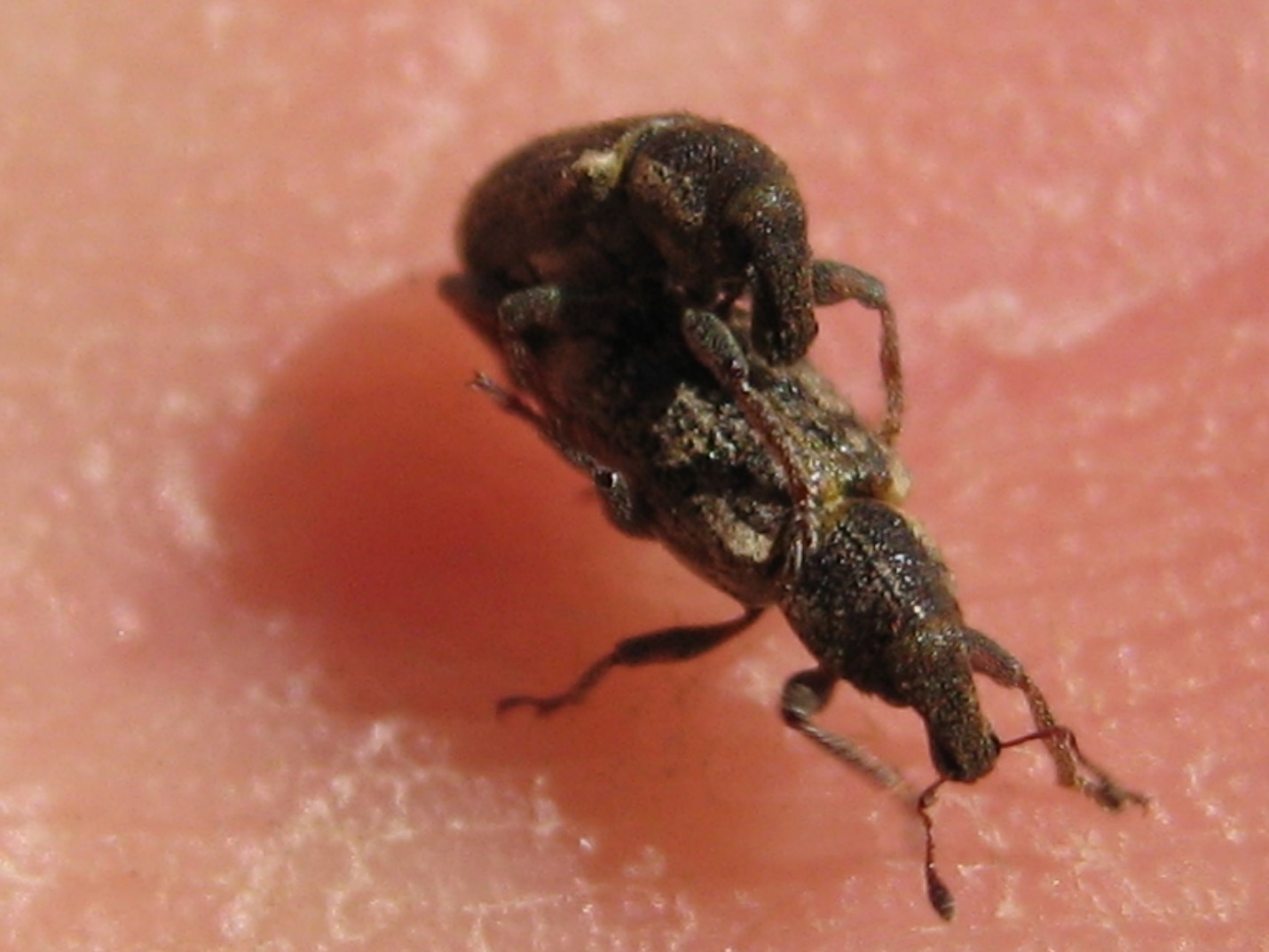 Figure 1. Annual bluegrass weevil (Listronotus maculicollis) adult. Photo Credit: John Keeler.
Two insecticide programs, one fertility program, combinations of each, and a nontreated were included in the trial (Table 1). Treatment 3 consisted entirely of a single application of Ference™ on May 7th. Treatment 5 was a more complete insecticide program, considered insecticide rotation, and timed applications to target specific ABW life stages. Both insecticide programs were evaluated with and without fertility.
Previous research indicates a combination program of granular and foliar fertility provides higher turf quality on average across a season than either source applied alone (Totten et al., 2008). The fertility program included a granular application of POLYON® 43-0-0 and Anuvia Green TRX™ on April 15th. Granular materials served as the base nitrogen fertility source for the program and were supplemented by foliar applications of Bio-MAX® 4-0-0, Harrell's MAX® N30 Plus, Harrell’s MAX® Title Phyte, and Harrell’s MAX® 12-0-0 applied on April 15th, and May 1st, 13th, and 27th. Application schedule and rates are outlined in Table 1.
Table 1 . Annual Bluegrass Weevil control treatments. Harrisburg, PA, 2000.
| Treatment Number | Treatment | Rate per 1000 sq ft | Application Date(s) |
1 | Nontreated | -- | -- |
2 | 2.8 lbs | 15 April | |
1.8 lbs | 15 April | ||
3 fl oz | 15 April; 1, 13, and 27 May | ||
4 fl oz | 15 April; 1, 13, and 27 May | ||
3 fl oz | 15 April; 1, 13, and 27 May | ||
3 fl oz | 15 April; 1, 13, and 27 May | ||
3 | 0.459 fl oz | 7 May | |
4 | 2.8 lbs | 15 April | |
1.8 lbs | 15 April | ||
0.459 fl oz | 7 May | ||
3 fl oz | 15 April; 1, 13, and 27 May | ||
4 fl oz | 15 April; 1, 13, and 27 May | ||
3 fl oz | 15 April; 1, 13, and 27 May | ||
3 fl oz | 15 April; 1, 13, and 27 May | ||
5 | 7 mL | 15 April | |
0.459 fl oz | 7 May | ||
0.41 oz | 27 May | ||
6 | 7 mL | 15 April | |
0.459 fl oz | 7 May | ||
0.41 oz | 27 May | ||
2.8 lbs | 15 April | ||
1.8 lbs | 15 April | ||
3 fl oz | 15 April; 1, 13, and 27 May | ||
4 fl oz | 15 April; 1, 13, and 27 May | ||
3 fl oz | 15 April; 1, 13, and 27 May | ||
3 fl oz | 15 April; 1, 13, and 27 May |
Turfgrass quality and larvae control data were collected on June 8th. Only the full fertility plus full insecticide program (treatment 6) provided significantly higher turfgrass quality than the nontreated. All treatments including fertility performed well, scoring =8.5 turf quality (Figure 2, Figure 3).
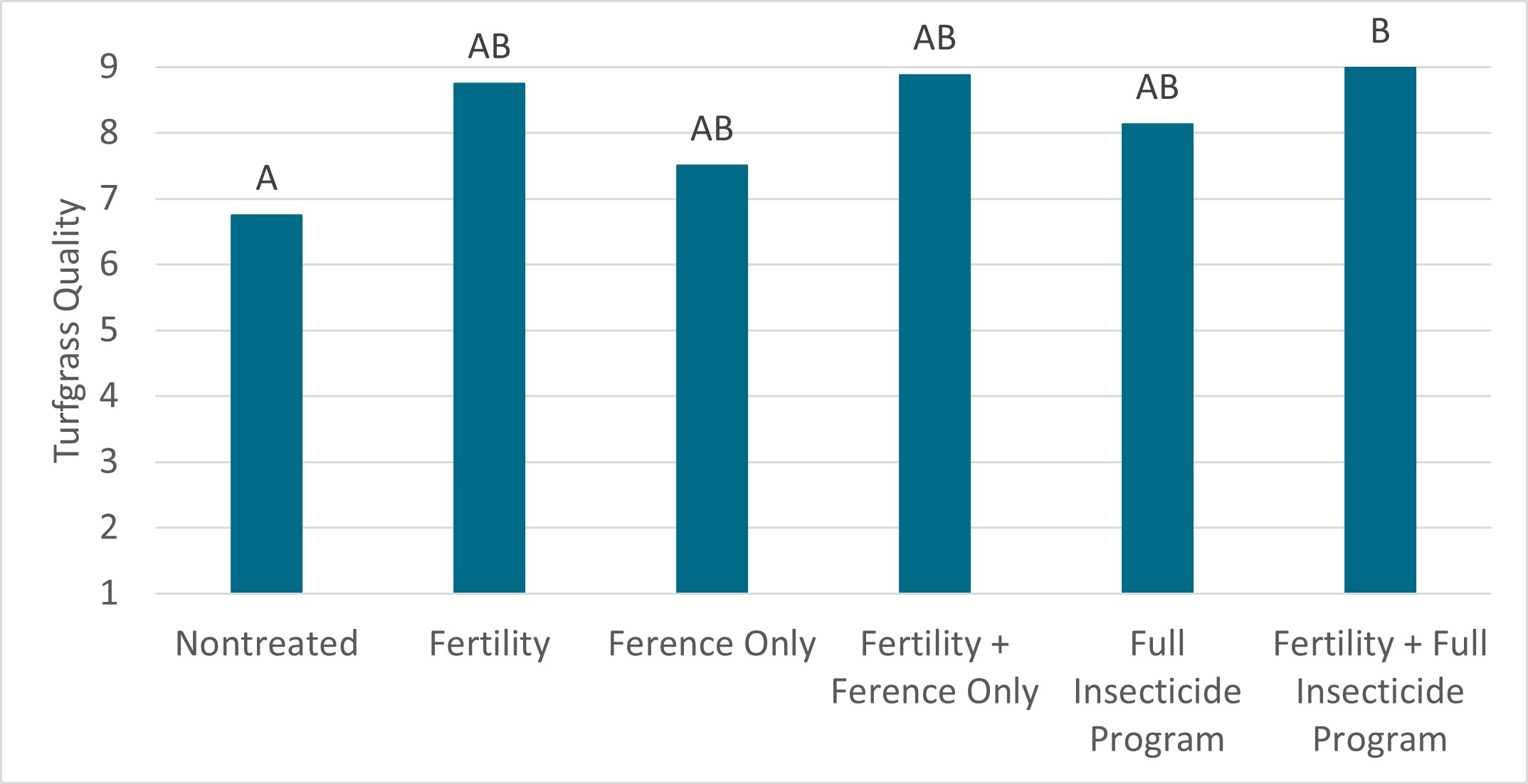 Figure 2. Effect of Harrell's fertility and insecticide programs on turfgrass quality in an ABW-infested creeping bentgrass-Poa annua fairway. Harrisburg, PA; June 2020.
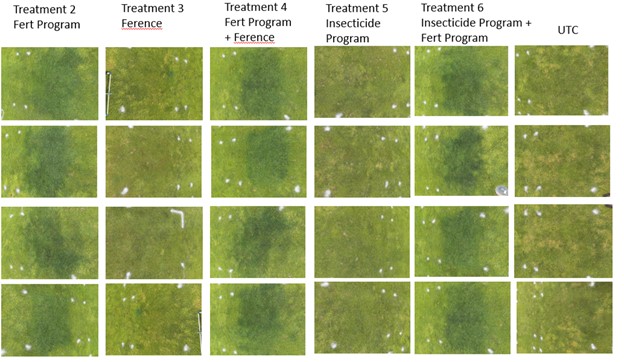 Figure 3. Effect of Harrell's fertility and insecticide program on turfgrass quality in an ABW-infested creeping bentgrass-Poa annua fairway. Harrisburg, PA; June 2020.
Statistically speaking, only the full insecticide program (treatment 5) significantly reduced ABW larvae population (100% reduction) compared to the nontreated. The full insecticide program combined with fertility (treatment 6) reduced ABW larvae populations 84% versus nontreated plots, statistically similar to treatment 5 and the nontreated (Figure 4).
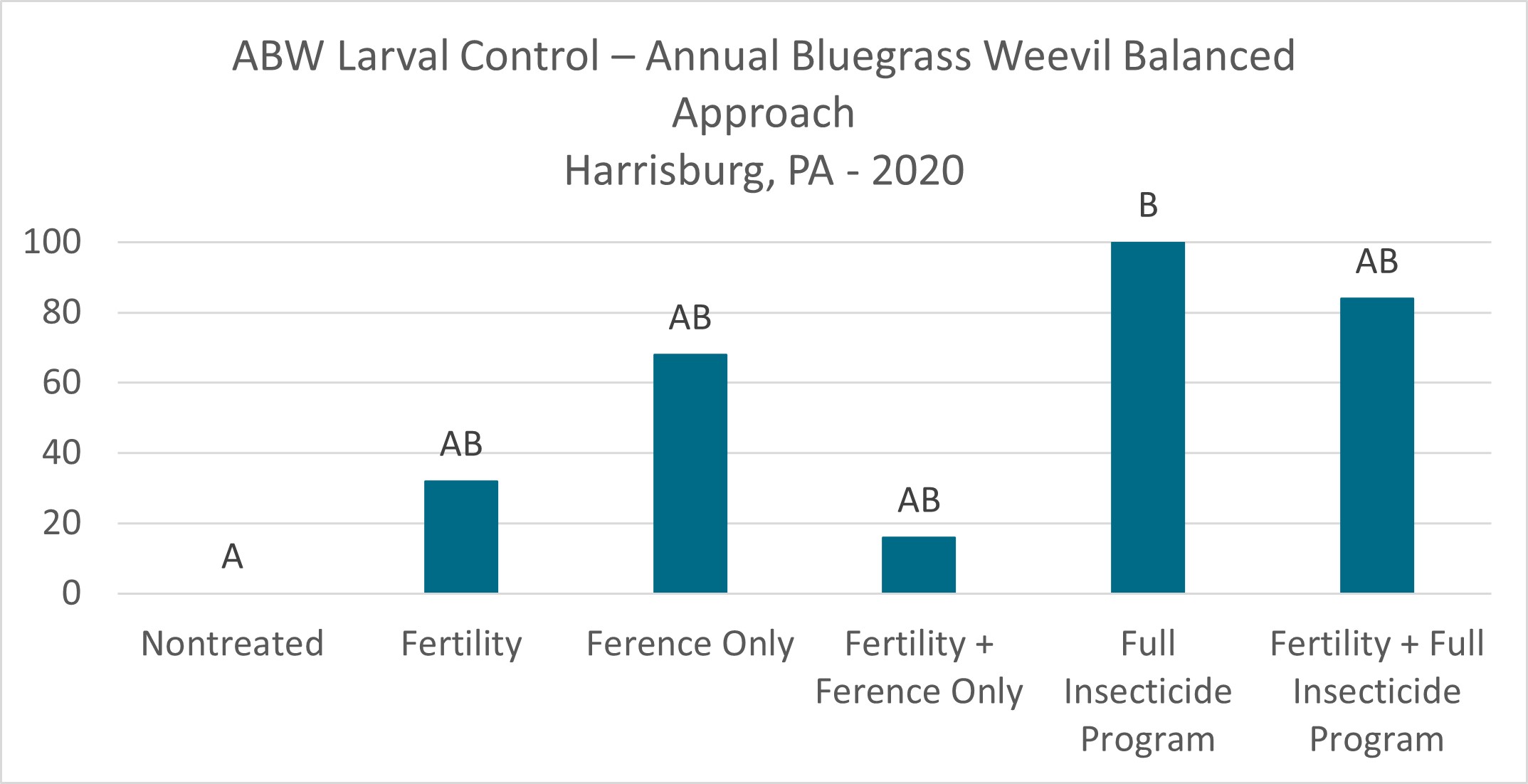 Figure 4. Effect of Harrell's fertility and insecticide programs on ABW larval control in an ABW-infested creeping bentgrass-Poa annua fairway. Harrisburg, PA; June 2020.
Results from this study suggest that turfgrass quality and ABW control may be related but are not directly correlated. In situations with high ABW pressure, a sound fertility program should be implemented to promote healthy turf growth to counteract damage caused by ABW.
Superintendents should not rely on fertility or insecticides alone to provide both a high level of turf quality and suppression of ABW populations. Although every property is unique, the study summarized above can serve as a starting point for development of an ABW management program. Get in touch with your Harrell’s rep if you are interested to learn more about the study or interested in how the lessons learned from this study can be incorporated into your agronomic program.
References
Billeisen, T. 2017. Annual Bluegrass Weevil in Turf. https://content.ces.ncsu.edu/annual-bluegrass-weevil-in-turf. Accessed 9 September 2020.
McGraw, BA and AM Koppennhofer. 2007. Biology and management of the annual bluegrass weevil, Listronotus maculicollis (coleoptra: Curculionidae). Handbook of Turfgrass Management and Physiology. CRC Press. Pp. 335-350.
McGraw, BA and AM Koppenhofer. 2017. A survey of annual bluegrass weevil management. Golf Course Management. March 2017.
McGraw, BA and D Kline. 2020. Harrell’s annual bluegrass weevil research report. Internal research document. September 2020.
Kostromytska, OS, S Wu, and AM Koppenhofer. 2019. Annual bluegrass weevil cross-resistance to insecticides. Golf Course Management. January 2019.
Totten, FW, H. Liu, LB McCarty, CM Baldwin, DG Bielenberg, and JE Toler. 2008. Efficiency of foliar versus granular fertilization: a field study of creeping bentgrass performance. Journal of Plant Nutrition 31:972-982.
Warner, RE. 1965. Hyperodes anthracinus (Dietz) damaging golf greens (Coleoptera: Curculionidae). Coleop. Bul. 19:32.
Related Resources

In addition to being the nation’s largest distributor of branded fungicides, herbicides, and insecticides, Harrell’s produces custom-blended fertilizers, specialty liquids, and wetting agents. Additionally, Harrell’s is the exclusive US owner, formulator, and distributor of all POLYON® branded products.
TEAM HARRELL'S
STAY EQUIPPED
Never stop learning. Access FREE continuing education courses from Harrell’s.
LET'S GROW
PRESS RELEASES
PRESS RELEASES
STAY EQUIPPED
Never stop learning. Access FREE continuing education courses from Harrell’s.
LET'S GROW